Bus Tire (Radial) High Load
CN → US| HS编码 | 关税税率 | 原产国 | 目的国 | 文档 |
|---|---|---|---|---|
| 4012124035 | 39.0% | CN | US | 官方文档 |
| 4011201035 | 39.0% | CN | US | 官方文档 |
| 4012124025 | 39.0% | CN | US | 官方文档 |
| 4011201015 | 39.0% | CN | US | 官方文档 |
商品图片
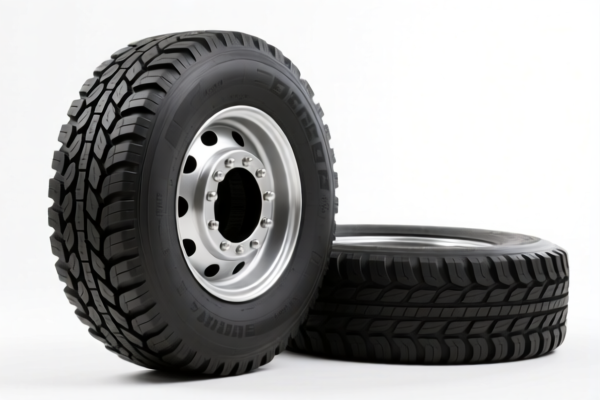
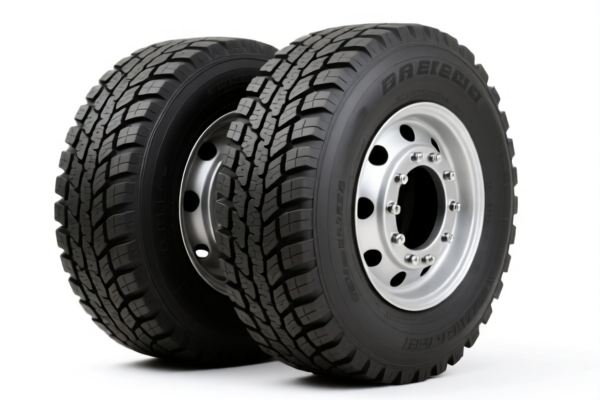
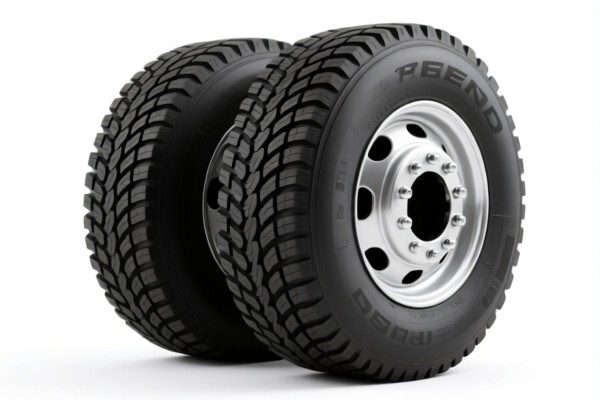
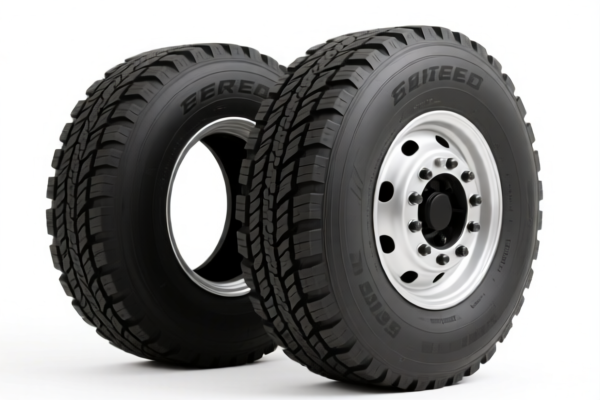
AI分析
🚛 Bus Tires (Radial) High Load – The "High-Risk" Import Category
🌐 HS Code Reference & Customs Clearance Guide | 2026 Latest Tariff Analysis | Professional通关 Strategy for Heavy-Duty Tires
📌 Part 1: Product Definition & Classification – Are You Declaring the Right HS Code?
Bus tires, especially Radial High-Load variants, are specialized rubber products designed for commercial transportation (buses, trucks). In international trade, they are strictly categorized under Chapter 40 (Rubber and Articles Thereof), specifically Heading 4011 or 4012, depending on the construction and wear state.
Key Distinction:
- Radial Construction (4011 vs 4012):
- 4011: Typically covers tires for buses or lorries (trucks) with radial construction.
- 4012: Often used for retreaded tires or specific sub-categories of bus tires depending on the precise sub-heading interpretation in the US HTS. However, for new radial bus tires, 4011.20 is the primary heading, but 4012.12 is frequently cited in specific high-load classifications or retread contexts. Note: The provided data explicitly maps High-Load Bus Radial Tires to both 4011.20 and 4012.12 sub-codes, likely reflecting specific tariff lines for "High Load" or specific usage nuances.
⚠️ Critical Classification Point:
- Radial vs. Bias: Must be clearly stated as "Radial". Bias ply tires fall under different sub-headings.
- Vehicle Type: Must specify "Bus" or "Truck/Lorry". Passenger car tires are excluded.
- Condition: New vs. Retreaded. The provided data suggests new high-load radial tires.
📦 Part 2: HS Code Breakdown & Tax Detail (Based on Provided Data)
The following HS Codes and tax rates are derived strictly from the provided <DATA>. All listed items incur a Total Tax Rate of 39.0% due to the叠加 (stacking) of Base, Section 301, and Section 122 tariffs.
| HS Code | Product Summary | Tax Detail Breakdown | Total Tax Rate |
|---|---|---|---|
4012.12.40.35 |
Radial Bus Tires, High Load, Rubber Material | Base: 4.0% Section 301 (Added): 25.0% Section 122: 10% |
39.0% |
4011.20.10.35 |
Radial Tires for Buses/Trucks, High Load | Base: 4.0% Section 301 (Added): 25.0% Section 122: 10% |
39.0% |
4012.12.40.25 |
Radial Bus Tires, High Load, Truck/Bus Characteristics | Base: 4.0% Section 301 (Added): 25.0% Section 122: 10% |
39.0% |
4011.20.10.15 |
Radial Tires for Buses/Trucks, High Load, Highway Use | Base: 4.0% Section 301 (Added): 25.0% Section 122: 10% |
39.0% |
🔍 Key Insight:
- Regardless of the slight variation in the last 2 digits of the HS Code (.35,.15, etc.), all listed codes have an identical total tax rate of 39.0%.
- The breakdown is consistent: 4% Base Duty + 25% Section 301 Tariff + 10% Section 122 Tariff.
- Section 122 Tariff: Often applies to specific imports from certain countries or under specific trade remedies. Ensure compliance with origin rules.
💰 Part 3: 2026 Tariff Rate Analysis (Detailed Explanation)
✅ Applicable Jurisdiction: United States (US)
✅ Product Category: Rubber Tires for Buses/Trucks (Radial, High Load)
✅ Effective Date: Current (2025-2026)
🎯 1. Why is the Total Rate 39.0%?
The 39.0% rate is not a single duty but a cumulative burden of three distinct tariffs:
- Base Duty (4.0%):
- Standard Most-Favored-Nation (MFN) rate for tires under HTS 4011/4012.
-
This is the baseline cost before any trade remedies.
-
Section 301 Tariff (25.0%):
- Imposed on Chinese-origin goods under the US Trade Representative (USTR) Section 301 investigation.
-
Applies to tires from China. If the tires are from other countries (e.g., Vietnam, Thailand), this may not apply, but the provided data assumes the 25% is present, implying Chinese origin.
-
Section 122 Tariff (10%):
- Under Section 122 of the Trade Act of 1974, the President may adjust duties to protect national security or specific industries.
- A 10% surcharge is applied in addition to Section 301.
📌 Calculation Example:
For a shipment worth $100,000 CIF:
- Base Duty: $100,000 × 4% = $4,000
- Section 301: $100,000 × 25% = $25,000
- Section 122: $100,000 × 10% = $10,000
- Total Duty Payable: $39,000 (39%)⚠️ De Minimis Exemption:
❌ Not Applicable. Tires under 39% total duty do not qualify for de minimis (Section 321) exemption. All shipments must be formally entered.
🛠️ Part 4: Customs Clearance Practical Advice (Avoid Pitfalls)
✅ 1. Required Documentation (Mandatory)
| Document | Requirement | Purpose |
|---|---|---|
| Commercial Invoice | Must state: "Radial Bus Tire, High Load, Model: XXX" | Clarifies product nature to avoid misclassification. |
| Packing List | Detail dimensions, weight, and quantity. | Helps CBP verify compliance with volume/weight limits. |
| Certificate of Origin | Must specify country of manufacture. | Critical for applying/disputing Section 301 and Section 122 tariffs. |
| Product Specification Sheet | Include: Radial construction, Load Index, Speed Rating, Tread Pattern. | Proves "High Load" classification and radial structure. |
| Bill of Lading/Air Waybill | Standard shipping document. | Proof of shipment. |
✅ 2. Declaration Tips (Crucial for Accuracy)
🔥 Golden Rule:
"Declare 'Radial', 'Bus/Truck', and 'High Load' explicitly. Do not just say 'Tire'."
| Scenario | Correct HS Code Selection | Why? |
|---|---|---|
| Radial tire for a city bus | 4011.20.10.35 or 4012.12.40.25 |
Matches "Bus" and "Radial" criteria. |
| Radial tire for a long-haul truck | 4011.20.10.15 |
Matches "Truck" and "Highway Use". |
| Misdeclaration | Using 4011.10 (Passenger Car) |
❌ Severe Penalty. Passenger tires have different duty rates and regulations. |
| Misdeclaration | Using 4012.11 (Retreaded) |
❌ Wrong Category. New tires must be declared as new. |
✅ 3. Special Considerations for "High Load"
- Load Index: Ensure the invoice includes the Load Index (e.g., 152/149M). CBP may request this to confirm the "High Load" classification.
- Section 122 Compliance: Since 10% is added, verify if any exclusions or exemptions apply. Usually, no exclusions exist for tires under Section 122.
- Anti-Dumping/Countervailing Duties (AD/CVD): While not listed in the provided data, always check for active AD/CVD orders on tires from China. If applicable, these are additional duties and can be significantly higher. The provided data only lists 39%, so assume no AD/CVD unless confirmed.
🌍 Part 5: Global Market Comparison (2026 Context)
| Market | HS Code (General) | Approx. Duty Rate | Key Notes |
|---|---|---|---|
| 🇺🇸 United States | 4011.20.10.35 |
39.0% | Includes 4% Base + 25% Sec 301 + 10% Sec 122. Highest risk. |
| 🇨🇳 China (Export) | N/A | 0% (Export Duty) | China does not typically levy export duties on tires, but VAT refunds may apply. |
| 🇪🇺 European Union | 4011.20 |
~4.5% | No Section 301/122 equivalents. Lower risk. |
| 🇨🇦 Canada | 4011.20 |
~0-5% | Preferential rates if under CUSMA/USMCA (if manufactured in US/Mexico). |
| 🇲🇽 Mexico | 4011.20 |
~5% | No major trade barriers for US-origin tires. |
📌 Conclusion:
- The US market is the most expensive for importing Chinese-origin bus tires due to the 39% cumulative tariff.
- Strategic Recommendation: Consider sourcing from Vietnam, Thailand, or Mexico to avoid Section 301 and Section 122 tariffs, potentially reducing duty to 4-5%.
📌 Part 6: Common Mistakes & Pitfalls (Learn from Others)
❌ Mistake 1: Declaring as "Passenger Car Tires" to avoid higher duties.
👉 Consequence: CBP will classify it as Bus/Truck tires, apply 39% duty, and impose penalties + interest.
❌ Mistake 2: Ignoring "Section 122" in documentation.
👉 Consequence: If the origin is not clearly declared, CBP may not apply the correct 10% surcharge, leading to underpayment and future audits.
❌ Mistake 3: Using generic descriptions like "Rubber Tires".
👉 Consequence: CBP may delay clearance for further classification, causing storage fees and demurrage.
✅ Best Practice:
"Radial Bus Tire, High Load, Model XYZ, Load Index 152, Radial Construction, Chinese Origin"
🎯 Part 7: Conclusion – Professional Declaration Saves Money!
🎯 Remember:
🔹 "39% is the baseline for Chinese Bus Tires in the US."
🔹 "4% Base + 25% Sec 301 + 10% Sec 122 = 39%."
🔹 "Declare 'Radial' and 'Bus' explicitly to avoid misclassification penalties."
📌 Pro Tip:
- Apply for an Advance Ruling (CBP Form 5106) to confirm the correct HS Code and duty rate before shipment.
- Explore Alternative Origins: If possible, source from non-China countries to mitigate the 35% additional tariff burden.
📣 Immediate Action:
📞 Contact a Licensed Customs Broker to verify the exact HS Code for your specific tire model.
📄 Prepare Accurate Product Specifications to support your declaration.
🚀 Minimize Duty Costs: Consider supply chain diversification to avoid high US tariffs.
✨ Professional Clearance Starts with Accurate Classification!
💼 Every percentage point matters in tire imports!
用户评价
关于 HS 编码归类
协调制度(HS)是由世界海关组织(WCO)制定的国际贸易商品分类标准。全球 200 多个国家采用 HS 系统作为海关关税、贸易统计和进出口监管的基础。
每个 HS 编码遵循以下层级结构:
- 章(2 位)——商品大类(例如:第 84 章:机器和机械设备)
- 品目(4 位)——章内的更具体分类
- 子目(6 位)——国际通用细分,所有 WCO 成员国统一使用
- 本国细分(8-10 位)——各国自行扩展的细分编码,如美国 HTSUS 10 位编码
正确的 HS 编码归类对于顺利通关、准确缴纳关税和遵守贸易法规至关重要。错误归类可能导致海关延误、多缴关税或罚款。
从CN进口到US时,适用的关税税率可能包括:
- 最惠国(MFN)税率——适用于 WTO 成员国的标准关税税率
- 普通税率——适用于无贸易协定国家
- 贸易救济关税——附加关税,如 301 条款(反倾销)、232 条款(国家安全)或反补贴税
本页内容仅供参考。如需正式归类,请咨询当地海关或持牌报关代理。