Bus with more than 10 seats
CN → US| HS编码 | 关税税率 | 原产国 | 目的国 | 文档 |
|---|---|---|---|---|
| 8702106100 | 37.0% | CN | US | 官方文档 |
| 8702103100 | 37.0% | CN | US | 官方文档 |
| 8706000540 | 39.0% | CN | US | 官方文档 |
商品图片
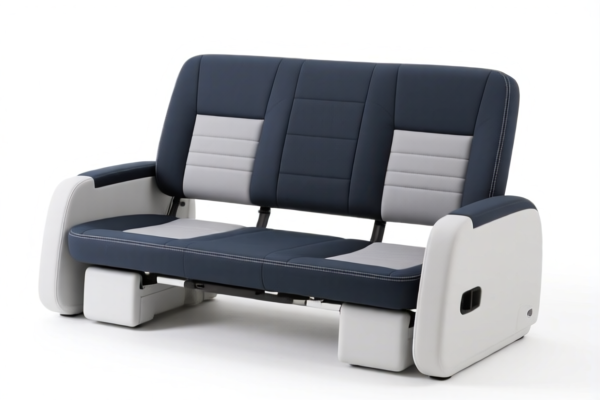
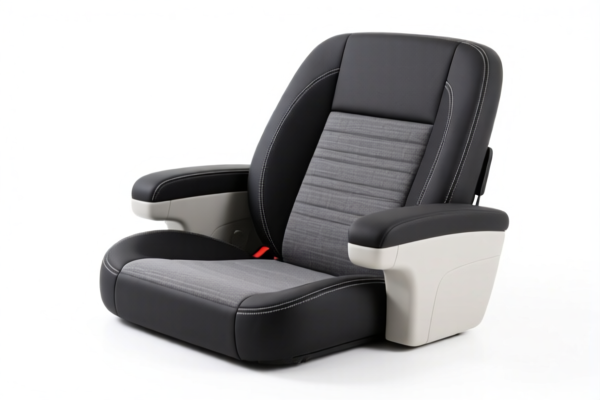
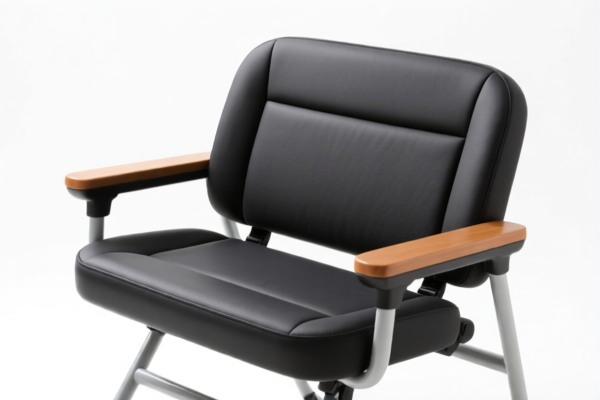
AI分析
🚌 Large Capacity Buses (>10 Seats): HS Code Classification & Customs Clearance Strategy
🌐 HS Code Reference & Customs Clearance Guide | 2026 Latest Tariff Analysis | Professional Customs Strategy
📌 I. Product Definition & Classification: Do You Truly Understand "Buses"?
Buses with more than 10 seats are core transport equipment for public transit, tourism, and corporate shuttle services. In international trade, they are categorized not just by size, but by passenger capacity and structural classification.
Passenger Buses (8702.10): Vehicles designed primarily for transporting 10 or more passengers. This is the most common category for commercial buses, school buses, and tour coaches.
Chassis with Cab (8706.00): Sometimes, if the vehicle is declared as a "chassis with cab" intended for further modification into a bus, it might fall under different headings. However, for finished buses transporting >10 people, 8702 is the primary heading.
⚠️ Key Distinction Point:
- If the vehicle is designed to carry 10 or more people (including the driver or excluding, depending on local law, but typically HS 8702 refers to the capacity category), it falls under 8702.
- If the vehicle is primarily for cargo or mixed use but carries >10 passengers, customs may still inspect if it’s "primarily for passenger transport."
- Critical Note: HS Code 8702.10 specifically targets buses for 10 or more persons. Vehicles for up to 10 persons fall under 8703 (passenger cars).
📦 II. HS Code Classification Details (2026 Latest Tariff Authority Mapping)
Based on the provided data, here are the precise HS Codes, tax rates, and legal justifications for buses with more than 10 seats:
| HS Code | Product Description | Application Scenario | Total Tax Rate | Legal Basis & Tax Breakdown |
|---|---|---|---|---|
8702.10.61.00 |
Bus for 10+ passengers | Commercial buses, tour coaches, transit buses designed for 10+ people. | 37.0% | Base Tariff: 2.0% Additional Tariff: 25.0% Section 122 Tariff: 10% |
8702.10.31.00 |
Bus for 10+ passengers (Large Coach) | Large coaches, intercity buses, vehicles explicitly classified as "large passenger vehicles." | 37.0% | Base Tariff: 2.0% Additional Tariff: 25.0% Section 122 Tariff: 10% |
8706.00.05.40 |
Chassis with Cab for Bus (10+ Seats) | Vehicles declared as chassis with cab, intended for bus body construction, but classified under 8706 for specific regulatory reasons. | 39.0% | Base Tariff: 4.0% Additional Tariff: 25.0% Section 122 Tariff: 10% |
🔍 Critical Analysis:
- 8702.10.61.00 and 8702.10.31.00 both carry a 37% total tax rate. The difference lies in the specific sub-category of "bus" (e.g., specific design or size).
- 8706.00.05.40 carries a 39% total tax rate. This is 2% higher than the standard bus categories. This code applies to chassis with cab that are part of the 8702 product family but declared under 8706 for specific classification purposes.
- Why the difference? Base tariff for 8702.10 is 2%, while for 8706.00 it is 4%. Both have the same additional tariffs (25% + 10%).
💰 III. 2026 Latest Tariff Rate Breakdown (Including Surcharge Policies)
✅ Applicable Jurisdiction: United States (US)
✅ Origin: China (CN)
✅ Effective Date: From November 10, 2025 (and subsequent imports)
🎯 1. 8702.10.61.00 & 8702.10.31.00 —— Standard Buses for 10+ Passengers
| Item | Details |
|---|---|
| Base Tariff | 2.0% |
| Section 301 Additional Tariff | +25.0% |
| Section 122 Tariff | +10.0% |
| Total Tax Rate | 37.0% |
| Tax Calculation | CIF Value × 37% |
| De Minimis Eligibility | ❌ No (Not eligible for de minimis) |
| Legal Reference Path | Section 122 Tariff → Section 301 Tariff → USITC:8702.10.xx.xx |
📌 Explanation:
- The 25% additional tariff is imposed under Section 301 of the Trade Act of 1974, targeting Chinese goods.
- The 10% Section 122 tariff is imposed under Section 232 of the Trade Expansion Act, based on national security grounds for certain vehicles.
- Total 37% is a significant cost burden. Importers must calculate this carefully in their pricing strategy.
🎯 2. 8706.00.05.40 —— Chassis with Cab (Bus Category)
| Item | Details |
|---|---|
| Base Tariff | 4.0% |
| Section 301 Additional Tariff | +25.0% |
| Section 122 Tariff | +10.0% |
| Total Tax Rate | 39.0% |
| Tax Calculation | CIF Value × 39% |
| De Minimis Eligibility | ❌ No |
| Legal Reference Path | Section 122 Tariff → Section 301 Tariff → USITC:8706.00.05.40 |
📌 Caution:
- This code is 2% more expensive than the standard bus codes.
- Use this only if the product is legally classified as a chassis with cab and not a complete bus. Misclassification can lead to penalties.
🛠️ IV. Customs Clearance Practical Advice (Avoiding Pitfalls)
✅ 1. Required Documentation Checklist
| Document | Mandatory? | Notes |
|---|---|---|
| ✅ Product Specifications | ✔️ | Must clearly state passenger capacity (e.g., "Seats: 45"). |
| ✅ Commercial Invoice | ✔️ | Must specify "Bus for 10+ Passengers" or "Chassis with Cab." |
| ✅ Packing List | ✔️ | Detail the goods to avoid misdeclaration. |
| ✅ Origin Certificate | ✔️ | To confirm Country of Origin (China). |
| ✅ Certificate of Conformity | ✔️ | EPA, DOT, and FMVSS compliance documents are critical for vehicles. |
| ✅ Engine Serial Number & VIN | ✔️ | Must match documentation exactly. |
✅ 2. Classification Tips (Key Rules)
🔥 “Capacity is King, Chassis vs. Bus is Key!”
| Scenario | Correct HS Code | Incorrect Code | Consequence |
|---|---|---|---|
| Complete Bus, 10+ Seats | 8702.10.61.00 or 8702.10.31.00 |
8706.00.05.40 |
Overpay by 2% or risk penalty for misclassification. |
| Chassis with Cab (for bus body) | 8706.00.05.40 |
8702.10.xx |
Underpay base tariff, but customs may reassess and charge 39% + penalties. |
| Bus with <10 Seats | 8703.xx.xx |
8702.xx.xx |
Major misclassification. High penalty risk. |
✅ 3. Special Considerations
| Situation | Advice |
|---|---|
| OEM Buses | Ensure the supplier provides accurate VIN and passenger capacity declaration. |
| Electric Buses | Same HS Codes apply, but verify if any EV-specific exemptions exist (currently none for China-origin in this category). |
| Customs Audit | Be prepared to provide photos of the interior seating arrangement to prove >10 seats. |
🌍 V. Global Market Comparison (2026)
| Country/Region | Recommended HS Code | Tariff (China Origin) | Key Requirements | Notes |
|---|---|---|---|---|
| 🇺🇸 USA | 8702.10.61.00 / 8702.10.31.00 |
37.0% | DOT, EPA, FMVSS | Highest tariffs due to Section 301 & 232. |
| 🇨🇳 China | 8702.10 |
5% (Imported) | CCC, MIIT | Lower tariff, but strict safety standards. |
| 🇪🇺 EU | 8702 |
14% (if no FTA) | EC Type Approval | No Section 301 tariffs. |
| 🇨🇦 Canada | 8702 |
0% (if under USMCA/CUSMA) | Transport Canada Standards | Preferential rates if from US/Mexico. |
| 🇲🇽 Mexico | 8702 |
0% (if under USMCA) | NOM Standards | Key hub for North American distribution. |
📌 Conclusion:
- USA is the most challenging market due to 37-39% tariffs.
- Europe and Asia offer lower tariff burdens but have different regulatory frameworks (EC Type Approval vs. FMVSS).
📌 VI. Common Errors & Pitfalls (Lessons Learned)
❌ Error 1: Misdeclaring a complete bus as a chassis to avoid Section 122 tariffs.
👉 Consequence: Customs may reject the declaration, impose 39% + penalties, and delay shipment.
❌ Error 2: Declaring a 9-seater van as a bus.
👉 Consequence: Wrong HS Code (should be 8703), leading to underpayment and fines.
❌ Error 3: Ignoring EPA/DOT certifications for electric buses.
👉 Consequence: Goods held at customs, demurrage fees, or deportation.
✅ Correct Practice:
“Bus, Diesel, 40 Seats, for Commercial Transport, Model XYZ, DOT/EPA Certified”
🎯 VII. Conclusion: Precise Classification for Cost Efficiency
🎯 Key Takeaways:
🔹 Passenger Capacity is Critical: 10+ seats = 8702. <10 seats = 8703.
🔹 Total Tax in USA: 37% for standard buses, 39% for chassis.
🔹 Documentation: VIN, EPA, DOT, and clear passenger count are mandatory.
🔹 Cost Planning: Factor in 37% tariff when pricing US-bound buses from China.
📌 Pro Tip:
If your buses are assembled in Vietnam or Mexico, you may qualify for lower tariffs under free trade agreements. Consider supply chain diversification to mitigate US tariff risks.
📣 Immediate Action:
📞 Consult a licensed customs broker.
📄 Ensure all EPA/DOT certificates are valid and uploaded.
🚀 Clear customs efficiently, minimize costs, and expand your global reach!
✨ Professional Customs Clearance Starts with Accurate Classification!
💼 Every percent of tariff matters—optimize your strategy!
用户评价
关于 HS 编码归类
协调制度(HS)是由世界海关组织(WCO)制定的国际贸易商品分类标准。全球 200 多个国家采用 HS 系统作为海关关税、贸易统计和进出口监管的基础。
每个 HS 编码遵循以下层级结构:
- 章(2 位)——商品大类(例如:第 84 章:机器和机械设备)
- 品目(4 位)——章内的更具体分类
- 子目(6 位)——国际通用细分,所有 WCO 成员国统一使用
- 本国细分(8-10 位)——各国自行扩展的细分编码,如美国 HTSUS 10 位编码
正确的 HS 编码归类对于顺利通关、准确缴纳关税和遵守贸易法规至关重要。错误归类可能导致海关延误、多缴关税或罚款。
从CN进口到US时,适用的关税税率可能包括:
- 最惠国(MFN)税率——适用于 WTO 成员国的标准关税税率
- 普通税率——适用于无贸易协定国家
- 贸易救济关税——附加关税,如 301 条款(反倾销)、232 条款(国家安全)或反补贴税
本页内容仅供参考。如需正式归类,请咨询当地海关或持牌报关代理。