Butterfly Mold
CN → US| HS编码 | 关税税率 | 原产国 | 目的国 | 文档 |
|---|---|---|---|---|
| 8477908601 | 38.1% | CN | US | 官方文档 |
| 8480718045 | 38.1% | CN | US | 官方文档 |
| 8480718060 | 38.1% | CN | US | 官方文档 |
| 8477908695 | 38.1% | CN | US | 官方文档 |
商品图片

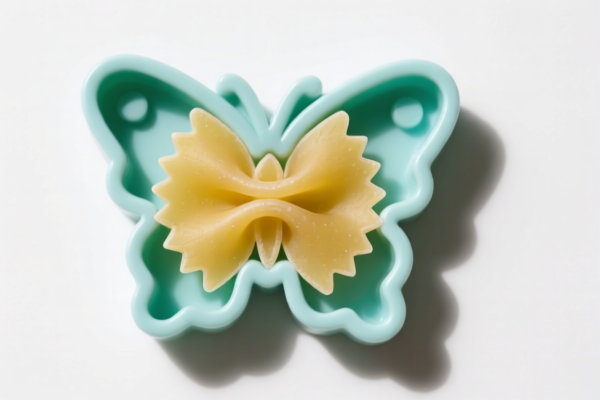
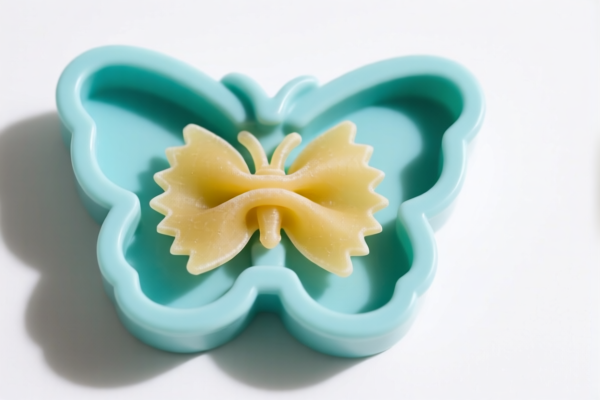
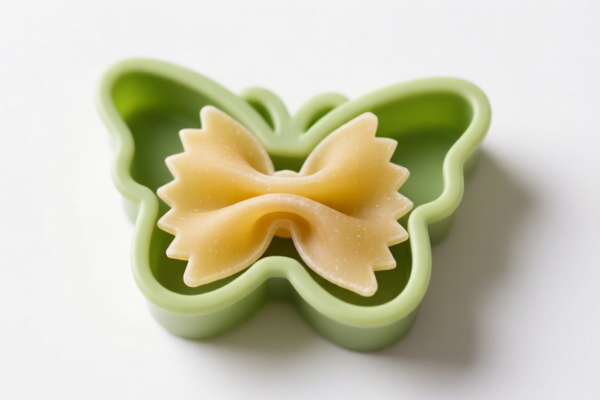
AI分析
🦋 Butterfly Mold (Molds for Rubber or Plastics)
🌐 HS Code Reference & Customs Clearance Guide | 2026 Latest Tariff Analysis | Professional Entry Strategy
📌 I. Product Definition: What Exactly is a "Butterfly Mold"?
A "Butterfly Mold" is a specialized tool used in the manufacturing of plastic or rubber products, typically for creating items with complex shapes, wings, or specific aesthetic designs. In international trade, it is classified not as a finished good, but as a part of machinery or a specific type of mold used in injection or compression molding processes.
⚠️ Key Distinction:
- Is it a standalone machine? ❌ No.
- Is it a part of a machine or a specific mold category? ✅ Yes.
- Crucial Logic: The classification depends on whether it is viewed as a component of an injection molding machine or as a specific mold type (injection/compression).
📦 II. HS Code Classification Details (2026 Latest Tariff Authority)
Based on the provided data, the "Butterfly Mold" can be classified under four specific HS codes depending on the precise manufacturing context and logical fallback categories. All listed codes carry the same total tax rate for US imports from China.
| HS Code | Product Description | Application Logic | Tax Rate |
|---|---|---|---|
8477.90.86.01 |
Parts of Injection Molding Machines | Viewed as a component suitable for rubber or plastic processing machinery. | 38.1% |
8480.71.80.45 |
Injection/Compression Molds | Fits the specific use case of plastic or rubber injection/compression molding. | 38.1% |
8480.71.80.60 |
Compression Molds (Fallback) | Classified as a compression-type mold under the "catch-all" logic. | 38.1% |
8477.90.86.95 |
Other Parts for Manufacturing | Treated as a general mechanical part for producing plastic/rubber goods. | 38.1% |
🔍 重点提醒 (Key Reminder):
- Despite the different HS codes, all four options result in the same total tax rate of 38.1% for imports from China to the US.
- The choice of HS code may affect customs discretion, inspection requirements, or eligibility for specific exemptions, so accurate product description is vital.
- All codes fall under Chapter 84 (Nuclear reactors, boilers, machinery and mechanical parts).
💰 III. 2026 Latest Tariff Rate Breakdown (Including Surtaxes & Policy Add-ons)
✅ Applicable Country: United States (US)
✅ Origin: China (CN)
✅ Effective Date: Current and future imports subject to these rates
🎯 Total Tariff Structure for All Listed HS Codes
| Item | Detail |
|---|---|
| Base Tariff | 3.1% (Standard MFN rate for machinery parts/molds) |
| Section 301 Surtax | 25.0% (Additional duty on Chinese origin goods) |
| Section 122 Tariff | 10.0% (Additional tariff under Section 122 authorities) |
| Total Tax Rate | 38.1% |
| Tax Calculation | CIF Value × 38.1% |
| De Minimis Exemption | ❌ Not Applicable (Deny de minimis for these tariff lines) |
| Legal Basis Path | Base: 3.1% → Section 301: 25.0% → Section 122: 10.0% |
📌 Explanation:
- The 3.1% is the standard base duty for mechanical parts and molds.
- The 25.0% is the additional duty imposed under Section 301 of the Trade Act of 1974, targeting specific Chinese imports.
- The 10.0% is added under Section 122 (19 U.S.C. § 2152), which allows the President to adjust duties for national security or economic reasons.
- Total: 38.1%. This is a significant cost factor. Importers must calculate landed cost carefully.
🛠️ IV. Customs Clearance Practical Advice (Real-World Pitfall Avoidance)
✅ 1. Required Documentation Checklist (None Can Be Omitted)
| Document | Mandatory? | Purpose |
|---|---|---|
| ✅ Product Specifications | ✔️ | Must clearly state: Material (plastic/rubber), Process (injection/compression), and Function. |
| ✅ Technical Drawings | ✔️ | To prove it is a mold/parts and not a finished plastic toy. |
| ✅ Commercial Invoice | ✔️ | Description must match HS code logic (e.g., "Butterfly Mold, Injection Type"). |
| ✅ Packing List | ✔️ | Detail weight, dimensions, and number of units. |
| ✅ Origin Certificate | ✔️ | To confirm Chinese origin (triggers 301/122 tariffs). |
| ✅ HS Code Pre-Ruling Request | ✔️ | Highly recommended to lock in the correct HS code (8477 vs. 8480) before shipment. |
✅ 2. Declaration Strategy (Key Mantra)
🔥 "Be Specific: Injection or Compression? Part or Mold?"
| Scenario | Recommended HS Code | Reasoning |
|---|---|---|
| Used in Injection Molding Machine | 8477.90.86.01 |
Directly matches "parts of machines" for plastic processing. |
| Explicitly a Mold (Injection/Compression) | 8480.71.80.45 |
Best fit if the item is a standalone mold tool. |
| Ambiguous/General Purpose | 8480.71.80.60 |
Fallback to compression mold category if injection is not confirmed. |
| Generic Mechanical Part | 8477.90.86.95 |
Use only if it doesn't fit specific mold definitions but is still a machine part. |
⚠️ Warning:
- Do not declare as "Plastic Butterfly Toy" (HS Code 9503) – this is customs fraud and will result in seizure, fines, and back taxes.
- Do not declare as "Metal Tool" (HS Code 8207) – this may attract different, potentially higher, penalties for misclassification.
✅ 3. Special Situations
| Situation | Handling Advice |
|---|---|
| OEM Custom Molds | Provide customer design files and order specifications. Prove it’s a tool, not a consumer product. |
| Set of Molds | Declare each mold separately with its specific function. Avoid grouping unless identical. |
| Mold + Spare Parts | If shipped together, declare the mold as the primary item. List spare parts separately if they are distinct components. |
| Transshipment | If routed through Vietnam/Malaysia, origin documentation must still prove Chinese origin to avoid Section 301/122 evasion allegations (which are severe). |
🌍 V. Global Market Comparison (2026 Latest)
| Country/Region | Recommended HS Code | Total Tariff (CN Origin) | Certification/Notes |
|---|---|---|---|
| 🇺🇸 USA | 8477.90.86.01 / 8480.71.80.45 etc. |
38.1% | 3.1% Base + 25% Sec 301 + 10% Sec 122. |
| 🇨🇳 China | 8480.71.80.45 |
0%~5% | Domestic trade, no import tariffs. |
| 🇪🇺 EU | 8480.71.80 |
~4.5% | No Section 301/122 equivalents. Standard EU tariff. |
| 🇦🇺 Australia | 8480.71.80 |
~5.0% | Standard ASEAN-Australia FTA may apply if ASEAN origin. |
| 🇯🇵 Japan | 8480.71.80 |
~0%~5% | EPA/JFTA benefits may apply. |
📌 Conclusion:
- The USA is the most expensive market due to Section 301 and Section 122 tariffs.
- EU, Japan, and Australia do not impose these specific punitive tariffs on Chinese molds, making them more cost-effective for non-US markets.
📌 VI. Common Mistakes & Pitfalls (Lessons Learned)
❌ Mistake 1: Declaring "Butterfly Mold" as "Plastic Product" (HS 3926)
👉 Consequence: Customs will reject it for misclassification, assess 38.1% tax + penalty, and potentially seize goods.
❌ Mistake 2: Ignoring "Section 122" Tariff
👉 Consequence: Assuming only 301 tariff (25%) applies, leading to underpayment by 10%. Back taxes + interest will follow.
❌ Mistake 3: Vague Description on Invoice ("Mold for Butterfly")
👉 Consequence: Customs examiners cannot determine if it’s 8477 (machine part) or 8480 (mold). Results in delayed clearance and requests for additional info.
❌ Mistake 4: Claiming De Minimis Exemption
👉 Consequence: Section 301 and Section 122 goods are excluded from de minimis (Section 321) entry. Small shipments are not exempt.
✅ Correct Practice:
"Butterfly Injection Mold, Aluminum Alloy, for Rubber/Plastic Processing, Model XYZ, Chinese Origin"
🎯 VII. Conclusion: Professional Declaration, Cost Control, Risk Mitigation
🎯 Remember the Mantra:
🔹 "It’s a MOLD, not a TOY.
🔹 3.1% Base + 25% 301 + 10% 122 = 38.1%.
🔹 "Be Specific in Description, Avoid Penalties, Save Costs!"
📌 Pro Tip:
If you are importing large volumes, consider Applying for an Exclusion from Section 301 tariffs (if eligible) or exploring Supply Chain Diversification to non-US targeted countries.
Always Pre-Rule your HS Code with US Customs (CBP) to ensure consistency across shipments.
📣 Immediate Action:
📞 Consult a licensed Customs Broker.
📤 Provide detailed technical drawings and functional descriptions.
🚀 Ensure Smooth Clearance, Maximize Profit, and Stay Compliant!
✨ Professional Customs Clearance Starts with Accurate Classification!
💼 Every Dollar of Tax Saved is Pure Profit!
用户评价
关于 HS 编码归类
协调制度(HS)是由世界海关组织(WCO)制定的国际贸易商品分类标准。全球 200 多个国家采用 HS 系统作为海关关税、贸易统计和进出口监管的基础。
每个 HS 编码遵循以下层级结构:
- 章(2 位)——商品大类(例如:第 84 章:机器和机械设备)
- 品目(4 位)——章内的更具体分类
- 子目(6 位)——国际通用细分,所有 WCO 成员国统一使用
- 本国细分(8-10 位)——各国自行扩展的细分编码,如美国 HTSUS 10 位编码
正确的 HS 编码归类对于顺利通关、准确缴纳关税和遵守贸易法规至关重要。错误归类可能导致海关延误、多缴关税或罚款。
从CN进口到US时,适用的关税税率可能包括:
- 最惠国(MFN)税率——适用于 WTO 成员国的标准关税税率
- 普通税率——适用于无贸易协定国家
- 贸易救济关税——附加关税,如 301 条款(反倾销)、232 条款(国家安全)或反补贴税
本页内容仅供参考。如需正式归类,请咨询当地海关或持牌报关代理。