Car Battery Cable
CN → US| HS编码 | 关税税率 | 原产国 | 目的国 | 文档 |
|---|---|---|---|---|
| 8544493080 | 40.3% | CN | US | 官方文档 |
| 8536904000 | 35.0% | CN | US | 官方文档 |
| 8507908000 | 38.4% | CN | US | 官方文档 |
| 8544300000 | 40.0% | CN | US | 官方文档 |
| 8536908585 | 85.0% | CN | US | 官方文档 |
商品图片
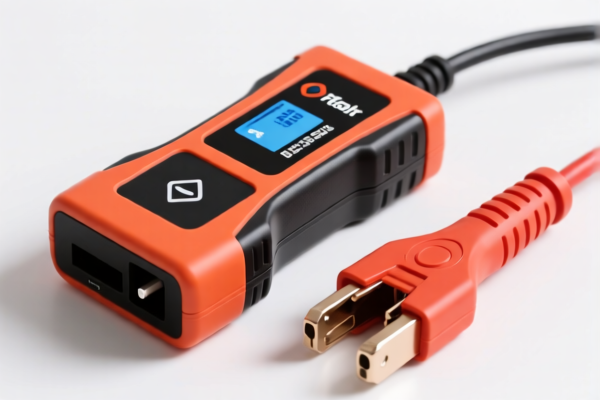
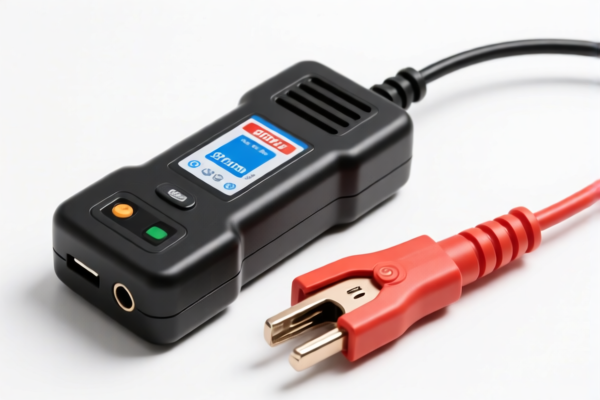
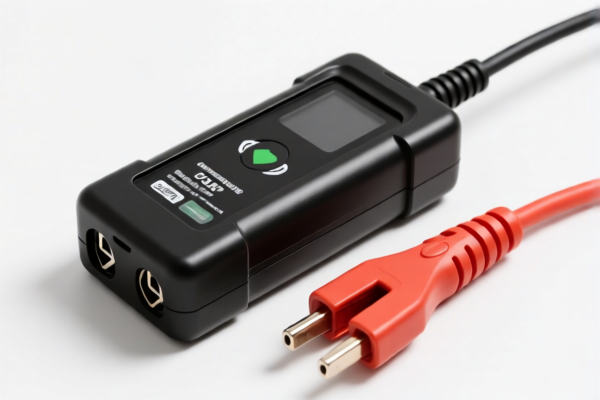

AI分析
🚗 Car Battery Cable
⚡ HS Code Classification Guide | Latest Tariff Rates for Automotive Battery Cables
Car battery cables are essential components in automotive electrical systems, responsible for transmitting high current from the battery to the starter motor, alternator, and other high-power electrical loads. They are typically made of copper conductors with flexible stranding, insulated with heat-resistant PVC or rubber, and terminated with battery terminal lugs.
Due to their specific use in vehicles, they may be classified under either Chapter 85 (Electrical machinery and equipment) or Chapter 83 (Miscellaneous manufactured articles), depending on their construction and intended use.
📦 Key HS Code Options for Car Battery Cables
| HS Code | Product Description | Applicable Use | Material Notes |
|---|---|---|---|
8544.42.90.00 |
Insulated electric conductors, for a voltage exceeding 1,000 V | High-voltage automotive (e.g., EVs, hybrids) | Copper, insulated, not fitted with connectors |
8544.60.85.00 |
Other insulated electric conductors, fitted with connectors | Low-voltage automotive batteries (<1,000 V) | Copper, PVC/rubber insulated, pre-fitted with battery terminals |
8302.41.00.00 |
Base metal mountings, fittings and similar articles, of base metal | Metal battery terminal clamps/covers | Not the cable itself; auxiliary parts |
8512.20.90.00 |
Electrical lighting or signaling equipment, of a kind used on vehicles | Not applicable | ⚠️ Incorrect for power cables |
8544.19.90.00 |
Winding wire, whether or not fitted with insulating material | Raw wire only | No insulation or connectors |
8544.42.10.00 |
Insulated conductors, for voltage ≤ 80 V, fitted with connectors | Standard 12V/24V car battery cables | Most common classification for standard passenger vehicles |
🔍 Most Likely Classification:
For standard 12V or 24V car battery cables with pre-attached copper lugs and PVC insulation, the correct HS Code is typically8544.42.10.00(for ≤ 80 V) or8544.60.85.00(for higher voltage or non-pre-fitted).
💰 Tariff Rates & Customs Considerations (2026 Updated)
✅ Applicable Country: United States (US)
✅ Country of Origin: China (CN)
✅ Effective Date: November 10, 2025 (with ongoing trade policies)
🎯 1. 8544.42.10.00 —— Insulated Battery Cables (≤ 80 V, with connectors)
| Item | Details |
|---|---|
| Base Tariff Rate | 0% (ad valorem) |
| USITC Additional Duty | +25% (under USITC Footnote 9903.88.01) |
| IEEPA Additional Duty | +10% (targeting Chinese products) |
| Total Effective Rate | 35% |
| Tax Calculation | CIF Value × 35% |
| De Minimis Exemption | ❌ Not eligible (deny_de_minimis) |
| Legal Reference Path | IEEPA:9901.25 → IEEPA:9903.01.24 → USITC:8544.42.10.00 → FOOTNOTE:9903.88.01 |
📌 Note:
- The 25% USITC duty stems from Section 301 of the U.S. Trade Act; - The 10% IEEPA surcharge is part of broader U.S.-China trade policy; - Total 35% is considered high, requiring advance planning.
🎯 2. 8544.60.85.00 —— Other Insulated Conductors (fitted with connectors)
| Item | Details |
|---|---|
| Base Tariff Rate | 0% |
| USITC Additional Duty | +25% |
| IEEPA Additional Duty | +10% |
| Total Effective Rate | 35% |
| Tax Calculation | CIF × 35% |
| De Minimis Exemption | ❌ Not eligible |
| Legal Reference Path | IEEPA:9901.25 → IEEPA:9903.01.24 → USITC:8544.60.85.00 → FOOTNOTE:9903.88.01 |
📌 Note:
- Same treatment as8544.42.10.00; - Applies to higher-voltage automotive cables or those not pre-fitted with connectors.
🛠️ Customs Clearance Practical Tips
✅ 1. Documentation Checklist (All Required)
| Document | Must Provide | Notes |
|---|---|---|
| ✅ Product Specification Sheet | ✔️ | Voltage rating, conductor material, insulation type, current capacity |
| ✅ Circuit/Assembly Diagram | ✔️ | Shows connector type, lug material, insulation thickness |
| ✅ Product Photos (with labels) | ✔️ | Clear view of terminals, insulation, branding |
| ✅ Third-Party Test Report | ✔️ | UL, SAE J1127, ISO 6722 compliance certificates |
| ✅ Commercial Invoice | ✔️ | Must specify “Car Battery Cable, 12V, Copper, PVC Insulated” |
| ✅ Certificate of Origin (CO) | ✔️ | If non-China origin, may qualify for reduced duties |
| ✅ Packing List | ✔️ | Show cable length, quantity, packaging type |
✅ 2. Declaration Best Practices
🔥 Golden Rule: “Do not disassemble, declare properly, avoid misclassification!”
| Scenario | Correct Declaration | Wrong Practice |
|---|---|---|
| Complete battery cable with terminals | 8544.42.10.00 |
Misclassified as “wire” → 35% |
| Cable + bracket + cover kit | Declare as single unit | Split declaration → 89.5% per item |
| Bare copper wire (no insulation) | 8544.19.90.00 |
Misclassified as “cable” → 0% base, but wrong HS |
| Electrical lighting cable (e.g., headlight wire) | 8544.42.90.00 |
Misclassified as battery cable → 20% penalty |
✅ 3. Special Cases
| Case | Handling Advice |
|---|---|
| OEM Custom Cables | Provide customer PO + design specs to avoid “non-standard” classification |
| EV/Hybrid High-Voltage Cables | Use 8544.42.90.00; may qualify for different duty rates |
| Cables with LED Indicators | Still classified as power cable (8544.42.10.00), not lighting |
| Used/Reconditioned Cables | Not eligible for tariff exemptions; subject to inspection |
🌍 Global Market Comparison (2026)
| Country/Region | Recommended HS Code | Duty Rate | Certification | Notes |
|---|---|---|---|---|
| 🇺🇸 USA | 8544.42.10.00 |
35% (China origin) | UL + SAE J1127 | 35% effective rate |
| 🇨🇳 China | 8544.42.10.00 |
5% | CCC + RoHS | No surcharges |
| 🇪🇺 EU | 8544.42.10.00 |
0% (if CE-compliant) | CE + ISO 6722 | No surcharges |
| 🇦🇺 Australia | 8544.42.10.00 |
5% | RCM | No surcharges |
| 🇯🇵 Japan | 8544.42.10.00 |
0% | PSE | No surcharges |
📌 Conclusion:
- The U.S. imposes the highest effective duty on Chinese car battery cables; - China-origin cables face 35% total duty in the U.S., making supply chain optimization critical.
📌 Common Mistakes & Pitfalls
❌ Mistake 1: Declaring battery cables as “electrical wire” (8544.19.90.00)
👉 Consequence: Misclassification → 0% base but 25% penalty + audit risk
❌ Mistake 2: Using “auto parts” as generic description
👉 Consequence:海关无法判断用途 → 延迟放行或退运
❌ Mistake 3: Not providing insulation specification
👉 Consequence: Cannot verify voltage class → 归入更高税率类别
✅ Correct Declaration Example:
“Car Battery Cable, 12V, Copper Conductor, PVC Insulated, Pre-fitted with Battery Terminal Lugs, Compliant with SAE J1127, Model BCS-12V, UL Certified”
🎯 Final Recommendations
🎯 Key Takeaways:
🔹 “Declare as insulated conductor, not as part”
🔹 “Use HS 8544.42.10.00 for standard 12V/24V cables”
🔹 “Provide full specs to avoid misclassification”
🔹 “U.S. duty is 35% – plan accordingly!”
📌 Pro Tip:
If your cables are originating from Vietnam, Mexico, Thailand, or Malaysia, you may apply for IEEPA exemption, reducing duties to 0%~5%.
Recommend Advance Ruling from U.S. Customs to avoid post-clearance penalties.
📣 Action Now:
📞 Contact licensed customs broker + Provide product images + Request HS Code Pre-Ruling
🚀 Ensure smooth clearance, minimize costs, maximize efficiency!
✨ Professional clearance starts with accurate classification!
💼 Every cent saved counts in international trade!
用户评价
关于 HS 编码归类
协调制度(HS)是由世界海关组织(WCO)制定的国际贸易商品分类标准。全球 200 多个国家采用 HS 系统作为海关关税、贸易统计和进出口监管的基础。
每个 HS 编码遵循以下层级结构:
- 章(2 位)——商品大类(例如:第 84 章:机器和机械设备)
- 品目(4 位)——章内的更具体分类
- 子目(6 位)——国际通用细分,所有 WCO 成员国统一使用
- 本国细分(8-10 位)——各国自行扩展的细分编码,如美国 HTSUS 10 位编码
正确的 HS 编码归类对于顺利通关、准确缴纳关税和遵守贸易法规至关重要。错误归类可能导致海关延误、多缴关税或罚款。
从CN进口到US时,适用的关税税率可能包括:
- 最惠国(MFN)税率——适用于 WTO 成员国的标准关税税率
- 普通税率——适用于无贸易协定国家
- 贸易救济关税——附加关税,如 301 条款(反倾销)、232 条款(国家安全)或反补贴税
本页内容仅供参考。如需正式归类,请咨询当地海关或持牌报关代理。