Car Key Signal Blocking Bag
CN → US| HS编码 | 关税税率 | 原产国 | 目的国 | 文档 |
|---|---|---|---|---|
| 6307909891 | 24.5% | CN | US | 官方文档 |
| 4202929700 | 52.6% | CN | US | 官方文档 |
| 6307909875 | 17.0% | CN | US | 官方文档 |
| 4202399000 | 55.0% | CN | US | 官方文档 |
商品图片
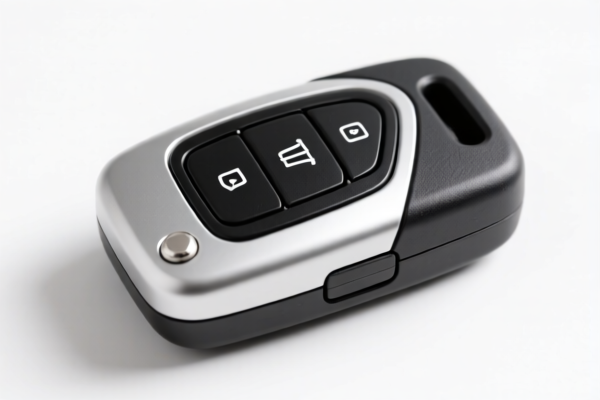
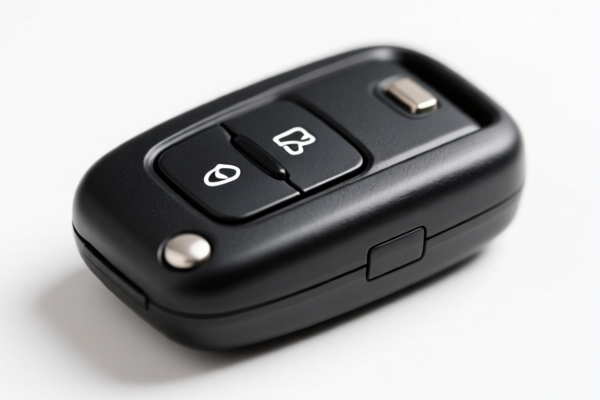
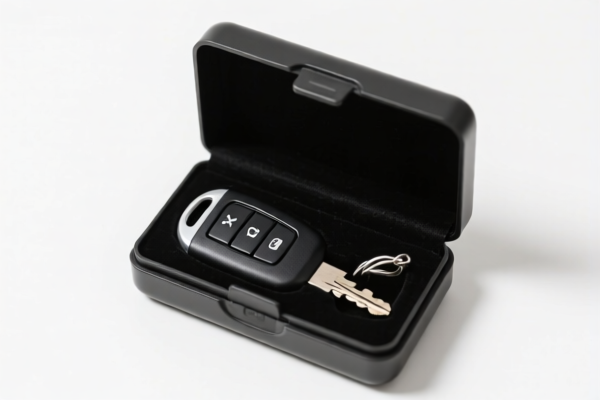
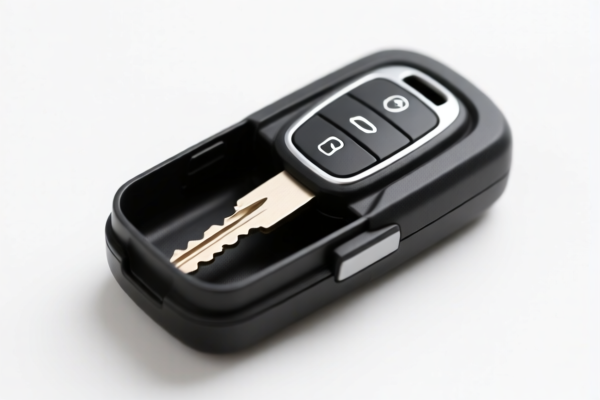
AI分析
🚗 Car Key Signal Blocking Bag (Key Fob Pouch / RFID Shielding Pouch)
🌐 HS Code Reference & Customs Clearance Guide | 2026 Latest Tariff Analysis | Professional Clearance Strategy
📌 I. Product Definition & Classification: What Exactly Is a "Signal Blocking Bag"?
A Car Key Signal Blocking Bag, often marketed as an RFID wallet, key fob pouch, or Faraday bag, is a security accessory designed to prevent unauthorized access to your vehicle. It works by creating an electromagnetic shield (Faraday cage effect) that blocks radio frequency (RF) signals between the key fob and the car, preventing "relay attacks" or signal amplification theft.
In international trade, these products are classified based on two primary factors: 1. Material Composition: Is it a textile product (fabric/woven) or a leather/plastic goods product (synthetic leather/polyurethane)? 2. Functionality: Is it categorized as a general protective case, a specific shielding material, or a container for carrying items?
⚠️ Critical Distinction:
- If made primarily of textile/fabric with metallic coating → Often falls under Chapter 63 (Other Made-up Textile Articles).
- If made primarily of synthetic leather/plastic with a rigid or semi-rigid structure → Often falls under Chapter 42 (Articles of Leather; Related Articles).
- Misclassification Risk: Declaring it as "electronic accessory" (Chapter 85) or "part of car" (Chapter 87) is incorrect. It is a textile/leather good or container.
📦 II. HS Code Classification Details (2026 Latest Tariff Authority Comparison)
Based on the provided data, here are the four most likely HS Codes for Car Key Signal Blocking Bags, ranked by logical fit and tax efficiency.
| HS Code | Product Description | Basis for Classification | Total Tax Rate |
|---|---|---|---|
6307.90.98.75 |
Shielding Material / Protective Case | Classified as "Other made-up articles" specifically linked to shielding materials or masks. Material: Metal fiber/conductive fabric. | 17.0% |
6307.90.98.91 |
Finished Protective Case (Textile) | Classified as "Other made-up articles" (finished products). Material: Fabric/composite with metal coating or conductive fibers. | 24.5% |
4202.92.97.00 |
Similar Container (Synthetic Materials) | Classified as articles of plastic sheeting or textile materials with outer surface of plastic/textile. Matches "similar containers" logic. | 52.6% |
4202.39.90.00 |
Carrying Case / Pouch (Leather/Synthetic) | Classified as "Other articles of leather/plastic," specifically pouches/bags for carrying personal items. | 55.0% |
🔍 Key Insight:
- The lowest tax rate (17.0%) applies to codes under Chapter 63 (6307...) that emphasize the shielding function or use textile materials.
- The highest tax rates (52.6% - 55.0%) apply to codes under Chapter 42 (4202...), which treat the item as a luxury or general leather/plastic good rather than a functional textile shield.
- Strategy: Argue for Chapter 63 classification by emphasizing the functional shielding material (conductive fabric) rather than just its form as a "bag."
💰 III. 2026 Latest Tariff Rate Breakdown (Including Surtaxes & Policy Add-ons)
✅ Applicable Country: United States (US)
✅ Country of Origin: China (CN)
✅ Effective Date: November 10, 2025 (and subsequent imports)
🎯 1. 6307.90.98.75 — Shielding Material / Protective Case (Recommended Low-Tax Option)
| Item | Content |
|---|---|
| Base Tariff | 7.0% |
| USITC Surtax (Section 301) | 0.0% (Note: Some 6307 items may be exempt from 25% if not specifically targeted, but data shows 0% here) |
| IEEPA Add-on (122 Clause) | +10% (Specific to China-origin goods under this classification) |
| Total Tax Rate | 17.0% |
| Tax Calculation | CIF Value × 17.0% |
| De Minimis Exemption | ❌ Not Eligible (Due to IEEPA/Section 301 surcharges) |
| Legal Basis Path | IEEPA:9903.01.24 → USITC:6307.90.98.75 → FOOTNOTE:122 |
📌 Explanation:
- This is the most cost-effective classification.
- The 0% Section 301 surtax (compared to 25% in other codes) is the key differentiator.
- The 10% IEEPA applies because it is deemed a Chinese-origin good subject to specific trade restrictions.
- Total 17% is significantly lower than the textile "finished product" code (24.5%) and vastly lower than the leather/good codes (50%+).
🎯 2. 6307.90.98.91 — Finished Protective Case (Textile Material)
| Item | Content |
|---|---|
| Base Tariff | 7.0% |
| USITC Surtax (Section 301) | +7.5% (Partial Section 301 application) |
| IEEPA Add-on (122 Clause) | +10% |
| Total Tax Rate | 24.5% |
| Tax Calculation | CIF Value × 24.5% |
| De Minimis Exemption | ❌ Not Eligible |
| Legal Basis Path | IEEPA:9903.01.24 → USITC:6307.90.98.91 → FOOTNOTE:7.5% |
📌 Explanation:
- Slightly higher than6307.90.98.75due to the 7.5% Section 301 surtax.
- Still considered a "textile-made-up article," but the specific subheading attracts a higher punitive tariff.
- Why the difference? Customs may view98.91as a general "protective case" while98.75is specifically linked to "shielding/materials."
🎯 3. 4202.92.97.00 — Similar Container (Synthetic/Plastic)
| Item | Content |
|---|---|
| Base Tariff | 17.6% |
| USITC Surtax (Section 301) | +25.0% |
| IEEPA Add-on (122 Clause) | +10% |
| Total Tax Rate | 52.6% |
| Tax Calculation | CIF Value × 52.6% |
| De Minimis Exemption | ❌ Not Eligible |
| Legal Basis Path | IEEPA:9903.01.24 → USITC:4202.92.97.00 → FOOTNOTE:25% |
📌 Explanation:
- High base tariff because Chapter 42 goods are often seen as higher-value consumer goods.
- The 25% Section 301 surtax is fully applied.
- Avoid this if possible, unless the bag is made entirely of leather/rubber/plastic with no textile component.
🎯 4. 4202.39.90.00 — Carrying Case / Pouch (Leather/Synthetic)
| Item | Content |
|---|---|
| Base Tariff | 20.0% |
| USITC Surtax (Section 301) | +25.0% |
| IEEPA Add-on (122 Clause) | +10% |
| Total Tax Rate | 55.0% |
| Tax Calculation | CIF Value × 55.0% |
| De Minimis Exemption | ❌ Not Eligible |
| Legal Basis Path | IEEPA:9903.01.24 → USITC:4202.39.90.00 → FOOTNOTE:25% |
📌 Explanation:
- The highest tax rate in the list.
- Typically applies to leather pouches or high-end synthetic leather cases.
- If your product is a simple fabric pouch, do not use this code unless it is genuinely made of leather.
🛠️ IV. Customs Clearance Practical Advice (Real-World Pitfall Avoidance)
✅ 1. Document Checklist (Essential for Smooth Clearance)
| Document | Must Provide | Notes |
|---|---|---|
| ✅ Product Specification Sheet | ✔️ | Detail material composition (e.g., "95% Polyester, 5% Silver-coated Nylon") |
| ✅ Technical Data Sheet | ✔️ | Specify RF Shielding Effectiveness (e.g., "Blocks 100MHz–10GHz signals") |
| ✅ Product Photos | ✔️ | Clear images showing the metallic interior lining (proof of shielding material) |
| ✅ Commercial Invoice | ✔️ | Describe as: "RFID Blocking Pouch, Textile Material, For Car Key Protection" |
| ✅ Origin Certificate | ✔️ | Confirm China origin to apply correct IEEPA/Section 301 rates |
✅ 2. Declaration Strategy (Key Tips)
🔥 "Emphasize Material, Not Function, to Lower Tax!"
| Situation | Correct Declaration | Wrong Declaration | Consequence |
|---|---|---|---|
| Textile Bag with Metal Lining | 6307.90.98.75 (Shielding Material) |
4202.92.97.00 (Plastic Good) |
Savings: 35.6% |
| Synthetic Leather Bag | 4202.92.97.00 |
6307.90.98.91 (Textile) |
Risk: Higher Duty + Misclassification Penalty |
| Leather Bag | 4202.39.90.00 |
6307... |
Risk: Rejection due to material mismatch |
📌 Tip:
- If the bag is made of fabric (even with a metal coating), argue for Chapter 63.
- Use terms like "Conductive Fabric," "Metal-Embedded Textile," or "RF Shielding Material" in the description.
- Avoid terms like "Leather Wallet," "Purse," or "Fashion Accessory" if it is actually a textile product.
✅ 3. Special Cases
| Scenario | Advice |
|---|---|
| OEM Custom Design | Provide design specs to prove textile dominance over plastic/leather components. |
| Multi-layer Bag | If outer layer is plastic but inner is metal textile, argue for functional shielding (Chapter 63). |
| Set with Keys | If sold with car keys, the key fob determines classification (Chapter 85/87), but the pouch is usually accessory. Separate clearance is safer. |
🌍 V. Global Market Comparison (2026 Latest)
| Country/Region | Recommended HS Code | Tariff | Notes |
|---|---|---|---|
| 🇺🇸 USA | 6307.90.98.75 |
17.0% | Lowest rate for textile-based shields. |
| 🇺🇸 USA | 4202.92.97.00 |
52.6% | High cost for synthetic/leather versions. |
| 🇪🇺 EU | 4202.32.00 |
~2.5% + VAT | Generally low duty, but VAT applies (19-27%). |
| 🇨🇳 China | 4202.32.00 |
~5% | Lower base duty, no Section 301. |
| 🇬🇧 UK | 4202.32.00 |
~5% | Post-Brexit tariff structures apply. |
📌 Conclusion:
- The USA is the most complex market due to Section 301 and IEEPA surcharges.
- Classification as Chapter 63 (Textile) is the only way to avoid the 25% Section 301 surtax that hits Chapter 42 (Leather/Plastic) goods.
- For EU/UK, the tariff difference is less critical, but material accuracy is still key.
📌 VI. Common Errors & Pitfalls (Lessons Learned)
❌ Error 1: Declaring a fabric bag as a leather good (4202...)
👉 Result: Higher duty (55% vs 17%) + potential audit for misrepresentation.
❌ Error 2: Claiming De Minimis (Section 321) exemption for shipments < $800
👉 Result: Denied. All 122/IEEPA/Section 301 surcharges void the de minimis exemption for Chinese goods.
❌ Error 3: Using vague descriptions like "Gift Bag" or "Key Holder"
👉 Result: Customs may assign a default higher tariff or hold the shipment for classification review.
❌ Error 4: Ignoring the metallic lining in photos
👉 Result: If customs sees only the outer fabric, they may classify it as a general textile (6307.90.98.91 at 24.5%) instead of the shield-specific code (6307.90.98.75 at 17.0%).
✅ Correct Approach:
"RFID Shielding Pouch, Made of Conductive Polyester Fabric with Silver-Coated Lining, Blocks 100MHz-10GHz Signals, For Automotive Key Fobs"
🎯 VII. Conclusion: Professional Clearance, Cost Efficiency
🎯 Remember the Mantra:
🔹 "Fabric is King, Leather is Expense. Chapter 63, Lower Price."
🔹 "17% vs 55%, That's the Difference. Declare Material, Not Just Form."
🔹 "No De Minimis for China, Plan for Surcharge."
📌 Pro Tip:
If your product is made of synthetic leather but contains shielding material, try to argue for Chapter 63 by highlighting the functional importance of the shielding layer. However, if it is truly leather/rubber/plastic, accept the 52.6%-55.0% rate and ensure accurate documentation to avoid penalties.
📣 Immediate Action:
📞 Consult a licensed customs broker to apply for an Advance Ruling if importing large volumes.
🚀 Optimize your supply chain by ensuring the bill of materials clearly states textile/conductive fabric composition.
✨ Precision in Classification = Savings in Customs Duties!
💼 Every percent saved is pure profit!
用户评价
关于 HS 编码归类
协调制度(HS)是由世界海关组织(WCO)制定的国际贸易商品分类标准。全球 200 多个国家采用 HS 系统作为海关关税、贸易统计和进出口监管的基础。
每个 HS 编码遵循以下层级结构:
- 章(2 位)——商品大类(例如:第 84 章:机器和机械设备)
- 品目(4 位)——章内的更具体分类
- 子目(6 位)——国际通用细分,所有 WCO 成员国统一使用
- 本国细分(8-10 位)——各国自行扩展的细分编码,如美国 HTSUS 10 位编码
正确的 HS 编码归类对于顺利通关、准确缴纳关税和遵守贸易法规至关重要。错误归类可能导致海关延误、多缴关税或罚款。
从CN进口到US时,适用的关税税率可能包括:
- 最惠国(MFN)税率——适用于 WTO 成员国的标准关税税率
- 普通税率——适用于无贸易协定国家
- 贸易救济关税——附加关税,如 301 条款(反倾销)、232 条款(国家安全)或反补贴税
本页内容仅供参考。如需正式归类,请咨询当地海关或持牌报关代理。