Car Rearview Mirror
CN → US| HS编码 | 关税税率 | 原产国 | 目的国 | 文档 |
|---|---|---|---|---|
| 8708295160 | 0.0% | CN | US | 官方文档 |
| 8708295110 | 0.0% | CN | US | 官方文档 |
| 7009100000 | 38.9% | CN | US | 官方文档 |
| 7009915010 | 41.5% | CN | US | 官方文档 |
| 9013105000 | 22.8% | CN | US | 官方文档 |
商品图片
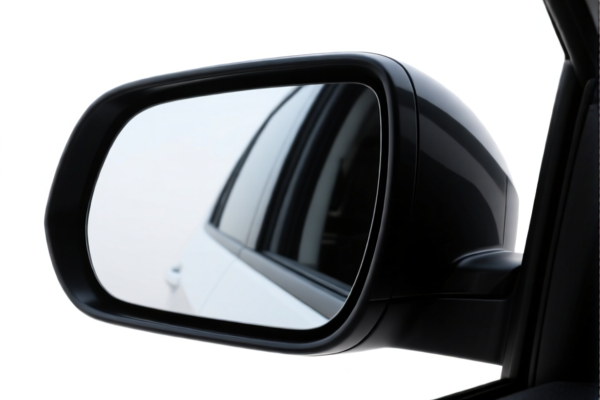
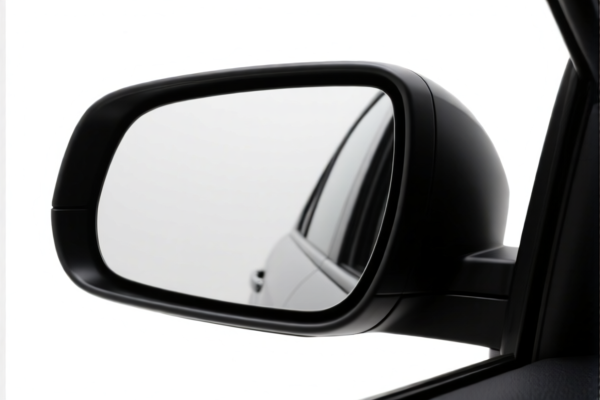
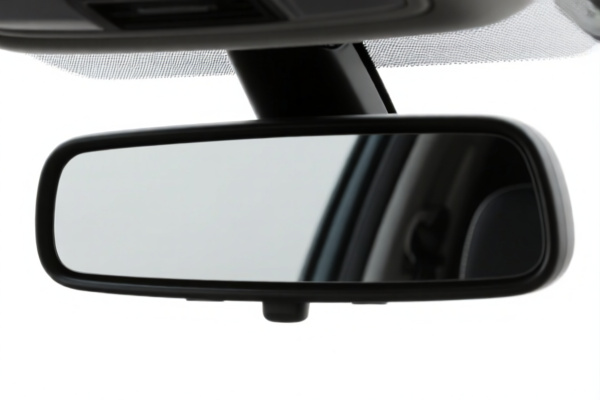

AI分析
🚗 Car Rearview Mirrors: HS Code Classification, Tax Breakdown & Clearance Strategy (2026)
🌐 HS Code Reference & Clearance Guide | 2026 Latest Tariff Analysis | Professional Customs Strategy
📌 I. Product Definition & Classification: Do You Really Understand "Rearview Mirrors"?
Car rearview mirrors are critical safety components in automotive systems. In international trade, they are classified based on their structure, material, and integration. The classification determines whether they are treated as vehicle parts (lower base duty) or glass/optical products (higher base duty), which significantly impacts the final tax burden under US Section 301 and IEEPA regulations.
⚠️ Key Distinction Point:
- If it is a complete assembly including housing, brackets, and wiring for installation on a vehicle → Classified under Chapter 87 (Vehicle Parts). - If it is a standalone glass mirror or lacks specific vehicle mounting features → Classified under Chapter 70 (Glass) or 90 (Optical Instruments).
📦 II. HS Code Classification Details (2026 Latest Tariff Authority)
| HS Code | Product Description | Application Scenario | Base Duty + Add-ons | Total Tax Rate |
|---|---|---|---|---|
8708.29.51.60 |
Other parts and accessories of bodies (including cabs); Mirror assemblies (Steel/Aluminum/Copper/Brass content triggers specific clauses) | Complete rearview mirrors with metal/plastic housing, integrated into vehicle body systems. | Base: 2.5% +301: 25.0% +122 Clause (Steel/Alu/Cu): 50% +IEEPA: 10% |
87.5% |
8708.29.51.10 |
Other parts and accessories of bodies; General mirror assemblies (Non-ferrous/Plastic dominant) | Rearview mirrors made primarily of plastic or non-susceptible metals, falling under general vehicle part categories. | Base: 2.5% +301: 25.0% +122 Clause: 10% +IEEPA: 10% |
47.5% |
7009.10.00.00 |
Glass mirrors, including rear-view mirrors, not fitted | Unfitted glass mirrors. The summary states this matches the product usage "completely." Often applies to aftermarket or loose glass units. | Base: 3.9% +301: 25.0% +122 Clause: 10% +IEEPA: 10% |
38.9% |
7009.91.50.10 |
Other glass mirrors, fitted or not | Mirrors classified as general glass mirrors, potentially with fittings but not strictly as "vehicle parts" in Chapter 87. High base duty due to glass nature. | Base: 6.5% +301: 25.0% +122 Clause: 10% +IEEPA: 10% |
41.5% |
9013.10.50.00 |
Laser beams, other lasers and optical appliances; Other optical appliances and instruments, n.e.s. | Classified as optical appliances (reflective mirrors). This is a "catch-all" for optical devices that don't fit strictly into medical or automotive parts categories. | Base: 5.3% +301: 7.5% +122 Clause: 10% +IEEPA: 7.5%* (Note: Data shows 7.5% add-on here) |
22.8% |
🔍 Important Note:
-8708.29.51.60carries the highest tax burden (87.5%) due to the 122 Clause targeting steel, aluminum, and copper products. If your mirror contains significant ferrous/non-ferrous metal components, this applies. -9013.10.50.00offers the lowest tax rate (22.8%) by classifying the item as an "optical appliance." This requires proving the item is primarily an optical device rather than a structural vehicle part. -7009.10.00.00is a strong candidate if the mirror is sold unfitted (just the glass/reflector assembly).
💰 III. 2026 Latest Tariff Rate Explanation (Detailed Breakdown)
✅ Applicable Country: United States (US)
✅ Origin: China (CN)
✅ Effective Date: Post-November 2025 (Including subsequent imports)
🎯 1. 8708.29.51.60 —— Vehicle Body Parts (Metal/Raw Materials Susceptible)
| Item | Detail |
|---|---|
| Base Duty | 2.5% |
| USITC Add-on (Sec 301) | +25.0% |
| 122 Clause Add-on | +50.0% (Applies to Steel, Aluminum, Copper products) |
| IEEPA Add-on | +10.0% |
| Total Rate | 87.5% |
| Calculation | CIF Value × 87.5% |
| De Minimis Exemption | ❌ Denied |
| Legal Path | USITC:8708.29.51.60 → FOOTNOTE:122 Clause → IEEPA:9903.01.25 |
📌 Explanation:
This is the most expensive classification. It applies if the mirror is considered a vehicle part (8708) AND contains steel/aluminum/copper (122 Clause). The 50% additional duty is specific to raw material imports or products heavily reliant on these metals.
🎯 2. 8708.29.51.10 —— Vehicle Body Parts (General/Plastic Dominant)
| Item | Detail |
|---|---|
| Base Duty | 2.5% |
| USITC Add-on (Sec 301) | +25.0% |
| 122 Clause Add-on | +10.0% (Limited application) |
| IEEPA Add-on | +10.0% |
| Total Rate | 47.5% |
| Calculation | CIF Value × 47.5% |
| De Minimis Exemption | ❌ Denied |
| Legal Path | USITC:8708.29.51.10 → IEEPA:9903.01.24 |
📌 Note:
Lower than51.60because it avoids the heavy 122 Clause penalty, likely due to material composition (e.g., plastic housing). Still a high tax burden due to the 25% + 10% + 10% stack.
🎯 3. 7009.10.00.00 —— Unfitted Glass Mirrors
| Item | Detail |
|---|---|
| Base Duty | 3.9% |
| USITC Add-on (Sec 301) | +25.0% |
| 122 Clause Add-on | +10.0% |
| IEEPA Add-on | +10.0% |
| Total Rate | 38.9% |
| Calculation | CIF Value × 38.9% |
| De Minimis Exemption | ❌ Denied |
| Legal Path | USITC:7009.10.00.00 → IEEPA:9903.01.24 |
📌 Explanation:
If the product is classified as a glass mirror (7009) rather than a vehicle part, the base duty increases slightly (3.9% vs 2.5%), but it avoids the heavy metal-specific penalties of Chapter 87. This is a viable middle ground if the product is unfitted.
🎯 4. 9013.10.50.00 —— Optical Appliances (Lowest Tax)
| Item | Detail |
|---|---|
| Base Duty | 5.3% |
| USITC Add-on (Sec 301) | +7.5% |
| 122 Clause Add-on | +10.0% |
| IEEPA Add-on | +7.5% (Note: Data shows lower add-on here) |
| Total Rate | 22.8% |
| Calculation | CIF Value × 22.8% |
| De Minimis Exemption | ❌ Denied |
| Legal Path | USITC:9013.10.50.00 → IEEPA:9903.01.25 |
📌 Strategy:
This is the most cost-effective classification at 22.8%. It requires arguing that the mirror is an optical instrument (9013) rather than a vehicle component. This is legally risky but financially significant.
🛠️ IV. Clearance Practical Advice (Pitfall Avoidance Guide)
✅ 1. Documentation Checklist (Mandatory)
| Document | Required | Description |
|---|---|---|
| ✅ Product Specifications | ✔️ | Material composition (Plastic vs. Metal vs. Glass), dimensions, mounting type. |
| ✅ Structural Diagrams | ✔️ | Show if it includes housing/brackets (suggests Ch 87) or is just glass (suggests Ch 70/90). |
| ✅ Product Photos | ✔️ | Clear images of the mirror, labeling, and any electronic components. |
| ✅ Commercial Invoice | ✔️ | Accurate description: e.g., "Rearview Mirror Assembly" vs. "Glass Reflective Mirror." |
| ✅ Certificate of Origin | ✔️ | Required for determining origin-based tariffs (China CN triggers all add-ons). |
| ✅ HS Code Pre-Ruling | ✔️ | Highly Recommended to avoid disputes between Ch 87, 70, and 90. |
✅ 2. Declaration Techniques (Key Mantras)
🔥 "Material Dictates Code, Integration Dictates Duty!"
| Scenario | Correct Declaration | Error Consequence |
|---|---|---|
| Complete Mirror with Housing/Wiring | 8708.29.51.10 or 51.60 |
If misdeclared as 7009, risk of penalty for incorrect classification. |
| Loose Glass Mirror (No Housing) | 7009.10.00.00 |
If declared as 8708, you pay 87.5% instead of 38.9%. |
| Optical Mirror (Reflective Element) | 9013.10.50.00 |
If declared as 8708, you pay 87.5% instead of 22.8%. |
| Mirror with Steel Housing | 8708.29.51.60 |
Avoiding 51.60 requires proving minimal steel content. |
✅ 3. Special Handling
| Situation | Handling Advice |
|---|---|
| OEM Parts for Car Makers | Must declare as 8708 (Vehicle Parts). Do not attempt 9013 if intended for direct assembly. |
| Aftermarket Glass Replacement | Declare as 7009.10.00.00 (Unfitted Glass Mirror) to save tax. |
| Smart Mirrors (Cameras/Displays) | If it has digital components, it might fall under 8528 (Monitors) or 9013 (Optical/Electronic). Check carefully! |
| Plastic-Housed Mirrors | Aim for 8708.29.51.10 to avoid the 50% Steel/Alu tax. |
🌍 V. Global Market Comparison (2026)
| Country/Region | Recommended HS Code | Estimated Tax (China Origin) | Notes |
|---|---|---|---|
| 🇺🇸 USA | 9013.10.50.00 |
22.8% (Lowest) | Avoid 8708 if possible due to 301+IEEPA+122 penalties. |
| 🇨🇳 China | 8708.29.51.10 |
~2.5% - 5% | Low import duty, no US-style add-ons. |
| 🇪🇺 EU | 7009.10.00.00 |
~3.9% - 6% | Check for EU-specific carbon taxes or green regulations. |
| 🇦🇺 Australia | 8708.29.51.10 |
~5% - 10% | No Section 301 equivalent, but GST applies. |
| 🇯🇵 Japan | 7009.10.00.00 |
~6.5% - 8% | Standard MFN rates apply. |
📌 Conclusion:
- The US market is the most challenging due to layered tariffs (Base + 301 + IEEPA + 122). - Optimization Strategy: For the US, try to classify as9013(Optical) or7009(Glass) if the product structure allows, to save up to 65% in taxes compared to8708.
📌 VI. Common Mistakes & Pitfalls (Lessons Learned)
❌ Mistake 1: Declaring a plastic-housed mirror as 8708.29.51.60
👉 Result: Unnecessary 50% 122 Clause tax.
✅ Fix: Prove housing is plastic/non-metallic → Use 8708.29.51.10.
❌ Mistake 2: Declaring a complete vehicle assembly as 7009 (Glass)
👉 Result: Customs rejection, delay, or penalty for misclassification.
✅ Fix: If it has a bracket/wiring for direct vehicle installation, use 8708.
❌ Mistake 3: Ignoring the 122 Clause for metal components
👉 Result: Surprise 50% surcharge.
✅ Fix: Analyze material composition (Bill of Materials) carefully.
❌ Mistake 4: Assuming De Minimis (Section 321) applies
👉 Result: 87.5% tax applied to small packages.
✅ Fix: No De Minimis exemption for China-origin goods under current IEEPA/301 rules.
🎯 VII. Conclusion: Professional Declaration, Cost Savings, Efficient Clearance!
🎯 Remember the Mantra:
🔹 "Metal triggers 122, Plastic saves 50, Glass/Optical saves 65!"
🔹 "HS Code decides tax, classification error costs thousands!"
📌 Pro Tip:
If your mirrors are smart mirrors (with cameras/screens), consider 8528 (Monitors) or 9013 (Optical/Electronic) to avoid the 8708 trap.
Always apply for an Advance Ruling with US Customs (CBP) before shipping high-value lots to mitigate risk.
📣 Immediate Action:
📞 Consult a licensed customs broker + Provide BOM (Bill of Materials) + Apply for HS Pre-Ruling
🚀 Ensure your Car Rearview Mirrors clear US customs smoothly, efficiently, and profitably!
✨ Professional clearance starts with precise classification!
💼 Every cent saved is pure profit!
用户评价
关于 HS 编码归类
协调制度(HS)是由世界海关组织(WCO)制定的国际贸易商品分类标准。全球 200 多个国家采用 HS 系统作为海关关税、贸易统计和进出口监管的基础。
每个 HS 编码遵循以下层级结构:
- 章(2 位)——商品大类(例如:第 84 章:机器和机械设备)
- 品目(4 位)——章内的更具体分类
- 子目(6 位)——国际通用细分,所有 WCO 成员国统一使用
- 本国细分(8-10 位)——各国自行扩展的细分编码,如美国 HTSUS 10 位编码
正确的 HS 编码归类对于顺利通关、准确缴纳关税和遵守贸易法规至关重要。错误归类可能导致海关延误、多缴关税或罚款。
从CN进口到US时,适用的关税税率可能包括:
- 最惠国(MFN)税率——适用于 WTO 成员国的标准关税税率
- 普通税率——适用于无贸易协定国家
- 贸易救济关税——附加关税,如 301 条款(反倾销)、232 条款(国家安全)或反补贴税
本页内容仅供参考。如需正式归类,请咨询当地海关或持牌报关代理。