Carbon Paper (Roll)
CN → US| HS编码 | 关税税率 | 原产国 | 目的国 | 文档 |
|---|---|---|---|---|
| 4823901000 | 35.0% | CN | US | 官方文档 |
| 4823902000 | 35.0% | CN | US | 官方文档 |
| 4823908000 | 35.0% | CN | US | 官方文档 |
商品图片
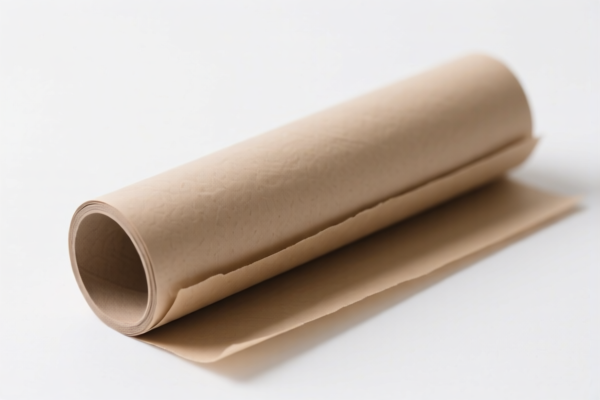

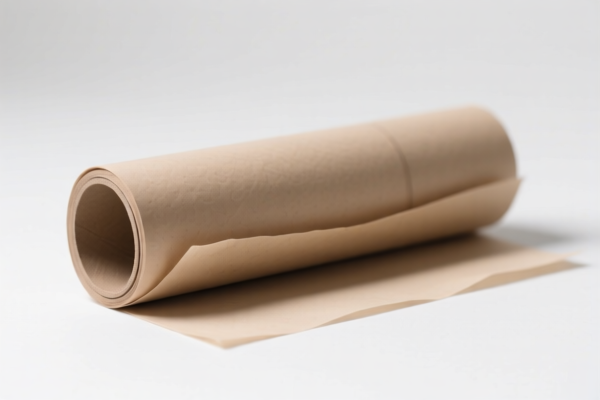

AI分析
🖋️ Carbon Paper (Roll) – HS Code Classification & US Customs Clearance Guide (2026)
🌐 HS Code Reference & Clearance Strategy | 2026 Latest Tariff Analysis | Expert-Level Compliance
📌 I. Product Definition & Classification: What Exactly is "Carbon Paper"?
Carbon paper is a thin sheet of paper coated with dry ink or pigment on one side, used to produce copies of documents when pressure is applied (e.g., via typewriter or handwritten notes). In international trade, despite its name implying a specific function, it is classified primarily under Chapter 48 (Paper and Paperboard) because its fundamental material is cellulose/pulp-based.
⚠️ Key Distinction:
- Even if described as "for copying" or "carbonated," it is not classified as a printing device or electronic accessory.
- The form factor (roll vs. sheet) and packaging (box vs. loose) determine the specific sub-heading.
- Crucial Note: In current trade contexts (especially US-China relations), carbon paper is heavily scrutinized due to significant Section 301 and IEEPA tariffs.
📦 II. HS Code Classification Details (2026 Latest Tariff Authority)
Based on the provided data, Carbon Paper (Roll) falls under Heading 4823 (Other articles of paper pulp, paper, cellulose fiberboard and paperboard). The following are the most relevant HS Codes found in the reference data, along with their logical derivations:
| HS Code | Product Description | Application Scenario | Material/Form Logic |
|---|---|---|---|
| 4823.90.10.00 | Carbon Paper (Boxed/Packaged) | Standard retail or B2B packs where sheets are pre-cut and boxed. | Explicitly defined as "Carbon Paper (Boxed)" in the data. Material: Paper; Form: Cut to size. |
| 4823.90.20.00 | Carbon Paper (General Paper Product) | General classification for carbon paper as a paper product. | Defined as "Paper Product," fitting the general category of pulp/paper goods. |
| 4823.90.80.00 | Carbon Paper (General/Other Paper Articles) | Rolls, loose sheets, or other forms not specifically listed elsewhere. | Defined as "Paper Product," consistent with paper/cardboard articles. Often inferred as gasket/seal-like forms in some industrial contexts, but fundamentally paper. |
🔍 Important Clarification from Data:
- The reference data repeatedly cites 4823.90.80.00 as a catch-all for carbon paper where the material is "paper/cellulose-based" and the form is "paper product."
- Even if the summary mentions "gaskets/seals" (垫片/密封件), this is likely a misinterpretation by automated systems; Carbon Paper is NOT a mechanical seal. It is Paper. Always emphasize "Paper Product" in declarations to avoid confusion with rubber/metal gaskets (which have different tariffs).
- 4823.90.10.00 is specifically flagged for "Boxed" carbon paper. If your product is in a roll, 4823.90.80.00 or 4823.90.20.00 are more appropriate, as rolls are not "cut to size" in the same way boxed sheets are.
💰 III. 2026 Latest Tariff Rate Breakdown (Including Surcharges & Policy Add-ons)
✅ Applicable Country: United States (US)
✅ Country of Origin: China (CN)
✅ Effective Time: 2025/2026 (Current Trade War Context)
🎯 1. General Rate for Carbon Paper (All HS Codes: 4823.90.xx)
According to the provided data, the tax structure is identical across the referenced HS codes:
| Item | Detail |
|---|---|
| Base Tariff | 0.0% (Ad Valorem) |
| Section 301 Additional Tariff | +25.0% |
| Section 122 Tariff (IEEPA) | +10.0% |
| Total Effective Tariff Rate | 35.0% |
| Tax Calculation | CIF Value × 35% |
| De Minimis Exemption | ❌ Not Eligible (Deny de minimis for China-origin goods under these sections) |
| Legal Basis Path | Section 301: Footnote 9903.88.01 → IEEPA: Section 122 → HS: 4823.90.xx |
📌 Explanation of Tariffs:
- 0% Base: Paper products generally have low base tariffs.
- +25% Section 301: This is the primary "Trade War" tariff imposed on a wide range of Chinese goods, including paper products.
- +10% IEEPA (122 Clause): This refers to tariffs imposed under the International Emergency Economic Powers Act, often applied to specific Chinese imports as part of broader economic sanctions or trade measures.
- Total 35%: This is a significant cost burden. Importers must factor this into their landed cost calculations.
🛠️ IV. Customs Clearance Practical Advice (Real-World Pitfall Avoidance)
✅ 1. Documentation Checklist (Must-Haves)
| Document | Required | Notes |
|---|---|---|
| ✅ Commercial Invoice | ✔️ | Must clearly state "Carbon Paper" or "Carbon Copy Paper." Do not use vague terms like "Paper Sheets." |
| ✅ Product Specification | ✔️ | Specify: Material (Paper/Cellulose), Coating (Dry Ink), Form (Roll/Sheet), Dimensions. |
| ✅ Packing List | ✔️ | Detail gross weight, net weight, number of rolls/sheets per box. |
| ✅ Certificate of Origin | ✔️ | Critical for proving origin (China). Misdeclaration of origin can lead to severe penalties. |
| ✅ Bill of Lading/Air Waybill | ✔️ | Standard shipping document. |
✅ 2. Declaration Tips (Critical Keywords)
🔥 Golden Rule: "Be Specific, Be Accurate, Be Paper."
| Scenario | Correct Declaration | Incorrect Declaration | Consequence of Error |
|---|---|---|---|
| Carbon Paper in Roll | "Carbon Paper, Paper Product, Roll Form, HS 4823.90.80.00" | "Copying Paper" or "Print Media" | Risk of reclassification to higher-tariff categories or delays. |
| Carbon Paper in Box | "Carbon Paper (Boxed), Paper Product, HS 4823.90.10.00" | "Office Supplies" | Vague description may trigger additional inspection. |
| Origin Declaration | "Country of Origin: China" | "Made in [Another Country]" (if false) | Fraud penalties, seizure, and back taxes. |
| Description | "Paper coated with dry ink for copying" | "Electronic Document Copy" | Misclassification as electronics (higher tariff). |
✅ 3. Special Cases & Mitigation
| Situation | Handling Advice |
|---|---|
| Mixed Shipments | If carbon paper is mixed with non-tariffed items (e.g., plastic rollers), declare separately to avoid applying 35% to the entire shipment. |
| Re-export/Transshipment | Ensure proper bond and documentation if transiting through a third country. US Customs scrutinizes "origin laundering." |
| Small Quantity Samples | Even small quantities are subject to the 35% tariff. Do not assume "de minimis" applies to China-origin goods under these specific clauses. |
| Alternative Materials | If using synthetic or plastic-based "carbon-less" paper, the HS Code may change (e.g., to Chapter 39 for plastics), potentially altering the tariff. Verify material composition. |
🌍 V. Global Market Comparison (2026)
| Country/Region | Recommended HS Code | Tariff (China Origin) | Notes |
|---|---|---|---|
| 🇺🇸 USA | 4823.90.80.00 / 4823.90.10.00 |
35% (0% Base + 25% Sec 301 + 10% IEEPA) | High tariff impact. Plan pricing accordingly. |
| 🇨🇳 China | 4823.90.80.00 |
~0-5% (Depends on specific entry) | Lower import tariffs, but focus is on export compliance. |
| 🇪🇺 EU | 4823.90.90 |
~6.5% | Standard MFN rate. No additional Section 301-style tariffs. |
| 🇬🇧 UK | 4823.90.90 |
~6.5% | Post-Brexit tariff alignment similar to EU. |
| 🇯🇵 Japan | 4823.90.90 |
~0-5% | Favorable trade agreement rates may apply. |
📌 Conclusion:
- The US market is uniquely expensive for Chinese-origin carbon paper due to the combination of Section 301 and IEEPA tariffs.
- Importers should consider supply chain diversification (e.g., sourcing from Vietnam or Thailand if possible) to mitigate the 35% cost, though "Country of Origin" rules are strict.
📌 VI. Common Errors & Pitfalls (Lessons Learned)
❌ Error 1: Declaring as "Office Supplies" without specific HS Code
👉 Consequence: Customs may assign a default code with higher tariffs or delay shipment for classification review.
❌ Error 2: Ignoring the "122 Clause" (IEEPA) Tariff
👉 Consequence: Underpaying by 10%. Leads to back taxes, interest, and potential penalties.
❌ Error 3: Confusing "Carbon Paper" with "Carbon-less Paper" (NCR Paper)
👉 Consequence: NCR paper may have different classifications (sometimes under plastics or chemicals). Ensure accurate material description.
❌ Error 4: Not specifying "Roll" vs. "Box"
👉 Consequence: Incorrect sub-heading selection (e.g., using 4823.90.10.00 for rolls) may lead to audit issues if the physical goods don't match the "Boxed" description.
✅ Correct Approach:
"Carbon Paper, Paper Product, Coated for Copying, Form: Roll, HS Code: 4823.90.80.00, Origin: China, Tariff: 35% (Including Sec 301 & IEEPA)"
🎯 VII. Conclusion: Professional Declaration, Cost Control
🎯 Remember the Key Takeaways:
🔹 "Carbon Paper is Paper, not a Device."
🔹 "China Origin = 35% Total Tariff in the US."
🔹 "Specify 'Roll' or 'Box' to match the correct HS Sub-heading."
🔹 "Document Everything: Invoice, Spec, CO."
📌 Pro Tip:
If you are importing large volumes, consider applying for a Section 301 Exclusion if applicable (though these are rare and often expire). Alternatively, explore duty drawback programs if re-exporting the final product.
📣 Immediate Action:
📞 Consult a licensed customs broker.
📄 Prepare detailed product specifications highlighting "Paper" and "Cellulose" content.
🧮 Calculate landed cost including the 35% total tariff.
🚀 Ensure smooth clearance and cost predictability!
✨ Professional clearance starts with accurate classification!
💼 Every percentage point counts in the age of trade tariffs!
用户评价
关于 HS 编码归类
协调制度(HS)是由世界海关组织(WCO)制定的国际贸易商品分类标准。全球 200 多个国家采用 HS 系统作为海关关税、贸易统计和进出口监管的基础。
每个 HS 编码遵循以下层级结构:
- 章(2 位)——商品大类(例如:第 84 章:机器和机械设备)
- 品目(4 位)——章内的更具体分类
- 子目(6 位)——国际通用细分,所有 WCO 成员国统一使用
- 本国细分(8-10 位)——各国自行扩展的细分编码,如美国 HTSUS 10 位编码
正确的 HS 编码归类对于顺利通关、准确缴纳关税和遵守贸易法规至关重要。错误归类可能导致海关延误、多缴关税或罚款。
从CN进口到US时,适用的关税税率可能包括:
- 最惠国(MFN)税率——适用于 WTO 成员国的标准关税税率
- 普通税率——适用于无贸易协定国家
- 贸易救济关税——附加关税,如 301 条款(反倾销)、232 条款(国家安全)或反补贴税
本页内容仅供参考。如需正式归类,请咨询当地海关或持牌报关代理。