Carbon Paper and Transfer Paper
CN → US| HS编码 | 关税税率 | 原产国 | 目的国 | 文档 |
|---|---|---|---|---|
| 4809202000 | 35.0% | CN | US | 官方文档 |
| 4811493000 | 35.0% | CN | US | 官方文档 |
| 4816200000 | 35.0% | CN | US | 官方文档 |
| 4816900100 | 35.0% | CN | US | 官方文档 |
| 4809204000 | 35.0% | CN | US | 官方文档 |
商品图片
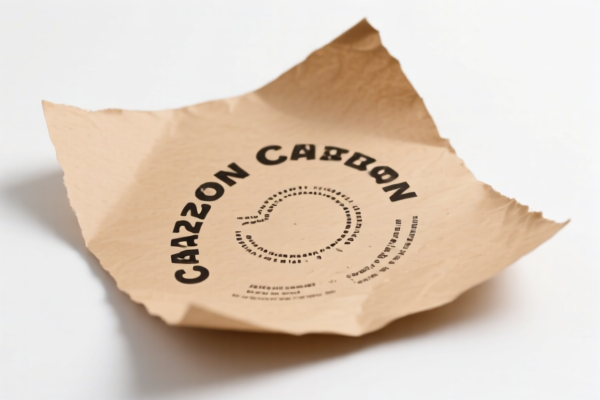


AI分析
📝 Carbon Paper & Transfer Paper (复写纸与转印纸)
🌐 HS Code Reference & Customs Clearance Guide | 2026 Latest Tariff Analysis | Professional Clearance Strategy
📌 I. Product Definition & Classification: What Exactly Are We Shipping?
Carbon Paper (复写纸) and Transfer Paper (转印纸/无碳复写纸) are essential stationery items used for creating duplicate copies of documents without the need for ink cartridges or digital printers. In international trade, they are classified under Chapter 48 (Paper and Paperboard), but their specific HS codes depend heavily on their manufacturing process, coating type, and intended use.
⚠️ Key Distinction:
- Carbon Paper: Typically refers to paper coated with a dry ink or wax layer on one side, used between sheets to make carbon copies.
- Transfer Paper / NCR Paper (No Carbon Required): Refers to papers coated with micro-encapsulated dyes or clays that react under pressure to create a copy without separate carbon sheets.
- Decorative/Colored Papers: Sometimes "transfer paper" is confused with decorative coated papers used for arts and crafts, which fall under different subheadings.
📦 II. HS Code Classification Details (2026 Latest Tariff Authority Match)
Based on the provided <DATA>, all identified HS codes for "Carbon Paper" share the same total tax rate structure. Below is the detailed breakdown:
| HS Code | Product Description | Matching Summary (From Data) | Key Characteristics |
|---|---|---|---|
4809.20.20.00 |
Carbon Paper | "Material and usage fully match the classification explanation." | Standard carbon-coated paper for manual duplication. |
4811.49.30.00 |
Carbon Paper (Coated/Colored) | "Belongs to coated, colored, or decorated paper products, classified under other categories." | Paper with surface coating/coloring, possibly self-copying variants. |
4816.20.00.00 |
Carbon Paper | "Name and classification explanation fully consistent; material and usage match." | General category for carbon copy paper (often NCR types). |
4816.90.01.00 |
Carbon Paper | "Fully matches classification in terms of usage and form." | Other carbon/transfer papers not specified elsewhere. |
4809.20.40.00 |
Carbon Paper (Self-copying) | "Consistent in usage and material attributes with self-copying carbon paper." | Specifically highlights Self-copying (NCR) attributes. |
4811.49.21.00 |
Carbon Paper | "Material is paper/cardboard; usage involves coating or surface coloring treatment." | Focuses on the coating process (coated paper). |
4811.90.80.50 |
Carbon Paper | "Belongs to paper media, meets paper/cardboard material requirements, classified under others." | General category for paper media not elsewhere specified. |
🔍 重点提醒 (Critical Note):
- All HS codes listed above result in the same total tax rate for US imports from China.
- The distinction between these codes lies in nomenclature precision during customs declaration. Using the most specific code (e.g.,4816.20.00.00for standard carbon copy paper) reduces the risk of customs queries.
- Do not confuse with artistic transfer papers for fabric (Chapter 49 or 59) or thermal paper (Chapter 48 but different subheadings).
💰 III. 2026 Latest Tariff Rate Breakdown (Including Surcharges & Policy Add-ons)
✅ Applicable Country: United States (US)
✅ Origin: China (CN)
✅ Effective Time: 2025 November 10 onwards (including subsequent imports)
🎯 1. General Rate for All Listed HS Codes (4809.20.20.00, 4811.49.30.00, 4816.20.00.00, etc.)
| Item | Content |
|---|---|
| Base Tariff | 0.0% (Ad Valorem) |
| Section 301 Tariff | +25.0% (USITC Footnote associated with Chapter 48 paper products from China) |
| Section 122 Tariff | +10.0% (Additional surcharge for specific Chinese-origin goods) |
| Total Tariff Rate | 35.0% |
| Tax Calculation | CIF Value × 35% |
| De Minimis Exemption | ❌ NOT APPLICABLE (Deny De Minimis) |
| Legal Authority Path | USITC:4809/4811/4816 → SECTION 301: 25% → SECTION 122: 10% |
📌 Explanation:
- "Base Tariff 0%": Standard USMFN rate for paper products is often 0% or very low.
- "Section 301 Tariff 25%": This is the major trade war tariff applied to many Chinese goods, including paper products.
- "Section 122 Tariff 10%": This refers to additional duties under specific executive orders or trade acts targeting Chinese imports.
- Total 35%: This is a significant cost factor. Importers must calculate this into their landed cost carefully.
- No De Minimis: Shipments valued under $800 (Section 321) do not qualify for exemption. All shipments are subject to these tariffs.
🛠️ IV. Customs Clearance Practical Advice (Avoid Pitfalls)
✅ 1. Required Documentation Checklist (No Omissions)
| Document | Mandatory? | Description |
|---|---|---|
| ✅ Product Specification Sheet | ✔️ | Must detail: Paper weight (gsm), coating type, dimensions, packaging quantity. |
| ✅ Material Safety Data Sheet (MSDS) | ✔️ | Essential if the paper contains chemical coatings (ink, clay, dye capsules). |
| ✅ Commercial Invoice | ✔️ | Must clearly state: "Carbon Paper for Document Duplication" or "NCR Paper". Avoid vague terms like "Office Supplies". |
| ✅ Packing List | ✔️ | Detail gross/net weight, number of boxes, and contents per box. |
| ✅ Certificate of Origin (CO) | ✔️ | To prove origin as China (CN) for tariff application. |
| ✅ HS Code Pre-Ruling (Optional but Recommended) | ✔️ | Apply for a binding ruling to confirm the correct HS code among the 7 options. |
✅ 2. Declaration Tips (Key Mantras)
🔥 “Coating Defines Category, Usage Defines Sub-heading, Name Must Be Precise!”
| Scenario | Correct Declaration | Wrong Practice |
|---|---|---|
| Standard Carbon Paper (ink-coated) | 4809.20.20.00 or 4809.20.40.00 |
Vague: "Copy Paper" → Risk of misclassification |
| NCR Paper (No Carbon Required) | 4816.20.00.00 |
Vague: "Paper Sheets" → Delay for further inspection |
| Coated/Decorated Paper | 4811.49.30.00 or 4811.49.21.00 |
Mislabeling as "Printing Paper" (different tariff) |
| General Paper Media | 4811.90.80.50 or 4816.90.01.00 |
Using too broad a code when a specific one fits |
📌 Note:
- Ensure the HS Code selected matches the exact product type.
- For NCR Paper,4816.20.00.00is the most commonly accepted code globally.
- For Traditional Carbon Paper (with ink coating),4809series is more accurate.
✅ 3. Special Cases Handling
| Situation | Handling Advice |
|---|---|
| Mixed Packages (Carbon + NCR + Regular Paper) | Declare separately if possible. Mixed declarations may lead to disputes on which tariff applies to which item. |
| Sample Shipments | Still subject to 35% tariff. Do not mark as "Free Sample" to avoid customs penalties. |
| Private Label | Provide manufacturer details. US Customs may verify if the product truly matches the declared HS code. |
| Thermal Paper | Different HS Code (e.g., 4823). Ensure you are not declaring thermal paper as carbon paper. |
🌍 V. Global Market Customs Comparison (2026 Latest)
| Country/Region | Recommended HS Code | Tariff Rate (China Origin) | Certification | Notes |
|---|---|---|---|---|
| 🇺🇸 USA | 4816.20.00.00 (NCR) |
35% (Base 0% + 301 25% + 122 10%) | None typically | High tariff burden. |
| 🇨🇳 China | 4816.20.00.00 |
5-10% | CCC (if applicable) | Domestic trade uses standard codes. |
| 🇪🇺 EU | 4816.90 |
0-6.5% | REACH (Chemical compliance) | Lower tariffs, but strict chemical regulations. |
| 🇬🇧 UK | 4816.90 |
0-6.5% | UKCA | Post-Brexit rules apply. |
| 🇦🇺 Australia | 4816.90 |
5% | GMS (General Market Standard) | No additional surcharges. |
📌 Conclusion:
- USA is the most expensive market for Carbon Paper due to the 35% combined tariff.
- EU and UK have lower tariffs but stricter chemical safety regulations (REACH) due to paper coatings.
- China has moderate tariffs.
📌 VI. Common Errors & Pitfalls (Lessons Learned)
❌ Error 1: Declaring Carbon Paper as "Printing Paper" (4802)
👉 Consequence: Misclassification. Customs may assess back-tariffs or impose penalties. The correct code is 4809 or 4816.
❌ Error 2: Ignoring the "Section 122" 10% Surcharge
👉 Consequence: Underpayment of duties. The total cost is 35%, not just 25%. This leads to unexpected costs at customs.
❌ Error 3: Using "De Minimis" for small shipments
👉 Consequence: Denied. Section 321 (De Minimis) does not apply to goods from China under Section 301 and Section 122. All shipments are taxed.
❌ Error 4: Vague Description: "Office Supplies"
👉 Consequence: High risk of customs inspection. Delayed clearance. Provide precise description: "NCR Carbon Copy Paper, 1-ply, 8.5x11 inches".
✅ Correct Practice:
"Carbon Copy Paper, NCR Type, No Carbon Required, Coated Paper, Box of 500 Sheets, Model XYZ, Origin China"
🎯 VII. Conclusion: Professional Declaration Saves Money
🎯 Key Takeaways:
🔹 "35% Total Tariff is Inevitable for China Origin" – Budget accordingly.
🔹 "Use4816.20.00.00for NCR Paper" – Most accurate for modern carbonless copy paper.
🔹 "Use4809.20.20.00for Traditional Carbon Paper" – For ink-coated sheets.
🔹 "Declare Precisely" – Avoid vague terms to speed up customs clearance.
📌 Pro Tip:
If you are importing large volumes, consider Applying for an Exclusion under Section 301 if available (check USTR website periodically), though this is rare for basic paper products.
Alternatively, explore supply chain diversification (e.g., sourcing from Vietnam or Thailand) to potentially avoid the 25% + 10% surcharges, though origin rules must be strictly met.
📣 Immediate Action:
📞 Consult with a licensed customs broker to verify the exact HS code for your specific product formulation.
📄 Prepare MSDS and Technical Data Sheets in advance.
🚀 Ensure your commercial invoice clearly states the product type and HS code to avoid delays.
✨ Professional customs clearance starts with accurate classification!
💼 Every percentage point in tariff matters! Calculate wisely!
用户评价
关于 HS 编码归类
协调制度(HS)是由世界海关组织(WCO)制定的国际贸易商品分类标准。全球 200 多个国家采用 HS 系统作为海关关税、贸易统计和进出口监管的基础。
每个 HS 编码遵循以下层级结构:
- 章(2 位)——商品大类(例如:第 84 章:机器和机械设备)
- 品目(4 位)——章内的更具体分类
- 子目(6 位)——国际通用细分,所有 WCO 成员国统一使用
- 本国细分(8-10 位)——各国自行扩展的细分编码,如美国 HTSUS 10 位编码
正确的 HS 编码归类对于顺利通关、准确缴纳关税和遵守贸易法规至关重要。错误归类可能导致海关延误、多缴关税或罚款。
从CN进口到US时,适用的关税税率可能包括:
- 最惠国(MFN)税率——适用于 WTO 成员国的标准关税税率
- 普通税率——适用于无贸易协定国家
- 贸易救济关税——附加关税,如 301 条款(反倾销)、232 条款(国家安全)或反补贴税
本页内容仅供参考。如需正式归类,请咨询当地海关或持牌报关代理。