Carbonless Form Paper
CN → US| HS编码 | 关税税率 | 原产国 | 目的国 | 文档 |
|---|---|---|---|---|
| 4820400000 | 35.0% | CN | US | 官方文档 |
| 4811908050 | 35.0% | CN | US | 官方文档 |
| 4819200040 | 35.0% | CN | US | 官方文档 |
| 4820104000 | 35.0% | CN | US | 官方文档 |
| 4811904090 | 35.0% | CN | US | 官方文档 |
商品图片
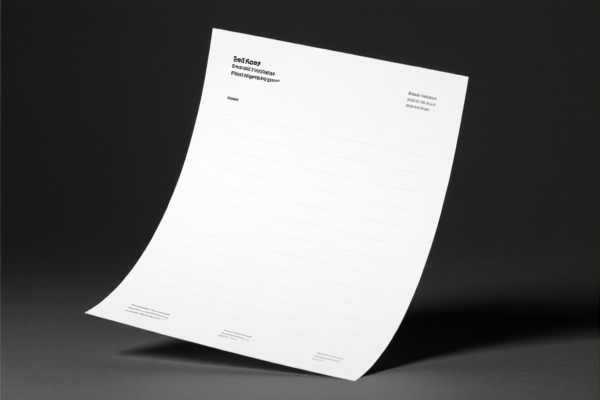
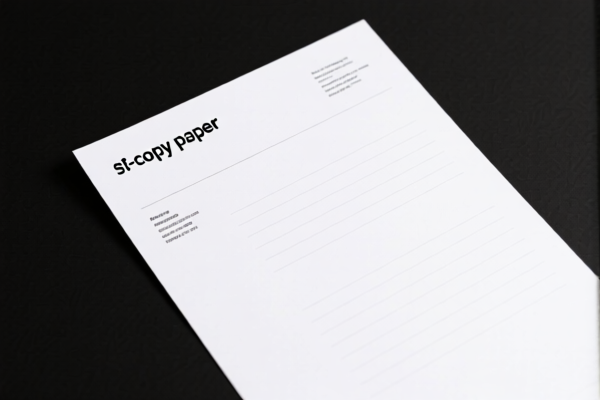
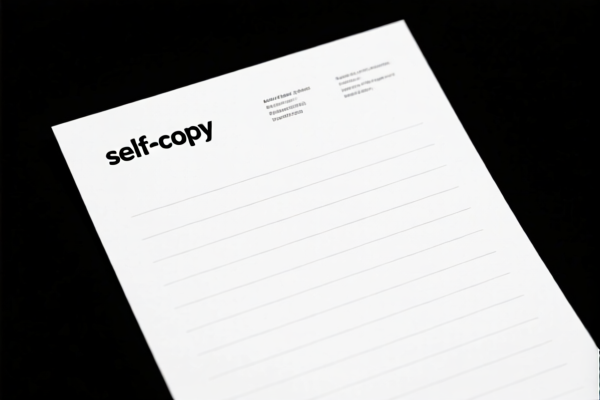
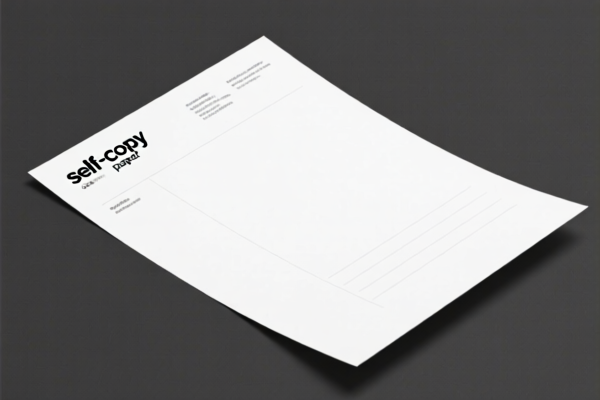
AI分析
📄 Carbonless Form Paper (No-Copy Paper / NCR Paper)
🌐 HS Code Reference & Customs Clearance Guide | 2026 Latest Tariff Analysis | Professional Level Clearance Strategy
📌 I. Product Definition & Classification: Do You Really Understand "Carbonless Form Paper"?
Carbonless Form Paper (often referred to as NCR Paper - No Carbon Required) is a self-copying paper that produces copies of writing without the use of carbon paper. In international trade, its classification depends heavily on its form factor (loose sheets vs. bound booklets) and specific application (general stationery vs. specific business documents).
Key Distinction Points:
* Loose Sheets / Coated Paper: If the product is primarily treated paper for general copying or printing purposes, it may fall under paper/coated categories (4811).
* Bound/Booklet Form: If the paper is pre-bound into notebooks, pad books, or multi-part forms for specific office/business use, it falls under article classes like stationery notebooks (4820).
* Multi-part Forms: If specifically designed as multi-part business receipts or invoices, specific stationery codes (4820.40) apply.
⚠️ Critical Note for Customs:
- Misclassifying a bound booklet as loose coated paper can lead to significant tax discrepancies and clearance delays.
- Always provide the physical form (bound vs. loose) and final use (general office vs. specific business transaction) in your declaration.
📦 II. HS Code Classification Details (2026 Latest Tariff Authority Cross-Reference)
Based on the provided data, here are the applicable HS Codes for Carbonless Form Paper, along with their summaries and tax implications.
| HS Code | Product Description & Summary | Applicable Scenario | Key Feature |
|---|---|---|---|
4820.40.00.00 |
Carbonless Booklet: Paper stationery item. Purpose: Multi-part business documents. Matches the form and function of carbonless forms. | Pre-bound multi-part forms, receipt books, invoice pads. | Bound/Booklet Form |
4811.90.80.50 |
Carbonless Paper: Coated/printed paper product. Material: Paper. Matches the characteristics of "other" paper categories. | Loose sheets, rolls, or bulk treated paper not yet bound. | Loose/Coated Paper |
4819.20.00.40 |
Carbonless Paper: Paper material. Form: Folded or bound paper container/stationery. Meets other category requirements. | Folded forms or specific paper containers made from carbonless stock. | Folded/Container Form |
4820.10.40.00 |
Carbonless Notebook: Notebook/account book class. Material: Paper. Purpose matches. | Standard carbonless notebooks or diary-style forms. | Notebook Form |
4811.90.40.90 |
Carbon Copy Paper: Paper product. Form: Coated or treated paper. Matches other paper/cardboard categories. | Traditional carbon paper or general treated paper sheets. | General Treated Paper |
🔍 Key Reminder:
-4820series generally covers articles of stationery (notebooks, pads, books). Use this if the product is bound or pre-formatted for direct office use. -4811series generally covers processed paper (coated, printed, treated). Use this if the product is loose sheets, rolls, or bulk material intended for further processing or binding by the buyer.
💰 III. 2026 Latest Tariff Rate Details (Including Surtaxes & Policy Surcharges)
✅ Applicable Country: United States (US)
✅ Origin: China (CN)
✅ Effective Time: Current rates apply for imports from China.
🎯 1. All HS Codes in 4820 Series (4820.40.00.00, 4820.10.40.00)
| Item | Content |
|---|---|
| Base Tariff Rate | 0.0% (ad valorem) |
| Section 301 Surtax (25%) | +25.0% (Under USITC Footnote for Chinese Goods) |
| Section 122 Tariff | +10.0% (Specific tariff clause applicable to certain Chinese goods) |
| Total Tariff Rate | 35.0% |
| Tax Calculation | CIF Value × 35% |
| De Minimis Exemption | ❌ Not Eligible (These items do not qualify for de minimis relief under current trade rules) |
| Legal Basis Path | Base Tariff: 0% → Section 301: +25% → Section 122: +10% |
📌 Explanation:
- Although the base duty for many stationery items is 0%, the Section 301 tariffs (25%) and Section 122 tariffs (10%) significantly increase the landed cost. - Total impact: 35%. This is a high tariff burden that must be factored into your pricing strategy. - Section 301: Imposed under the Trade Expansion Act to address unfair trade practices. - Section 122: An older authority often used for national security or economic adjustments, currently applied as an additional surcharge.
🎯 2. All HS Codes in 4811 Series (4811.90.80.50, 4811.90.40.90, 4819.20.00.40)
| Item | Content |
|---|---|
| Base Tariff Rate | 0.0% (ad valorem) |
| Section 301 Surtax (25%) | +25.0% (Under USITC Footnote for Chinese Goods) |
| Section 122 Tariff | +10.0% (Specific tariff clause applicable to certain Chinese goods) |
| Total Tariff Rate | 35.0% |
| Tax Calculation | CIF Value × 35% |
| De Minimis Exemption | ❌ Not Eligible |
| Legal Basis Path | Base Tariff: 0% → Section 301: +25% → Section 122: +10% |
📌 Note:
- All carbonless paper products from China, regardless of whether they are loose sheets (4811) or bound forms (4820), face the same total tariff rate of 35%. - The distinction in HS Code does not provide a tariff advantage in the US market for Chinese-origin goods due to the broad application of Section 301 and Section 122 tariffs.
🛠️ IV. Customs Clearance Practical Advice (Pitfall Avoidance Guide)
✅ 1. Required Documentation Checklist (All Mandatory)
| Document | Must Provide | Description |
|---|---|---|
| ✅ Product Specification Sheet | ✔️ | Detailed description: Paper weight, type of coating (B/C paper), number of parts (2-part, 3-part, etc.). |
| ✅ Product Photos | ✔️ | Clear images showing if the product is bound (booklet, pad) or loose. This is critical for correct HS Code selection. |
| ✅ Commercial Invoice | ✔️ | Must clearly state "Carbonless Form Paper" or "NCR Paper". Avoid vague terms like "Paper" or "Stationery" without specification. |
| ✅ Packing List | ✔️ | Details on net/gross weight, number of sheets, and packaging type. |
| ✅ Declaration of Origin | ✔️ | Proof of Chinese origin, as tariffs are origin-specific. |
✅ 2. Declaration Tips (Key Mnemonic)
🔥 "Bound forms go to 4820, Loose sheets go to 4811. But both pay 35%! Get it right to avoid delays!"
| Scenario | Correct HS Code Category | Common Mistake |
|---|---|---|
| Pre-bound multi-part forms (e.g., receipt books) | 4820.40.00.00 |
Declaring as "loose paper" → Misclassification risk. |
| Loose carbonless sheets | 4811.90.80.50 or 4811.90.40.90 |
Declaring as "notebooks" → Incorrect functional description. |
| Folded forms | 4819.20.00.40 |
Overlooking the "folded" aspect and using generic codes. |
✅ 3. Special Considerations
| Situation | Handling Advice |
|---|---|
| Mixed Shipments | If a shipment contains both bound forms and loose sheets, declare them separately on the customs entry. Do not lump them under one HS Code if their descriptions differ. |
| Sample Shipments | Even for samples, declare the correct HS Code. De minimis rules may not apply if the value exceeds thresholds or if the item is subject to specific restrictions. |
| Private Label/OEM | Ensure the invoice reflects the actual product nature. If it’s a generic carbonless paper, use 4811. If it’s pre-printed with a customer’s logo and bound, it may still be 4820 depending on the degree of customization. |
🌍 V. Global Market Comparison (2026 Latest)
| Country/Region | Recommended HS Code | Estimated Duty (China Origin) | Key Certification | Notes |
|---|---|---|---|---|
| 🇺🇸 United States | 4820.40.00.00 / 4811.90.80.50 |
35% (0% Base + 25% S301 + 10% S122) | None specific | High tariff burden. Accurate classification is vital. |
| 🇨🇳 China | 4820.40.00.00 / 4811.90.80.50 |
0% - 5% (Export/Import depending on direction) | GB Standards | Low duty for internal trade. |
| 🇪🇺 European Union | 4820.40.00.00 / 4811.90.80.50 |
~6.5% (MFN Rate) | CE (if applicable) | No Section 301/122 equivalents. Lower overall cost. |
| 🇬🇧 United Kingdom | 4820.40.00.00 / 4811.90.80.50 |
~6.5% (MFN Rate) | UKCA | Post-Brexit rates similar to EU. |
| 🇦🇺 Australia | 4820.40.00.00 / 4811.90.80.50 |
5% | RCM | Moderate duty. |
📌 Conclusion:
- The US is the most challenging market for Chinese carbonless paper due to the 35% effective tariff rate.
- EU, UK, and Australia have significantly lower duties (~5-6.5%), making them more cost-effective destinations if supply chain flexibility allows.
📌 VI. Common Errors & Pitfall Guide (Lessons Learned)
❌ Error 1: Declaring bound forms as loose paper (4811)
👉 Consequence: Customs may reclassify, leading to penalties or delayed release because the functional description doesn’t match the code.
❌ Error 2: Ignoring the Section 122 Tariff
👉 Consequence: Underpayment of duties. The 10% Section 122 tariff is often overlooked but is mandatory. Total rate is not just 25% (Section 301), but 35%.
❌ Error 3: Vague Description on Invoice
👉 Consequence: Use of generic terms like "Paper Goods" leads to Customs querying the shipment, causing delays.
❌ Error 4: Assuming De Minimis Applies
👉 Consequence: Many small shipments may incorrectly assume no duty is due. However, 35% duty applies, and if the value is high enough, it must be declared properly.
✅ Correct Practice:
"Carbonless Multi-Part Form Paper, Pre-bound, 3-Ply, 210x297mm, Model XYZ, Origin: China"
🎯 VII. Conclusion: Professional Declaration, Cost Control, Efficiency!
🎯 Remember the Mnemonic:
🔹 "Bound to 4820, Loose to 4811. Both pay 35%, don't let the 122 Clause slip!"
🔹 "HS Code defines the tax, 35% is the real cost. Declare accurately, avoid the costliest mistake!"
📌 Pro Tip:
If your carbonless paper is originating from Vietnam, Mexico, or Thailand, you may be eligible for lower or zero tariffs under free trade agreements or by avoiding Section 301/122 tariffs.
Recommend Advance Ruling from US Customs if the product form is ambiguous (e.g., semi-bound or customized).
📣 Take Action Now:
📞 Contact a professional customs broker + Provide product photos + Apply for HS Code Advance Ruling
🚀 Ensure your carbonless forms clear customs smoothly, efficiently, and cost-effectively!
✨ Professional clearance starts with accurate classification!
💼 Every cent of your cost deserves precise calculation!
用户评价
关于 HS 编码归类
协调制度(HS)是由世界海关组织(WCO)制定的国际贸易商品分类标准。全球 200 多个国家采用 HS 系统作为海关关税、贸易统计和进出口监管的基础。
每个 HS 编码遵循以下层级结构:
- 章(2 位)——商品大类(例如:第 84 章:机器和机械设备)
- 品目(4 位)——章内的更具体分类
- 子目(6 位)——国际通用细分,所有 WCO 成员国统一使用
- 本国细分(8-10 位)——各国自行扩展的细分编码,如美国 HTSUS 10 位编码
正确的 HS 编码归类对于顺利通关、准确缴纳关税和遵守贸易法规至关重要。错误归类可能导致海关延误、多缴关税或罚款。
从CN进口到US时,适用的关税税率可能包括:
- 最惠国(MFN)税率——适用于 WTO 成员国的标准关税税率
- 普通税率——适用于无贸易协定国家
- 贸易救济关税——附加关税,如 301 条款(反倾销)、232 条款(国家安全)或反补贴税
本页内容仅供参考。如需正式归类,请咨询当地海关或持牌报关代理。