Carbonless Receipt Paper
CN → US| HS编码 | 关税税率 | 原产国 | 目的国 | 文档 |
|---|---|---|---|---|
| 4907000000 | 17.5% | CN | US | 官方文档 |
| 4816200000 | 35.0% | CN | US | 官方文档 |
| 4816900100 | 35.0% | CN | US | 官方文档 |
| 4823908680 | 35.0% | CN | US | 官方文档 |
| 4823209000 | 35.0% | CN | US | 官方文档 |
商品图片
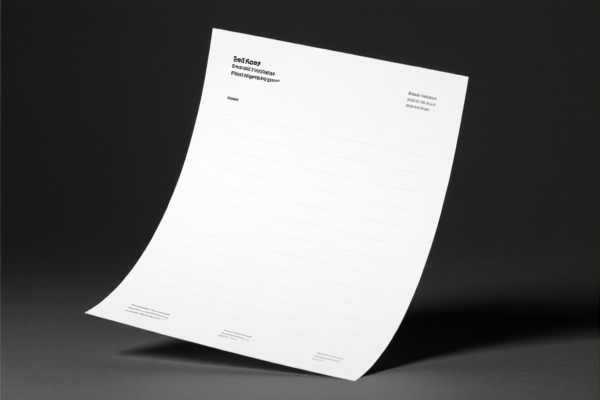
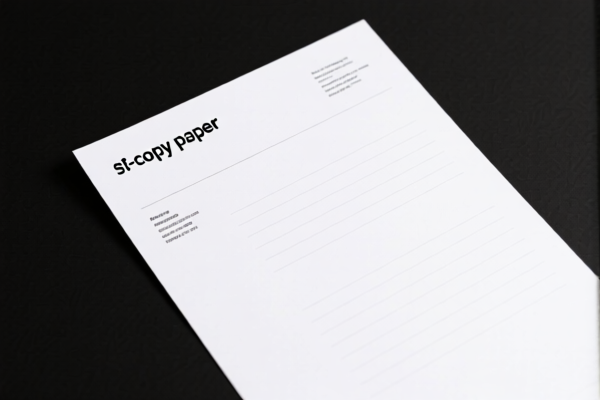
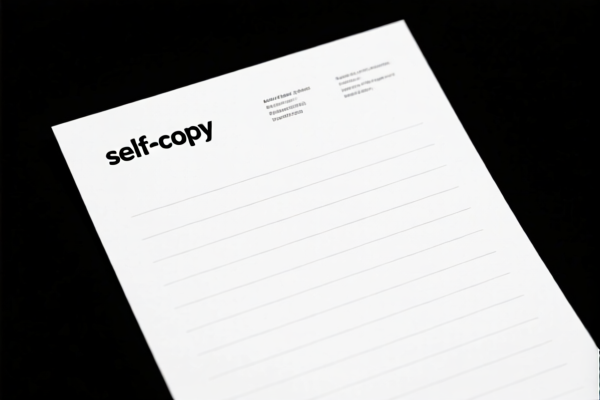
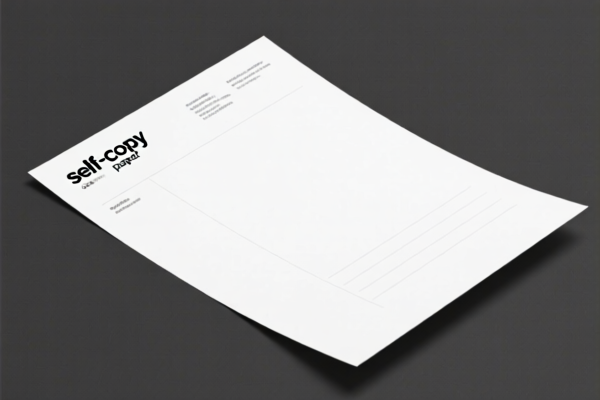
AI分析
🧾 Carbonless Receipt Paper (NCR Paper)
🌐 HS Code Reference & Customs Clearance Guide | 2026 Latest Tariff Analysis | Professional Clearance Strategy
📌 I. Product Definition & Classification: What is "Carbonless Receipt Paper" Actually?
Carbonless Receipt Paper, commonly known as NCR (No Carbon Required) Paper, is a multi-part stationery item used for creating duplicate records without the need for carbon paper. It consists of sheets coated with micro-encapsulated dye (on the back of the top sheet) and clay (on the front of the lower sheets). When pressure is applied, the capsules burst, releasing the dye to create a permanent copy.
In international trade, this product can be classified under four distinct HS Codes depending on its specific structure, material composition, and intended use as a "document carrier" vs. "raw paper."
⚠️ Critical Distinction:
- If viewed strictly as a record/certificate carrier (functional document) → 4907.00.00.00 (Lowest Tax)
- If viewed as copying/transfer paper or general paper product → 4816.20.00.00 / 4816.90.01.00 / 4823.90.86.80 (Highest Tax)
📦 II. HS Code Classification Details (2026 Latest Tariff Authority Comparison)
| HS Code | Product Description | Application Scenario | Key Differentiator |
|---|---|---|---|
4907.00.00.00 |
Stamped paper, printed forms, and similar paper/cardboard carriers of printed matter | Multi-part receipt forms, invoices, delivery notes where the function as a record is key | ✅ Functional Definition: Focuses on its role as a "certificate/document carrier." Lowest Tax Tier. |
4816.20.00.00 |
Carbon copy paper (other than of heading 4809) | NCR paper where the emphasis is on the "copying/transfer" mechanism itself | ⚠️ Mechanism Definition: Focuses on the chemical coating for copying. Highest Tax Tier. |
4816.90.01.00 |
Other paper, cardboard, fiberboard or cellulose fiber sheeting, capable of being used as a copy, transfer or reproduction sheet | NCR paper variants that don't fit strict "carbon copy" definitions but share the transfer function | ⚠️ Material/Capability: Broad category for paper-based transfer materials. Highest Tax Tier. |
4823.90.86.80 |
Other articles of paper pulp, paper, cellulose fiber | Receipt paper where the product is considered a general "paper article" (e.g., cut receipts, branded forms) | ⚠️ General Paper Item: Treats the receipt as a generic paper good. Highest Tax Tier. |
4823.20.90.00 |
Other paper, paperboard, cellulose wadding and webs of cellulose fibers, cut to size or shape | Receipt paper stamped with seals/chops or cut into specific receipt shapes | ⚠️ Shape/Form: Focuses on the physical form (cut/stamped) rather than the chemical transfer mechanism. Highest Tax Tier. |
🔍 Key Reminder:
- The same physical product can have a 17.5% tax rate (if classified as4907) or a 35.0% tax rate (if classified as any48xxcode). - Customs authorities often scrutinize NCR paper under the4816headings because it is technically "copying paper." However, if the product is pre-printed as multi-part forms (receipts/invoices), many jurisdictions allow classification under 4907 as "printed matter/certificate carriers." - Strategy: If the paper is sold as blank NCR sheets,4816is likely. If sold as pre-printed, multi-part receipts, argue for4907to save 17.5%.
💰 III. 2026 Latest Tariff Rate Breakdown (Including Surtaxes & Policy Surcharges)
✅ Applicable Country: United States (US)
✅ Country of Origin: China (CN)
✅ Effective Date: November 10, 2025 onwards (including subsequent imports)
🎯 1. 4907.00.00.00 —— Stamped/Printed Forms & Certificate Carriers (The "Low Tax" Option)
| Item | Content |
|---|---|
| Base Rate | 0% (ad valorem) |
| USITC Surcharge | +7.5% (Specific Section 301/Retaliatory measures applicable to this subheading in some contexts) |
| Section 122 Surcharge | +10% (Targeted surcharge on specific Chinese goods) |
| Total Tax Rate | 17.5% |
| Tax Calculation | CIF Value × 17.5% |
| De Minimis Eligibility | ❌ Not Eligible (deny_de_minimis) |
| Legal Basis Path | Base: 4907.00.00.00 → USITC: +7.5% → Section 122: +10% |
📌 Explanation:
- This is the most favorable classification for multi-part receipts. - The 7.5% comes from specific trade measures affecting paper-based forms. - The 10% is a mandatory surcharge under Section 122 for certain Chinese-origin paper goods. - Total: 17.5%. This is significantly cheaper than the alternative.
🎯 2. 4816.20.00.00 —— Carbon Copy Paper (The "Standard" High-Tax Option)
| Item | Content |
|---|---|
| Base Rate | 0% |
| USITC Surcharge | +25.0% (Standard Section 301 tariff on paper products) |
| Section 122 Surcharge | +10% |
| Total Tax Rate | 35.0% |
| Tax Calculation | CIF Value × 35.0% |
| De Minimis Eligibility | ❌ Not Eligible |
| Legal Basis Path | IEEPA/301: +25% → Section 122: +10% → USITC: 4816.20.00.00 |
📌 Note:
- If customs determines your NCR paper is primarily "copying paper" rather than "pre-printed forms," this is the default classification. - The 25% is the standard punitive tariff on Chinese paper. - Total: 35.0%. This is double the cost of the4907classification.
🎯 3. 4816.90.01.00 —— Other Copy/Transfer Paper
| Item | Content |
|---|---|
| Base Rate | 0% |
| USITC Surcharge | +25.0% |
| Section 122 Surcharge | +10% |
| Total Tax Rate | 35.0% |
| Tax Calculation | CIF Value × 35.0% |
| De Minimis Eligibility | ❌ Not Eligible |
📌 Note:
- Similar to4816.20, this is a catch-all for transfer papers that don't fit strict "carbon copy" definitions. Same high tariff burden.
🎯 4. 4823.90.86.80 & 4823.20.90.00 —— Other Paper Articles / Cut Paper
| Item | Content |
|---|---|
| Base Rate | 0% |
| USITC Surcharge | +25.0% |
| Section 122 Surcharge | +10% |
| Total Tax Rate | 35.0% |
| Tax Calculation | CIF Value × 35.0% |
| De Minimis Eligibility | ❌ Not Eligible |
📌 Note:
- These codes are used if the paper is considered a "finished paper article" (e.g., stamped seals, cut-to-size receipts) rather than a chemical transfer product or a form. - Still subject to the full 35.0% tariff.
🛠️ IV. Customs Clearance Practical Advice (Combat Pitfalls Guide)
✅ 1. Documentation Checklist (Must-Have)
| Document | Required | Description |
|---|---|---|
| ✅ Product Spec Sheet | ✔️ | Must specify: NCR type (e.g., 3-part, 2-part), coating type, paper weight, dimensions. |
| ✅ Commercial Invoice | ✔️ | Crucial: Use precise language. If aiming for 4907, describe as "Pre-printed Multi-Part Receipt Forms" rather than "Blank NCR Paper." |
| ✅ Structure Diagram | ✔️ | Show layers (CB, CF, BFP) to prove it's a chemical transfer paper. |
| ✅ Photo of Product | ✔️ | Show pre-printed text/logos if claiming 4907. Blank sheets will likely trigger 4816. |
| ✅ Packaging List | ✔️ | Clarify if sold as sets (forms) or rolls/sheets (raw material). |
✅ 2. Classification Strategy (Key Mantra)
🔥 "If It’s Printed & Parted, Classify 4907. If It’s Blank & Chemical, Pay 35%."
| Scenario | Correct HS Code | Tax Rate | Risk Level |
|---|---|---|---|
| Pre-printed, multi-part receipt forms (with logos/text) | 4907.00.00.00 |
17.5% | 🟢 Low (Best option) |
| Blank NCR rolls/sheets (no printing, just chemical coating) | 4816.20.00.00 |
35.0% | 🔴 High (Default for blanks) |
| NCR paper with stamps/seals (not pre-printed forms) | 4823.20.90.00 |
35.0% | 🟡 Medium |
| General transfer paper (not specific receipts) | 4816.90.01.00 |
35.0% | 🟡 Medium |
⚠️ Critical Tip:
- Do NOT simply write "Carbonless Paper" on the invoice. This is ambiguous and often leads to4816classification by customs brokers seeking the "safer" but more expensive option, or risking an audit if you claim4907without proof. - If you are selling blank NCR paper, you cannot justify4907. Accept the 35% cost or find duty-free supply chains (e.g., Vietnam/Mexico origin). - If you are selling pre-printed receipts, provide samples showing the printed content to support4907.00.00.00.
✅ 3. Special Cases & Mitigation
| Situation | Handling Advice |
|---|---|
| OEM Custom Receipts | Provide the design file and a sample of the final printed form. Prove it is a "certificate of receipt" (4907) not just "paper" (4816). |
| Blind Shipping | Ensure the supplier’s invoice matches your description. Discrepancies between "NCR Paper" (Supplier) and "Receipt Forms" (Importer) trigger audits. |
| Hybrid Products | If selling both blank NCR and pre-printed forms, separate shipments. Do not mix them. Mixed shipments can lead to reclassification of the entire batch to the highest tax rate. |
| Section 122 Exemptions | Check if your specific subheading has any temporary exclusions. Currently, none are listed for these codes in the provided data. |
🌍 V. Global Market Clearance Comparison (2026 Latest)
| Country/Region | Recommended HS Code | Tariff (China Origin) | Key Requirement | Note |
|---|---|---|---|---|
| 🇺🇸 USA | 4907.00.00.00 (if pre-printed) |
17.5% | Proof of printing | If blank, 4816 → 35.0% |
| 🇨🇳 China | 4907.00.00.00 |
~5-10% (Import) | CCC/RoHS (if applicable) | Domestic tax structure differs |
| 🇪🇺 EU | 4816.20.00 / 4907 |
0-3% | CE/RoHS | Generally lower tariffs than US |
| 🇬🇧 UK | 4907.00.00 |
0-5% | UKCA | Post-Brexit rules may vary |
| 🇯🇵 Japan | 4907.00.00 |
0-6% | FSC (if forestry) | Low base tariffs, no Section 122 |
📌 Conclusion:
- The USA is the only major market with the Section 122 + Section 301 combination creating the 17.5% vs 35.0% gap. - EU/UK/Japan do not impose these specific punitive surcharges, making the classification difference less financially critical (though accuracy is still vital for legal compliance).
📌 VI. Common Errors & Pitfalls Guide (Blood & Tears Lessons)
❌ Error 1: Declaring blank NCR paper as 4907.00.00.00
👉 Consequence: Customs flags the entry for lacking "printed matter/certificate" proof. Result: Reclassification to 4816 + Penalty + Delay.
❌ Error 2: Using generic terms like "Office Supplies" or "Copy Paper"
👉 Consequence: Customs cannot determine the specific chemical nature. Result: Manual Examination + Potential Misclassification.
❌ Error 3: Mixing Blank NCR and Pre-Printed Receipts in One Shipment
👉 Consequence: The entire shipment may be assessed at the higher 35% rate to ensure compliance. Result: Unexpected Cost Spike.
❌ Error 4: Ignoring Section 122 in Tariff Calculation
👉 Consequence: Underpaying duties by 10%. Result: Audit, Back Taxes, and Interest.
✅ Correct Approach:
"Pre-Printed Multi-Part NCR Receipt Forms (3-Ply), Paper Weight 58gsm, Certified for Business Use, Model NCR-3P, Origin: China"
🎯 VII. Conclusion: Precise Classification Saves 17.5%!
🎯 Remember the Mantra:
🔹 "Blank = 35% (4816), Printed = 17.5% (4907)."
🔹 "One word changes the cost: 'Form' vs. 'Paper'."
🔹 "Section 122 adds 10% to EVERYTHING. Get it right or pay double."
📌 Pro Tip:
If you are importing large volumes of blank NCR paper, consider sourcing from non-China origins (e.g., Thailand, Indonesia) to avoid the 35.0% total tariff.
For pre-printed receipts, always provide sample photos with the customs broker to justify 4907.00.00.00.
📣 Immediate Action:
📞 Contact your freight forwarder with product photos.
📄 Request a Pre-Ruling (ISF/Section 321 if applicable) for high-volume shipments.
🚀 Optimize your supply chain: Separate blank vs. printed goods to minimize tax exposure.
✨ Professional Clearance Starts with Accurate Classification!
💼 Every 17.5% saved is pure profit!
用户评价
关于 HS 编码归类
协调制度(HS)是由世界海关组织(WCO)制定的国际贸易商品分类标准。全球 200 多个国家采用 HS 系统作为海关关税、贸易统计和进出口监管的基础。
每个 HS 编码遵循以下层级结构:
- 章(2 位)——商品大类(例如:第 84 章:机器和机械设备)
- 品目(4 位)——章内的更具体分类
- 子目(6 位)——国际通用细分,所有 WCO 成员国统一使用
- 本国细分(8-10 位)——各国自行扩展的细分编码,如美国 HTSUS 10 位编码
正确的 HS 编码归类对于顺利通关、准确缴纳关税和遵守贸易法规至关重要。错误归类可能导致海关延误、多缴关税或罚款。
从CN进口到US时,适用的关税税率可能包括:
- 最惠国(MFN)税率——适用于 WTO 成员国的标准关税税率
- 普通税率——适用于无贸易协定国家
- 贸易救济关税——附加关税,如 301 条款(反倾销)、232 条款(国家安全)或反补贴税
本页内容仅供参考。如需正式归类,请咨询当地海关或持牌报关代理。