Carboxylated Styrene Butadiene Rubber
CN → US| HS编码 | 关税税率 | 原产国 | 目的国 | 文档 |
|---|---|---|---|---|
| 4002190015 | 35.0% | CN | US | 官方文档 |
| 4002190016 | 35.0% | CN | US | 官方文档 |
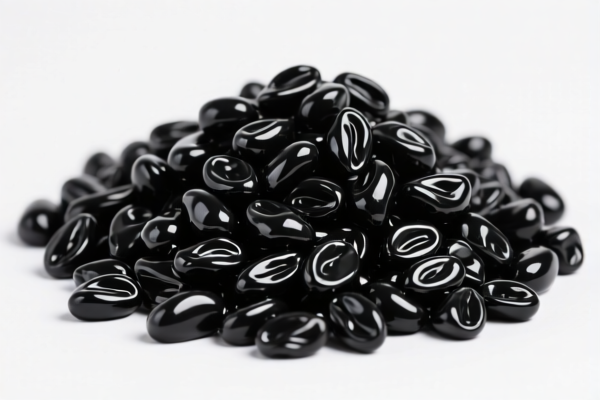
商品图片



AI分析
🧪 Carboxylated Styrene Butadiene Rubber (XSBR) & SBR: Global Customs Classification & Tax Strategy
🌐 HS Code Reference & Clearance Guide | 2026 Latest Tariff Analysis | Professional Clearance Strategy
📌 一、Product Definition & Classification: What Exactly is "Synthetic Rubber" in Trade?
Styrene-Butadiene Rubber (SBR) and Carboxylated Styrene-Butadiene Rubber (XSBR) are the two most widely used synthetic rubbers in the world. They are primarily used in tire manufacturing (treads, sidewalls), footwear, conveyor belts, and mechanical goods.
In international trade, precise classification depends on: 1. Polymerization Method: Emulsion (E-SBR) vs. Solution (S-SBR). 2. Chemical Modification: Standard SBR vs. Carboxylated SBR (XSBR), which offers improved compatibility with polar materials (like carbon black) and better adhesion to textiles/metals. 3. Physical Form: Bales, pellets, or flakes. 4. Styrene Content: Specifically, whether it contains 50% or less styrene by weight of the dry polymer.
⚠️ Key Distinction Point: - XSBR is a specific derivative of SBR with carboxyl groups, often commanding higher value and specific HS subheadings. - SBR is classified by its production process (Emulsion/E-SBR vs. Solution/S-SBR). - Both fall under Heading 4002 (Synthetic Rubber and Factice derived from oils).
📦 II. HS Code Classification Details (2026 Latest Tariff Authority对照)
Based on the provided data, the relevant HS Codes are strictly limited to those containing ≤ 50% styrene by weight.
| HS Code | Product Description | Key Characteristics | Applicable Form |
|---|---|---|---|
4002.19.00.15 |
Styrene-Butadiene Rubber (SBR) produced by Emulsion Polymerization (E-SBR) | Standard SBR, produced via emulsion process. | Bales |
4002.19.00.16 |
Styrene-Butadiene Rubber (SBR) produced by Solution Polymerization (S-SBR) | Solution SBR, distinct molecular structure, better performance in some applications. | Bales |
🔍 Important Note on XSBR: - The provided data mentions "Carboxylated styrene-butadiene rubber (XSBR)" in the general description for Heading 4002.19. - However, the specific subheadings (15 and 16) explicitly list E-SBR and S-SBR respectively. - Clarification: If the XSBR is not explicitly listed under a separate 10-digit code in this dataset, it may fall under the "Other" category within 4002.19, but strictly based on the provided DATA, only
4002.19.00.15(E-SBR) and4002.19.00.16(S-SBR) are available with specific tax rates. - Action: If your product is truly XSBR, you must verify if it fits under "Other" in the broader 4002.19 group or if a specific XSBR code exists outside this snippet. For the purpose of this guide, we analyze the two specific codes provided.
💰 III. 2026 Latest Tariff Rate Breakdown (US Import from China)
✅ Applicable Country: United States (US)
✅ Origin: China (CN)
✅ Effective Date: Current tariffs apply
🎯 1. 4002.19.00.15 — E-SBR (Emulsion Polymerization)
| Item | Content |
|---|---|
| Base Tariff Rate | 0.0% |
| Section 301 Add-on Tariff | +25.0% |
| Total Tax Rate | 25.0% |
| Tax Calculation | CIF Value × 25.0% |
| De Minimis Exemption | ❌ Not Applicable (Section 301 tariffs generally do not qualify for de minimis exemption under current enforcement) |
| Legal Basis | Section 301 Tariff List (China-origin synthetic rubber) |
📌 Explanation: - E-SBR is heavily used in tire manufacturing. - The 25% surcharge is a significant cost driver. Importers must factor this into pricing strategies. - No base tariff, but the full impact comes from the trade war tariff.
🎯 2. 4002.19.00.16 — S-SBR (Solution Polymerization)
| Item | Content |
|---|---|
| Base Tariff Rate | 0.0% |
| Section 301 Add-on Tariff | 0.0% |
| Total Tax Rate | 0.0% |
| Tax Calculation | CIF Value × 0.0% |
| De Minimis Exemption | ✅ N/A (Since total tax is 0%) |
| Legal Basis | Not listed in Section 301 List 4A (or exempted) |
📌 Explanation: - S-SBR has 0% total tax, making it significantly more competitive in the US market compared to E-SBR. - This creates a tax arbitrage opportunity: If product specifications allow, sourcing or formulating as S-SBR instead of E-SBR can save 25% in tariffs. - S-SBR is often preferred for high-performance tires due to better wet grip and lower rolling resistance.
🛠️ IV. Clearance Operational Advice (Practical Pitfall Avoidance)
✅ 1. Documentation Checklist (Non-negotiable)
| Document | Required? | Description |
|---|---|---|
| ✅ Commercial Invoice | ✔️ | Must clearly state: "Styrene-Butadiene Rubber, [Emulsion/Solution] Polymerized, Bales, Origin: China" |
| ✅ Packing List | ✔️ | Must specify weight of dry polymer and confirm styrene content ≤ 50% |
| ✅ Certificate of Origin (CO) | ✔️ | Essential to prove Chinese origin (triggers 301 tariffs for E-SBR) |
| ✅ Technical Data Sheet (TDS) | ✔️ | Critical: Must specify polymerization method (Emulsion vs. Solution) and styrene percentage |
| ✅ Bill of Lading (B/L) | ✔️ | Ensure freight details match invoice value for CIF calculation |
✅ 2. Classification Strategy (Key Mantra)
🔥 "Process Defines Code, Content Defines Rate, Form Defines Fit!"
| Scenario | Correct HS Code | Tax Rate | Why? |
|---|---|---|---|
| E-SBR, ≤50% Styrene, Bales | 4002.19.00.15 |
25% | Emulsion process + China origin = 301 tariff |
| S-SBR, ≤50% Styrene, Bales | 4002.19.00.16 |
0% | Solution process = Exempt from 301 (in this data) |
| XSBR (Not explicitly listed) | ❓ Verify | ⚠️ Check | If not 15 or 16, may fall under "Other" in 4002.19.00.19 or similar. Do not assume 0%! |
| >50% Styrene SBR | 4002.49.00.00 (Hypothetical) |
⚠️ Check | Outside scope of provided data. Different tax bracket. |
✅ 3. Special Case Handling
| Situation | Advice |
|---|---|
| Mix of E-SBR and S-SBR | Declare separately! Do not mix in one HS Code. Misclassification can lead to penalties. |
| XSBR (Carboxylated) | If your XSBR is not E-SBR or S-SBR, it may be "Other". Check if it falls under 4002.19.00.19 or similar. Assume 25% if not explicitly 0%. |
| Non-Chinese Origin | If imported from Vietnam, Thailand, etc., 301 tariffs may not apply. Provide valid CO! |
| Pellets vs. Bales | Ensure description matches "Bales" as per HS Code specificity. If pellets, confirm if same code applies (usually yes for primary forms). |
🌍 V. Global Market Comparison (2026 Latest)
| Country/Region | Recommended HS Code | Tariff (China Origin) | Key Requirements | Note |
|---|---|---|---|---|
| 🇺🇸 USA | 4002.19.00.15 / 4002.19.00.16 |
25% (E-SBR) / 0% (S-SBR) | Section 301 Compliance | High cost for E-SBR. S-SBR preferred for cost savings. |
| 🇨🇳 China | 4002.19.00.15 / 4002.19.00.16 |
0% (Import Duty) | CCC (if applicable) | No import duty, but VAT applies. |
| 🇪🇺 EU | 4002.19.00 |
0% | REACH Compliance | No additional duties. REACH registration required for chemical substances. |
| 🇲🇽 Mexico | 4002.19.00.01 (Example) |
0% (USMCA) | USMCA Certificate | If from US, duty-free. Check specific MLTAR. |
📌 Conclusion: - USA is the most complex market due to Section 301 tariffs. - S-SBR is strategically advantageous in the US due to 0% tax vs. 25% for E-SBR. - EU and China are neutral on duty, but regulatory compliance (REACH, CCC) is key.
📌 VI. Common Errors & Pitfalls (Lessons Learned)
❌ Error 1: Classifying E-SBR as S-SBR to avoid 25% tariff
👉 Consequence: Customs audit, penalties, back taxes + interest. Always use TDS to prove polymerization method.
❌ Error 2: Ignoring Styrene Content
👉 Consequence: If >50% styrene, it falls under a different heading (e.g., 4002.49). Must declare ≤50% explicitly.
❌ Error 3: Assuming XSBR is automatically S-SBR or E-SBR
👉 Consequence: XSBR may be a separate subheading. Verify with technical specs.
❌ Error 4: Not providing CO for Non-China Origin
👉 Consequence: Charged 25% even if product is from Vietnam. Always provide valid CO.
✅ Correct Practice:
"Styrene-Butadiene Rubber, Solution Polymerized (S-SBR), Bales, Styrene Content: 40%, Dry Polymer Weight: 500kg, Origin: China"
🎯 VII. Conclusion: Professional Declaration, Save Costs, Ensure Compliance!
🎯 Remember the Mantra:
🔹 "E-SBR: 25%, S-SBR: 0%. Process defines cost!"
🔹 "XSBR: Check Subheading. Don't Assume!"
🔹 "CO is King: Origin Determines Tax!"
📌 Pro Tip:
If you are importing S-SBR, leverage the 0% tariff advantage.
If you must import E-SBR, consider supply chain diversification (e.g., sourcing from non-China origins if possible) or absorb the cost in pricing.
For XSBR, consult a customs broker to confirm the exact subheading under 4002.19.
📣 Take Action Now:
📞 Contact a Licensed Customs Broker
📄 Provide Technical Data Sheets (TDS)
🚀 Secure Advance Ruling if possible for high-volume imports.
✨ Professional Clearance Starts with Accurate Classification!
💼 Your every dollar of cost deserves precise calculation!
用户评价
关于 HS 编码归类
协调制度(HS)是由世界海关组织(WCO)制定的国际贸易商品分类标准。全球 200 多个国家采用 HS 系统作为海关关税、贸易统计和进出口监管的基础。
每个 HS 编码遵循以下层级结构:
- 章(2 位)——商品大类(例如:第 84 章:机器和机械设备)
- 品目(4 位)——章内的更具体分类
- 子目(6 位)——国际通用细分,所有 WCO 成员国统一使用
- 本国细分(8-10 位)——各国自行扩展的细分编码,如美国 HTSUS 10 位编码
正确的 HS 编码归类对于顺利通关、准确缴纳关税和遵守贸易法规至关重要。错误归类可能导致海关延误、多缴关税或罚款。
从CN进口到US时,适用的关税税率可能包括:
- 最惠国(MFN)税率——适用于 WTO 成员国的标准关税税率
- 普通税率——适用于无贸易协定国家
- 贸易救济关税——附加关税,如 301 条款(反倾销)、232 条款(国家安全)或反补贴税
本页内容仅供参考。如需正式归类,请咨询当地海关或持牌报关代理。