Card Embossing Die Cut
CN → US| HS编码 | 关税税率 | 原产国 | 目的国 | 文档 |
|---|---|---|---|---|
| 8466100110 | 38.9% | CN | US | 官方文档 |
| 8466100130 | 38.9% | CN | US | 官方文档 |
| 8442509000 | 17.5% | CN | US | 官方文档 |
| 8442501000 | 35.0% | CN | US | 官方文档 |
商品图片
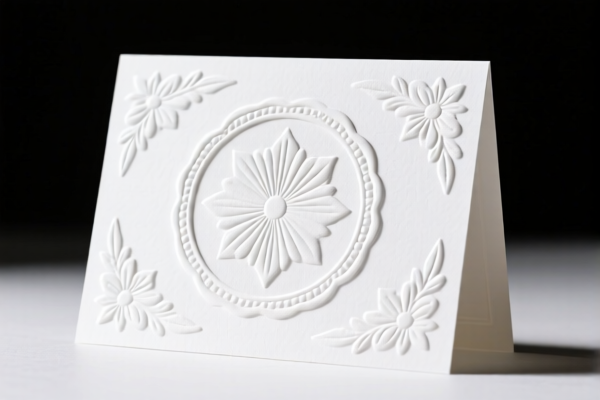
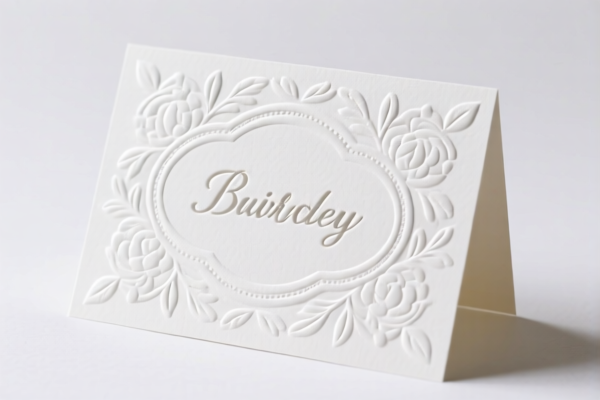
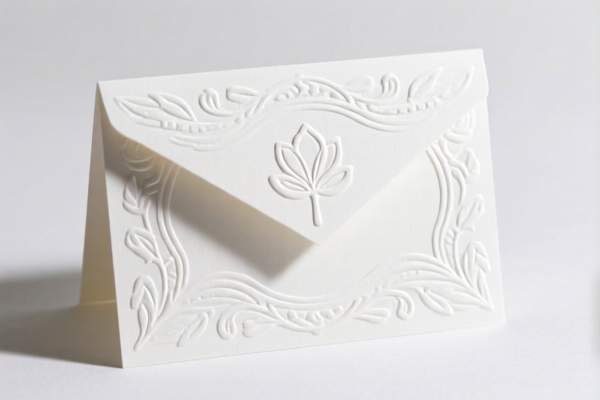
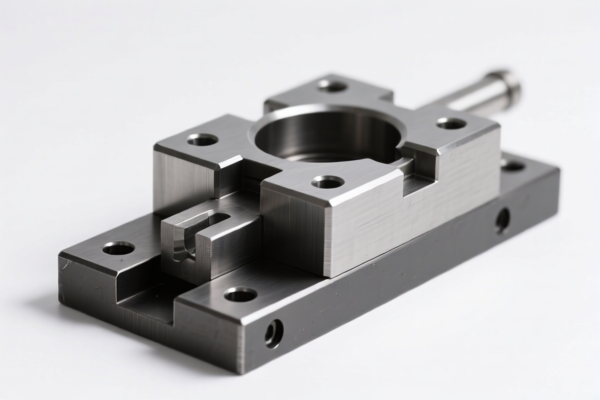
AI分析
🎴 Card Embossing & Die Cut Machinery (Specialized Printing/Finishing Equipment)
🌐 HS Code Reference & Customs Clearance Guide | 2024/2025 Latest Tariff Analysis | Professional-Level Clearance Strategy
📌 I. Product Definition & Classification: Do You Really Understand "Card Embossing & Die Cut"?
In the context of international trade and customs classification, "Card Embossing Die Cut" refers to machinery, apparatus, and equipment used for preparing printing components (such as embossing plates or dies) or finishing printed materials. It is not a simple hand tool, nor is it a general-purpose printing press. It falls under Chapter 84 (Nuclear reactors, boilers, machinery and mechanical appliances).
The classification hinges on two critical distinctions: 1. Machinery vs. Components: Are you importing the machine that performs the embossing/cutting, or the metal plate/die itself? 2. General vs. Specific: Is it a general preparation device, or a specific plate/cylinder preparation unit?
⚠️ Key Distinction Points:
- If importing the Machine (press, embosser, or die-cutting press) → Look at 8442.50 (Preparation of printing components) or potentially 8466 (Parts/Accessories if strictly defined).
- If importing the Plate/Die (the actual metal stamping tool) → Look at 8442.50.10 (Plates).
- If importing Tool Holders specific to CNC machining of these dies → Look at 8466.10.
📦 II. HS Code Classification Details (Based on Provided Data)
| HS Code | Product Description | Applicability Scenario | Included in Data? |
|---|---|---|---|
| 8442.50.90.00 | Plates, cylinders, and lithographic stones, prepared for printing purposes: Other | General embossing dies, custom-cutting plates not classified elsewhere; used in machines preparing printing components. | ✅ Yes |
| 8442.50.10.00 | Plates, cylinders, and lithographic stones, prepared for printing purposes: Plates | Specific metal plates (embossing plates, die-cutting plates) prepared for printing/finishing purposes. | ✅ Yes |
| 8466.10.01.10 | Tool holders for forming-type or cutting-type dies | Tool holders and self-opening dieheads specifically for forming-type or cutting-type dies. | ✅ Yes |
| 8466.10.01.30 | Tool holders for replaceable cutting or drill inserts | Tool holders for replaceable inserts used in machining these plates/dies. | ✅ Yes |
🔍 Critical Reminder:
- 8442.50 is the primary heading for plates/dies used in printing/embossing preparation.
- 8466.10 applies only if you are importing tool holders (accessories) for machines under headings 8456-8465 (which includes certain CNC or machining tools used to make these plates).
- Do not misclassify a complete embossing machine as a "plate" (8442.50). If it is the machine itself, it may fall under 8442.30 (Mechanical types) or 8442.50 (if primarily for preparing components). However, based strictly on the provided data, we are analyzing components/plates/tools.
💰 III. 2024/2025 Latest Tariff Rate Details (With Additional Duties)
✅ Applicable Country: United States (US)
✅ Origin: China (CN)
✅ Effective Date: Current (Subject to Section 301 & IEEPA regulations)
🎯 1. 8442.50.90.00 —— Other Prepared Plates/Cylinders (Embossing Dies, etc.)
| Item | Content |
|---|---|
| Base Duty Rate | 0.0% (Ad Valorem) |
| Section 301 Additional Duty | +7.5% |
| Total Tax Rate | 7.5% |
| Tax Calculation | CIF Value × 7.5% |
| De Minimis Exemption | ❌ Not Applicable (De minimis does not apply to goods subject to Section 301 duties) |
| Legal Basis Path | HTSUS:8442.50.90.00 → Section 301: Footnote 9903.88.01 |
📌 Explanation:
- "Plates, cylinders, and other printing components" prepared for printing purposes are generally low base duty.
- However, Section 301 tariffs add a significant layer. For subheadings not explicitly listed in the highest bracket, the 7.5% rate often applies to certain industrial components.
- Warning: If the "die" is considered a "plate" under8442.50.10, the rate jumps to 25% (see below). Ensure the "Other" classification is justified (e.g., it's not a standard lithographic stone or simple plate).
🎯 2. 8442.50.10.00 —— Plates (Specifically Embossing/Cutting Plates)
| Item | Content |
|---|---|
| Base Duty Rate | 0.0% (Ad Valorem) |
| Section 301 Additional Duty | +25.0% |
| Total Tax Rate | 25.0% |
| Tax Calculation | CIF Value × 25.0% |
| De Minimis Exemption | ❌ Not Applicable |
| Legal Basis Path | HTSUS:8442.50.10.00 → Section 301: Footnote 9903.88.01 |
📌 Warning:
- This is the most critical classification risk.
- If your "Card Embossing Die Cut" is strictly defined as a plate (e.g., a flat metal plate with raised patterns for embossing), it falls under 8442.50.10.00.
- The 25% tariff is significantly higher than the 7.5% for "Other" components.
- Strategy: If the item is a complex assembly or a specific tool holder rather than a flat plate, argue for 8442.50.90.00 or 8466.10 to save 17.5%.
🎯 3. 8466.10.01.10 & 8466.10.01.30 —— Tool Holders & Accessories
| Item | Content |
|---|---|
| Base Duty Rate | 3.9% (Ad Valorem) |
| Section 301 Additional Duty | +25.0% |
| Total Tax Rate | 28.9% |
| Tax Calculation | CIF Value × 28.9% |
| De Minimis Exemption | ❌ Not Applicable |
| Legal Basis Path | HTSUS:8466.10.01.x0 → Section 301 |
📌 Explanation:
- These codes apply to tool holders and dieheads used in machining or forming processes.
- If you are importing fixtures or holders that hold the embossing die during cutting, these codes may apply.
- The base duty is higher (3.9%), and the additional duty is 25%, totaling 28.9%.
- Use this only if the item is clearly a holder/accessory and not the plate itself.
🛠️ IV. Customs Clearance Practical Advice (Real-World Pitfall Guide)
✅ 1. Documentation Checklist (Essential)
| Document | Mandatory? | Description |
|---|---|---|
| ✅ Product Specification Sheet | ✔️ | Must clearly state: Is it a Plate (8442.50.10) or a Machine Part (8442.50.90)? Include material, dimensions, and function. |
| ✅ Technical Drawings | ✔️ | Crucial for distinguishing between a "plate" (flat, patterned) and a "tool holder" (mechanical fixture). |
| ✅ Commercial Invoice | ✔️ | Description must match HS Code. E.g., "Embossing Plate for Card Printing" vs. "Tool Holder for Die-Cutting Machine". |
| ✅ Photos of Product | ✔️ | Clear images showing the object’s structure. Flat plate? Use 8442.50.10. Complex mechanical holder? Use 8466.10. |
| ✅ Certificate of Origin | ✔️ | To determine eligibility for any potential exemptions (though Section 301 applies to China origin). |
✅ 2. Declaration Strategy (Key Mantras)
🔥 "Define the Object, Not the Function!"
| Scenario | Correct Declaration | Risk of Misclassification |
|---|---|---|
| Flat Metal Plate with embossing pattern | 8442.50.10.00 (Plates) |
High Tax (25%) |
| Complex Die Assembly or Non-Standard Component | 8442.50.90.00 (Other) |
Lower Tax (7.5%) – Justify as "Other printing component" |
| Holder/Fixture for CNC machine | 8466.10.01.10 |
Higher Tax (28.9%) – But necessary if it’s a holder |
| Complete Embossing Machine | NOT IN DATA (Likely 8442.30) | ⚠️ Data Limit: If importing the whole machine, do NOT use 8442.50. Use 8442.30 (Mechanical types) – but check current rates separately. |
📌 Critical Tip:
- If the item is a replacement part for a machine, ensure it is described as a "Part" or "Component."
- If it is a tool (like a die), it may be classified as a "Plate" (8442.50.10) unless it fits the "Other" category.
- Argue for 8442.50.90.00 if the item is a complex, multi-layered embossing tool or a non-standard plate, to benefit from the 7.5% rate instead of 25%.
✅ 3. Special Circumstances
| Situation | Handling Advice |
|---|---|
| Sample Imports | Even samples are subject to Section 301 duties. Do not rely on "gift" exemptions for commercial-grade dies. |
| Mixed Containers | If shipping plates (8442.50.10) and tool holders (8466.10) together, declare separately. Do not average the rates. |
| Used/Damaged Goods | Still classified under the same HS Code. Value declared must be accurate. |
| OEM Custom Dyes | Provide the design file and confirm it is "prepared for printing purposes." |
🌍 V. Global Market Comparison (2024/2025)
| Country/Region | Recommended HS Code | Duty Rate (China Origin) | Notes |
|---|---|---|---|
| 🇺🇸 USA | 8442.50.10.00 / 8442.50.90.00 |
25% / 7.5% | Section 301 applies. High compliance risk. |
| 🇨🇳 China | 8442.50.10 / 8442.50.90 |
0% - 5% | Import duties are low. No Section 301. |
| 🇪🇺 EU | 8442.50 |
0% | Generally low duty for printing components. |
| 🇬🇧 UK | 8442.50 |
0% | Post-Brexit, many industrial components have 0% duty. |
| 🇯🇵 Japan | 8442.50 |
0% | Low duty for printing equipment components. |
📌 Conclusion:
- The US market is the most expensive due to Section 301 tariffs.
- Optimize Classification: Aim for8442.50.90.00(7.5%) if possible, rather than8442.50.10.00(25%).
- For non-US markets, the duty difference is negligible, so focus on correct technical classification for regulatory compliance.
📌 VI. Common Errors & Pitfalls (Lessons Learned)
❌ Error 1: Declaring a Complex Embossing Tool as a "Plate" (8442.50.10)
👉 Consequence: Pay 25% tax when you could have paid 7.5%.
✅ Fix: Provide technical specs showing it is a "specialized component" (Other) under 8442.50.90.00.
❌ Error 2: Declaring a Tool Holder as a "Plate"
👉 Consequence: Rejection by Customs for incorrect classification.
✅ Fix: Use 8466.10.01.10 if it is a holder for dies.
❌ Error 3: Using "Card Making Tool" as a generic description
👉 Consequence: Customs ambiguity, leading to delays or reclassification.
✅ Fix: Use precise terms: "Embossing Plate for Printing," "Die-Cutting Tool Holder," etc.
❌ Error 4: Assuming De Minimis ($800) applies
👉 Consequence: Shipment detained, penalties, and back taxes.
✅ Fix: Section 301 goods are never exempt from de minimis. Declare fully.
🎯 VII. Conclusion: Precision Classification Saves Money!
🎯 Remember the Golden Rule:
🔹 "Plate = 25% (High Risk)"
🔹 "Other Component = 7.5% (Lower Risk)"
🔹 "Tool Holder = 28.9% (High Base)"
🔹 "Is it flat and patterned? Think Plate. Is it a mechanical fixture? Think Holder. Is it a unique component? Think Other."
📌 Pro Tip:
If your embossing die is custom-made and not a standard lithographic plate, consult with a customs broker to argue for 8442.50.90.00 ("Other") to save 17.5% in duties. Provide detailed engineering drawings to prove it is not a simple "plate."
📣 Immediate Action:
📞 Contact a Customs Broker + Provide Technical Drawings + Request Advance Ruling (if possible)
🚀 Ensure your Card Embossing Dies are classified correctly to maximize profit margins!
✨ Professional Clearance Starts with Accurate Classification!
💼 Every percentage point saved is pure profit!
用户评价
关于 HS 编码归类
协调制度(HS)是由世界海关组织(WCO)制定的国际贸易商品分类标准。全球 200 多个国家采用 HS 系统作为海关关税、贸易统计和进出口监管的基础。
每个 HS 编码遵循以下层级结构:
- 章(2 位)——商品大类(例如:第 84 章:机器和机械设备)
- 品目(4 位)——章内的更具体分类
- 子目(6 位)——国际通用细分,所有 WCO 成员国统一使用
- 本国细分(8-10 位)——各国自行扩展的细分编码,如美国 HTSUS 10 位编码
正确的 HS 编码归类对于顺利通关、准确缴纳关税和遵守贸易法规至关重要。错误归类可能导致海关延误、多缴关税或罚款。
从CN进口到US时,适用的关税税率可能包括:
- 最惠国(MFN)税率——适用于 WTO 成员国的标准关税税率
- 普通税率——适用于无贸易协定国家
- 贸易救济关税——附加关税,如 301 条款(反倾销)、232 条款(国家安全)或反补贴税
本页内容仅供参考。如需正式归类,请咨询当地海关或持牌报关代理。