Carpet Anti Slip Stickers
CN → US| HS编码 | 关税税率 | 原产国 | 目的国 | 文档 |
|---|---|---|---|---|
| 4016996050 | 37.5% | CN | US | 官方文档 |
| 3919102055 | 40.8% | CN | US | 官方文档 |
| 5907006000 | 35.0% | CN | US | 官方文档 |
| 5907001500 | 43.0% | CN | US | 官方文档 |
| 4016910000 | 37.7% | CN | US | 官方文档 |
商品图片
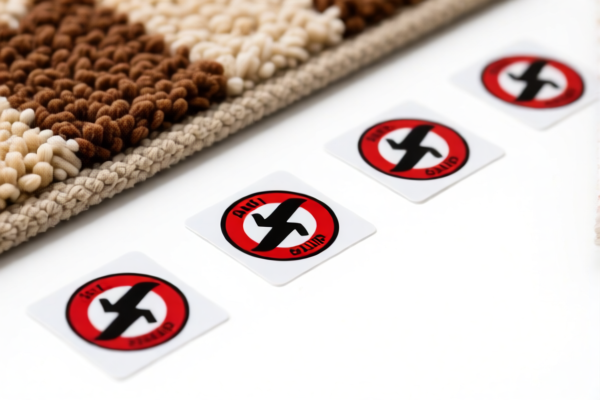
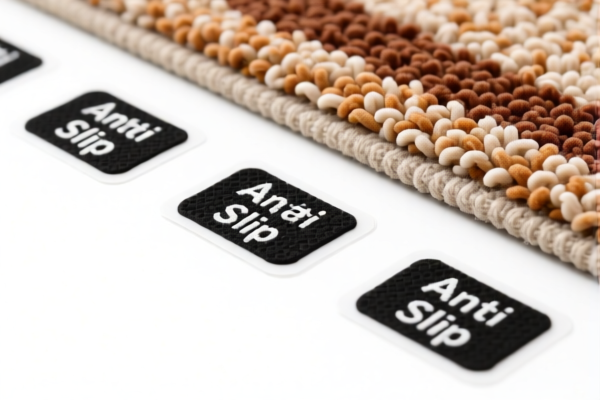
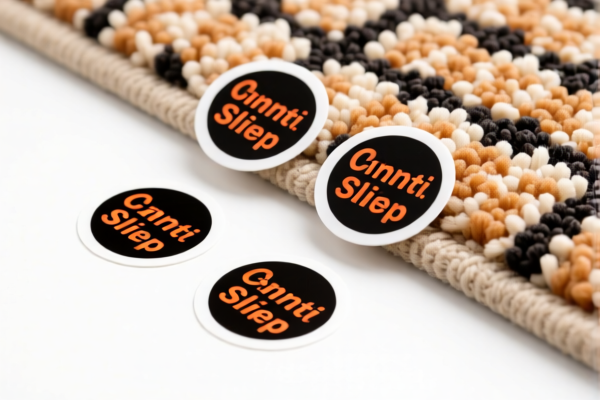
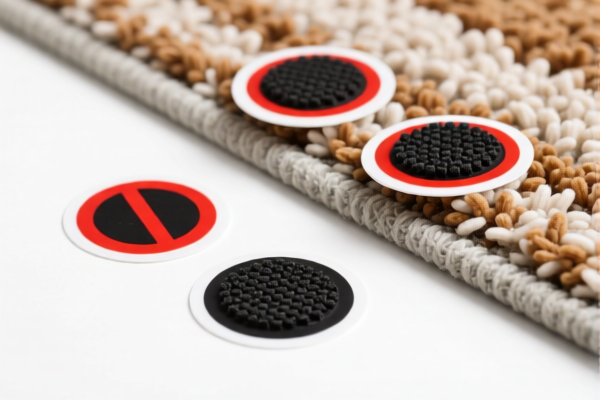
AI分析
🛑 Carpet Anti-Slip Stickers (Anti-Skid Pads)
🌐 HS Code Reference & Clearance Guide | 2026 Updated Tariff Analysis | Strategic Compliance Strategy
📌 1. Product Definition & Classification: What Exactly Are "Anti-Slip Stickers"?
Carpet Anti-Slip Stickers are adhesive-backed products designed to prevent rugs, carpets, and mats from sliding on hard floors (wood, tile, laminate). In international trade, their classification is critical because it depends entirely on the primary material and structure of the sticker.
The core distinction lies in whether the base is Rubber/Elastomer, Plastic, or Textile-based. Misclassification can lead to massive tariff discrepancies due to the high "Section 301" and "122 Section" penalties on Chinese goods imported into the US.
⚠️ Key Distinction Point:
- If made of Rubber/Elstomer (e.g., foam rubber, silicone rubber) → Chapter 40
- If made of Plastic (e.g., PVC, PE self-adhesive sheets) → Chapter 39
- If made of Textile/Fabric (e.g., felt, non-woven fabric) → Chapter 59
📦 2. HS Code Classification Details (2026 Latest Tariff Alignment)
Based on the provided data, here are the specific HS Codes and their tax implications for Carpet Anti-Slip Stickers.
| HS Code | Product Description | Material Basis | Total Tax Rate |
|---|---|---|---|
| 4016.99.60.50 | Other vulcanized rubber articles, based on rubber or similar elastomers. | Rubber/Elastomer | 37.5% |
| 3919.10.20.55 | Self-adhesive plates, sheets, film, foil, tape, strip and other shapes, of plastic, anti-slip use. | Plastic | 40.8% |
| 5907.00.60.00 | Textile fabrics impregnated, coated, covered or layered with plastic or rubber (synthetic). | Synthetic/Fabric | 35.0% |
| 5907.00.15.00 | Patches, etc., of textile or synthetic fibers, coated or covered. | Textile/Synthetic | 43.0% |
| 4016.91.00.00 | Other vulcanized rubber articles: Carpets and mats. | Rubber | 37.7% |
🔍 Critical Note:
- Plastic-based stickers (3919) often face the highest total tax (40.8%) due to the higher base duty (5.8%) combined with penalties. - Textile-based stickers (5907) offer slightly better rates (35.0%-43.0%) but require careful definition of "impregnated/coated." - Rubber-based stickers (4016) are generally the most common for heavy-duty anti-slip pads, with rates around 37.5%-37.7%.
💰 3. 2026 Latest Tariff Rate Breakdown (Including Surcharges & Policy Add-ons)
✅ Applicable Country: United States (US)
✅ Origin: China (CN)
✅ Effective Time: Post-November 2025 Importations
🎯 1. 4016.99.60.50 – Rubber/Elastomer Anti-Slip Stickers
| Item | Content |
|---|---|
| Base Tariff | 2.5% |
| Section 301 Surcharge | +25.0% |
| Section 122 Surcharge | +10.0% |
| Total Tax Rate | 37.5% |
| Tax Calculation | CIF Value × 37.5% |
| De Minimis Exemption | ❌ Not Eligible (Deny De Minimis) |
| Legal Basis Path | USITC:4016.99.60.50 → 301 Footnote → 122 Footnote |
📌 Explanation:
- The 37.5% rate is the sum of the low base duty (2.5%) and the aggressive punitive tariffs (35% total surcharge). - This code is ideal for thick, rubbery, non-woven pads that rely on elastomeric properties.
🎯 2. 3919.10.20.55 – Plastic Self-Adhesive Anti-Slip Sheets
| Item | Content |
|---|---|
| Base Tariff | 5.8% |
| Section 301 Surcharge | +25.0% |
| Section 122 Surcharge | +10.0% |
| Total Tax Rate | 40.8% |
| Tax Calculation | CIF Value × 40.8% |
| De Minimis Exemption | ❌ Not Eligible (Deny De Minimis) |
| Legal Basis Path | USITC:3919.10.20.55 → 301 Footnote → 122 Footnote |
📌 Warning:
- This is the most expensive option among the codes. - Applies to PVC, PE, or plastic-backed stickers with an adhesive layer. - Avoid using this code unless the product is explicitly 100% plastic-based, as misclassification risks penalties.
🎯 3. 5907.00.60.00 – Synthetic Fabric Anti-Slip Pads
| Item | Content |
|---|---|
| Base Tariff | 0.0% |
| Section 301 Surcharge | +25.0% |
| Section 122 Surcharge | +10.0% |
| Total Tax Rate | 35.0% |
| Tax Calculation | CIF Value × 35.0% |
| De Minimis Exemption | ❌ Not Eligible (Deny De Minimis) |
| Legal Basis Path | USITC:5907.00.60.00 → 301 Footnote → 122 Footnote |
📌 Advantage:
- Lowest Total Tax (35.0%) among the options. - Applicable to fabric-based anti-slip pads (e.g., non-woven felt) that are coated or impregnated with synthetic materials for grip. - Must prove the product is a "textile fabric" treated with plastic/rubber, not just a plastic sheet with a fabric texture.
🎯 4. 5907.00.15.00 – Textile Patches/Coverings
| Item | Content |
|---|---|
| Base Tariff | 8.0% |
| Section 301 Surcharge | +25.0% |
| Section 122 Surcharge | +10.0% |
| Total Tax Rate | 43.0% |
| Tax Calculation | CIF Value × 43.0% |
| De Minimis Exemption | ❌ Not Eligible (Deny De Minimis) |
| Legal Basis Path | USITC:5907.00.15.00 → 301 Footnote → 122 Footnote |
📌 Caution:
- Highest Total Tax (43.0%). - Applies to coated textile patches or overlays. - Only use if the product is definitively a "patch" or "overlay" on textile, rather than a standalone pad.
🎯 5. 4016.91.00.00 – Rubber Carpets and Mats
| Item | Content |
|---|---|
| Base Tariff | 2.7% |
| Section 301 Surcharge | +25.0% |
| Section 122 Surcharge | +10.0% |
| Total Tax Rate | 37.7% |
| Tax Calculation | CIF Value × 37.7% |
| De Minimis Exemption | ❌ Not Eligible (Deny De Minimis) |
| Legal Basis Path | USITC:4016.91.00.00 → 301 Footnote → 122 Footnote |
📌 Context:
- If the anti-slip sticker is large enough to be considered a "mat" or "carpet" made of rubber, this code applies. - Slightly higher than4016.99.60.50due to a higher base duty (2.7% vs 2.5%).
🛠️ 4. Clearance Practical Advice (Avoid Pitfalls)
✅ 1. Required Documentation Checklist
| Document | Mandatory? | Notes |
|---|---|---|
| ✅ Product Specification Sheet | ✔️ | Must detail material composition (e.g., "100% Nitrile Rubber" vs "PVC with Felt Backing"). |
| ✅ Material Breakdown | ✔️ | Specify the percentage of rubber/plastic/textile to support HS Code selection. |
| ✅ Product Photos | ✔️ | Show cross-section to prove adhesive layer and base material. |
| ✅ Commercial Invoice | ✔️ | Use precise description: "Anti-Slip Pad, Rubber, Self-Adhesive." Avoid generic "Sticker." |
| ✅ Certificate of Origin (CO) | ✔️ | Confirm China origin to apply surcharges correctly. |
✅ 2. Declaration Tips (Key Mnemonics)
🔥 “Material Dictates Duty! Don’t Mix Materials!”
| Scenario | Correct HS Code | Error Consequence |
|---|---|---|
| Rubber Pad with Adhesive | 4016.99.60.50 (37.5%) |
Misclassifying as Plastic (3919) → Pay 40.8% (Waste 3.3%) |
| Plastic Sheet with Adhesive | 3919.10.20.55 (40.8%) |
Misclassifying as Textile (5907) → Audit Risk (High penalty for under-declaring) |
| Felt/Fabric Pad | 5907.00.60.00 (35.0%) |
Misclassifying as Rubber → Overpay Tax |
| Coated Fabric Patch | 5907.00.15.00 (43.0%) |
Use only if it’s a "patch" or small overlay; otherwise, it’s often a "mat" or "sheet." |
✅ 3. Special Case Handling
| Situation | Recommendation |
|---|---|
| Hybrid Products (e.g., Rubber + Plastic Layer) | Declare based on essential character. If rubber provides the grip, use 4016. If plastic provides structure, use 3919. |
| Small Samples (< $800) | Do NOT use De Minimis. All codes listed explicitly deny de minimis due to Section 301/122. Full duty applies even for small packages. |
| Labeling | Clearly label as "Anti-Slip Pad" or "Carpet Grip." Avoid "Sticker" if it’s thick (>2mm), as "Sticker" may imply thin paper/plastic, leading to misclassification. |
🌍 5. Global Market Comparison (2026 Latest)
| Country/Region | Recommended HS Code | Tariff (China Origin) | Notes |
|---|---|---|---|
| 🇺🇸 USA | 4016.99.60.50 / 3919.10.20.55 |
37.5% - 40.8% | High punitive tariffs. No de minimis. |
| 🇨🇳 China | 4016.99.60.50 |
~2.5% | Low base duty, no surcharges. |
| 🇪🇺 EU | 4016.99.90 |
~4.2% | No Section 301/122 surcharges. |
| 🇦🇺 Australia | 4016.99.90 |
~5.0% | GST applies, but low tariff. |
📌 Conclusion:
- The US market is the most expensive for anti-slip stickers due to the 35% surcharge on top of base duties. - Optimize Cost: If possible, choose Rubber (4016.99.60.50) or Synthetic Fabric (5907.00.60.00) for lower rates compared to Plastic (3919).
📌 6. Common Mistakes & Pitfalls (Lessons Learned)
❌ Mistake 1: Declaring all anti-slip products as "Stickers" under Chapter 35 (Glues) or Chapter 49 (Printed Matter).
👉 Consequence: Severe penalties for misclassification. Anti-slip properties place them in Chapters 39, 40, or 59.
❌ Mistake 2: Assuming small shipments qualify for de minimis ($800 threshold).
👉 Consequence: All goods under Section 301/122 are excluded from de minimis. You must pay 35-43% duty even on $10 items.
❌ Mistake 3: Ignoring the "Adhesive" aspect.
👉 Consequence: If the adhesive is the main feature, it might fall under Chapter 35 (Glues), but for anti-slip pads, the substrate material (rubber/plastic/fabric) is dominant. Stick to Chapters 39, 40, 59.
✅ Correct Declaration Example:
"Carpet Anti-Slip Pad, 12x12 inch, Self-Adhesive, Made of Vulcanized Rubber, For Home Use."
HS Code:4016.99.60.50
🎯 7. Conclusion: Strategic Clearing for Profit Maximization
🎯 Remember the Mantra:
🔹 "Material First, Duty Second! Rubber is Cheaper than Plastic!"
🔹 "No De Minimis for China! Every Dollar Counts!"
🔹 "Fabric Can Be Lowest (35%), But Verify Composition!"
📌 Pro Tip:
If you are exporting to the US, consider shifting production to countries not subject to Section 301 (e.g., Vietnam, Mexico) to avoid the 35% surcharge.
For domestic US shipments, ensure accurate material labeling to avoid customs audits.
📣 Action Required:
📞 Consult your freight forwarder with material MSDS and product photos.
🚀 Apply for an Advance Ruling if your shipment value is high.
💼 Optimize your product design to use Rubber or Fabric to save 3-8% in duties.
✨ Smart Classification Saves Thousands!
💼 Precision in HS Code = Profit in Your Pocket!
用户评价
关于 HS 编码归类
协调制度(HS)是由世界海关组织(WCO)制定的国际贸易商品分类标准。全球 200 多个国家采用 HS 系统作为海关关税、贸易统计和进出口监管的基础。
每个 HS 编码遵循以下层级结构:
- 章(2 位)——商品大类(例如:第 84 章:机器和机械设备)
- 品目(4 位)——章内的更具体分类
- 子目(6 位)——国际通用细分,所有 WCO 成员国统一使用
- 本国细分(8-10 位)——各国自行扩展的细分编码,如美国 HTSUS 10 位编码
正确的 HS 编码归类对于顺利通关、准确缴纳关税和遵守贸易法规至关重要。错误归类可能导致海关延误、多缴关税或罚款。
从CN进口到US时,适用的关税税率可能包括:
- 最惠国(MFN)税率——适用于 WTO 成员国的标准关税税率
- 普通税率——适用于无贸易协定国家
- 贸易救济关税——附加关税,如 301 条款(反倾销)、232 条款(国家安全)或反补贴税
本页内容仅供参考。如需正式归类,请咨询当地海关或持牌报关代理。