Cat Pattern Socks
CN → US| HS编码 | 关税税率 | 原产国 | 目的国 | 文档 |
|---|---|---|---|---|
| 6115959000 | 31.0% | CN | US | 官方文档 |
| 6115969020 | 24.6% | CN | US | 官方文档 |
| 6117809510 | 32.1% | CN | US | 官方文档 |
| 6117809570 | 32.1% | CN | US | 官方文档 |
| 6115969020 | 24.6% | CN | US | 官方文档 |
商品图片
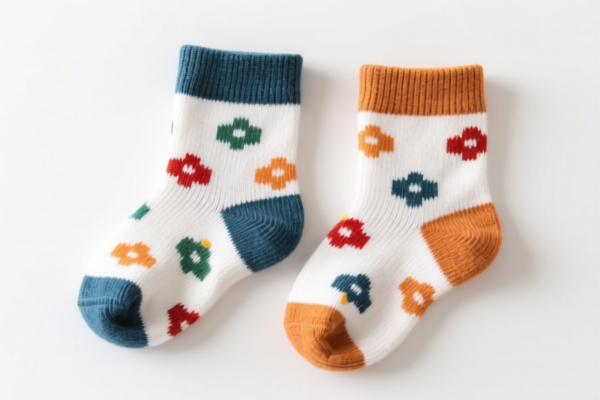
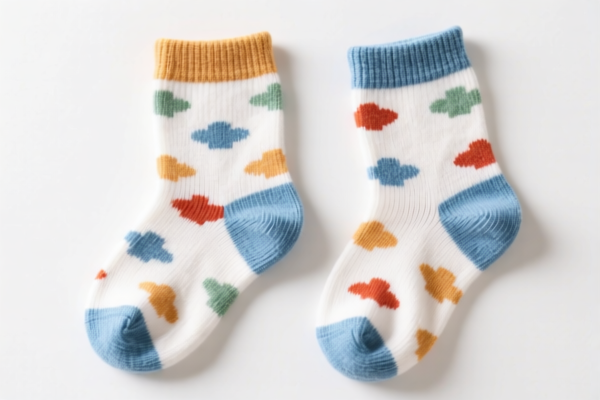
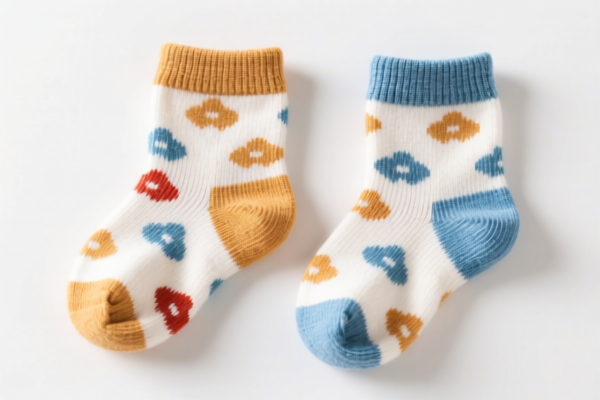
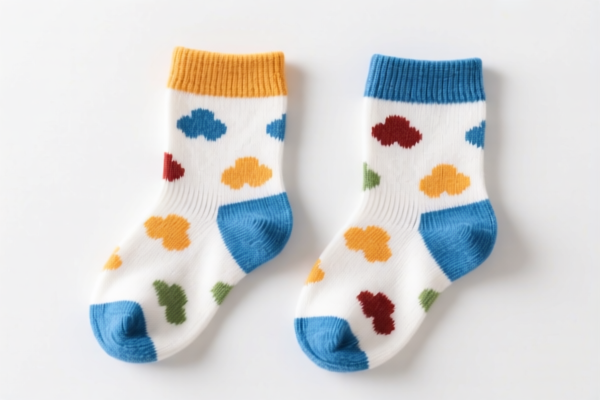
AI分析
🐱 Cat Pattern Socks (毛绒猫袜)
🌐 HS Code Reference & Customs Clearance Guide | 2024/2025 Latest Tariff Analysis | Professional Entry Strategy
📌 I. Product Definition & Classification: Do You Really Understand "Cat Socks"?
"Cat Pattern Socks" (often referred to as plush cat socks or novelty socks) are typically classified as knitted or crocheted hosiery or made-up clothing accessories. In international trade, the specific HS Code depends heavily on two factors:
1. Form: Is it strictly a "sock" (footwear) or a "clothing accessory"?
2. Material: Is it primarily Cotton, Synthetic Fibers, or Wool?
⚠️ Key Distinction Point:
- If the item is primarily knitted and designed to cover the foot → Chapter 61 (Knitted).
- If the material is synthetic vs. cotton, the base tariff rate changes significantly.
- 122 Clause (Section 301/Trade War): Most of these items from China are subject to additional tariffs regardless of material, but the base rate varies.
📦 II. HS Code Classification Details (Based on Provided Data)
| HS Code | Product Description | Material Inference | Form Classification |
|---|---|---|---|
6115.95.90.00 |
Plush Cat Socks, Form: Socks | Cotton / Textile Fibers | Socks (Footwear) |
6115.96.90.20 |
Plush Cat Socks, Form: Socks | Synthetic Fibers (No Wool) | Socks (Footwear) |
6117.80.95.10 |
Plush Cat Socks, Form: Clothing Accessory | Cotton / Textile Fibers | Clothing Accessory |
6117.80.95.70 |
Plush Cat Socks, Form: Clothing Accessory | Synthetic/Artificial Fibers (Non-Wool) | Clothing Accessory |
🔍 Critical Note:
-6115refers to Hosiery (Socks, Stockings, etc.). This is the most common classification for wearable socks.
-6117refers to Made-up Clothing Accessories (e.g., scarves, shawls, or if the "socks" are deemed non-standard hosiery like costume pieces).
- Material matters: Synthetic fibers (6115.96or6117.80subheadings for synthetics) often have a 14.6% base tariff, while Cotton (6115.95) may have a slightly different base, but both are heavily impacted by the 122 Clause.
💰 III. 2024/2025 Latest Tariff Rate Breakdown (Including Additional Duties)
✅ Applicable Country: United States (US)
✅ Origin: China (CN)
✅ Effective Time: Current Trade War Tariffs (Section 301 / 122 Clause)
🎯 1. 6115.95.90.00 —— Cotton-based Socks
| Item | Content |
|---|---|
| Base Tariff | 13.5% |
| Section 301 (Add-on) | +7.5% |
| 122 Clause Tariff | +10% |
| Total Effective Rate | 31.0% |
| Calculation Method | CIF Value × 31.0% |
| De Minimis Exemption | ❌ Not Applicable (Section 301 goods are generally excluded from 80.01 de minimis relief for low-value shipments from China) |
| Legal Path | HTS:6115.95.90.00 → Section 301: Footnote 1 → 122 Clause: 10% |
📌 Explanation:
- This classification applies if the socks are primarily Cotton.
- The 31.0% total rate is a significant cost driver.
- The 10% 122 Clause is an additional punitive tariff on top of standard Section 301 rates.
🎯 2. 6115.96.90.20 —— Synthetic Fiber Socks (Most Common for Plush)
| Item | Content |
|---|---|
| Base Tariff | 14.6% |
| Section 301 (Add-on) | 0.0% (Note: Some synthetic hosiery may fall under different 301 footnotes, but data indicates 0.0% add-on here) |
| 122 Clause Tariff | +10% |
| Total Effective Rate | 24.6% |
| Calculation Method | CIF Value × 24.6% |
| De Minimis Exemption | ❌ Not Applicable |
| Legal Path | HTS:6115.96.90.20 → 122 Clause: 10% |
📌 Explanation:
- This is the most likely classification for mass-produced plush cat socks, as they are often made from acrylic, polyester, or rayon (synthetic fibers).
- Total Rate: 24.6%. This is 6.4% lower than the cotton variant.
- Crucial: Ensure the material composition is accurately declared as synthetic to avoid misclassification penalties.
🎯 3. 6117.80.95.10 & 6117.80.95.70 —— Classified as "Clothing Accessories"
| HS Code | Material | Total Tax | Breakdown |
|---|---|---|---|
6117.80.95.10 |
Cotton | 32.1% | Base: 14.6% + 301: 7.5% + 122: 10% |
6117.80.95.70 |
Synthetic | 32.1% | Base: 14.6% + 301: 7.5% + 122: 10% |
📌 Explanation:
- If Customs determines the item is not standard hosiery (e.g., very bulky, costume-like, or not primarily for foot coverage), it may be misclassified under Chapter 61.17.
- Warning: Both variants incur 32.1%. This is the highest rate in the dataset.
- Recommendation: Avoid this classification if the item is clearly a wearable sock. Misclassification can lead to audits and back-dated duties.
🛠️ IV. Customs Clearance Practical Advice (Pitfall Avoidance Guide)
✅ 1. Preparation Checklist (Mandatory)
| Document | Required? | Purpose |
|---|---|---|
| ✅ Product Material Composition | ✔️ | Must specify % of Cotton vs. Synthetic. Critical for distinguishing between 31.0% and 24.6%. |
| ✅ Product Photos | ✔️ | Show the sole, cuff, and pattern. Proves it is a "sock" (6115), not an "accessory" (6117). |
| ✅ Commercial Invoice | ✔️ | Description must be precise: "Plush Knitted Socks, Synthetic, Cat Pattern". Avoid vague terms like "Pet Toy" or "Costume". |
| ✅ Origin Certificate | ✔️ | To confirm Country of Origin (China). |
| ✅ Packaging Label | ✔️ | Must match invoice details. |
✅ 2. Declaration Tips (Golden Rules)
🔥 "Synthetic is Cheaper, Cotton is Riskier, Accessory is Expensive!"
| Scenario | Correct HS Code | Total Tax | Why? |
|---|---|---|---|
| Standard Plush Socks (Poly/Acrylic) | 6115.96.90.20 |
24.6% | ✅ Lowest effective rate. Synthetics often have different 301 footnotes. |
| Standard Plush Socks (Cotton Mix) | 6115.95.90.00 |
31.0% | ⚠️ Higher base rate + 301 add-on. |
| Misclassified as Accessory | 6117.80.95.xx |
32.1% | ❌ Highest rate. Avoid unless it's truly a non-footwear item (e.g., hand puppets). |
📌 Key Strategy:
- If your socks are made of Polyester/Acrylic, emphasize "Synthetic" in the description to target6115.96.90.20.
- If they are Cotton, you must pay the higher rate. Consider blending materials to shift the "principal material" classification if legally permissible.
✅ 3. Special Considerations for "Cat Pattern"
| Issue | Advice |
|---|---|
| Intellectual Property (IP) | Ensure the "Cat" pattern is original or licensed. Disney/Studio Ghibli cat designs are heavily policed. |
| De Minimis (Section 321) | ❌ Do NOT rely on $800 de minimis exemption for China-origin goods under Section 301. The 122 Clause and 301 tariffs still apply. |
| Material Declaration | Incorrectly declaring "Cotton" when it's "Acrylic" can lead to misdeclaration penalties (27.5% of duty evaded + potential criminal charges). |
🌍 V. Global Market Comparison (2024/2025)
| Region | Recommended HS Code | Estimated Total Tax | Notes |
|---|---|---|---|
| 🇺🇸 USA | 6115.96.90.20 |
24.6% | Includes 122 Clause. Highest compliance risk. |
| 🇨🇳 China (Import) | Same HS | ~10-15% | Lower base rates, no Section 301. |
| 🇪🇺 EU | 6115.96 |
~12% | No Section 301, but VAT applies. |
| 🇬🇧 UK | 6115.96 |
~12% | Post-Brexit tariff regime. |
📌 Conclusion:
The USA market is the most expensive due to the 122 Clause (+10%) and Section 301.
For US-bound shipments, Synthetic Fiber Socks (6115.96.90.20) are the optimal classification for cost savings.
📌 VI. Common Mistakes & Pitfalls (Lessons Learned)
❌ Mistake 1: Declaring "Cat Socks" as "Pet Clothing" (HS 9619 or similar)
👉 Consequence: Misclassification. Pet clothing is different from human hosiery. High penalty risk.
❌ Mistake 2: Ignoring the "122 Clause"
👉 Consequence: Underpayment of 10% additional tariff. CBP will assess back-taxes + interest + fines.
❌ Mistake 3: Mixing Cotton and Synthetic without specifying which is "Principal Material"
👉 Consequence: CBP will use the material that constitutes >50% by weight. If unsure, declare both or test.
✅ Correct Practice:
"Plush Knitted Socks, Synthetic Fiber, Acrylic Blend, Cat Pattern, For Human Wear, Model #123"
🎯 VII. Conclusion: Precision is Profit
🎯 Remember the Rules:
🔹 "Synthetic Socks = 24.6% | Cotton Socks = 31.0% | Accessories = 32.1%"
🔹 "Always pay the 122 Clause (+10%)"
🔹 "Never use De Minimis for China-Origin Section 301 Goods"
📌 Pro Tip:
If you are shipping small quantities (under $800), do not assume they will enter duty-free. The 122 Clause often nullifies the de minimis exemption for Chinese goods. Consult a customs broker to verify current CBP enforcement on "low-value" Section 301 goods.
📣 Immediate Action:
📞 Verify Material Composition (Lab Test if necessary)
📝 Select6115.96.90.20if Synthetic
💰 Budget for 24.6% Total Duty
🚀 Clear Customs Smoothly, Avoid Penalties, Maximize Margin!
✨ Professional Customs Clearance Starts with Accurate Classification!
💼 Every 1% of Tariff Saved is Pure Profit!
用户评价
关于 HS 编码归类
协调制度(HS)是由世界海关组织(WCO)制定的国际贸易商品分类标准。全球 200 多个国家采用 HS 系统作为海关关税、贸易统计和进出口监管的基础。
每个 HS 编码遵循以下层级结构:
- 章(2 位)——商品大类(例如:第 84 章:机器和机械设备)
- 品目(4 位)——章内的更具体分类
- 子目(6 位)——国际通用细分,所有 WCO 成员国统一使用
- 本国细分(8-10 位)——各国自行扩展的细分编码,如美国 HTSUS 10 位编码
正确的 HS 编码归类对于顺利通关、准确缴纳关税和遵守贸易法规至关重要。错误归类可能导致海关延误、多缴关税或罚款。
从CN进口到US时,适用的关税税率可能包括:
- 最惠国(MFN)税率——适用于 WTO 成员国的标准关税税率
- 普通税率——适用于无贸易协定国家
- 贸易救济关税——附加关税,如 301 条款(反倾销)、232 条款(国家安全)或反补贴税
本页内容仅供参考。如需正式归类,请咨询当地海关或持牌报关代理。