Catalogs and Indexes
CN → US| HS编码 | 关税税率 | 原产国 | 目的国 | 文档 |
|---|---|---|---|---|
| 4911100080 | 17.5% | CN | US | 官方文档 |
| 4911100020 | 17.5% | CN | US | 官方文档 |
商品图片
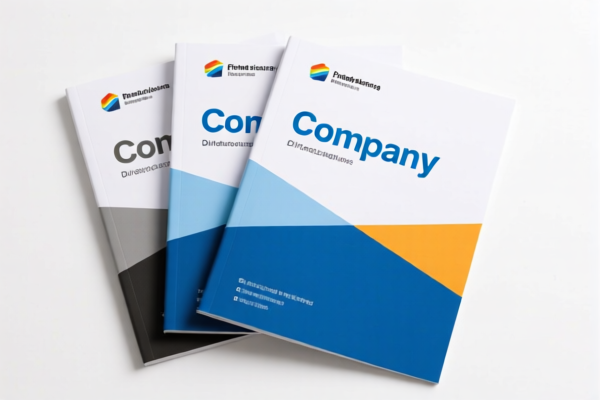
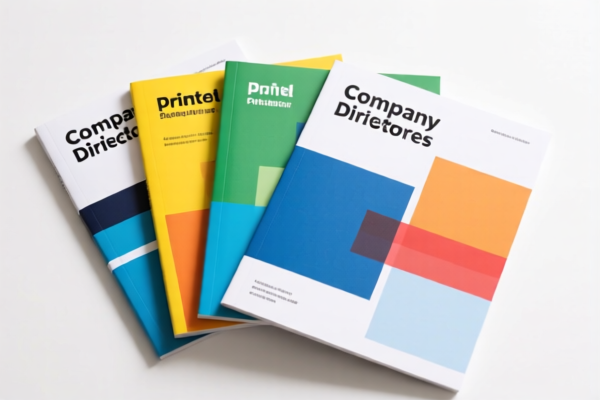
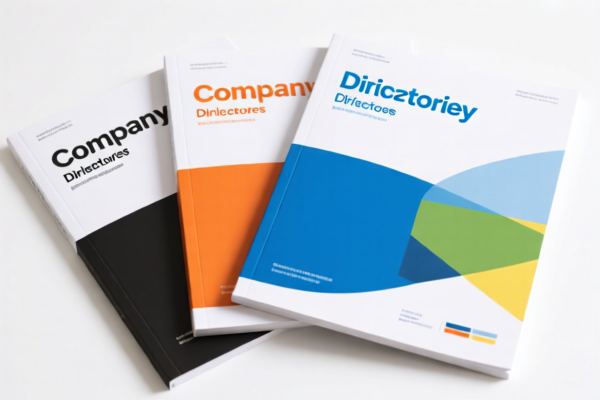
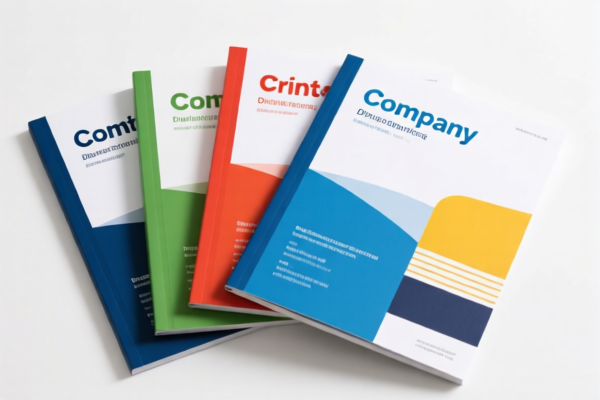
AI分析
📚 Catalogs and Indexes (Printed Matter)
🌐 HS Code Reference & Customs Clearance Guide | 2026 Latest Tariff Analysis | Professional Entry Strategy
📌 I. Product Definition & Classification: Do You Truly Understand "Catalogs"?
In international trade, "Catalogs and Indexes" fall under the broader category of Printed Matter. Specifically, they refer to commercial documents used for advertising, trade promotion, or providing information on products for sale. The critical distinction lies in the content focus and target market:
Commercial Catalogs/Trade Advertising Material (General): Printed matter containing lists of goods, prices, or descriptions intended for trade promotion or general sales offers.
US Product Sales Catalogs: A specific subset where the printed material relates principally to current offers for the sale of United States products. This distinction triggers a different HS code subheading despite similar physical characteristics.
⚠️ Key Differentiation Point:
- If the catalog promotes general merchandise, foreign products, or is a generic trade directory →归入 4911.10.00.80
- If the catalog specifically highlights items for sale from US-based entities/suppliers →归入 4911.10.00.20
📦 II. HS Code Classification Details (2026 Latest Tariff Authority Comparison)
| HS Code | Product Description | Applicable Scenario | Content Focus |
|---|---|---|---|
4911.10.00.80 |
Other printed matter (including pictures/photos): Trade advertising material, commercial catalogs, etc. | General commercial catalogs, brochures for foreign products, generic trade directories | ✅ General/Foreign Focus |
4911.10.00.20 |
Other printed matter (including pictures/photos): Trade advertising material, commercial catalogs, etc. (Specifically: Printed catalogs relating principally to current offers for the sale of United States products) | Catalogs promoting US-origin goods, US supplier directories, "Made in USA" sales brochures | ✅ US Product Focus |
🔍 Important Reminder:
- Physical Form: Both codes apply to physical printed items (booklets, flyers, mailers). Digital catalogs (PDFs on USB/email) may not qualify under "printed matter" depending on interpretation, but physical shipments are strictly covered.
- No Electronics: These are purely informational printed goods. No electronic components, screens, or drives are included.
- Advertising Nature: Must be primarily for trade promotion or sales information, not educational textbooks or news publications (which fall under other 49xx headings).
💰 III. 2026 Latest Tariff Rate Breakdown (Including Surtaxes & Policy Add-ons)
✅ Applicable Country: United States (US)
✅ Country of Origin: China (CN)
✅ Effective Time: 2025/2026 Current Rates (Subject to Trade Policy Updates)
🎯 1. 4911.10.00.80 —— General Trade Advertising Material & Commercial Catalogs
| Item | Details |
|---|---|
| Base Tariff Rate | 0.0% (ad valorem) |
| Additional Tariff (Section 301) | +7.5% |
| Total Tariff Rate | 7.5% |
| Tax Calculation | CIF Value × 7.5% |
| De Minimis Exemption | ❌ Not Applicable for China-origin goods under current trade restrictions for this category. |
| Legal Basis Path | HTSUS:4911.10.00.80 → Section 301 Tariff List |
📌 Explanation:
- The Base Rate is 0%, meaning there is no standard duty for most printed matter.
- The 7.5% Additional Tariff applies due to US-China trade tensions (Section 301 tariffs).
- Total Liability: Even though the base is zero, the surcharge makes the total cost 7.5% of the declared value.
🎯 2. 4911.10.00.20 —— Printed Catalogs Relating Principally to Sale of US Products
| Item | Details |
|---|---|
| Base Tariff Rate | 0.0% (ad valorem) |
| Additional Tariff (Section 301) | +7.5% |
| Total Tariff Rate | 7.5% |
| Tax Calculation | CIF Value × 7.5% |
| De Minimis Exemption | ❌ Not Applicable for China-origin goods under current trade restrictions. |
| Legal Basis Path | HTSUS:4911.10.00.20 → Section 301 Tariff List |
📌 Note:
- Despite the different HS code subheading, the tariff outcome is identical to the general catalog code.
- The distinction in HS code is primarily for statistical tracking and regulatory compliance, ensuring that only catalogs specifically promoting US products are flagged for this subheading.
- Critical for Importers: If you are a foreign supplier sending catalogs of non-US goods to the US, use.80. If you are a US distributor sending catalogs of US goods to international markets (importing into China/from elsewhere), the US HS code is less relevant; however, for imports into the US from China, use the code matching the content.
🛠️ IV. Customs Clearance Practical Advice (Battle-Tested Pitfall Avoidance)
✅ 1. Required Documentation Checklist (Must-Haves)
| Document | Required? | Explanation |
|---|---|---|
| ✅ Commercial Invoice | ✔️ | Must clearly state "Printed Catalogs" or "Trade Advertising Material". Avoid vague terms like "Samples". |
| ✅ Packing List | ✔️ | Detail the number of pages, weight, and dimensions. Paper products are light but bulky; accurate weight prevents fees. |
| ✅ Content Description | ✔️ | Explicitly state: "Catalog containing lists of [Product Type] for sale. No electronics." |
| ✅ Copy of Catalog Content | ✔️ (Recommended) | If customs questions the nature of the print (e.g., is it a newspaper?), a page sample helps. |
| ✅ Certificate of Origin | ✔️ | Not required for tariff reduction (as base rate is 0%), but good for record-keeping. |
✅ 2. Declaration Tips (Key Mantra)
🔥 "Be Specific, Not Generic. 'Catalog' is Better than 'Paper'!"
| Scenario | Correct Declaration | Incorrect Practice |
|---|---|---|
| General Sales Catalog | 4911.10.00.80Description: "Printed Commercial Catalog for [Product Name]" |
❌ "Paper Book" or "Miscellaneous Paper" → Risk of inspection for misclassification. |
| US Product Sales Catalog | 4911.10.00.20Description: "Printed Catalog Relating to Sale of US Products" |
❌ Using .80 for US-product catalogs is allowed but may cause statistical discrepancies; use .20 for accuracy. |
| Business Cards | ❌ Do NOT use these codes. | Business cards fall under 4911.91.00. Using catalog codes for cards is a common error leading to delays. |
| Magazines/Journals | ❌ Do NOT use these codes. | Periodicals fall under 4901 or 4902. Misclassifying a magazine as a catalog can trigger incorrect duty assessments. |
✅ 3. Special Situations Handling
| Situation | Handling Advice |
|---|---|
| Digital Catalogs on USB Drives | ❌ Do Not Use HS 4911. USB drives with catalog files are classified as Data Storage Media (8523) or Computer Peripherals (8471). Tariffs will be significantly higher (often 25%+). Ship physical copies if you want the 7.5% rate. |
| Large Quantity Shipments | Ensure packaging is robust. Paper is susceptible to moisture damage. Use waterproof bags and pallets to avoid "damaged goods" claims that complicate valuation. |
| Mixed Shipments (Catalogs + Products) | If catalogs are included with physical products, they are often considered "accessories" or "free goods" bundled with the main product. The main product's HS code usually applies to the whole shipment. Declare separately if possible to isolate the catalog value. |
🌍 V. Global Main Market Clearance Comparison (2026 Latest)
| Country/Region | Recommended HS Code | Tariff (China Origin) | Certification | Notes |
|---|---|---|---|---|
| 🇺🇸 USA | 4911.10.00.80 / .20 |
7.5% | None | High risk of Section 301 surcharge. |
| 🇨🇳 China (Export) | 4911.10 (Varies) |
Varies (0-10%) | None | Check Chinese export codes. |
| 🇪🇺 EU | 4911.10 |
0% | None | Generally duty-free for printed matter. No Section 301 equivalent. |
| 🇬🇧 UK | 4911.10 |
0% | None | Post-Brexit, most printed matter is duty-free. |
| 🇨🇦 Canada | 4911.10 |
0% | None | CUSMA/USMCA benefits may apply if originating. |
📌 Conclusion:
- USA is the outlier: The 7.5% additional tariff significantly increases costs compared to EU/UK/Canada (where it is often 0%).
- Digital Alternatives: Consider sending PDFs via email instead of physical mail to avoid all customs duties and shipping delays for marketing materials.
- Volume Sensitivity: For small samples, de minimis rules in other countries may apply, but in the US, Section 301 goods often bypass standard de minimis exceptions for Chinese origin.
📌 VI. Common Mistakes & Pitfall Guide (Blood & Tears Lessons)
❌ Mistake 1: Labeling a USB drive with a catalog PDF as "Catalog"
👉 Consequence: Misclassification → Tariff jumps from 7.5% to 25%+ (on the drive) + potential data privacy scrutiny.
👉 Fix: Ship physical paper catalogs for the 7.5% rate, or send digital links via email.
❌ Mistake 2: Using "Book" or "Publication" instead of "Catalog"
👉 Consequence: Customs may assign a different HS code (e.g., 4901 for books) which might have different duty rates or reporting requirements.
👉 Fix: Use precise terminology: "Trade Catalog" or "Commercial Brochure".
❌ Mistake 3: Ignoring the "US Products" distinction for .20
👉 Consequence: While tax is the same, statistical error. If you are promoting US goods to foreign markets, ensure you use the correct code for export declarations in the US (though the user question implies import into the US). For imports into the US, ensure the content matches the code description.
👉 Fix: If promoting foreign goods to the US, strictly use .80.
✅ Correct Practice:
"100 PCS Printed Commercial Catalogs for [Product Name], Paper, A4 Size, Containing Product Lists and Prices. HS 4911.10.00.80"
🎯 VII. Conclusion: Professional Declaration, Time & Cost Saving!
🎯 Remember the Mantra:
🔹 "Physical Paper, 7.5% Tariff (US). Digital USB, Higher Duty! Be Specific, Avoid 'Miscellaneous'!"
🔹 "Catalog vs. Magazine: Know the Difference. One is Trade, One is Periodical."
📌 Pro Tip:
If you are sending marketing materials frequently, consider printing locally in the destination country (e.g., EU/UK) where duties are 0%. This avoids the 7.5% US surcharge entirely and reduces shipping volume/cost.
📣 Immediate Action:
📞 Review your current shipment contents.
📝 Label accurately as "Printed Catalog" not "Paper Samples".
🚀 Choose physical copies for low-risk, low-cost entry, or digital for zero-tariff speed!
✨ Professional clearance starts with accurate classification!
💼 Your marketing budget deserves precision, not penalties!
用户评价
关于 HS 编码归类
协调制度(HS)是由世界海关组织(WCO)制定的国际贸易商品分类标准。全球 200 多个国家采用 HS 系统作为海关关税、贸易统计和进出口监管的基础。
每个 HS 编码遵循以下层级结构:
- 章(2 位)——商品大类(例如:第 84 章:机器和机械设备)
- 品目(4 位)——章内的更具体分类
- 子目(6 位)——国际通用细分,所有 WCO 成员国统一使用
- 本国细分(8-10 位)——各国自行扩展的细分编码,如美国 HTSUS 10 位编码
正确的 HS 编码归类对于顺利通关、准确缴纳关税和遵守贸易法规至关重要。错误归类可能导致海关延误、多缴关税或罚款。
从CN进口到US时,适用的关税税率可能包括:
- 最惠国(MFN)税率——适用于 WTO 成员国的标准关税税率
- 普通税率——适用于无贸易协定国家
- 贸易救济关税——附加关税,如 301 条款(反倾销)、232 条款(国家安全)或反补贴税
本页内容仅供参考。如需正式归类,请咨询当地海关或持牌报关代理。