Cellulose Acetate Anti UV Film
CN → US| HS编码 | 关税税率 | 原产国 | 目的国 | 文档 |
|---|---|---|---|---|
| 3912110000 | 40.6% | CN | US | 官方文档 |
| 3912120000 | 40.6% | CN | US | 官方文档 |
| 3920730000 | 37.9% | CN | US | 官方文档 |
| 3920791000 | 41.2% | CN | US | 官方文档 |
| 3921140000 | 41.5% | CN | US | 官方文档 |
商品图片
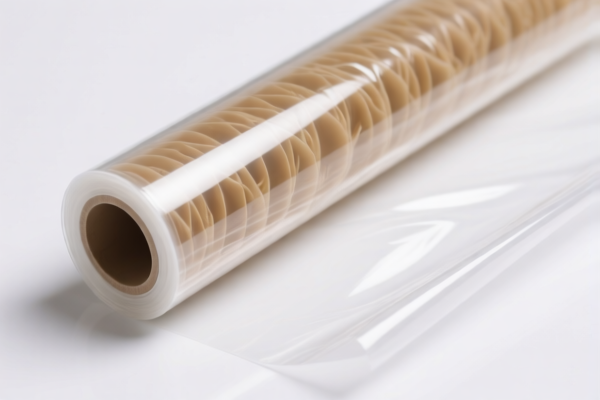


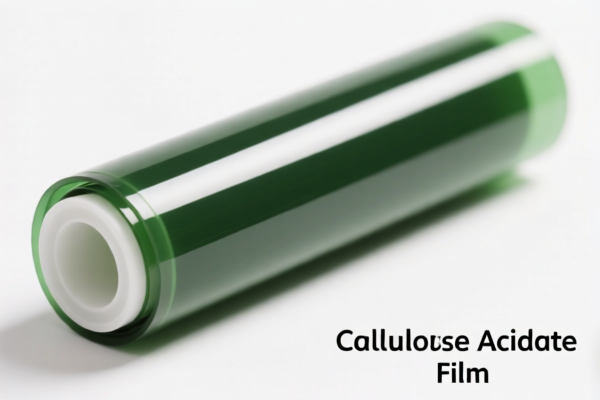
AI分析
🌟 Cellulose Acetate Anti UV Film (醋酸纤维素防紫外线薄膜)
🌐 HS Code Reference & Customs Clearance Guide | 2024-2026 Latest Tariff Analysis | Professional-Level Compliance Strategy
📌 I. Product Definition & Classification: Do You Really Understand "Cellulose Acetate Film"?
Cellulose Acetate Anti UV Film is a high-performance optical film made from cellulose acetate, widely used in solar energy, automotive glazing, and architectural glass to block harmful UV rays while maintaining high light transmission.
In international trade, this product is classified based on its form (film vs. sheet/plate) and thickness, leading to different HS Codes and significantly different tax liabilities. Misclassification can lead to severe customs penalties or unexpected tariff shocks.
⚠️ Key Distinction Point:
- If it is a thin film (usually < 0.076mm or < 76 microns) in rolls or sheets, it often falls under Chapter 39 (Plastics) specific provisions for films.
- If it is a primary form (semi-finished granules/preparations) or specific semi-finished sheets not fitting the "film" definition, it may fall under 3912 (Cellulose derivatives).
- Crucial Note: The provided data focuses on specific HS codes for "Cellulose Acetate Film" and related cellulose derivatives. We must strictly align with the provided<DATA>which maps specific descriptors to HS Codes.
📦 II. HS Code Classification Details (Based on Provided DATA)
| HS Code | Product Description (Summary) | Key Characteristics | Applicable Scenario |
|---|---|---|---|
3912.11.00.00 |
Cellulose acetate in primary forms, semi-finished/film-like | Primary Form/Semi-finished: Often refers to processed cellulose acetate before final film manufacturing or specific sheet forms defined as "primary". | Raw material stage, specific sheet forms not meeting "thin film" criteria. |
3912.12.00.00 |
Cellulose acetate film, common form of cellulose derivatives | Standard Cellulose Acetate Film: The general category for cellulose acetate films that are standard derivatives. | General purpose cellulose acetate films, including UV-filtering types if not meeting specific thickness/shape criteria of 3920. |
3920.73.00.00 |
Cellulose acetate film, plates, sheets, membranes, foils | Plates/Sheets/Membranes: Specifically categorized as "plates, sheets, membranes, foils" under Chapter 39 (Plastics). | Thicker sheets or specific membrane forms of cellulose acetate. |
3920.79.10.00 |
Cellulose acetate film, thickness ≤ 0.076mm (76 microns) | Ultra-Thin Film: Explicitly defined by thickness. This is the most critical code for high-transmission optical UV films. | Most likely code for Anti-UV Optical Films. Thin, flexible films used in solar panels or window tints. |
3921.14.00.00 |
Regenerated cellulose film, material and form consistent | Regenerated Cellulose (Rayon Type): Applies if the film is made from regenerated cellulose rather than cellulose acetate (chemical derivative). | Use only if the material is regenerated cellulose (e.g., cellophane-type), NOT cellulose acetate. |
🔍 Critical Analysis:
- Cellulose Acetate vs. Regenerated Cellulose: Ensure your material is chemically "Cellulose Acetate" (ester) and not "Regenerated Cellulose" (polymer). If it is regenerated cellulose,3921.14.00.00might apply, but the tax rate is higher (41.5%).
- Thickness Matters: For Anti-UV films, if the thickness is ≤ 0.076mm,3920.79.10.00is the precise fit. If thicker,3920.73.00.00may apply.
- Primary Forms: If sold as a semi-finished chemical product rather than a finished film,3912.11.00.00or3912.12.00.00applies.
💰 III. 2024-2026 Latest Tariff Rate Breakdown (Including Additional Taxes & Policy Surcharges)
✅ Applicable Country: United States (US)
✅ Country of Origin: China (CN)
✅ Effective Time: Current tariffs apply as per the provided data (including Section 301 and 122 Clause surcharges).
🎯 1. 3920.79.10.00 —— Cellulose Acetate Film, Thickness ≤ 0.076mm (Most Common for Optical Films)
| Item | Details |
|---|---|
| Base Tariff | 6.2% |
| Section 301 Additional Tariff | +25% (25% ad valorem under US Trade Act Section 301) |
| Section 122 Clause Tariff | +10% (Specific surcharge as noted in data) |
| Total Tariff Rate | 41.2% |
| Tax Calculation | CIF Value × 41.2% |
| De Minimis Exemption | ❌ NOT Applicable (High tax rate exceeds exemption thresholds) |
| Legal Basis Path | USITC:3920.79.10.00 → Section 301: Footnote 9903.88.01 → Section 122 Clause |
📌 Explanation:
- This is the most precise code for thin Anti-UV films.
- The total tax of 41.2% is substantial. The 25% is a standard Section 301 tariff for many plastics/films from China. The 10% is an additional layer.
- Cost Impact: For a $10,000 shipment, you pay $4,120 in duties alone.
🎯 2. 3912.11.00.00 & 3912.12.00.00 —— Cellulose Acetate (Primary Forms/Standard Film)
| Item | Details |
|---|---|
| Base Tariff | 5.6% |
| Section 301 Additional Tariff | +25% |
| Section 122 Clause Tariff | +10% |
| Total Tariff Rate | 40.6% |
| Tax Calculation | CIF Value × 40.6% |
| De Minimis Exemption | ❌ NOT Applicable |
| Legal Basis Path | USITC:3912.x1.x0 → Section 301 → Section 122 |
📌 Note:
- Slightly lower than3920.79.10.00by 0.6%, but misclassification risk is high if the product is clearly a "film" ≤ 0.076mm. Customs may reclassify to the more specific code.
🎯 3. 3920.73.00.00 —— Cellulose Acetate Film, Plates/Sheets
| Item | Details |
|---|---|
| Base Tariff | 2.9% |
| Section 301 Additional Tariff | +25% |
| Section 122 Clause Tariff | +10% |
| Total Tariff Rate | 37.9% |
| Tax Calculation | CIF Value × 37.9% |
| De Minimis Exemption | ❌ NOT Applicable |
📌 Note:
- If your film is thicker than 0.076mm or classified as a "plate/sheet," this code offers the lowest total tax (37.9%).
- Risk: If declared as "film" but thickness is > 0.076mm, this is correct. If < 0.076mm, customs will force reclassification to3920.79.10.00(41.2%).
🎯 4. 3921.14.00.00 —— Regenerated Cellulose Film (If Applicable)
| Item | Details |
|---|---|
| Base Tariff | 6.5% |
| Section 301 Additional Tariff | +25% |
| Section 122 Clause Tariff | +10% |
| Total Tariff Rate | 41.5% |
| Tax Calculation | CIF Value × 41.5% |
| De Minimis Exemption | ❌ NOT Applicable |
📌 Warning:
- Only use if material is Regenerated Cellulose (e.g., cellophane). If it is Cellulose Acetate, this is incorrect and leads to penalties.
- Highest tax rate in the list.
🛠️ IV. Customs Clearance Practical Advice (Operational Pitfall Guide)
✅ 1. Documentation Checklist (Non-negotiable)
| Document | Must Provide | Description |
|---|---|---|
| ✅ Product Specification Sheet | ✔️ | Must explicitly state: Material (Cellulose Acetate), Thickness (e.g., 50 microns / 0.05mm), UV Blocking %, Dimensions. |
| ✅ Technical Data Sheet (TDS) | ✔️ | Chemical composition, proof of "Cellulose Acetate" vs. "Regenerated Cellulose". |
| ✅ Product Photos | ✔️ | Clear images showing roll form, labeling, and any thickness markers. |
| ✅ Commercial Invoice | ✔️ | Must use precise language: "Cellulose Acetate Anti-UV Film, Thickness XXmm, HS Code XXXX". Avoid vague terms like "Plastic Sheet". |
| ✅ Packing List | ✔️ | Weight and dimensions must match invoice. |
| ✅ Origin Certificate | ✔️ | Standard COO for China origin. |
✅ 2. Classification Strategy (Key Mantra)
🔥 "Thickness Dictates Code, Material Defines Chapter, Vagueness Triggers Audit!"
| Scenario | Correct HS Code | Risk if Incorrect |
|---|---|---|
| Thin Film (≤ 0.076mm) | 3920.79.10.00 (41.2%) |
If declared as 3920.73.00.00, customs may audit thickness. If declared as 3912..., it's a primary form error. |
| Thicker Sheet (> 0.076mm) | 3920.73.00.00 (37.9%) |
Lower tax, but must prove thickness > 0.076mm via specs. |
| Primary Chemical Form | 3912.11.00.00 / 3912.12.00.00 (40.6%) |
Only if not yet formed into a continuous film. |
| Regenerated Cellulose | 3921.14.00.00 (41.5%) |
High risk if material is actually acetate. Penalty for misdeclaration. |
📌 Pro Tip:
- Accurate Thickness Declaration is Critical. Provide the exact microns (μm) or millimeters (mm) in the commercial invoice and packing list.
- If your film is 50 microns (0.05mm), it MUST be3920.79.10.00. Do not try to force3920.73.00.00to save 3.3% tax; the risk of seizure or fine is not worth it.
✅ 3. Special Circumstances Handling
| Situation | Handling Advice |
|---|---|
| OEM Custom Thickness | Provide engineering drawings showing thickness tolerance. If thickness varies, declare the majority or the most common size, but note "Thickness varies between X and Y". |
| Multi-layer Laminates | If the Anti-UV film is laminated with other materials (e.g., PET), the classification may change to a composite plastic. Seek pre-ruling. |
| Solar Lamination | If part of a solar panel lamination process, ensure the "film" is declared separately from the glass/EVA if shipped as components. |
| Anti-UV Coating | The coating does not change the base HS Code. It is still Cellulose Acetate Film. |
🌍 V. Global Market Comparison (2024-2026)
| Country/Region | Recommended HS Code | Total Tariff (CN Origin) | Key Requirements | Remarks |
|---|---|---|---|---|
| 🇺🇸 USA | 3920.79.10.00 |
41.2% | FCC (if applicable), Detailed Specs | High tariffs due to Section 301 & 122. |
| 🇨🇳 China | 3920.79.10.00 |
~6.2% + VAT | CCC (if applicable) | Import duties are lower, but VAT (13%) applies. |
| 🇪🇺 EU | 3920.79.10.00 (CH 3920) |
~6.5% | REACH, RoHS | No Section 301. Lower total cost than US. |
| 🇬🇧 UK | 3920.79.10.00 |
~6.5% | UKCA, UK REACH | Post-Brexit rules apply. |
📌 Conclusion:
- USA is the most expensive market for Cellulose Acetate Films due to the 35%+ surcharge.
- Consider supply chain diversification if targeting the US market heavily.
- For EU/UK, the cost is significantly lower, making these markets more attractive for high-volume film exports.
📌 VI. Common Errors & Pitfalls (Blood & Tears Lessons)
❌ Error 1: Declaring "Plastic Film" generically without specifying "Cellulose Acetate".
👉 Consequence: Customs may assign a higher default rate or reject the entry for lack of specificity.
❌ Error 2: Ignoring Thickness.
👉 Consequence: If you declare 3920.73.00.00 (37.9%) but the film is 0.05mm, customs will reclassify to 3920.79.10.00 (41.2%) and charge back taxes + penalties.
❌ Error 3: Confusing "Cellulose Acetate" with "Regenerated Cellulose".
👉 Consequence: 3921.14.00.00 has a higher base rate (6.5%) and similar surcharges. Misclassification leads to audit.
❌ Error 4: Using "De Minimis" (Section 321) for shipments > $800.
👉 Consequence: Anti-UV films are often high-value. If declared under $800 but actual value is higher, customs will seize goods and issue fines.
✅ Correct Practice:
"Cellulose Acetate Anti-UV Optical Film, Thickness 0.05mm, Width 1200mm, Roll Form, HS Code 3920.79.10.00, Made in China"
🎯 VII. Conclusion: Precision Classification for Cost Efficiency
🎯 Remember the Mantra:
🔹 "Thin Film ≤ 0.076mm → 3920.79.10 (41.2%)"
🔹 "Thicker Sheet → 3920.73.00 (37.9%)"
🔹 "Primary Form → 3912.xx (40.6%)"
🔹 "Material Must Match Code! Accuracy Saves Money!"
📌 Pro Tip:
- If your film is very thin and used in high-tech applications (e.g., semiconductor, medical), consider applying for an HTSUS Exclusion if available, though unlikely for cellulose acetate.
- Always request a Pre-Ruling from US CBP if the product is novel or thickness is borderline. This provides legal certainty and protects against future audits.
📣 Immediate Action:
📞 Contact your Customs Broker with the exact thickness (microns) and material composition before shipping.
🚀 Declare accurately to avoid 41.2% surprises!
💼 Your profit margin depends on precise HS Code selection!
✨ Professional Customs Clearance Starts with Accurate Classification!
💼 Every Percent of Tax Saved is Pure Profit!
用户评价
关于 HS 编码归类
协调制度(HS)是由世界海关组织(WCO)制定的国际贸易商品分类标准。全球 200 多个国家采用 HS 系统作为海关关税、贸易统计和进出口监管的基础。
每个 HS 编码遵循以下层级结构:
- 章(2 位)——商品大类(例如:第 84 章:机器和机械设备)
- 品目(4 位)——章内的更具体分类
- 子目(6 位)——国际通用细分,所有 WCO 成员国统一使用
- 本国细分(8-10 位)——各国自行扩展的细分编码,如美国 HTSUS 10 位编码
正确的 HS 编码归类对于顺利通关、准确缴纳关税和遵守贸易法规至关重要。错误归类可能导致海关延误、多缴关税或罚款。
从CN进口到US时,适用的关税税率可能包括:
- 最惠国(MFN)税率——适用于 WTO 成员国的标准关税税率
- 普通税率——适用于无贸易协定国家
- 贸易救济关税——附加关税,如 301 条款(反倾销)、232 条款(国家安全)或反补贴税
本页内容仅供参考。如需正式归类,请咨询当地海关或持牌报关代理。