Cellulose Casings
CN → US商品图片

AI分析
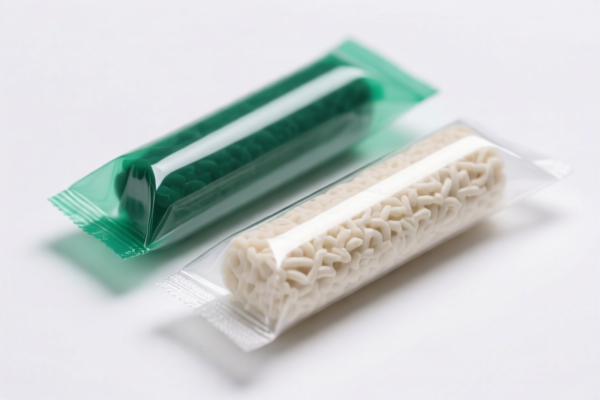
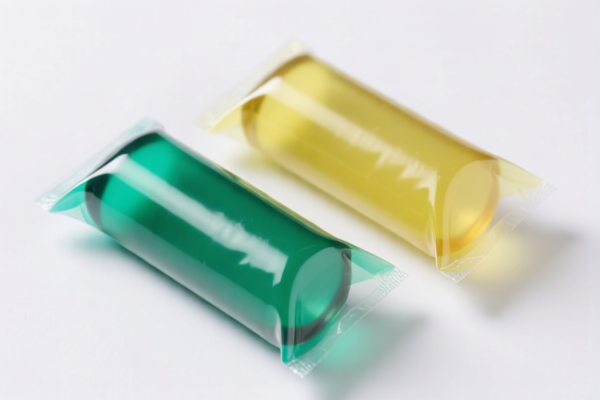
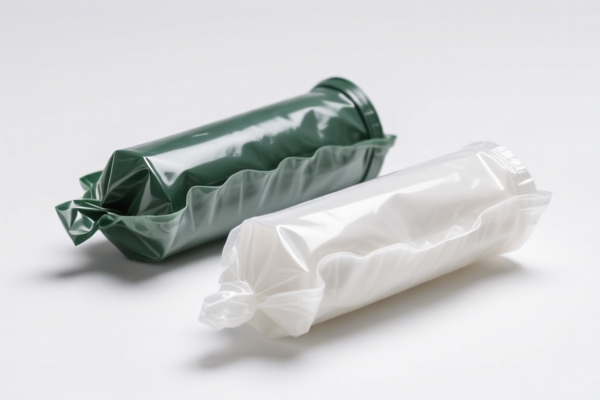
🌭 Cellulose Casings (Edible & Semi-Edible Meat Casings)
🌐 HS Code Reference & Clearance Guide | 2026 Latest Tariff Analysis | Professional Clearance Strategy
📌 I. Product Definition & Classification: What Exactly Are "Cellulose Casings"?
Cellulose casings are artificial sausage skins made from purified wood pulp (cellulose). They are widely used in the meat processing industry for manufacturing sausages, hams, and cured meats.
In international trade, they are strictly divided into two functional categories, which dictate their HS Code and duty rate:
- Edible Cellulose Casings: Designed to be eaten with the product. These are often treated or flavored to be palatable.
- Non-Edible (Removable) Cellulose Casings: Used for shaping and smoking but must be removed before consumption. They act as a barrier against oxidation and bacteria during processing.
⚠️ Key Distinction Point:
- If the casing is intended to be consumed, it falls under food products (Chapter 19 or 23 depending on composition, but usually 1904 or 2309 for processed casings).
- If the casing is intended to be removed, it is classified as a manufactured textile/paper product (Chapter 48).
- Most commercial "Cellulose Casings" imported for industrial meat processing are NON-EDIBLE and are classified under Chapter 48.
📦 II. HS Code Classification Details (2026 Latest Tariff Reference)
| HS Code | Product Description | Applicable Scenario | Edible? | Removable? |
|---|---|---|---|---|
4805.24.00.00 |
Cellulose fibers, creped or crinkled, in sheets of any size, whether or not surface-coated or printed (Other) | Standard Non-Edible Casings (Smooth or textured) | ❌ No | ✅ Yes |
4805.90.00.00 |
Other cellulose fiber papers and paperboard, in sheets | Less common; may apply to specialty treated cellulose films | ❌ No | ✅ Yes |
1904.10.00.00 |
Cereals or vegetable products, prepared or preserved by swelling or roasting | Edible Casings (If primarily made from cereal/cellulose mix for consumption) | ✅ Yes | N/A |
2309.90.90.00 |
Preparations of a kind used in animal feeding | Less common; may apply if high protein/fiber content for direct feeding | ✅ Yes | N/A |
🔍 Important Reminder:
- 90% of industrial cellulose casings are classified under4805.24.00.00.
- Do NOT classify removable casings under food chapters. This is a common error that triggers inspections for food safety compliance (FDA/EFSA) unnecessarily.
- If the casing is edible, provide a detailed ingredient list and nutritional facts. If non-edible, emphasize "Not for Human Consumption - Remove Before Eating."
💰 III. 2026 Latest Tariff Rate Details (Including Surtaxes & Policies)
✅ Applicable Country: United States (US)
✅ Origin: China (CN)
✅ Effective Date: November 10, 2025 onwards (for subsequent imports)
🎯 1. 4805.24.00.00 —— Non-Edible Cellulose Casings (Most Common)
| Item | Details |
|---|---|
| Base Duty Rate | 0% (Free of duty for most paper products) |
| USITC Surtax | +25% (Under USITC Footnote 9903.88.01) |
| IEEPA Surtax | +10% (Against China/HK products, effective from Nov 10, 2025) |
| Total Duty Rate | 35% |
| Tax Calculation | CIF Value × 35% |
| De Minimis Eligible? | ❌ No (deny_de_minimis) |
| Legal Basis Path | IEEPA:9903.01.25 → USITC:4805.24.00.00 → FOOTNOTE:9903.88.01 |
📌 Explanation:
- Although base duty is 0%, the 35% combined surtax is significant.
- This tax is specifically targeted at Chinese-manufactured paper and cellulose products.
- High Duty Alert: Importers must budget for this 35% cost.
🎯 2. 1904.10.00.00 —— Edible Cellulose/Cereal Casings
| Item | Details |
|---|---|
| Base Duty Rate | 3.4% (Standard MFN rate) |
| USITC Surtax | +25% (Under USITC Footnote 9903.88.01) |
| IEEPA Surtax | +10% (Against China/HK products) |
| Total Duty Rate | 38.4% |
| Tax Calculation | CIF Value × 38.4% |
| De Minimis Eligible? | ❌ No (deny_de_minimis) |
📌 Note:
- Edible casings face even higher total rates due to the base duty.
- Requires FDA Prior Notice and Food Facility Registration.
🛠️ IV. Clearance Practical Advice (Pitfall Avoidance Guide)
✅ 1. Essential Documentation Checklist (All Required)
| Document | Required | Explanation |
|---|---|---|
| ✅ Product Spec Sheet | ✔️ | Must specify: Material (Cellulose), Diameter, Thickness, Permeability, Edible vs. Non-Edible. |
| ✅ Ingredient List | ✔️ | If edible: Full chemical composition. If non-edible: "Pure Cellulose, Non-Toxic, Not for Consumption." |
| ✅ Product Photos | ✔️ | Show roll form, labeling, and any safety warnings. |
| ✅ FDA Prior Notice | ✔️ | Mandatory if edible. Not required for non-edible, but good practice. |
| ✅ Commercial Invoice | ✔️ | Clearly state: "Cellulose Sausage Casings, Non-Edible, HS 4805.24.00.00." |
| ✅ Certificate of Origin | ✔️ | To verify Chinese origin for surtax calculation. |
✅ 2. Declaration Tips (Key Mantra)
🔥 “Non-Edible is Key, Label Clearly, Avoid FDA Hurdles, HS 4805 is Safe!”
| Scenario | Correct Declaration | Wrong Practice |
|---|---|---|
| Non-Edible Casings | HS 4805.24.00.00, "Non-Edible Cellulose Casing" |
Declare as "Food" → FDA Hold |
| Edible Casings | HS 1904.10.00.00, "Edible Casing" |
Declare as "Paper" → Misclassification Penalty |
| Mixed Shipment | Separate invoices for edible/non-edible | Mixed declaration → Customs Audit |
✅ 3. Special Cases Handling
| Situation | Handling Advice |
|---|---|
| OEM/Private Label | Provide branding authorization if selling under a trademark. |
| Sample Shipments | Even samples are subject to 35% duty if from China. No de minimis. |
| Sustainable/Eco-Friendly Claims | If claiming "Biodegradable" or "Organic," provide third-party certification to avoid greenwashing claims. |
| Food-Grade Chemicals | If casings are treated with food-safe coatings, ensure coatings comply with FDA 21 CFR standards. |
🌍 V. Global Market Clearance Comparison (2026 Latest)
| Country/Region | Recommended HS Code | Duty Rate | Certification | Remarks |
|---|---|---|---|---|
| 🇺🇸 USA | 4805.24.00.00 |
35% | None (if non-edible) | High surtax due to IEEPA |
| 🇨🇳 China | 4805.24.00.00 |
0% | None | Duty-free import |
| 🇪🇺 EU | 4805.24.00.00 |
0% (if under EUR.1) | CE (if food contact) | Free Trade Agreement benefits |
| 🇦🇺 Australia | 4805.24.00.00 |
5% | None | Low duty, stable |
| 🇯🇵 Japan | 4805.24.00.00 |
0% | JAS (if organic) | Duty-free for many paper products |
📌 Conclusion:
- USA is the highest-cost market due to the 35% combined surtax.
- EU and Japan offer better opportunities with 0% or low duties.
- Consider supply chain diversification if targeting the US market heavily.
📌 VI. Common Errors & Pitfall Guide (Lessons Learned)
❌ Error 1: Declaring Non-Edible Casings as "Food"
👉 Consequence: FDA Inspection, Detention, Return to Sender.
Fix: Clearly mark "NOT FOR HUMAN CONSUMPTION" on packaging and invoice.
❌ Error 2: Using HS Code 4803 (Tissue Paper) instead of 4805
👉 Consequence: Misclassification, Potential Penalty.
Fix: Cellulose casings are specifically covered under 4805.24.
❌ Error 3: Ignoring IEEPA Surtax in Costing
👉 Consequence: Profit Margin Squeeze due to unexpected 10% tax.
Fix: Include 35% total duty in FOB/CIF pricing models.
❌ Error 4: Missing FDA Prior Notice for Edible Casings
👉 Consequence: Cargo held at port, demurrage fees accrue.
Fix: Submit FDA Prior Notice 4 hours before arrival.
✅ Correct Declaration Example:
"Cellulose Sausage Casings, Non-Edible, 40mm Diameter, 25gsm, HS 4805.24.00.00, Not for Human Consumption, Remove Before Cooking"
🎯 VII. Conclusion: Professional Clearance, Cost Control, Risk Mitigation
🎯 Remember the Mantra:
🔹 "Non-Edible, HS 4805, 35% Duty, Label Clearly, Avoid FDA!"
🔹 "Edible is Harder, 38.4% Duty, FDA First, Ingredients Clear!"
🔹 "HS Code Dictates Cost, Error Means Delay, Correct Label Saves Money!"
📌 Pro Tip:
If your cellulose casings are originating from Vietnam, India, or Turkey, you may qualify for IEEPA exemption, reducing the duty to 0%~5%.
Consider Advance Ruling application with US Customs and Border Protection (CBP) for binding classification confirmation.
📣 Take Action Now:
📞 Contact your freight forwarder + Provide Product Specs + Apply for HS Code Advance Ruling
🚀 Ensure your casings, clear smoothly, avoid delays, and protect margins!
✨ Professional Clearance Starts with Precise Classification!
💼 Every Percent Saved is Pure Profit!
用户评价
关于 HS 编码归类
协调制度(HS)是由世界海关组织(WCO)制定的国际贸易商品分类标准。全球 200 多个国家采用 HS 系统作为海关关税、贸易统计和进出口监管的基础。
每个 HS 编码遵循以下层级结构:
- 章(2 位)——商品大类(例如:第 84 章:机器和机械设备)
- 品目(4 位)——章内的更具体分类
- 子目(6 位)——国际通用细分,所有 WCO 成员国统一使用
- 本国细分(8-10 位)——各国自行扩展的细分编码,如美国 HTSUS 10 位编码
正确的 HS 编码归类对于顺利通关、准确缴纳关税和遵守贸易法规至关重要。错误归类可能导致海关延误、多缴关税或罚款。
从CN进口到US时,适用的关税税率可能包括:
- 最惠国(MFN)税率——适用于 WTO 成员国的标准关税税率
- 普通税率——适用于无贸易协定国家
- 贸易救济关税——附加关税,如 301 条款(反倾销)、232 条款(国家安全)或反补贴税
本页内容仅供参考。如需正式归类,请咨询当地海关或持牌报关代理。