Cellulose Ester Heat Shrink Film
CN → US商品图片
AI分析
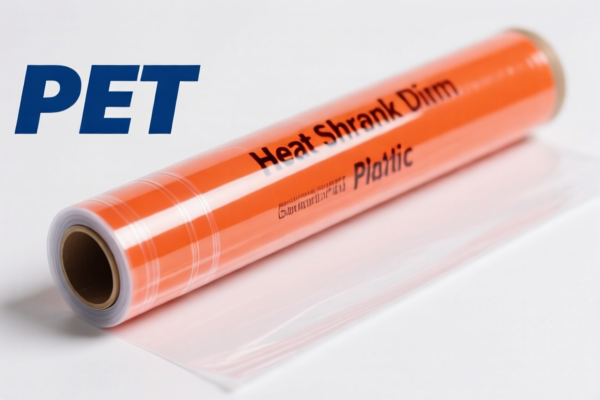
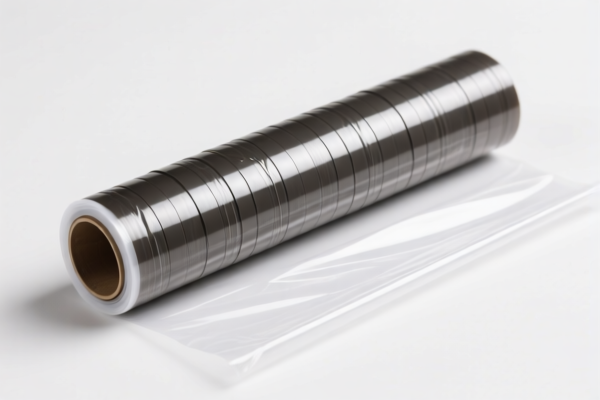
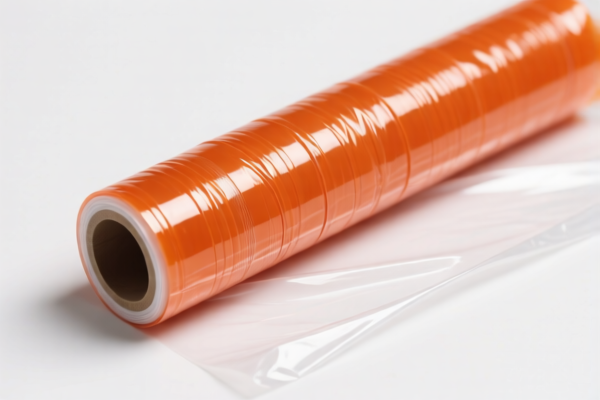
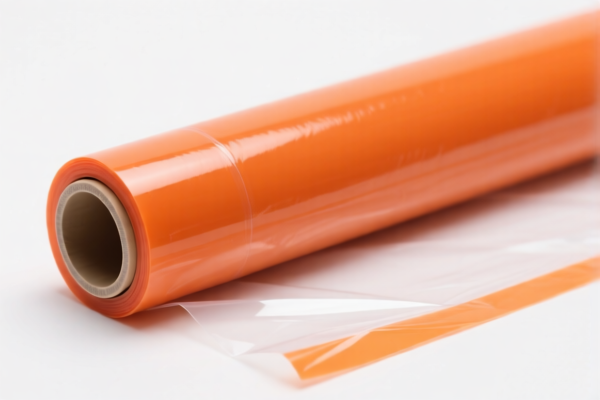
🎞️ Cellulose Ester Heat Shrink Film (Cellophane)
🌐 HS Code Reference & Customs Clearance Guide | 2026 Latest Tariff Analysis | Professional Entry Strategy
📌 I. Product Definition & Classification: Do You Really Understand "Cellulose Ester Film"?
Cellulose Ester Heat Shrink Film (commonly known as Cellophane or Regenerated Cellulose Film) is a transparent, biodegradable, and rigid film made from wood pulp (cellulose). Unlike synthetic plastics (like PVC or OPP), it is derived from natural sources.
In international trade, it is strictly distinguished from Plastic Films (Chapter 39) and Paper (Chapter 48) based on its chemical composition and manufacturing process.
Key Distinction:
- Cellulose Ester (Cellophane): Made from regenerated cellulose, treated with acetic anhydride/chloroform. It has high oxygen barrier properties and is compostable. → Chapter 39
- Synthetic Plastic Film (OPP/PVC/PE): Made from polymers like polypropylene or polyvinyl chloride. → Chapter 39 (Different Heading)
- Paper-Based Film: If coated with a thin layer of plastic, it may still be considered paper. But pure cellulose ester is Plastic.
⚠️ Critical Classification Point:
- If the product is unwound rolls of cellulose ester film → 3920.62.00
- If it is finished shrink bags (cut and sealed) → Still generally 3920.62.00 (as plates/sheets/films), unless classified as "other plastic articles" (3926), but customs usually prefer the film heading for bulk shrink packaging.
- Do NOT classify as Paper (4823) or Synthetic Resin Films (3920.39/3920.69).
📦 II. HS Code Classification Details (2026 Latest Tariff Authority)
| HS Code | Product Description | Application Scenario | Material Type |
|---|---|---|---|
3920.62.00.00 |
Other plates, sheets, film, foil and strip, of cellulose esters and ethers | Unwound rolls of celloffane/shrink film, labels, wrapping film | ✅ Cellulose Ester |
3921.90.89.00 |
Other plates, sheets, film, foil and strip | If heavily coated or laminated in a way that changes essential character (rare for pure celloffane) | ⚠️ Laminated/Coated |
4823.90.60.00 |
Other paper, paperboard, cellulose wadding and webs of cellulose fibers | ❌ Incorrect – Only if it's paper-based, not pure cellulose ester | ❌ Paper |
3920.69.00.00 |
Other plates, sheets, film, of plastics (polyesters, polyamides, etc.) | ❌ Incorrect – For synthetic plastics like PET/OPP, NOT cellulose | ❌ Synthetic Plastic |
🔍 Key Reminder:
- Cellulose Ester = Plastic under HS Chapter 39, NOT Paper!
- The most accurate code for standard heat-shrinkable cellophane film is 3920.62.00.00.
- Ensure the commercial invoice specifies "Cellulose Ester" or "Regenerated Cellulose" to avoid misclassification as synthetic plastic (which may have different duties) or paper.
💰 III. 2026 Latest Tariff Rate Details (Including Surcharges)
✅ Applicable Country: United States (US)
✅ Origin: China (CN)
✅ Effective Date: November 10, 2025 onwards (including subsequent imports)
🎯 1. 3920.62.00.00 —— Cellulose Esters and Ethers (Film/Rolls)
| Item | Content |
|---|---|
| Base Duty Rate | 0% (ad valorem) |
| USITC Surtax (Section 301) | +7.5% (Footnote 9903.88.01) |
| IEEPA Surtax | +10% (Targeting China/HK products, effective Nov 10, 2025) |
| Total Duty Rate | 17.5% |
| Duty Calculation | CIF Value × 17.5% |
| De Minimis Exemption | ❌ Not Eligible (deny_de_minimis) |
| Legal Path | IEEPA:9903.01.25 → IEEPA:9903.01.24 → USITC:3920.62.00.00 → FOOTNOTE:9903.88.01 |
📌 Explanation:
- 0% Base Rate: Cellulose esters are often low-base duty items.
- +7.5% Section 301: Applies to plastic articles/manufactures.
- +10% IEEPA: New surcharge effective Nov 2025 for Chinese-origin goods.
- Total 17.5%: Significantly lower than many synthetic plastics (which can face 25%+).
- No De Minimis: Shipments under $800 do NOT escape these duties.
🛠️ IV. Customs Clearance Practical Advice (实战避坑指南)
✅ 1. Required Documentation Checklist (Mandatory)
| Document | Must Provide | Notes |
|---|---|---|
| ✅ Commercial Invoice | ✔️ | Must clearly state "Cellulose Ester Film" or "Regenerated Cellulose". Do not use vague terms like "Plastic Film". |
| ✅ Product Specification | ✔️ | Include material composition (e.g., "100% Cellulose Acetate"), thickness, width, and heat-shrink ratio. |
| ✅ HS Code Justification Letter | ✔️ | Explain why it is 3920.62 and not 3920.69 (synthetic) or 4823 (paper). Include molecular structure info if possible. |
| ✅ Photos | ✔️ | Show the roll, label, and sample. Label should indicate "Cellulose" or "Cellophane". |
| ✅ FSC Certification | ✔️ | If marketed as eco-friendly, provide Forest Stewardship Council certificates (not required for duty, but helpful for marketing/customs trust). |
✅ 2. Declaration Tips (Key Mantra)
🔥 "Not Plastic, Not Paper, It's Cellulose! Declare 'Ester', Save Money!"
| Scenario | Correct Declaration | Incorrect Practice |
|---|---|---|
| Pure Celloffane Roll | 3920.62.00.00 |
Misdeclare as PVC/OPP (3920.69) → Higher Duty |
| Celloffane Roll | 3920.62.00.00 |
Misdeclare as Paper (4823) → Seizure/Fine for Fraud |
| Pre-cut Shrink Bags | 3920.62.00.00 |
Declare as "Plastic Bags" (3926) → Unclear, potential penalty |
| Composite Film (Paper + Celloffane) | Likely 4823 or 3921 |
Claim as pure Celloffane → Customs will inspect and reject |
✅ 3. Special Scenarios
| Scenario | Handling Advice |
|---|---|
| Labeling | Clearly mark "Cellulose Ester" on the outer carton. Avoid "Plastic" if possible, though HS classifies it as plastic. |
| Biodegradable Claims | Ensure claims are substantiated. Customs may ask for MSDS or technical data sheets. |
| Mixed Shipments | If shipping with PVC film, separate shipments. Do not mix HS Codes on one invoice to avoid audits. |
| Origin Proof | If transshipped via Vietnam, ensure no substantial transformation occurred. Otherwise, US will still apply CN surtax. |
🌍 V. Global Market Comparison (2026 Latest)
| Country/Region | Recommended HS Code | Duty (China Origin) | Certification | Notes |
|---|---|---|---|---|
| 🇺🇸 USA | 3920.62.00.00 |
17.5% | None specific | Lowest among plastics due to low base rate |
| 🇪🇺 EU | 3920.62.00.00 |
6.5% | REACH Compliance | No Section 301 equivalent, but high base rate |
| 🇨🇳 China | 3920.62.00.00 |
5% | None | Import duty only |
| 🇯🇵 Japan | 3920.62.00.00 |
0% | JIS Standard | Often zero duty for cellulose esters |
| 🇬🇧 UK | 3920.62.00.00 |
6.5% | UKCA | Post-Brexit rules |
📌 Conclusion:
- USA is the only market with additional surtaxes, but the total (17.5%) is still competitive compared to synthetic plastics (25%+).
- EU and Japan offer better duty rates for Chinese-origin cellulose ester film.
- Eco-friendly marketing in the EU can leverage zero-duty arguments if classified as "recyclable," but duty-wise, it's still 6.5%.
📌 VI. Common Mistakes & Pitfalls (Blood Lessons)
❌ Mistake 1: Declaring as "Plastic Film" without specifying Cellulose Ester
👉 Consequence: Customs may apply general plastic duty (3920.69) which could be higher, or reject the declaration for lack of detail.
❌ Mistake 2: Declaring as "Paper" (4823)
👉 Consequence: Customs Fraud! Cellulose ester is chemically a plastic (Chapter 39). Fines and seizure risk.
❌ Mistake 3: Mixing Celloffane with PVC/OPP in one container
👉 Consequence: Customs may audit the entire shipment. If PVC is found, the whole container may be reclassified under stricter PVC rules.
❌ Mistake 4: Ignoring IEEPA Surtax
👉 Consequence: Failure to pay the +10% IEEPA surcharge post-Nov 2025 results in back taxes + penalties.
✅ Correct Practice:
"Cellulose Ester Heat Shrink Film, Regenerated Cellulose, Unwound Roll, Thickness 15micron, Width 300mm, Model CEL-15S, Material: Cellulose Acetate"
🎯 VII. Conclusion: Professional Declaration, Cost Optimization!
🎯 Remember the Mantra:
🔹 "Cellulose is Plastic, Not Paper! HS 3920.62, Duty 17.5%! Declare 'Ester', Stay Compliant!"
🔹 "Don't call it 'Plastic' generally, call it 'Cellulose Ester' for accuracy and smoother clearance!"
📌 Pro Tip:
- If you are exporting to the EU, consider applying for EUR.1 Movement Certificate if applicable (though CN origin doesn't get FTA benefits from EU).
- For the US, keep detailed technical data sheets ready to prove the material is Cellulose Ester and not a synthetic blend.
📣 Immediate Action:
📞 Contact your customs broker + Provide Material Safety Data Sheet (MSDS) + Confirm HS Code 3920.62.00.00
🚀 Ensure smooth customs clearance, avoid delays, and maximize your eco-friendly product advantage!
✨ Professional customs clearance starts with accurate classification!
💼 Your cost savings come from precision!
用户评价
关于 HS 编码归类
协调制度(HS)是由世界海关组织(WCO)制定的国际贸易商品分类标准。全球 200 多个国家采用 HS 系统作为海关关税、贸易统计和进出口监管的基础。
每个 HS 编码遵循以下层级结构:
- 章(2 位)——商品大类(例如:第 84 章:机器和机械设备)
- 品目(4 位)——章内的更具体分类
- 子目(6 位)——国际通用细分,所有 WCO 成员国统一使用
- 本国细分(8-10 位)——各国自行扩展的细分编码,如美国 HTSUS 10 位编码
正确的 HS 编码归类对于顺利通关、准确缴纳关税和遵守贸易法规至关重要。错误归类可能导致海关延误、多缴关税或罚款。
从CN进口到US时,适用的关税税率可能包括:
- 最惠国(MFN)税率——适用于 WTO 成员国的标准关税税率
- 普通税率——适用于无贸易协定国家
- 贸易救济关税——附加关税,如 301 条款(反倾销)、232 条款(国家安全)或反补贴税
本页内容仅供参考。如需正式归类,请咨询当地海关或持牌报关代理。