Cellulose Ether
CN → US商品图片
AI分析
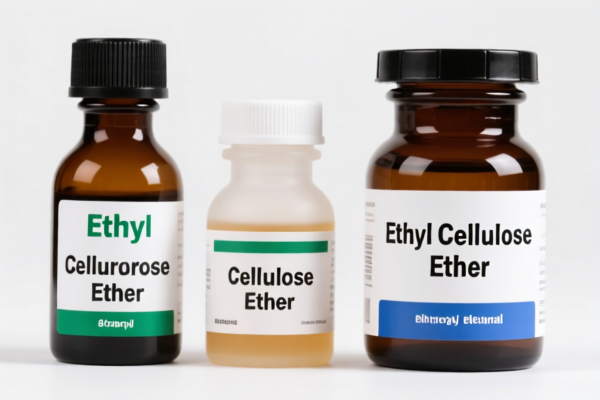
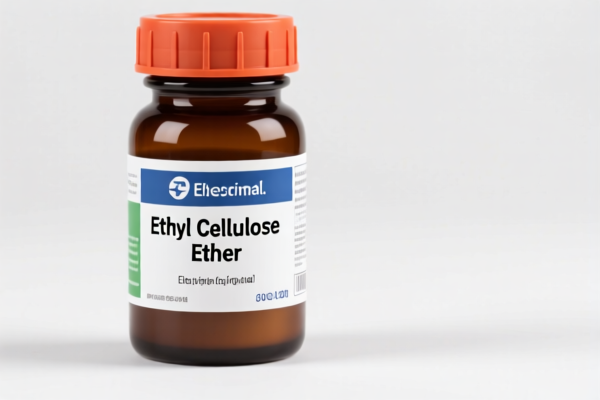
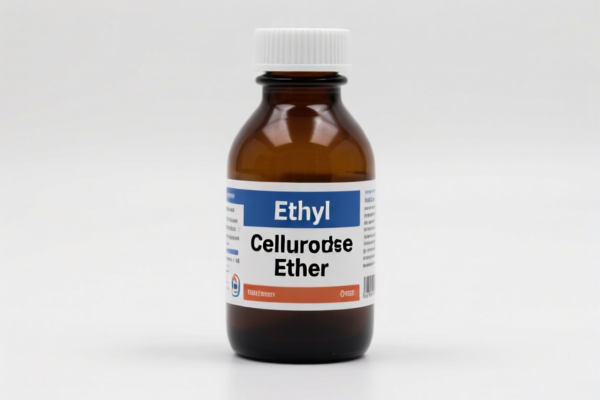
🧪 Cellulose Ether (Hydroxypropyl Methylcellulose, Hydroxyethyl Cellulose, etc.)
🌐 HS Code Reference & Customs Clearance Guide | 2026 Latest Tariff Analysis | Professional Clearance Strategy
📌 I. Product Definition & Classification: What Exactly is "Cellulose Ether"?
Cellulose ethers are semi-synthetic derivatives of cellulose, where hydroxyl groups are replaced by ether groups. They are not a single product but a family of water-soluble polymers with vastly different physical properties and industrial applications.
In international trade, the HS Code classification is highly dependent on the specific chemical structure, viscosity, and primary use. Misclassification is the #1 cause of customs delays or penalties for this product.
The three most common types are: 1. HPMC (Hydroxypropyl Methylcellulose): Used heavily in construction (tile adhesives, mortar) and pharmaceuticals (tablet coating). 2. HEC (Hydroxyethyl Cellulose): Used in cosmetics, detergents, and drilling fluids. 3. CMC (Carboxymethyl Cellulose): Technically a cellulose derivative but often grouped with ethers in trade data; used in food, paper, and detergents.
⚠️ Key Distinction Point:
- Construction Grade HPMC (for cement/mortar) → Typically falls under 3906.90.
- Pharmaceutical Grade HPMC → Also 3906.90, but requires GMP certificates.
- Food Grade HPMC/CMC → May fall under 2106 (food preparations) if pre-mixed, but pure powder is 2932 or 3906.
- Polymers in Primary Forms (powder/granules) → Generally Chapter 39.
📦 II. HS Code Classification Details (2026 Latest Tariff Authority Comparison)
| HS Code | Product Description | Primary Application | Chemical Nature |
|---|---|---|---|
3906.90.90.60 |
Other polymers of vinyl acetate or of other vinyl esters in primary forms; Cellulose ethers and their derivatives in primary forms | General industrial use, construction additives | ✅ Pure Polymer Powder/Granules |
3906.90.10.00 |
Cellulose Ethers (Specific subheading for HPMC, HEC, etc.) | Pharmaceutical, Food, Cosmetic, Construction | ✅ Primary Form |
2932.93.00.00 |
Other heterocyclic compounds with oxygen heteroatom only (includes Cellulose Ethers if considered chemical goods rather than polymers in some jurisdictions) | Rare; usually 3906 is preferred for polymers | ❌ Less Common for Trade |
2106.90.99.00 |
Other food preparations (e.g., pre-mixed dry food thickeners containing cellulose ethers) | Ready-to-use food additives | ❌ Mixture/Preparation |
3824.99.99.00 |
Prepared binding agents for foundry molds/cores (contains cellulose ethers) | Industrial binders | ❌ Mixture/Preparation |
🔍 Critical Warning:
- Most pure Cellulose Ether powders (HPMC, HEC, MEC) are classified under 3906.90 (Polymers in primary forms).
- If the product is mixed with other substances (e.g., in a tile adhesive powder), it may shift to 3824.99 or 3004 (if pharmaceutical mix).
- Always declare the specific type (e.g., "HPMC Powder, Viscosity 100,000 cps") to avoid ambiguity.
💰 III. 2026 Latest Tariff Rate Breakdown (Including Surtaxes & Policy Add-ons)
✅ Applicable Country: United States (US)
✅ Country of Origin: China (CN)
✅ Effective Date: November 10, 2025 onwards (including subsequent imports)
🎯 1. 3906.90.10.00 / 3906.90.90.60 —— Cellulose Ethers (Primary Forms)
| Item | Content |
|---|---|
| Base Rate | 5.3% – 6.5% (ad valorem, depending on specific sub-heading) |
| USITC Surtax (Section 301) | +25% |
| IEEPA Surtax | +10% (against China/HK products, effective Nov 10, 2025) |
| Total Effective Rate | ~40.3% – 41.5% |
| Tax Calculation | CIF Value × Total Rate |
| De Minimis Eligibility | ❌ No (deny_de_minimis applies to Section 301 items) |
| Legal Authority Path | IEEPA:9903.01.25 → IEEPA:9903.01.24 → USITC:3906.90 → FOOTNOTE:9903.88.01 |
📌 Explanation:
- Cellulose ethers are classified as polymeric materials under HTSUS Chapter 39.
- The 25% Section 301 tariff applies to most chemical polymers from China.
- The 10% IEEPA tariff is a new layer added in late 2025, significantly increasing costs.
- Total burden: ~40%+. This is a high-cost item for importers.
🎯 2. 2106.90.99.00 —— Food Preparations (if pre-mixed)
| Item | Content |
|---|---|
| Base Rate | 6.0% – 7.0% |
| USITC Surtax | +25% (if applicable to "other food preparations") |
| IEEPA Surtax | +10% |
| Total Effective Rate | ~41% – 42% |
| De Minimis Eligibility | ❌ No |
📌 Note:
- If you import pure HPMC for food manufacturing, use 3906.
- If you import pre-packaged food thickener mixes, use 2106.
- Tariffs are similar, but regulatory requirements differ (FDA for food vs. EPA/FDA for industrial).
🛠️ IV. Customs Clearance Practical Advice (Real-World Pitfall Guide)
✅ 1. Required Documentation Checklist (Non-Negotiable)
| Document | Mandatory? | Notes |
|---|---|---|
| ✅ Product Specification Sheet | ✔️ | Must state: Chemical Name, Viscosity, Substitution Degree (SD), Purity |
| ✅ Safety Data Sheet (SDS) | ✔️ | Essential for chemical handling classification |
| ✅ Certificate of Analysis (CoA) | ✔️ | Proves purity and absence of banned contaminants |
| ✅ Commercial Invoice | ✔️ | Must specify "Cellulose Ether (HPMC/HEC/CMC)" NOT just "Chemical Powder" |
| ✅ Bill of Lading | ✔️ | Ensure weight matches CoA |
| ✅ FDA Prior Notice | ✔️ | Required if for food/pharma use (21 CFR Part 1) |
| ✅ TSCA Certification | ✔️ | Required for chemical imports under TSCA Section 13 |
✅ 2. Declaration Tips (Key Mnemonic)
🔥 "Specify the Ether, Viscosity Matters, TSCA is Key, Don't Just Say 'Powder'!"
| Scenario | Correct Declaration | Wrong Practice |
|---|---|---|
| Pure HPMC Powder for Construction | 3906.90.10.00 - Hydroxypropyl Methylcellulose |
"Construction Chemical" → Audit Risk |
| HPMC for Pharma Use | 3906.90.10.00 - HPMC, USP Grade |
"Pharmaceutical Excipient" → Ambiguous |
| Pre-mixed Tile Adhesive | 3824.99.99.00 - Prepared Binding Agent |
"Cellulose Ether" → Wrong Chapter |
| Food-Grade HEC | 3906.90.90.60 - HEC, Food Grade |
"Food Additive" → May be 2106 if mixed |
✅ 3. Special Cases
| Case | Handling Advice |
|---|---|
| Pharmaceutical Grade | Must provide GMP Certificate and USP/EP Pharmacopoeia Reference. FDA Prior Notice is mandatory. |
| Food Grade | Must comply with 21 CFR 172.665 (CMC) or 172.660 (HPMC). FDA Prior Notice required. |
| Industrial Grade | TSCA Certification required. No FDA need, but SDS must be available. |
| Small Sample (< $800) | De Minimis DOES NOT APPLY due to IEEPA/301 rules. Full duty applies even for small shipments. |
🌍 V. Global Market Comparison (2026 Latest)
| Country/Region | Recommended HS Code | Tariff Rate | Certification Requirements | Notes |
|---|---|---|---|---|
| 🇺🇸 USA | 3906.90.10.00 |
~40% (China) | TSCA + FDA (if food/pharma) | High tariff burden; strict TSCA compliance |
| 🇨🇳 China | 3906.90.90.90 |
6.5% | N/A | Low import duty; major producer |
| 🇪🇺 EU | 3906.90.90 |
5.5% | REACH Registration Required | REACH is critical; no IEEPA surtax |
| 🇯🇵 Japan | 3906.90.90 |
5.0% | JIS Standard | No surtax; high quality scrutiny |
| 🇦🇺 Australia | 3906.90.90 |
5.0% | NICNAS/ACGIH | No surtax; standard chemical entry |
📌 Conclusion:
- USA has the highest effective tariff for Chinese-origin cellulose ethers (~40%).
- EU and Asia offer much lower barriers (~5-6%), making them more competitive for re-export or regional use.
- REACH (EU) and TSCA (US) are the biggest regulatory hurdles, not just tariffs.
📌 VI. Common Mistakes & Pitfall Guide (Lessons Learned)
❌ Mistake 1: Declaring "Cellulose Ether" generically without specifying HPMC/HEC/CMC.
👉 Result: Customs issues a "Missing Information" query, delaying shipment by 7-14 days.
❌ Mistake 2: Under-declaring value to avoid duties.
👉 Result: Severe penalties, especially with IEEPA enforcement active since Nov 2025.
❌ Mistake 3: Ignoring TSCA Certification for chemical imports.
👉 Result: Goods seized or destroyed at US port. TSCA is non-negotiable.
❌ Mistake 4: Using De Minimis for small B2B samples.
👉 Result: IEEPA surtax applies even to shipments under $800 if from China.
✅ Correct Approach:
"Hydroxypropyl Methylcellulose (HPMC), Viscosity: 100,000 cps, Substitution Degree: 28-30%, USP Grade, Batch No. XYZ, TSCA Certified, SDS Attached."
🎯 VII. Conclusion: Precision is Profit
🎯 Remember the Mnemonic:
🔹 "Specify the Ether, TSCA is Key, 40% Duty for USA, REACH for EU!"
🔹 "Don't generalize, don't under-declare, documentation saves the day!"
📌 Pro Tip:
If your cellulose ether is originating from Vietnam, India, or Malaysia, you may avoid the US Section 301 + IEEPA surtaxes, reducing your total tariff to ~6-8%.
Consider supply chain diversification if volume is high.
📣 Immediate Action:
📞 Consult a licensed customs broker + Verify TSCA status + Prepare SDS/CoA
🚀 Ensure your Cellulose Ether imports are compliant, cleared, and cost-effective!
✨ Professional Clearance Starts with Accurate Classification!
💼 Every percentage point in tariff affects your bottom line!
用户评价
关于 HS 编码归类
协调制度(HS)是由世界海关组织(WCO)制定的国际贸易商品分类标准。全球 200 多个国家采用 HS 系统作为海关关税、贸易统计和进出口监管的基础。
每个 HS 编码遵循以下层级结构:
- 章(2 位)——商品大类(例如:第 84 章:机器和机械设备)
- 品目(4 位)——章内的更具体分类
- 子目(6 位)——国际通用细分,所有 WCO 成员国统一使用
- 本国细分(8-10 位)——各国自行扩展的细分编码,如美国 HTSUS 10 位编码
正确的 HS 编码归类对于顺利通关、准确缴纳关税和遵守贸易法规至关重要。错误归类可能导致海关延误、多缴关税或罚款。
从CN进口到US时,适用的关税税率可能包括:
- 最惠国(MFN)税率——适用于 WTO 成员国的标准关税税率
- 普通税率——适用于无贸易协定国家
- 贸易救济关税——附加关税,如 301 条款(反倾销)、232 条款(国家安全)或反补贴税
本页内容仅供参考。如需正式归类,请咨询当地海关或持牌报关代理。