Cellulose Glue (for Woodworking)
CN → US| HS编码 | 关税税率 | 原产国 | 目的国 | 文档 |
|---|---|---|---|---|
| 3506915000 | 37.1% | CN | US | 官方文档 |
| 3505200000 | 0.0% | CN | US | 官方文档 |
| 3505100092 | 0.0% | CN | US | 官方文档 |
| 3506990000 | 37.1% | CN | US | 官方文档 |
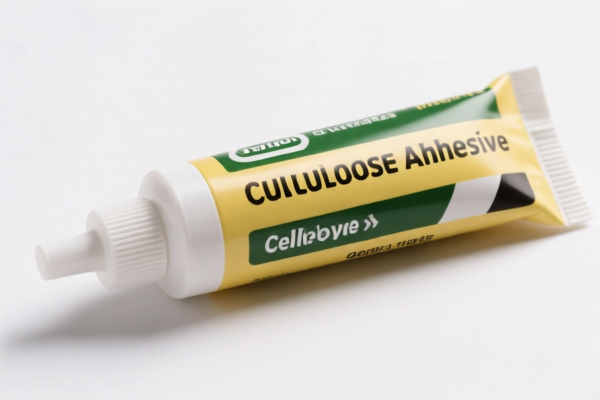
商品图片



AI分析
🌲 Cellulose Glue (for Woodworking)
🌐 HS Code Reference & Customs Clearance Guide | 2026 Latest Tariff Analysis | Professional-Level Customs Strategy
📌 Part 1: Product Definition & Classification: Do You Really Understand "Cellulose Glue"?
Cellulose Glue, commonly used in woodworking, is an adhesive derived from cellulose, often modified with starch or other polymers. In international trade, its classification depends heavily on its chemical composition and degree of processing:
- Organic Polymer-Based Adhesives: If the cellulose is chemically modified into a polymer format specifically for binding, it falls under Chapter 35 (Albuminoidal Substances; Modified Starches; Glues).
- Starch/Polysaccharide-Based Adhesives: If the glue is primarily based on starch derivatives or unmodified polysaccharides acting as an adhesive, it may fall under Starch-Based Adhesive categories.
⚠️ Key Distinction Point:
- If the product is a chemically modified organic polymer designed specifically as a配制胶 (prepared glue), it typically falls under 3506.91 or 3506.99.
- If the product is based on starch or变性淀粉 (modified starch) as the primary binding agent, it falls under 3505.20 or 3505.10.
- Woodworking is a typical application scenario but does not determine the HS code itself; the chemical nature does.
📦 Part 2: HS Code Classification Details (2026 Latest Tariff Authority Comparison)
| HS Code | Product Description | Application Scenario | Basis for Classification |
|--------|--------------------------|--------------------------|
| 3506.91.50.00 | Cellulose belongs to organic polymers, fits prepared glue & adhesive material, used for woodworking | Woodworking | Organic polymer-based adhesive |
| 3505.20.00.00 | Cellulose belongs to starch/polysaccharide material, consistent with adhesive properties, used for woodworking | Woodworking | Starch/polysaccharide-based adhesive |
| 3505.10.00.92 | Based on starch/modified starch adhesive properties, infers cellulose-based adhesive belongs to starch or polysaccharide derivatives, used for woodworking | Woodworking | Starch/modified starch derivative |
| 3506.99.00.00 | Cellulose conforms to adhesive chemical composition, woodworking is a typical use for prepared adhesives, classified as other prepared adhesives | Woodworking | Other prepared adhesives (general category) |
🔍 Key Reminder:
- 3506.91.50.00 and 3506.99.00.00 are for organic polymer-based or general prepared adhesives.
- 3505.20.00.00 and 3505.10.00.92 are for starch/polysaccharide-based adhesives.
- Misclassification Risk: Declaring a starch-based glue as an organic polymer (or vice versa) can lead to incorrect tariff calculations and customs delays.
💰 Part 3: 2026 Latest Tariff Rate Breakdown (Including Additional Taxes & Policy Add-ons)
✅ Applicable Country: United States (US)
✅ Origin: China (CN)
✅ Effective Date: November 10, 2025 onwards
🎯 1. 3506.91.50.00 —— Cellulose Glue (Organic Polymer-Based)
| Item | Details |
|---|---|
| Base Tariff | 2.1% |
| Section 301 Additional Tariff | 25.0% |
| Section 122 Tariff | 10.0% |
| Total Tax Rate | 37.1% |
| Tax Calculation | CIF Value × 37.1% |
| De Minimis Exemption | ❌ Not Eligible (High-risk category) |
| Legal Basis Path | Base: 2.1% → Section 301: 25.0% → Section 122: 10.0% |
📌 Explanation:
- This classification assumes the glue is an organic polymer-based adhesive.
- The 37.1% total rate includes base duty, Section 301 sanctions (25%), and Section 122 (10%).
- High cost: This is a significant burden for woodworking supplies.
🎯 2. 3505.20.00.00 —— Cellulose Glue (Starch/Polysaccharide-Based)
| Item | Details |
|---|---|
| Base Tariff | 2.1¢/kg + 2.9% |
| Section 301 Additional Tariff | 7.5% |
| Section 122 Tariff | 10.0% |
| Total Tax Rate | 2.1¢/kg + 2.9% + 7.5% + 10.0% |
| Tax Calculation | Mixed (Specific + Ad Valorem) |
| De Minimis Exemption | ❌ Not Eligible |
| Legal Basis Path | Base: 2.1¢/kg + 2.9% → Section 301: 7.5% → Section 122: 10.0% |
📌 Note:
- This classification is for starch-based adhesives.
- The Section 301 rate is lower (7.5%) compared to the polymer-based glue (25%).
- Cost Advantage: If your product is starch-based, this classification may offer lower overall tax than the polymer-based classification.
🎯 3. 3505.10.00.92 —— Cellulose Glue (Modified Starch/Polysaccharide Derivative)
| Item | Details |
|---|---|
| Base Tariff | 0.7¢/kg + 17.5% |
| Section 301 Additional Tariff | 7.5% |
| Section 122 Tariff | 10.0% |
| Total Tax Rate | 0.7¢/kg + 17.5% + 7.5% + 10.0% |
| Tax Calculation | Mixed (Specific + Ad Valorem) |
| De Minimis Exemption | ❌ Not Eligible |
| Legal Basis Path | Base: 0.7¢/kg + 17.5% → Section 301: 7.5% → Section 122: 10.0% |
📌 Note:
- This is for modified starch derivatives.
- The base ad valorem rate is 17.5%, which is higher than3505.20but may still be lower than the 37.1% for polymer-based glues depending on weight/value.
- Key Factor: The specific duty (0.7¢/kg) applies to weight, while the percentage applies to value.
🎯 4. 3506.99.00.00 —— Cellulose Glue (Other Prepared Adhesives)
| Item | Details |
|---|---|
| Base Tariff | 2.1% |
| Section 301 Additional Tariff | 25.0% |
| Section 122 Tariff | 10.0% |
| Total Tax Rate | 37.1% |
| Tax Calculation | CIF Value × 37.1% |
| De Minimis Exemption | ❌ Not Eligible |
| Legal Basis Path | Base: 2.1% → Section 301: 25.0% → Section 122: 10.0% |
📌 Note:
- This is the fallback category for "other prepared adhesives" not specified elsewhere.
- It carries the same high tariff (37.1%) as3506.91.50.00.
- Warning: Do not use this as a "catch-all" if a more specific starch-based code applies, as it offers no tariff advantage.
🛠️ Part 4: Customs Clearance Practical Advice (实战避坑指南)
✅ 1. Documentation Checklist (All Required)
| Document | Must Provide | Description |
|---|---|---|
| ✅ Product Specification Sheet | ✔️ | Chemical composition, base material (starch vs. polymer), application |
| ✅ MSDS (Material Safety Data Sheet) | ✔️ | Critical for chemical goods, especially adhesives |
| ✅ Product Photos (Label & Container) | ✔️ | Show brand, model, and any hazard symbols |
| ✅ Third-Party Test Report | ✔️ | Safety and compliance certifications (e.g., FDA, EPA if applicable) |
| ✅ Commercial Invoice | ✔️ | Clearly state "Cellulose Adhesive for Woodworking" |
| ✅ Packing List | ✔️ | Detail net/gross weight, volume |
| ✅ Certificate of Origin (CO) | ✔️ | If non-China origin, may qualify for preferential rates |
✅ 2. Declaration Tips (Key Mantra)
🔥 "Check Composition, Starch or Polymer, Declare Accurately, Tariff Drops by Half!"
| Scenario | Correct Declaration | Incorrect Action |
|---|---|---|
| Starch-based glue | 3505.20.00.00 or 3505.10.00.92 |
Declare as 3506 → 37.1% tax |
| Polymer-based glue | 3506.91.50.00 or 3506.99.00.00 |
Declare as starch → Penalty |
| Mixed composition | Provide detailed chemical analysis | Vague description → Delay |
| Industrial vs. Consumer | Specify end-use (woodworking) | Generic "Glue" → Misclassification |
✅ 3. Special Cases Handling
| Situation | Handling Advice |
|---|---|
| Custom Blends | Provide lab analysis to prove starch vs. polymer content |
| Liquid vs. Powder | Base duties may differ (specific vs. ad valorem) |
| Eco-Friendly Claims | If "bio-based," ensure documentation matches HS code logic |
| Large Volume Shipments | Consider Advance Ruling to lock in classification |
🌍 Part 5: Global Market Comparison (2026 Latest)
| Country/Region | Recommended HS Code | Tariff (China Origin) | Certification | Notes |
|---|---|---|---|---|
| 🇺🇸 USA | 3505.20.00.00 (Starch) |
~20% (2.1¢/kg + 2.9% + 7.5% + 10%) | No special | Lowest US rate if starch-based |
| 🇺🇸 USA | 3506.91.50.00 (Polymer) |
37.1% | None | High tax burden |
| 🇨🇳 China | 3505.20.00.00 |
5% | None | No additional tariffs |
| 🇪🇺 EU | 3505.20.00 |
0% (if REACH compliant) | REACH | No additional tariffs |
| 🇬🇧 UK | 3505.20.00 |
0% | UKCA | Post-Brexit rules apply |
📌 Conclusion:
- USA has the highest tariff complexity due to Section 301 and Section 122.
- Starch-based adhesives (3505) offer significant tariff savings (lower Section 301 rate of 7.5% vs. 25%) compared to polymer-based adhesives (3506).
- EU/UK are more favorable with 0% base tariffs (if compliant).
📌 Part 6: Common Mistakes & Pitfalls (Blood & Tears Lessons)
❌ Mistake 1: Declaring all cellulose glue as 3506.99.00.00 without checking composition
👉 Consequence: Pay 37.1% instead of ~20% for starch-based glue.
❌ Mistake 2: Ignoring Section 122 Tariffs
👉 Consequence: Unexpected 10% add-on on all adhesives from China.
❌ Mistake 3: Vague Description "Glue"
👉 Consequence: Customs flags for chemical safety (MSDS required) → Delay.
❌ Mistake 4: Assuming De Minimis Applies
👉 Consequence: All categories are non-exempt for Section 301/122 goods.
✅ Correct Approach:
"Cellulose-Based Adhesive, Starch-Derived, for Woodworking, MSDS Attached, Section 301/122 Applicable"
🎯 Part 7: Conclusion: Precise Classification, Cost Savings!
🎯 Remember the Mantra:
🔹 "Starch saves, Polymer pays, Section 301 bites hard!"
🔹 "Declare composition, not just use, to avoid tariff wars!"
📌 Pro Tip:
If your cellulose glue is starch-based, prioritize 3505.20.00.00 or 3505.10.00.92 for lower Section 301 rates (7.5% vs. 25%).
For polymer-based, expect 37.1% total tax.
Apply for Advance Rulings if uncertain to avoid clearance delays.
📣 Immediate Action:
📞 Contact a licensed customs broker + Provide chemical composition report + Apply for HS Code Pre-Ruling
🚀 Optimize your supply chain, reduce tax burden, and clear customs smoothly!
✨ Professional clearance starts with accurate classification!
💼 Every cent saved is a profit earned!
用户评价
关于 HS 编码归类
协调制度(HS)是由世界海关组织(WCO)制定的国际贸易商品分类标准。全球 200 多个国家采用 HS 系统作为海关关税、贸易统计和进出口监管的基础。
每个 HS 编码遵循以下层级结构:
- 章(2 位)——商品大类(例如:第 84 章:机器和机械设备)
- 品目(4 位)——章内的更具体分类
- 子目(6 位)——国际通用细分,所有 WCO 成员国统一使用
- 本国细分(8-10 位)——各国自行扩展的细分编码,如美国 HTSUS 10 位编码
正确的 HS 编码归类对于顺利通关、准确缴纳关税和遵守贸易法规至关重要。错误归类可能导致海关延误、多缴关税或罚款。
从CN进口到US时,适用的关税税率可能包括:
- 最惠国(MFN)税率——适用于 WTO 成员国的标准关税税率
- 普通税率——适用于无贸易协定国家
- 贸易救济关税——附加关税,如 301 条款(反倾销)、232 条款(国家安全)或反补贴税
本页内容仅供参考。如需正式归类,请咨询当地海关或持牌报关代理。