Cellulose Powder Cosmetics
CN → US| HS编码 | 关税税率 | 原产国 | 目的国 | 文档 |
|---|---|---|---|---|
| 3913902090 | 40.8% | CN | US | 官方文档 |
| 3913905000 | 41.5% | CN | US | 官方文档 |
商品图片
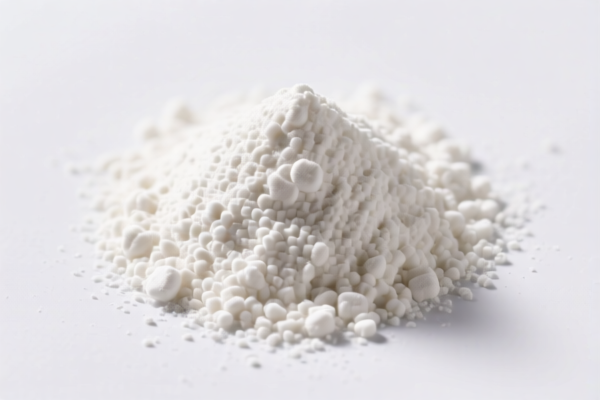
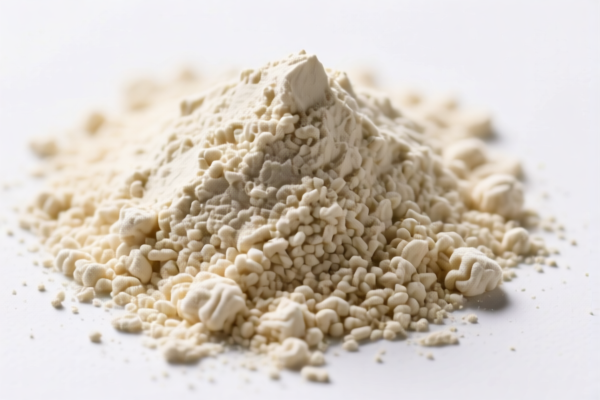
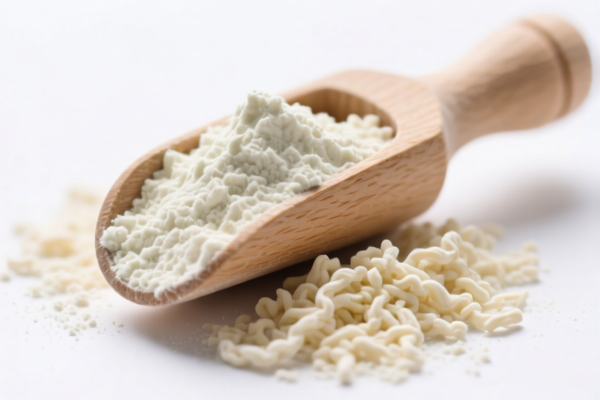
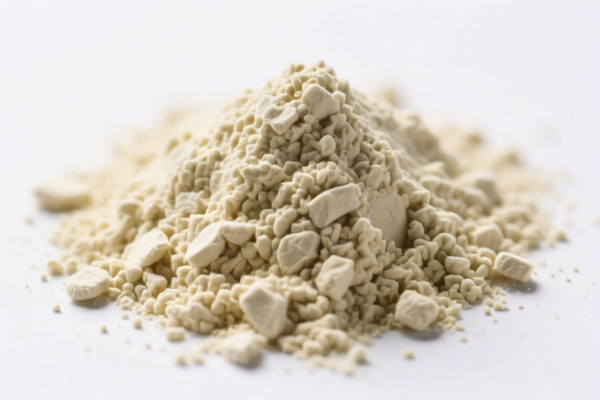
AI分析
🧴 Cellulose Powder in Cosmetics: Nature’s Texture Booster & Absorbent
🌐 HS Code Reference & Customs Clearance Guide | 2026 Latest Tariff Analysis | Professional Classification Strategy for Natural Polymers
📌 I. Product Definition & Classification: Is It Just "Powder" or a "Chemical Derivative"?
Cellulose powder, used in cosmetics (e.g., foundations, powders, matte finish agents), is derived from natural polymers (cellulose) often through chemical modification to achieve specific properties like oil absorption, flowability, or film-forming. In international trade, it is classified under Chapter 39: Plastics and Articles Thereof, specifically under heading 3913.
The critical distinction lies in whether the cellulose is raw/natural or chemically modified/derivative:
- Natural Polymers: Cellulose in its basic form (e.g., microcrystalline cellulose without significant chemical alteration) or simple derivatives.
- Modified Natural Polymers: Chemically treated cellulose (e.g., carboxymethyl cellulose, ethyl cellulose) to enhance performance.
⚠️ Key Classification Point:
- If the product is described as "natural polymer" or "chemical derivative of natural rubber/protein/cellulose" and is in primary forms (powder, granules, flakes), it falls under 3913.
- It is NOT classified under Chapter 38 (miscellaneous chemical products) or Chapter 30 (pharmaceuticals) unless specifically formulated as a medicinal product.
- Primary Form includes powders. So, "Cellulose Powder" is a primary form.
📦 II. HS Code Classification Details (2026 Latest Tariff Reference)
Based on the provided data, the relevant HS Codes for natural polymers and modified natural polymers (including cellulose derivatives) in primary forms are:
| HS Code | Product Description | Applicable Scenario | Tax Rate (Total) |
|---|---|---|---|
3913.90.20.90 |
Natural polymers & modified natural polymers, not elsewhere specified: Polysaccharides and their derivatives | Cellulose derivatives (e.g., modified cellulose powder), alginic acid, other polysaccharides | 30.8% |
3913.90.50.00 |
Natural polymers & modified natural polymers, not elsewhere specified: Other | Other natural polymers not covered under polysaccharides (less common for cellulose, but possible for certain protein-based derivatives) | 31.5% |
🔍 Detailed Explanation for Cellulose Powder:
- Cellulose is a polysaccharide. Therefore, modified natural polymers of cellulose (e.g., hydroxypropyl methylcellulose, carboxymethyl cellulose) are classified under Polysaccharides and their derivatives.
- HS Code3913.90.20.90is the most accurate classification for cellulose derivatives used in cosmetics.
- If the cellulose is unmodified and considered a "natural polymer" not elsewhere specified, it may still fall under 3913.90.20.90 as a polysaccharide.
-3913.90.50.00is for "Other" natural polymers (e.g., hardened proteins, natural rubber derivatives). Cellulose is not a protein or rubber derivative, so3913.90.20.90is preferred.
💰 III. 2026 Latest Tariff Rate Breakdown (Including Additional Duties)
✅ Applicable Country: United States (US)
✅ Origin: China (CN)
✅ Effective Date: Post-2025 (current tariffs apply)
🎯 1. 3913.90.20.90 —— Polysaccharides and Their Derivatives (e.g., Cellulose Derivatives)
| Item | Details |
|---|---|
| Basic Tariff | 5.8% (ad valorem) |
| Additional Tariff (Section 301) | +25.0% |
| Total Tariff | 30.8% |
| Tax Calculation | CIF Value × 30.8% |
| De Minimis Exemption? | ❌ No (Section 301 duties do not apply to de minimis shipments under $800 for most goods, but this is a high-value chemical/polymer; check current enforcement) |
| Legal Basis Path | USITC:3913.90.20.90 → Section 301: Footnote 9903.88.01 → IEEPA:9903.01.25 |
📌 Interpretation:
- The 5.8% is the standard MFN (Most Favored Nation) tariff for polysaccharides.
- The 25% is the Section 301 additional duty on Chinese-made polysaccharides and derivatives.
- Total 30.8% is a significant cost factor. Cosmetic manufacturers must account for this in pricing.
🎯 2. 3913.90.50.00 —— Other Natural Polymers
| Item | Details |
|---|---|
| Basic Tariff | 6.5% (ad valorem) |
| Additional Tariff (Section 301) | +25.0% |
| Total Tariff | 31.5% |
| Tax Calculation | CIF Value × 31.5% |
| De Minimis Exemption? | ❌ No |
| Legal Basis Path | USITC:3913.90.50.00 → Section 301: Footnote 9903.88.01 |
📌 Note: This code is less likely for cellulose but may apply if the product is a protein derivative or natural rubber derivative.
🛠️ IV. Customs Clearance Practical Advice (Pro Tips)
✅ 1. Documentation Checklist (Mandatory)
| Document | Required? | Notes |
|---|---|---|
| ✅ Product Specification Sheet | ✔️ | Must clearly state: "Cellulose Powder," "Derivative Type" (e.g., CMC, HPMC), "Cosmetic Grade," "Primary Form: Powder" |
| ✅ Certificate of Analysis (COA) | ✔️ | To prove purity and cosmetic-grade status |
| ✅ Material Safety Data Sheet (MSDS) | ✔️ | Required for chemical/polymer imports |
| ✅ Commercial Invoice | ✔️ | Describe as "Cellulose Derivative Powder for Cosmetic Use, HS 3913.90.20.90" |
| ✅ Bill of Lading | ✔️ | Standard shipping document |
| ✅ Origin Certificate | ✔️ | If claiming preferential rates under other FTAs (unlikely for China-US) |
✅ 2. Declaration Tips (Critical Keywords)
🔥 "Name It Right, Classify It Right, Save 25%!"
| Scenario | Correct Declaration | Incorrect Declaration |
|---|---|---|
| Cellulose Powder (Cosmetic Grade) | 3913.90.20.90 - "Polysaccharide Derivative, Powder" |
"Makeup Powder" → Wrong Chapter! |
| Microcrystalline Cellulose | 3913.90.20.90 |
"Food Additive" → May trigger FDA scrutiny |
| Unmodified Cellulose | 3913.90.20.90 |
"Natural Fiber" → Incorrect |
📌 Key Point:
- DO NOT declare as "Cosmetics" directly (Chapter 33). The raw material is a polymer. The final product (e.g., foundation) is a cosmetic.
- Use "Polysaccharide Derivative" or "Modified Natural Polymer" in the description.
- If you declare it as "Cosmetics," Customs may reclassify it, leading to delays, penalties, or misclassification.
✅ 3. Special Cases
| Situation | Advice |
|---|---|
| Blend with Other Powders | If mixed with talc, mica, etc., the product may no longer be a "primary form" of a single polymer. May require different classification (e.g., 3808 or 3304). Consult a customs broker. |
| Gift Samples (<$800) | Section 301 duties may still apply, but de minimis rules vary. Check current CBP guidance. |
| R&D Samples | May qualify for temporary importation under TTNR (Temporary Importation Under Bond) if returned. |
🌍 V. Global Market Comparison (2026)
| Country/Region | Recommended HS Code | Total Tariff (China Origin) | Notes |
|---|---|---|---|
| 🇺🇸 USA | 3913.90.20.90 |
30.8% | High due to Section 301 |
| 🇨🇳 China | 3913.90.20.90 |
~5.8% | Low base tariff, no Section 301 |
| 🇪🇺 EU | 3913.90.20.90 |
~4.5% | No additional duties on cosmetics raw materials |
| 🇬🇧 UK | 3913.90.20.90 |
~4.5% | Post-Brexit tariffs similar to EU |
| 🇯🇵 Japan | 3913.90.20.90 |
~5.0% | No additional duties |
📌 Conclusion:
- USA has the highest duty (30.8%) due to Section 301.
- Consider sourcing from non-China countries (e.g., EU, Japan, or Vietnam) if shipping to the US to avoid the 25% additional tariff.
- EU and Japan are more favorable for Chinese-origin polysaccharides.
📌 VI. Common Mistakes & Pitfalls (Learn from Others' Errors)
❌ Mistake 1: Declaring as "Cosmetic Powder" (Chapter 33)
👉 Consequence: Misclassification → Penalty + Delay. Raw cellulose is a polymer, not a finished cosmetic.
❌ Mistake 2: Ignoring "Derivative" Status
👉 Consequence: If modified, it’s a "modified natural polymer." Failure to declare may lead to reclassification and higher duties.
❌ Mistake 3: Not Providing MSDS/COA
👉 Consequence: Customs hold → Storage fees → Delays. Cosmetics and chemicals require safety data.
❌ Mistake 4: Blending Without Proper Declaration
👉 Consequence: If mixed with other substances, it’s no longer a "primary form" of a single polymer. May require different HS code (e.g., 3824 for prepared binders).
✅ Correct Approach:
"Cellulose Derivative Powder (HPMC), Cosmetic Grade, Primary Form, HS 3913.90.20.90"
🎯 VII. Conclusion: Smart Classification Saves Money
🎯 Remember:
🔹 "Raw Polymer → Chapter 39, Not Chapter 33!"
🔹 "Cellulose = Polysaccharide → HS 3913.90.20.90"
🔹 "USA Duty = 30.8%, Source Smart to Save 25%!"
📌 Pro Tip:
If you are importing large volumes into the US, consider supply chain diversification (e.g., sourcing from Thailand, India, or EU) to avoid the 25% Section 301 duty. Always apply for an Advance Ruling from CBP to confirm classification before shipment.
📣 Immediate Action:
📞 Contact a Licensed Customs Broker
📄 Prepare MSDS & COA
🚀 Confirm HS Code 3913.90.20.90 for Cellulose Derivatives
✨ Accurate Classification = Faster Clearance + Lower Costs
💼 Every Dollar Saved in Duties is Pure Profit!
用户评价
关于 HS 编码归类
协调制度(HS)是由世界海关组织(WCO)制定的国际贸易商品分类标准。全球 200 多个国家采用 HS 系统作为海关关税、贸易统计和进出口监管的基础。
每个 HS 编码遵循以下层级结构:
- 章(2 位)——商品大类(例如:第 84 章:机器和机械设备)
- 品目(4 位)——章内的更具体分类
- 子目(6 位)——国际通用细分,所有 WCO 成员国统一使用
- 本国细分(8-10 位)——各国自行扩展的细分编码,如美国 HTSUS 10 位编码
正确的 HS 编码归类对于顺利通关、准确缴纳关税和遵守贸易法规至关重要。错误归类可能导致海关延误、多缴关税或罚款。
从CN进口到US时,适用的关税税率可能包括:
- 最惠国(MFN)税率——适用于 WTO 成员国的标准关税税率
- 普通税率——适用于无贸易协定国家
- 贸易救济关税——附加关税,如 301 条款(反倾销)、232 条款(国家安全)或反补贴税
本页内容仅供参考。如需正式归类,请咨询当地海关或持牌报关代理。