Cellulose Propionate Capacitor Film
CN → US商品图片

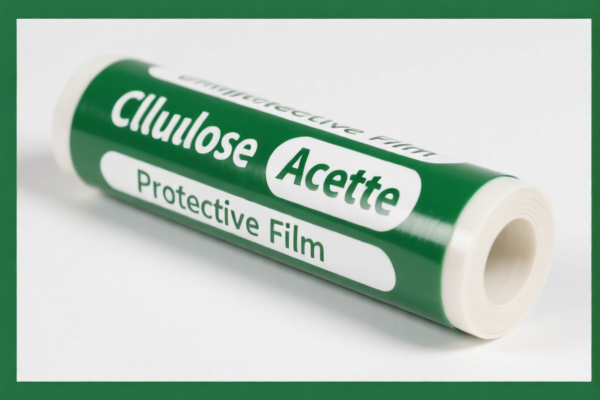
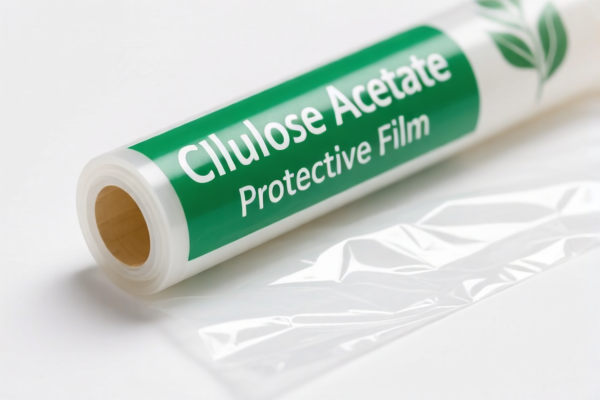

AI分析
📦 Cellulose Propionate Capacitor Film
🌐 HS Code Reference & Customs Clearance Guide | 2026 Latest Tariff Analysis | Professional Strategy
📌 I. Product Definition & Classification: What is “Cellulose Propionate Capacitor Film”?
Cellulose Propionate (CP) is a thermoplastic resin derived from cellulose. In the electronics industry, it is processed into thin, biaxially oriented films used primarily as dielectric material in capacitors. This film replaces older materials like cellulose acetate due to better moisture resistance and dielectric properties.
In international trade, this product is categorized based on its chemical composition and specific industrial application. It is generally classified as a plastic film intended for electrical insulation.
⚠️ Key Distinction:
- If the film is raw, unconverted plastic film → Classified under Ch. 39 (Plastics).
- If the film is cut, punched, or prepared specifically for capacitor assembly (already shaped) → It might be considered a part of an electrical appliance (Ch. 85), but usually, raw film for manufacturing capacitors stays in Ch. 39 unless it is a finished capacitor component ready for immediate insertion.
- Standard Practice: Most imports of “Capacitor Film” are classified as plastic films (3920 or 3921) because they are still semi-finished materials for the capacitor manufacturer, not the capacitor itself.
📦 II. HS Code Classification Details (2026 Latest Tariff Authority Comparison)
| HS Code | Product Description | Application Scenario | Chemical Basis |
|---|---|---|---|
3920.10.65.00 |
Other plates, sheets, film, foil, and strip, of cellulose derivatives | Cellulose Propionate film (unoriented or oriented), not cellular | ✅ Cellulose Derivative |
3920.10.69.00 |
Other plates, sheets, film, foil, and strip, of cellulose derivatives, other | Less common CP film grades | ✅ Cellulose Derivative |
3921.14.00.00 |
Plates, sheets, film, foil, and strip, of cellulosic gums (e.g., Nitrocellulose, Acetyl) | Sometimes used interchangeably in broader categories | ✅ Cellulosic Gum |
8532.10.00.00 |
Fixed capacitors, using mica or ceramic dielectrics | ❌ Incorrect: CP is plastic, not mica/ceramic | ❌ N/A |
8532.29.00.00 |
Other fixed capacitors, using paper or plastic dielectric | ✅ If finished: If imported as a finished capacitor (not film), this code applies. | ❌ N/A for film |
🔍 Key Reminder:
- The vast majority of “Cellulose Propionate Film” is classified under3920.10.65.00(Plastic Film of Cellulose Derivatives).
- Do NOT classify as a finished capacitor (8532) unless the item is already assembled into a capacitor component.
- Cellulose Propionate is a cellulose derivative, distinct from simple polyethylene (PE) or polypropylene (PP) films (which fall under different subheadings like3920.10for PE or3920.62for PP).
💰 III. 2026 Latest Tariff Rate Details (Including Surcharges & Policy Add-ons)
✅ Applicable Country: United States (US)
✅ Country of Origin: China (CN)
✅ Effective Time: November 10, 2025 onwards (including subsequent imports)
🎯 1. 3920.10.65.00 —— Plastic Film of Cellulose Derivatives (Cellulose Propionate)
| Item | Content |
|---|---|
| Base Tariff Rate | 3.5% (ad valorem) |
| USITC Additional Tariff (Section 301) | +7.5% (Standard 301 tariff for Ch. 39 items not excluded) |
| IEEPA Additional Tariff | +10% (针对中国/香港产品,自2025年11月10日起) |
| Total Tariff Rate | 21.0% |
| Tax Calculation | CIF Value × 21% |
| De Minimis Eligibility | ❌ No (deny_de_minimis applies to Section 301 items) |
| Legal Basis Path | USITC:3920.10.65.00 → FOOTNOTE:9903.01.03 (Section 301) → IEEPA:9903.01.25 |
📌 Explanation:
- The base rate for plastic films of cellulose derivatives is relatively low (3.5%).
- However, the Section 301 Additional Tariff of 7.5% applies to most plastic products from China.
- The IEEPA 10% surcharge adds significant cost, bringing the total to 21%.
- This is not as high as the 45% on monitors, but still substantial for low-margin film imports.
🎯 2. Alternative: If Classified as 3920.10.69.00 (Other Cellulose Derivatives)
| Item | Content |
|---|---|
| Base Tariff Rate | 3.5% |
| USITC Additional Tariff (Section 301) | +7.5% |
| IEEPA Additional Tariff | +10% |
| Total Tariff Rate | 21.0% |
| Legal Basis Path | USITC:3920.10.69.00 → FOOTNOTE:9903.01.03 → IEEPA:9903.01.25 |
📌 Note:
- Both subheadings under Cellulose Derivatives face the same surcharge structure.
- Ensure the chemical specification (Cellulose Propionate vs. other esters) is clear to avoid misclassification audits.
🛠️ IV. Customs Clearance Practical Advice (Real-World Pitfall Guide)
✅ 1. Documentation Checklist (Mandatory)
| Document | Required | Description |
|---|---|---|
| ✅ Product Specification Sheet | ✔️ | Must specify: Material (Cellulose Propionate), Thickness, Width, Dielectric Strength, Thickness Tolerance. |
| ✅ Certificate of Origin (CO) | ✔️ | Essential for verifying origin to apply/avoid tariffs. |
| ✅ Commercial Invoice | ✔️ | Clearly state: “Cellulose Propionate Plastic Film for Capacitor Dielectric.” Do NOT write “Capacitor” in the product name. |
| ✅ Packing List | ✔️ | Detail roll weights, core sizes, and layering. |
| ✅ Chemical Composition Report | ✔️ | Prove it is a Cellulose Derivative (not polyolefin like PP/PE) to justify HS Code 3920.10. |
✅ 2. Declaration Tips (Key Mnemonics)
🔥 “Film is Plastic, Not Part; Name it ‘Film’, Avoid ‘Capacitor’!”
| Scenario | Correct Declaration | Wrong Practice |
|---|---|---|
| Raw CP Film Rolls | 3920.10.65.00 – Cellulose Propionate Film |
“Capacitor Film” → Risk of being deemed “Part of Electrical Appliance” |
| Finished Capacitor | 8532.29.00.00 |
Using 3920 for finished goods → Under-declaration |
| Mixed Shipment (Film + Capacitors) | Separate Lines | Combining → Complex audit, potential penalties |
✅ 3. Special Cases Handling
| Situation | Handling Advice |
|---|---|
| Biodegradable CP Film | Same HS Code. No special tariff preference unless specific eco-certifications exist in bilateral treaties. |
| Imported from Vietnam/Malaysia | Check FTAs. If processed substantially, may avoid Section 301. Verify Rules of Origin. |
| Anti-Dumping (AD) Risk | Cellulose derivatives may face AD if dumped. Check DOC (Department of Commerce) case numbers for China plastic films. |
🌍 V. Global Market Customs Comparison (2026 Latest)
| Country/Region | Recommended HS Code | Tariff | Certification Requirements | Notes |
|---|---|---|---|---|
| 🇺🇸 USA | 3920.10.65.00 |
21% (CN Origin) | No specific FCC for raw film | Section 301 + IEEPA applies |
| 🇪🇺 EU | 3920.10.60.00 |
6.5% | REACH Compliance (Chemicals) | No Section 301 equivalent |
| 🇨🇳 China | 3920.10.65.00 |
5.0% | No special import tax | Raw material import |
| 🇮🇳 India | 3920.10.90.00 |
10% | BIS Standardization | High entry barrier |
| 🇯🇵 Japan | 3920.10.60.00 |
6.0% | JIS Standard | Free Trade Agreement (JPEPA) may reduce to 0% |
📌 Conclusion:
- The US market is the most costly for Chinese-origin CP film due to the 21% total duty.
- EU and Japan offer more stable, lower-duty environments but require strict chemical compliance (REACH/JIS).
- Consider supply chain diversification (e.g., sourcing from non-China origins) to mitigate US tariff risks.
📌 VI. Common Errors & Pitfall Guide (Blood & Tears Lessons)
❌ Error 1: Declaring as “Plastic Sheet” (3920.90)
👉 Consequence: Wrong HS Code (3920.90 has different 301 footnote). May lead to additional audits or misapplied tariffs.
Fix: Always use 3920.10 for cellulose derivatives.
❌ Error 2: Writing “Capacitor Material” in Description
👉 Consequence: Customs may suspect it’s a “part” of an electrical appliance (8532) and misclassify it, causing delays.
Fix: Use “Cellulose Propionate Plastic Film for Dielectric Use.”
❌ Error 3: Ignoring IEEPA Surcharge Eligibility
👉 Consequence: Underpayment of 10% IEEPA tax → Penalties + Interest.
Fix: Ensure IEEPA 10% is included in landed cost calculations.
❌ Error 4: Confusing CP with Polypropylene (PP) Film
👉 Consequence: PP film (3920.62) has different tariffs and properties. Misdeclaration = Fraud.
Fix: Provide chemical analysis report confirming Cellulose Propionate.
✅ Correct Declaration Example:
“Cellulose Propionate Plastic Film, Biaxially Oriented, Dielectric Grade, Thickness 15μm, for Capacitor Manufacturing, Unwound Rolls, No Electrical Components Attached, Origin: China”
🎯 VII. Conclusion: Precision in Classification Saves Money!
🎯 Remember the Mnemonic:
🔹 “Cellulose Derivative is 3920.10;
Don’t call it Capacitor, Let the Film Speak;
3.5% Base + 7.5% 301 + 10% IEEPA = 21% Pain;
Avoid US Origin if Cost is Main Constraint!”
📌 Pro Tip:
If your CP film is imported from Vietnam, Thailand, or Malaysia and undergoes substantial transformation, you may qualify for FTA benefits (e.g., CPTPP, RCEP) to avoid Section 301 tariffs.
Always apply for a Binding Tariff Information (BTI) or Advance Ruling if importing large volumes.
📣 Immediate Action:
📞 Contact your customs broker with the Chemical Specification Sheet.
🚀 Calculate Landed Cost including 21% Total Duty for US imports.
💡 Explore non-China supply chains to optimize cost structure.
✨ Professional Customs Clearance Starts with Accurate Classification!
💼 Every Percent of Duty Saved is Pure Profit!
用户评价
关于 HS 编码归类
协调制度(HS)是由世界海关组织(WCO)制定的国际贸易商品分类标准。全球 200 多个国家采用 HS 系统作为海关关税、贸易统计和进出口监管的基础。
每个 HS 编码遵循以下层级结构:
- 章(2 位)——商品大类(例如:第 84 章:机器和机械设备)
- 品目(4 位)——章内的更具体分类
- 子目(6 位)——国际通用细分,所有 WCO 成员国统一使用
- 本国细分(8-10 位)——各国自行扩展的细分编码,如美国 HTSUS 10 位编码
正确的 HS 编码归类对于顺利通关、准确缴纳关税和遵守贸易法规至关重要。错误归类可能导致海关延误、多缴关税或罚款。
从CN进口到US时,适用的关税税率可能包括:
- 最惠国(MFN)税率——适用于 WTO 成员国的标准关税税率
- 普通税率——适用于无贸易协定国家
- 贸易救济关税——附加关税,如 301 条款(反倾销)、232 条款(国家安全)或反补贴税
本页内容仅供参考。如需正式归类,请咨询当地海关或持牌报关代理。