Cement Anti seepage Additive
CN → US| HS编码 | 关税税率 | 原产国 | 目的国 | 文档 |
|---|---|---|---|---|
| 3403195000 | 40.8% | CN | US | 官方文档 |
| 3824402000 | 35.0% | CN | US | 官方文档 |
| 3403191000 | 35.2% | CN | US | 官方文档 |
| 3824405000 | 40.0% | CN | US | 官方文档 |
| 2530908050 | 10.0% | CN | US | 官方文档 |
商品图片
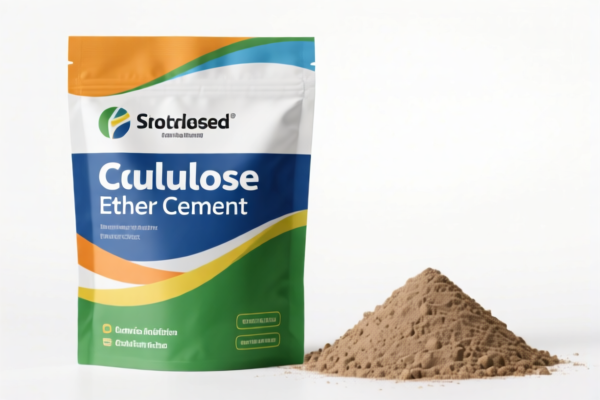
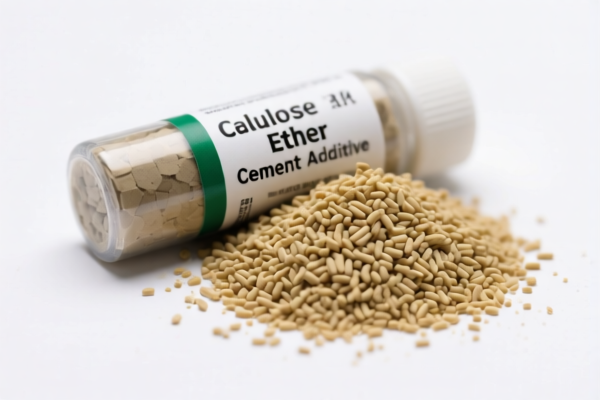
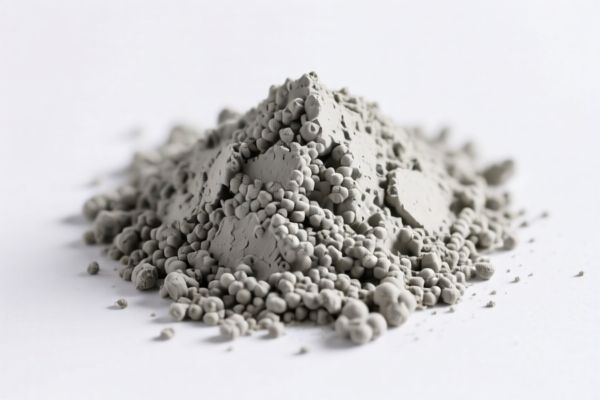
AI分析
🧱 Cement Anti-Seepage Additive: HS Code Classification & US Customs Clearance Guide (2026)
🌐 HS Code Reference & Customs Clearance Strategy | 2026 Latest Tariff Analysis | Professional Compliance Guide 📌 Part 1: Product Definition & Classification Logic
Cement Anti-Seepage Additives are chemical or mineral compounds added to concrete, mortar, or grout to improve impermeability, durability, and resistance to water penetration. In international trade, the classification depends strictly on the chemical composition and primary function of the additive.
⚠️ Critical Distinction Point: - If the additive is mineral-based (e.g., silicates, fly ash) → It falls under Chapter 25. - If the additive is organic/inorganic chemical (e.g., polymers, silanes) → It falls under Chapter 38. - If the additive is petroleum/mineral oil-based (lubricants or specific oil-containing preparations) → It falls under Chapter 34.
📦 Part 2: HS Code Classification Details (2026 Tariff Schedule)
| HS Code | Product Description | Key Characteristics | Classification Logic |
|---|---|---|---|
2530.90.80.50 |
Other mineral products (Mineral Additives) | Mineral-based, inorganic, non-specified elsewhere | Logic: Fits "Other mineral products" if not chemically prepared as a chemical product. |
3824.40.20.00 |
Prepared Binders for Metal Foundry Molds & Cores / Concrete Additives | Inorganic or organic chemical preparations | Logic: Classified as "Other prepared binders" or chemical additives for concrete/cement. |
3824.40.50.00 |
Prepared Binders for Foundry Molds / Concrete Additives | Chemical preparations specifically for cement/mortar | Logic: Specifically identified as a "preparation for cement, mortar or concrete." |
3403.19.10.00 |
Lubricating Preparations Containing Petroleum Oils | Oil-based chemical preparations | Logic: If the additive is primarily a lubricant or contains significant petroleum/mineral oil content as per Chapter 34 definitions. |
3403.19.50.00 |
Other Lubricating Preparations | Petroleum or mineral oil-based anti-corrosion/preparations | Logic: Used if the product is explicitly defined as a corrosion-prevention agent containing petroleum oils. |
🔍 Key Reminder: - Chapter 25 is for raw or simply processed minerals. - Chapter 38 is for complex chemical preparations and anti-corrosion agents for construction. - Chapter 34 is specifically for lubricating preparations and anti-corrosion preparations based on petroleum/mineral oils. - Do not confuse "chemical additives" with "lubricating preparations." The presence of petroleum oil shifts the code to 3403.
💰 Part 3: 2026 Tariff Rate Breakdown (US Market)
✅ Applicable Country: United States (US) ✅ Origin: China (CN) ✅ Effective Date: November 10, 2025 (and subsequent imports)
🎯 1. 2530.90.80.50 —— Mineral Additives (Lowest Risk)
| Item | Details |
|---|---|
| Base Tariff | 0.0% |
| USITC Additional Tariff | 0.0% |
| IEEPA Additional Tariff | +10% (针对中国/香港产品) |
| Total Tax Rate | 10.0% |
| Calculation | CIF Value × 10% |
| De Minimis Eligibility | ❌ No (deny_de_minimis) |
| Legal Path | IEEPA:9903.01.25 → USITC:2530.90.80.50 |
📌 Explanation: - This is the most tax-efficient classification if the product qualifies as a simple mineral product. - Only the IEEPA 10% surcharge applies. No Section 301 (25%) tariff.
🎯 2. 3824.40.20.00 & 3824.40.50.00 —— Chemical/Concrete Additives
| Item | Details |
|---|---|
| Base Tariff | 0.0% (~3824.40.20) / 5.0% (~3824.40.50) |
| USITC Additional Tariff | +25% |
| IEEPA Additional Tariff | +10% |
| Total Tax Rate | 35.0% (~3824.40.20) / 40.0% (~3824.40.50) |
| Calculation | CIF Value × Total Rate |
| De Minimis Eligibility | ❌ No (deny_de_minimis) |
| Legal Path | IEEPA:9903.01.25 → IEEPA:9903.01.24 → USITC:3824.40.x0.00 → FOOTNOTE:9903.88.01 |
📌 Explanation: - 3824.40.20.00: Base 0% + 25% (301) + 10% (IEEPA) = 35%. - 3824.40.50.00: Base 5% + 25% (301) + 10% (IEEPA) = 40%. - These are standard chemical preparations for construction. High tariff burden.
🎯 3. 3403.19.10.00 & 3403.19.50.00 —— Petroleum/Oil-Based Additives
| Item | Details |
|---|---|
| Base Tariff | 0.2% (~3403.19.10) / 5.8% (~3403.19.50) |
| USITC Additional Tariff | +25% |
| IEEPA Additional Tariff | +10% |
| Total Tax Rate | 35.2% (~3403.19.10) / 40.8% (~3403.19.50) |
| Calculation | CIF Value × Total Rate |
| De Minimis Eligibility | ❌ No (deny_de_minimis) |
| Legal Path | IEEPA:9903.01.25 → IEEPA:9903.01.24 → USITC:3403.19.x0.00 → FOOTNOTE:9903.88.01 |
📌 Explanation: - If your anti-seepage additive contains petroleum oils or is marketed as a corrosion-prevention agent with oil content, it falls here. - 3403.19.10.00: Base 0.2% + 25% + 10% = 35.2%. - 3403.19.50.00: Base 5.8% + 25% + 10% = 40.8%. - This is the highest tariff category among the options.
🛠️ Part 4: Customs Clearance Practical Advice
✅ 1. Preparation Checklist (Must-Have Documents)
| Document | Required | Notes |
|---|---|---|
| Product Specification Sheet | ✅ Yes | Must detail chemical composition (Mineral vs. Chemical vs. Oil-based). |
| Safety Data Sheet (SDS) | ✅ Yes | Crucial for customs to determine chemical nature (Chapter 38 vs 34). |
| Commercial Invoice | ✅ Yes | Clearly state "Concrete Additive" or "Anti-Seepage Agent." Avoid vague terms. |
| Certificate of Origin (CO) | ✅ Yes | Required for IEEPA assessment. |
| Bill of Lading | ✅ Yes | Standard shipping document. |
| Third-Party Test Report | ✅ Recommended | To prove mineral content (for 2530) or chemical composition. |
✅ 2. Declaration Strategy (Key Tips)
🔥 "Composition Determines Code, Oil Means High Tax!"
| Scenario | Recommended HS Code | Tax Rate | Strategy |
|---|---|---|---|
| Pure Mineral Additive | 2530.90.80.50 |
10% | Best Option. Provide SDS proving inorganic/mineral nature. |
| Organic/Inorganic Chemical Additive | 3824.40.20.00 |
35% | Standard for most polymer-based additives. |
| Oil-Containing Corrosion Agent | 3403.19.50.00 |
40.8% | Avoid if possible. Only use if explicitly oil-based. |
| Foundry Binder for Concrete | 3824.40.50.00 |
40% | Specific use-case. Ensure product fits "preparation for cement." |
📌 Warning: - Misclassification Penalty: If you declare a chemical additive as "Mineral" (
2530) to save 25% tariff, but customs finds petroleum or organic polymers, you will face back taxes + fines. - Oil Content: If the product contains petroleum distillates, it must be classified under Chapter 34 (3403), triggering the highest tax.
✅ 3. Special Cases
| Case | Handling Advice |
|---|---|
| Hybrid Additives | If it contains both minerals and chemicals, the primary function and characteristic material determine the code. Usually, chemical binding agents push it to Chapter 38. |
| Sample vs. Bulk | Both are subject to the same tariff rates. De Minimis ($800) exemption does not apply. |
| Private Label | Ensure the supplier’s SDS matches your declared composition. |
🌍 Part 5: Global Market Comparison (2026)
| Country/Region | Recommended HS Code | Estimated Tariff (China Origin) | Notes |
|---|---|---|---|
| 🇺🇸 USA | 2530.90.80.50 (if mineral) |
10% | Best for mineral-based. Chemicals face 35-40%. |
| 🇺🇸 USA | 3824.40.20.00 (if chemical) |
35% | Standard for most modern chemical additives. |
| 🇨🇳 China | 3824.40.20.00 |
5-6% | Low import tariff. No additional surcharges. |
| 🇪🇺 EU | 3824.40.20.00 |
0-6% | Varies by member state. No Section 301/IEEPA equivalents. |
| 🇬🇧 UK | 3824.40.20.00 |
0-6% | Post-Brexit tariffs generally aligned with EU. |
📌 Conclusion: - USA is the most challenging market due to Section 301 and IEEPA tariffs. - Mineral-based additives (
2530) offer the lowest risk and cost (10%). - Chemical additives (3824) are standard but expensive (35%). - Oil-based additives (3403) are the most expensive (40.8%) and should be avoided if the product allows mineral/chemical alternatives.
📌 Part 6: Common Mistakes & Pitfalls
❌ Mistake 1: Declaring a chemical polymer additive as "Mineral Product" (2530) |
👉 Consequence: Customs audit reveals organic content → Back taxes + 25% penalty.
❌ Mistake 2: Ignoring "Petroleum Oil" content in the ingredient list |
👉 Consequence: Misclassified to 2530 or 3824 → Reclassified to 3403 → 40.8% tax applied retroactively.
❌ Mistake 3: Assuming "De Minimis" ($800) exemption applies | 👉 Consequence: False. All HS codes listed are deny_de_minimis. Every shipment is taxed.
✅ Best Practice:
"Concrete Anti-Seepage Agent, [Mineral/Chemical] Based, SDS Attached, Model XYZ, Intended for Residential Construction"
🎯 Part 7: Conclusion
🎯 Remember:
🔹 "Mineral = 10%, Chemical = 35%, Oil = 40.8%." 🔹 "De Minimis Does Not Apply!" 🔹 "SDS is Your Best Friend in Classification."
📌 Pro Tip:
If your product is primarily a mineral additive (e.g., silicate-based), insist on HS Code 2530.90.80.50 for maximum savings.
If it is a chemical polymer, accept 3824.40.20.00 as the standard.
Avoid 3403 unless the product is explicitly oil-based, as it carries the highest tax burden.
📣 Immediate Action:
📞 Contact your supplier for the SDS (Safety Data Sheet). 🚀 Verify chemical composition against Chapter 25, 34, and 38 criteria. 💼 Accurate classification saves thousands in tariffs!
✨ Professional Clearance Starts with Accurate Classification! 💼 Every percentage point matters in your profit margin!
用户评价
关于 HS 编码归类
协调制度(HS)是由世界海关组织(WCO)制定的国际贸易商品分类标准。全球 200 多个国家采用 HS 系统作为海关关税、贸易统计和进出口监管的基础。
每个 HS 编码遵循以下层级结构:
- 章(2 位)——商品大类(例如:第 84 章:机器和机械设备)
- 品目(4 位)——章内的更具体分类
- 子目(6 位)——国际通用细分,所有 WCO 成员国统一使用
- 本国细分(8-10 位)——各国自行扩展的细分编码,如美国 HTSUS 10 位编码
正确的 HS 编码归类对于顺利通关、准确缴纳关税和遵守贸易法规至关重要。错误归类可能导致海关延误、多缴关税或罚款。
从CN进口到US时,适用的关税税率可能包括:
- 最惠国(MFN)税率——适用于 WTO 成员国的标准关税税率
- 普通税率——适用于无贸易协定国家
- 贸易救济关税——附加关税,如 301 条款(反倾销)、232 条款(国家安全)或反补贴税
本页内容仅供参考。如需正式归类,请咨询当地海关或持牌报关代理。