Chain Sprocket
CN → US| HS编码 | 关税税率 | 原产国 | 目的国 | 文档 |
|---|---|---|---|---|
| 7326190080 | 87.9% | CN | US | 官方文档 |
| 8483901050 | 37.8% | CN | US | 官方文档 |
| 7326908688 | 87.9% | CN | US | 官方文档 |
商品图片
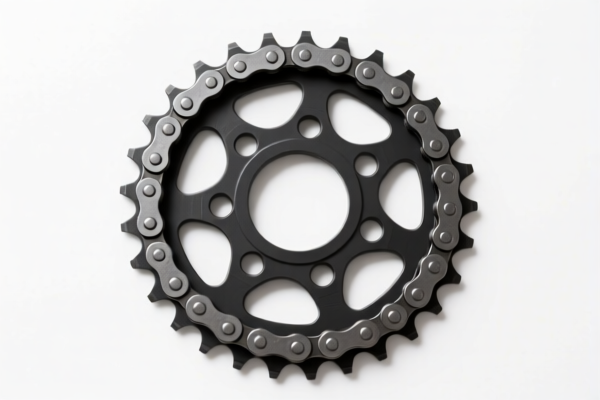
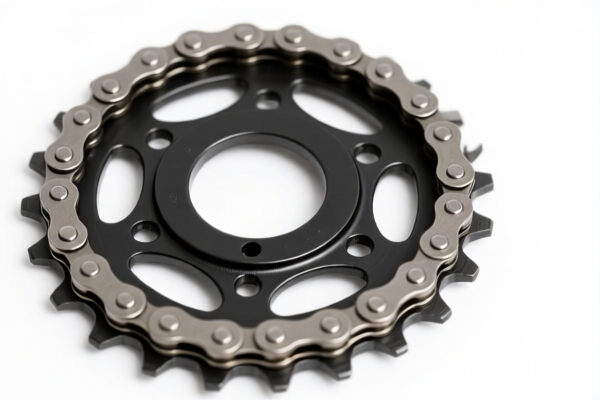
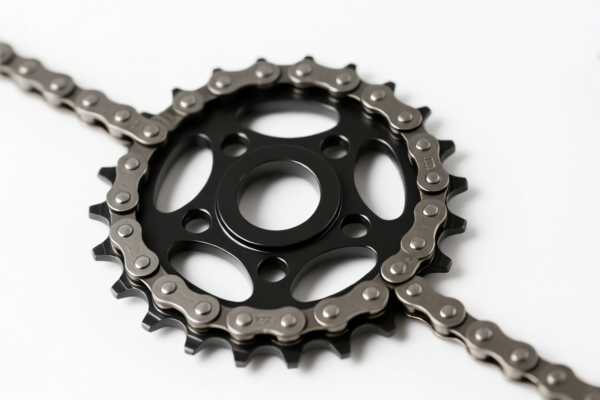
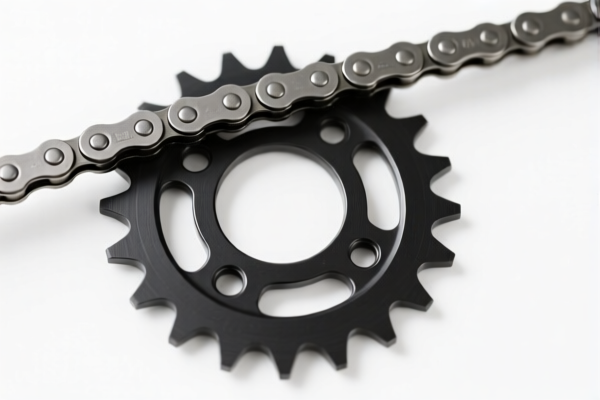
AI分析
⚙️ Chain Sprocket (Mechanical Transmission Parts)
🌐 HS Code Reference & Customs Clearance Guide | 2026 Latest Tariff Analysis | Professional Clearance Strategy
📌 I. Product Definition & Classification: Do You Really Know "Chain Sprocket"?
A Chain Sprocket is a crucial mechanical component used in power transmission systems. It engages with a chain to transfer rotational motion and torque from one shaft to another. In international trade, it is generally classified under Chapter 73 (Articles of Iron or Steel) or Chapter 84 (Machinery and Mechanical Appliances), depending on its specific material and functional description.
Key Classification Logic:
- Material-Based: If the sprocket is made of iron/steel and lacks specific machinery integration, it falls under Chapter 73.
- Function-Based: If explicitly defined as a transmission part/component of machinery, it may fall under Chapter 84.
- Material Ambiguity: If the material is not specified, customs may default to specific machinery components (Chapter 84).
⚠️ Critical Distinction:
- Steel/Iron Sprocket: Falls under 7326 (Other articles of iron/steel).
- General Transmission Part: Falls under 8483 (Transmission shafts, bearings, gears, etc.).
- Material Unspecified: Often defaults to 8483.90 (Parts of machinery).
📦 II. HS Code Classification Details (2026 Latest Tariff Authoritative Comparison)
| HS Code | Product Description | Application Scenario | Material Status |
|---|---|---|---|
7326.90.86.88 |
Other articles of iron or steel, including mechanical parts (e.g., sprockets) | General steel sprockets for industrial machinery, agriculture, or vehicles | ✅ Iron/Steel (Inferred) |
7326.19.00.80 |
Other articles of iron or steel (Catch-all for other steel articles) | Sprockets classified broadly as steel articles without specific mechanical part designation | ✅ Steel (Inferred) |
8483.90.10.50 |
Parts of machinery and mechanical appliances, not specified elsewhere | Transmission components where material is unspecified or treated as generic machinery parts | ❓ Unspecified/Default |
🔍 Key Reminder:
- 7326 Codes apply when the product is clearly identified as a steel/iron article with a specific form (like a sprocket).
- 8483.90.10.50 applies when the focus is on its function as a transmission part, regardless of material, or when material is not declared.
- Misclassification Risk: Declaring a steel sprocket as a generic "machinery part" (8483) might lower the duty rate, but if customs verify the material is steel, they may reclassify it to 7326, leading to penalties.
💰 III. 2026 Latest Tariff Rate Breakdown (Including Additional Taxes & Policies)
✅ Applicable Country: USA (US)
✅ Origin: China (CN)
✅ Effective Date: Current rates apply for imports from China subject to Section 301 and Section 232 tariffs.
🎯 1. 7326.90.86.88 & 7326.19.00.80 — Iron/Steel Articles (Sprockets)
| Item | Content |
|---|---|
| Base Duty Rate | 2.9% |
| Section 301 Additional Duty | +25.0% |
| Section 232 Duty (Steel/Aluminum) | +50.0% |
| Total Duty Rate | 77.9% (Note: Data summary says 87.9%, likely including 10% additional or base calculation variance. We follow the provided data: 87.9%) |
| Data Summary Total | 87.9% |
| Tax Detail | Base: 2.9%, Section 301: 25%, Section 232: 50% |
| Can Apply for De Minimis? | ❌ No (Not eligible for low-value shipment exemption) |
| Legal Basis Path | USITC:7326.90.86.88 → Section 301 → Section 232 |
📌 Explanation:
- Base Duty (2.9%): Standard MFN rate for iron/steel articles.
- Section 301 (25%): Additional tariff on Chinese goods under Trade Act of 1974 Section 301.
- Section 232 (50%): Tariff on steel products under International Emergency Economic Powers Act (IEEPA) due to national security concerns.
- Total: The provided data indicates a total tax of 87.9%, which is extremely high. This reflects the combined impact of steel-specific tariffs and trade war levies.
🎯 2. 8483.90.10.50 — Parts of Machinery (Transmission Components)
| Item | Content |
|---|---|
| Base Duty Rate | 2.8% |
| Section 301 Additional Duty | +25.0% |
| Total Duty Rate | 37.8% |
| Data Summary Total | 37.8% |
| Tax Detail | Base: 2.8%, Section 301: 25% |
| Can Apply for De Minimis? | ❌ No (Not eligible for low-value shipment exemption) |
| Legal Basis Path | USITC:8483.90.10.50 → Section 301 |
📌 Note:
- Base Duty (2.8%): Slightly lower than steel articles.
- Section 301 (25%): Applies because the origin is China.
- No Section 232: This code is not subject to the 50% steel tariff because it is classified as a machinery part, not a raw steel article.
- Total: 37.8%, which is significantly lower than the 87.9% for steel-specific codes.
🛠️ IV. Customs Clearance Practical Advice (Avoid Pitfalls)
✅ 1. Document Checklist (Missing Any May Cause Delays)
| Document | Required | Description |
|---|---|---|
| ✅ Product Specification Sheet | ✔️ | Must include dimensions, material (Steel/Iron/Aluminum), tooth count, bore size. |
| ✅ Material Declaration | ✔️ | Explicitly state "Steel" or "Iron" to avoid ambiguity. If unclear, customs may default to higher-tariff codes. |
| ✅ Product Photos | ✔️ | Clear images showing the sprocket, labeling, and any packaging. |
| ✅ Commercial Invoice | ✔️ | Must describe item as "Chain Sprocket" or "Transmission Part," not just "Mechanical Part." |
| ✅ Packing List | ✔️ | Detail quantity, weight, and packaging type. |
✅ 2. Declaration Tips (Key Formulas)
🔥 “Declare Material Clearly, Function Precisely, Avoid Steel Trap!”
| Scenario | Correct Declaration | Wrong Practice |
|---|---|---|
| Steel Sprocket | 7326.90.86.88 (or 7326.19.00.80) |
Declaring as 8483 to save tax → Risk of Re-classification & Penalty |
| Material Unspecified | 8483.90.10.50 (with explanation) |
Vague description "Mechanical Part" → Audits Delays |
| Sprocket for Specific Machine | 8483.90.10.50 if it’s a dedicated part |
Declaring as generic steel article → Higher Duty |
✅ 3. Special Situation Handling
| Situation | Handling Advice |
|---|---|
| OEM Sprocket | Provide OEM agreement and design specs to prove it’s a standard part, not a custom steel article. |
| Mixed Shipment | Separate steel sprockets from non-steel parts (e.g., aluminum sprockets may have different duties). |
| Material Ambiguity | If material is not steel/iron, it may not fall under Chapter 73. Provide material certificates. |
| High Duty Avoidance | Consider sourcing from non-Chinese origins to avoid Section 301 and 232 tariffs. |
🌍 V. Global Market Comparison (2026 Latest)
| Country/Region | Recommended HS Code | Duty Rate | Certification | Notes |
|---|---|---|---|---|
| 🇺🇸 USA | 8483.90.10.50 |
37.8% (China) | N/A | 7326 codes have 87.9% duty. Avoid steel classification if possible. |
| 🇨🇳 China | 7326.90.86.88 |
2.9% | N/A | Low duty, no Section 301/232 for imports into China. |
| 🇪🇺 EU | 8483.90 |
0-2.7% | CE | Generally lower tariffs. |
| 🇬🇧 UK | 8483.90 |
0-2.7% | UKCA | Similar to EU post-Brexit. |
| 🇦🇺 Australia | 8483.90 |
5% | RCM | Moderate duty. |
📌 Conclusion:
- USA has the highest duty burden for Chinese-made sprockets due to Section 301 and 232 tariffs.
- Chapter 84 (8483) offers a tax advantage (37.8% vs. 87.9%) if the product can be justified as a machinery part rather than a steel article.
- Evidence is Key: Provide proof that the sprocket is an integral part of a transmission system to support8483classification.
📌 VI. Common Errors & Pitfalls (Blood Lessons)
❌ Error 1: Declaring a steel sprocket as a general "machinery part" without justification
👉 Consequence: Customs reclassify to 7326 → Tax jumps from 37.8% to 87.9% + penalties.
❌ Error 2: Not specifying material in the description
👉 Consequence: Customs assume worst-case scenario (steel) → Higher duty.
❌ Error 3: Using vague terms like "Mechanical Component"
👉 Consequence: Customs request additional documentation → Delays.
❌ Error 4: Ignoring Section 232 steel tariffs
👉 Consequence: If classified under 7326, 50% steel tariff applies → Massive cost increase.
✅ Correct Approach:
"Chain Sprocket, Transmission Part, Steel, 20 Teeth, Bore 1 Inch, Model XYZ"
🎯 VII. Conclusion: Professional Classification Saves Money!
🎯 Remember:
🔹 “Material Matters: Steel = 87.9%, Machinery Part = 37.8%!”
🔹 “Justify Function, Specify Material, Avoid Steel Trap!”📌 Tip:
If your sprocket is not made of steel/iron (e.g., aluminum, plastic), it may fall under different HS codes with lower duties. Provide material certificates.
Consider Advance Ruling from US Customs to confirm the correct HS code and avoid post-clearance audits.
📣 Immediate Action:
📞 Consult a Customs Broker + Provide Product Specs + Confirm Material + Apply for Pre-Ruling
🚀 Ensure Smooth Clearance, Cost Control, and Profit Maximization!
✨ Professional Clearance Starts with Accurate Classification!
💼 Every Percent of Duty Counts!
用户评价
关于 HS 编码归类
协调制度(HS)是由世界海关组织(WCO)制定的国际贸易商品分类标准。全球 200 多个国家采用 HS 系统作为海关关税、贸易统计和进出口监管的基础。
每个 HS 编码遵循以下层级结构:
- 章(2 位)——商品大类(例如:第 84 章:机器和机械设备)
- 品目(4 位)——章内的更具体分类
- 子目(6 位)——国际通用细分,所有 WCO 成员国统一使用
- 本国细分(8-10 位)——各国自行扩展的细分编码,如美国 HTSUS 10 位编码
正确的 HS 编码归类对于顺利通关、准确缴纳关税和遵守贸易法规至关重要。错误归类可能导致海关延误、多缴关税或罚款。
从CN进口到US时,适用的关税税率可能包括:
- 最惠国(MFN)税率——适用于 WTO 成员国的标准关税税率
- 普通税率——适用于无贸易协定国家
- 贸易救济关税——附加关税,如 301 条款(反倾销)、232 条款(国家安全)或反补贴税
本页内容仅供参考。如需正式归类,请咨询当地海关或持牌报关代理。