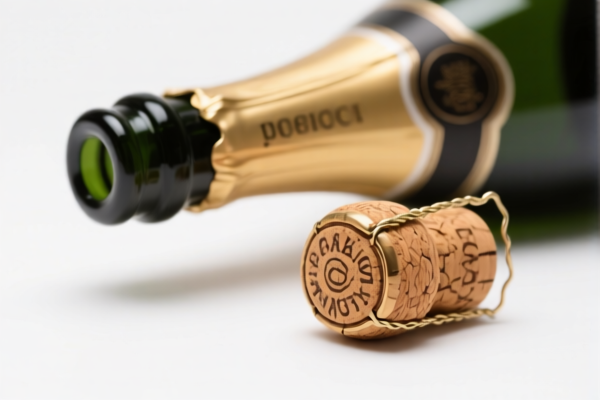
Champagne Bottle Natural Cork Stoppers
CN → US| HS编码 | 关税税率 | 原产国 | 目的国 | 文档 |
|---|---|---|---|---|
| 4504104500 | 35.0% | CN | US | 官方文档 |
| 4504104700 | 35.0% | CN | US | 官方文档 |
| 4503106000 | 35.0% | CN | US | 官方文档 |
| 4502000000 | 35.0% | CN | US | 官方文档 |
| 4503102000 | 35.0% | CN | US | 官方文档 |
商品图片



AI分析
🍾️ Champagne Bottle Natural Cork Stoppers
🌐 HS Code Reference & Customs Clearance Guide | 2026 Latest Tariff Analysis | Professional Entry Strategy
📌 I. Product Definition & Classification: What Exactly is a "Cork Stopper"?
Natural cork stoppers for champagne bottles are the premium sealing solution for sparkling wines. In international trade, these products fall under Chapter 45: Cork and Cork Products.
Due to specific manufacturing nuances, sizes, and slight variations in classification systems (especially for US imports from China), these items are often split into multiple HS Codes depending on the exact sub-category interpretation by customs authorities. All codes below relate to Natural Cork (Subheading 4503, 4502, 4504).
⚠️ Key Distinction:
- All listed codes below carry a HIGH TOTAL TAX RATE of 35% for shipments originating from China to the USA. - There is NO differentiation in tax rate between these specific codes in the provided dataset; the difference lies in the precise textual description required by customs. - Misclassification can lead to delays, even if the tax rate is similar, because customs officers scrutinize "Cork" descriptions closely for anti-dumping or origin rules.
📦 II. HS Code Classification Details (Based on Provided Data)
| HS Code | Product Description (Summary) | Key Characteristics |
|---|---|---|
| 4504.10.45.00 | Natural cork stoppers, material: natural cork, form: stoppers | Specific classification for natural cork stoppers under heading 4504 |
| 4504.10.47.00 | Natural cork stoppers, material: natural cork, form: plugs/stoppers | Another specific sub-category for natural cork stoppers/plugs |
| 4503.10.60.00 | Natural cork articles, material: natural cork, form: stoppers | Classified under "Cork articles" (4503) rather than processed cork (4504) |
| 4502.00.00.00 | Natural cork and its articles, material: natural cork, form: stoppers | Broad category for natural cork and its manufactured articles |
| 4503.10.20.00 | Natural cork articles, material: natural cork, form: stoppers | Specific article classification under Chapter 4503 |
🔍 Important Note:
- All five codes listed above apply to Natural Cork used as Stoppers/Plugs. - The dataset indicates that all these codes attract the same total tax burden. - When importing, ensure the commercial invoice explicitly states "Natural Cork" (not agglomerated or technical cork) to match these descriptions.
💰 III. 2026 Latest Tariff Rate Breakdown (Detailed Tax Clauses)
✅ Applicable Country: USA (US)
✅ Origin: China (CN)
✅ Effective Time: Current active rates (2025-2026)
🎯 Universal Tax Structure for All Listed Codes
| Tax Component | Rate | Legal Basis / Explanation |
|---|---|---|
| Base Tariff | 0.0% | Standard MFN (Most Favored Nation) duty for natural cork products is often 0%. |
| Section 301 / Retaliatory Tariff | +25.0% | Additional tariff imposed on certain Chinese imports under US Trade Law Section 301. |
| Section 122 / IEEPA Tariff | +10.0% | Additional tariff imposed on Chinese goods (specifically cited in data as "122 Clause"). |
| TOTAL EFFECTIVE TAX RATE | 35.0% | Sum of Base (0%) + Section 301 (25%) + Section 122 (10%) |
📌 Detailed Explanation:
- Base Tariff (0%): Natural cork is generally considered a low-risk raw material or processed natural product, hence the low base rate. - Section 301 Tariff (25%): This is the primary "trade war" tariff affecting a wide range of Chinese goods, including many cork products. It is non-negotiable without an exclusion (which is rare and limited). - Section 122 / IEEPA Tariff (10%): The data explicitly lists this as an additional layer. Section 122 of the Trade Act of 1962 allows the President to adjust tariffs for national security reasons. IEEPA (International Emergency Economic Powers Act) is often used to enforce such measures. This 10% is ON TOP of the 25%. - Total Cost Impact: For every $1,000 CIF value, you must pay $350 in duties/tariffs.🚫 De Minimis Exemption:
- NOT APPLICABLE (deny_de_minimis).
- Shipments under $800 (Section 321) are NOT exempt from these specific tariffs for Chinese-origin cork products. Full duties apply regardless of shipment value.
🛠️ IV. Customs Clearance Practical Advice (Pitfall Avoidance Guide)
✅ 1. Documentation Checklist (Mandatory)
| Document | Required? | Description |
|---|---|---|
| Commercial Invoice | ✅ Yes | Must clearly state: "Natural Cork Stopper", HS Code (e.g., 4504.10.45.00), and Country of Origin: China. |
| Packing List | ✅ Yes | Detail net weight vs. gross weight. Cork is lightweight; volume-based shipping may incur additional fees. |
| Material Certificate | ✅ Yes | Prove the material is 100% Natural Cork (not agglomerated, technical, or reconstituted). Mislabeling can lead to higher duties if classified differently. |
| Bill of Lading (B/L) | ✅ Yes | Standard shipping document. |
| ISF (10+2) Filing | ✅ Yes | Must file 24 hours before loading. Include correct HS Code and container number. |
⚠️ Critical Tip:
- Do NOT use generic terms like "Cork" or "Wood Plugs." Use "Natural Cork Stoppers for Champagne Bottles". - If the cork is agglomerated (composed of particles), it may fall under a different HS code with different tax implications. Ensure your supplier confirms it is Solid Natural Cork.
✅ 2. Classification Strategy & Tips
🔥 "Be Specific, Be Consistent, Avoid Ambiguity!"
| Scenario | Recommended Action | Mistake to Avoid |
|---|---|---|
| Standard Champagne Stoppers | Use 4504.10.45.00 or 4504.10.47.00 as they are most specific to "stoppers/plugs" in processed cork. | Using 4502.00.00.00 (too broad) which might trigger manual review. |
| Agglomerated Cork | Do NOT use the codes above. They are for Natural cork. Agglomerated cork has different HS codes (often 4503.90 or 4504.90). | Labeling agglomerated cork as "Natural" → Customs Fraud / Penalty. |
| Sample Shipments | Still declare full value. No de minimis exemption for China-origin cork. | Assuming small samples are tax-free → Held at Customs. |
| Mixed Shipments (Cork + Bottles) | Declare Separately. Bottles have different HS codes (9617 or 7013) and tax rates. | Combining values → Confused Classification, Higher Risk. |
✅ 3. Special Circumstances & Handling
| Situation | Handling Advice |
|---|---|
| OEM/Private Label | Provide brand authorization if applicable, but the HS code depends on the product, not the brand. |
| Discounted/Free Samples | Declare fair market value. $0 value declarations are rejected. |
| Re-export from Mexico/Canada | If transshipped, ensure proof of non-manipulation. However, if re-labeled as "Made in Mexico" without substantial transformation, the US may still apply China tariffs. |
| Quality Issues | If stoppers are damaged, file an insurance claim, but do not change the HS code based on condition. |
🌍 V. Global Market Comparison (Contextual)
| Region | Typical Tariff for Natural Cork | Note |
|---|---|---|
| 🇺🇸 USA | 35% (0% Base + 25% Sec 301 + 10% Sec 122) | Highest Cost Driver: Aggressive tariffs on Chinese goods. |
| 🇨🇳 China | 0% - 5% (Import Duty) | China imports natural cork primarily from Portugal/Spain. |
| 🇪🇺 EU | 0% | EU has Free Trade Agreements and low duties for cork. |
| 🇬🇧 UK | 0% | Post-Brexit, UK maintains similar tariffs to EU for cork. |
📌 Conclusion:
- The USA market is significantly more expensive for Chinese-origin natural cork stoppers due to the 35% combined tariff. - If your cost structure is tight, consider: 1. Sourcing from Portugal or Spain (to avoid China-origin tariffs). 2. Absorbing the cost into product pricing. 3. Using Agglomerated Cork (if acceptable to clients) to see if a different HS code applies (though often still subject to 301, check latest HTS).
📌 VI. Common Errors & Pitfalls (Blood Lessons)
❌ Error 1: Declaring "Agglomerated Cork" as "Natural Cork"
👉 Consequence: Customs seizure, fines, and potential legal action for misrepresentation.
❌ Error 2: Ignoring the Section 122 10% Surcharge
👉 Consequence: Underpayment of duties. Even if base rate is 0%, the 35% total must be paid.
❌ Error 3: Combining Cork Stoppers with Glass Bottles in One Line Item
👉 Consequence: Unclear valuation. Bottles and corks have different HS codes. Separate them.
❌ Error 4: Using "Wine Cork" as the Description
👉 Consequence: Too vague. Use "Champagne Bottle Natural Cork Stoppers".
✅ Correct Practice:
"Natural Cork Stoppers for Champagne Bottles, Solid Natural Cork, HS Code 4504.10.45.00, Country of Origin: China"
🎯 VII. Conclusion: Precision in Classification Saves Money!
🎯 Remember the Key Takeaway:
🔹 "Natural Cork = 35% Total Tax (China → USA)"
🔹 "Base 0% + Sec 301 25% + Sec 122 10% = 35%"
🔹 "Specify 'Natural', Not 'Agglomerated'"📌 Pro Tip:
If you are importing large volumes, consider applying for a HTS Code Exclusion under Section 301, although exclusions for cork are limited. Alternatively, explore duty drawback programs if the goods are later re-exported.
📣 Immediate Action:
📞 Contact your Customs Broker
📄 Provide Product Photos & Material Certificate
🚀 Ensure ISF 10+2 is filed 24h before loading
✨ Professional Clearance Starts with Accurate Classification!
💼 Your Profit Margin Depends on the Details!
用户评价
关于 HS 编码归类
协调制度(HS)是由世界海关组织(WCO)制定的国际贸易商品分类标准。全球 200 多个国家采用 HS 系统作为海关关税、贸易统计和进出口监管的基础。
每个 HS 编码遵循以下层级结构:
- 章(2 位)——商品大类(例如:第 84 章:机器和机械设备)
- 品目(4 位)——章内的更具体分类
- 子目(6 位)——国际通用细分,所有 WCO 成员国统一使用
- 本国细分(8-10 位)——各国自行扩展的细分编码,如美国 HTSUS 10 位编码
正确的 HS 编码归类对于顺利通关、准确缴纳关税和遵守贸易法规至关重要。错误归类可能导致海关延误、多缴关税或罚款。
从CN进口到US时,适用的关税税率可能包括:
- 最惠国(MFN)税率——适用于 WTO 成员国的标准关税税率
- 普通税率——适用于无贸易协定国家
- 贸易救济关税——附加关税,如 301 条款(反倾销)、232 条款(国家安全)或反补贴税
本页内容仅供参考。如需正式归类,请咨询当地海关或持牌报关代理。