Chassis for Motor Vehicles
CN → US| HS编码 | 关税税率 | 原产国 | 目的国 | 文档 |
|---|---|---|---|---|
| 8706001540 | 37.5% | CN | US | 官方文档 |
| 8708806590 | 0.0% | CN | US | 官方文档 |
| 8708801600 | 12.5% | CN | US | 官方文档 |
| 8706001520 | 37.5% | CN | US | 官方文档 |
商品图片
AI分析
🚗 Chassis for Motor Vehicles (With Engine)
🌐 HS Code Reference & Customs Clearance Guide | 2026 Latest Tariff Analysis | Professional Entry Strategy
📌 I. Product Definition & Classification: Do You Really Understand "Chassis"?
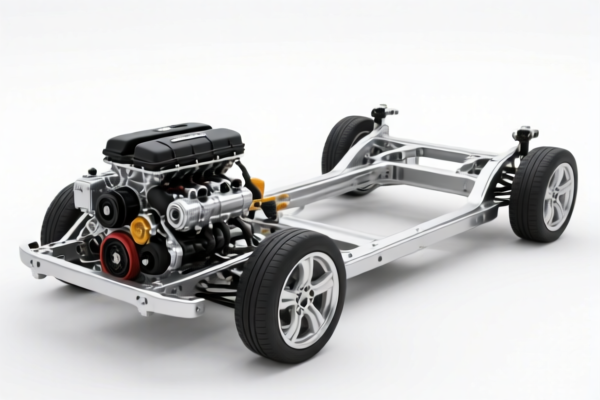
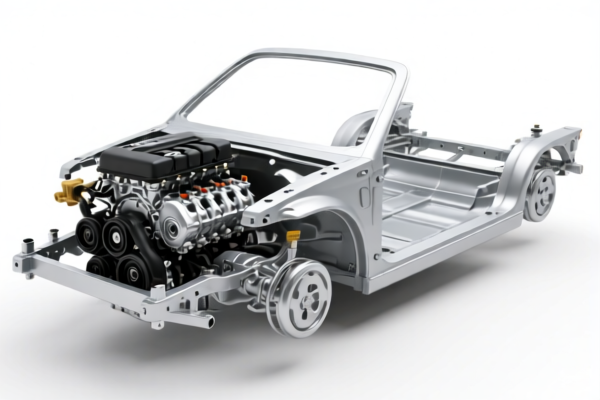
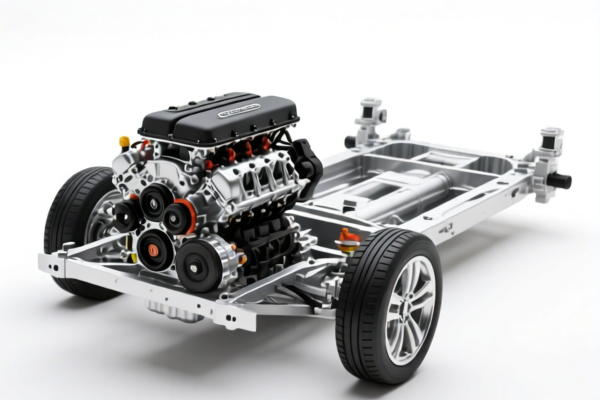
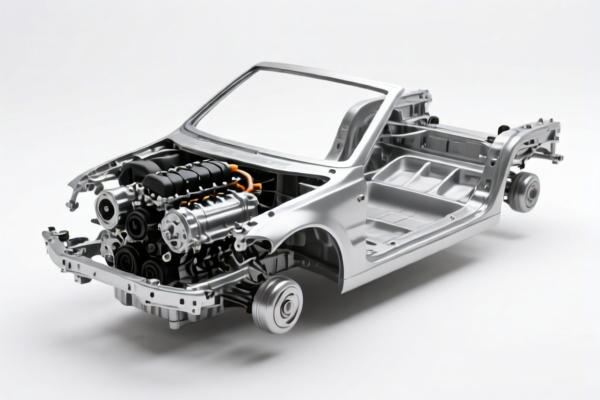
A chassis with engine (often referred to as a "cab chassis" or "rolling chassis") is the foundational structural framework of a motor vehicle. It typically includes the frame, suspension, steering system, and the powertrain (engine/motor), but excludes the body, cabin, or final load-bearing bodywork. It is designed to be the base upon which specialized bodies (like dump trucks, fire engines, or passenger cars) are mounted.
In international trade, classification hinges on two critical factors: 1. Completeness: Is it a complete vehicle structure or just a component? 2. Material Composition: Does it contain steel, aluminum, or copper, triggering specific "122 Clause" surcharges?
⚠️ Key Distinction Point:
- If it is a complete chassis frame with engine, intended for mounting a body → Chapter 87 (Vehicles)
- If it is merely a suspension part or structural bracket without the engine/frame integration → Chapter 87 (Parts & Accessories)
- Crucial Note: The presence of Steel, Aluminum, or Copper significantly impacts the tariff rate due to US "122 Clause" restrictions.
📦 II. HS Code Classification Details (2026 Latest Tariff Authority Mapping)
| HS Code | Product Description | Application Scenario | Material Conflict? |
|---|---|---|---|
8706.00.15.40 |
Chassis with Engine - Structural Component | Matches engine-equipped chassis形态. Used as a core vehicle component. | ❌ No specific material penalty noted in summary |
8708.80.65.90 |
Motor Vehicle Parts - Suspension/Structure | Includes suspension systems. Classified as a vehicle component. | ⚠️ YES: Steel, Aluminum, Copper items trigger +50% |
8708.80.16.00 |
Core Vehicle Component - Suspension/Steering | Fits "parts for other vehicles." Core structural/suspension/steering system. | ❌ No material penalty noted |
8706.00.15.20 |
Chassis with Engine - Passenger/Vehicle Scope | Inferred to be within passenger vehicle or motor vehicle category. | ❌ No specific material penalty noted |
8708.80.65.90 |
Vehicle Parts & Accessories | Form and usage have no material conflict (general case). | ⚠️ YES: Steel, Aluminum, Copper items trigger +50% |
🔍 Critical Reminder:
- HS 8706 covers "Chassis with Engine." This is a semi-finished vehicle structure. - HS 8708 covers "Parts and Accessories." - The "122 Clause" Penalty: For HS codes8708.80.65.90, if the product contains Steel, Aluminum, or Copper, an additional 50% tariff is applied on top of standard rates. This is a massive cost driver!
💰 III. 2026 Latest Tariff Rate Breakdown (Including Surcharges & Policy Add-ons)
✅ Applicable Country: United States (US)
✅ Origin: China (CN)
✅ Effective Time: Current rates apply (including Section 301 & 122 Clause implications)
🎯 1. 8706.00.15.40 & 8706.00.15.20 —— Chassis with Engine
These codes classify the chassis as a core vehicle component with an engine. They share the same high-risk tariff structure due to being imported from China.
| Item | Detail |
|---|---|
| Base Tariff | 2.5% |
| Section 301 Surcharge | +25.0% |
| "122 Clause" Surcharge | +10.0% |
| Total Tariff Rate | 37.5% |
| Tax Calculation | CIF Value × 37.5% |
| De Minimis Eligibility | ❌ No (Not eligible for $800 de minimis exemption) |
| Legal Basis Path | USITC:8706.00.15.40 → Section 301 → 122 Clause |
📌 Explanation:
- The 37.5% total rate is extremely high. It combines the standard MFN rate (2.5%) with punitive tariffs. - The "122 Clause" (+10%) is a specific US regulatory surcharge applied to certain vehicle parts and components to protect domestic manufacturing. - Cost Impact: For a $10,000 chassis, the tax alone is $3,750.
🎯 2. 8708.80.16.00 —— Core Vehicle Component (Suspension/Steering)
This code is for parts like suspension and steering systems that are critical but classified as "parts" rather than a "chassis with engine."
| Item | Detail |
|---|---|
| Base Tariff | 2.5% |
| Section 301 Surcharge | 0.0% (Exempted or not applied in this specific sub-heading context) |
| "122 Clause" Surcharge | +10.0% |
| Total Tariff Rate | 12.5% |
| Tax Calculation | CIF Value × 12.5% |
| De Minimis Eligibility | ❌ No |
| Legal Basis Path | USITC:8708.80.16.00 → 122 Clause |
📌 Note:
- This code offers a significant advantage (12.5% vs 37.5%) if the item can be classified as a "part" (e.g., a standalone suspension system) rather than a full "chassis with engine." - However, this only applies if it does not contain Steel/Aluminum/Copper that triggers the higher 8708.80.65.90 rate.
🎯 3. 8708.80.65.90 —— Vehicle Parts (Suspension/Structure) - HIGH RISK
This code applies to vehicle parts, including suspension systems. Crucially, the summary indicates a material-based penalty.
| Item | Detail |
|---|---|
| Base Tariff | 2.5% |
| Section 301 Surcharge | +25.0% |
| "122 Clause" Surcharge | +10.0% |
| Material Surcharge (Steel/Al/Cu) | +50.0% |
| Total Tariff Rate | 2.5% + 85.0% = 87.5% (If Steel/Al/Cu present) OR 37.5% (If non-metallic/non-penalized material) |
| Tax Calculation | CIF Value × Rate |
| De Minimis Eligibility | ❌ No |
| Legal Basis Path | USITC:8708.80.65.90 → Section 301 → 122 Clause → Material Restriction |
📌 Warning:
- If your suspension system or chassis part contains Steel, Aluminum, or Copper, the tariff skyrockets to 87.5%. - Even without the material surcharge, the base rate is 37.5% (2.5% + 25% + 10%). - Material Declaration is Critical: You must accurately declare the material composition to avoid misclassification penalties.
🛠️ IV. Customs Clearance Practical Advice (Combat Survival Guide)
✅ 1. Document Checklist (Non-negotiable)
| Document | Required | Explanation |
|---|---|---|
| ✅ Product Specifications | ✔️ | Detailed breakdown: Frame, Engine, Suspension, Steering. Must clarify if it's a "chassis with engine" (8706) or "part" (8708). |
| ✅ Material Composition Certificate | ✔️ | Critical for 8708.80.65.90. Must specify if Steel, Aluminum, or Copper is present to avoid the +50% surprise. |
| ✅ Photographs (Clear Labels) | ✔️ | Show the chassis with/without engine, suspension details, and any identifying plates. |
| ✅ Commercial Invoice | ✔️ | Clearly state "Chassis for Motor Vehicle with Engine" or "Suspension System Component." Avoid vague terms like "Car Part." |
| ✅ Packing List | ✔️ | Detail components to ensure no splitting of shipments that could trigger additional scrutiny. |
| ✅ Certificate of Origin (CO) | ✔️ | Confirm China origin. No preferential treatment available for these codes under current trade policies. |
✅ 2. Classification Strategy (Key Mantra)
🔥 "Chassis with Engine = 37.5%. Parts = 12.5% or 87.5%. Material Matters!"
| Scenario | Correct HS Code | Tariff Rate | Mistake to Avoid |
|---|---|---|---|
| Full Chassis + Engine | 8706.00.15.40 / .20 |
37.5% | Do NOT try to classify as a "part" to save tax → High risk of audit. |
| Suspension System (No Steel/Al/Cu) | 8708.80.16.00 |
12.5% | Ideal if structurally a separate component. |
| Suspension System (With Steel/Al/Cu) | 8708.80.65.90 |
87.5% | Avoid! If possible, redesign to use non-penalized materials or classify as 8708.80.16.00. |
| General Vehicle Part | 8708.80.65.90 |
37.5% (Base) + 50% (if metal) | Always check material content. |
✅ 3. Special Case Handling
| Situation | Handling Advice |
|---|---|
| OEM Custom Chassis | Provide full design specs and bill of materials (BOM). Proving it's a "chassis with engine" rather than a "kit" is vital. |
| Mixed Material Parts | If a part is 51% steel, it may trigger the 122 Clause material surcharge. Consider material substitution or separate classification. |
| Chassis Without Engine | If the engine is removed, it may fall under different sub-headings in 8706. Consult a customs broker for precise re-classification. |
| Parts for Electric Vehicles | Ensure "Engine" is interpreted correctly (may refer to motor). Classification logic remains similar, but documentation must reflect "Motor/Electric Drive Unit." |
🌍 V. Global Market Customs Comparison (2026 Latest)
| Country/Region | Recommended HS Code | Tariff (China Origin) | Certification | Notes |
|---|---|---|---|---|
| 🇺🇸 USA | 8706.00.15.40 |
37.5% (Chassis) 12.5%-87.5% (Parts) |
None Specific | High punitive tariffs. 122 Clause is active. |
| 🇨🇳 China | 8706.00.15.40 |
5% - 10% (Typical) | CCC (if applicable) | Lower entry barriers, but export controls may apply. |
| 🇪🇺 EU | 8706.00.15 |
10% (Standard) | CE/EUR.1 | No Section 301 equivalent. Focus on safety standards. |
| 🇯🇵 Japan | 8706.00.15 |
0% - 5% | JIS | Liberal trade policy. Low tariffs. |
📌 Conclusion:
- The US market is the most expensive due to combined Section 301 and 122 Clause tariffs. - EU and Japan are significantly more favorable, with no punitive surcharges. - Strategy: If selling globally, consider routing non-Chinese components through third countries (with substantial transformation) to mitigate US tariffs, but beware of anti-circumvention laws.
📌 VI. Common Mistakes & Pitfalls (Lessons Learned)
❌ Mistake 1: Declaring a "Chassis with Engine" as a "Part" to get the lower 12.5% rate.
👉 Consequence: Customs audit reveals it's a complete chassis. Back taxes + penalties of ~25%.
❌ Mistake 2: Ignoring the Material Composition for 8708.80.65.90.
👉 Consequence: If steel/aluminum is present, the rate jumps from 37.5% to 87.5%. Massive cost overrun.
❌ Mistake 3: Using vague descriptions like "Car Chassis Part."
👉 Consequence: Customs assigns the highest default rate or requires a 90-day hold for classification ruling.
❌ Mistake 4: Assuming De Minimis ($800) applies.
👉 Consequence: Denial. Vehicle chassis and parts are explicitly excluded from de minimis relief.
✅ Correct Approach:
"Motor Vehicle Chassis, Complete with Engine, Model XYZ, Frame Material: Steel, Suspension: Independent, Intended for Passenger Vehicle Mounting."
🎯 VII. Conclusion: Precision is Profit
🎯 Remember the Mantra:
🔹 "Chassis with Engine: 37.5%. Parts: 12.5% (No Metal) or 87.5% (Metal). Declare Materials Truthfully!"
🔹 "HS Code Determines Cost. A 25% tariff difference can kill your margin."
📌 Pro Tip:
- If your product is Steel/Aluminum-intensive, explore HS 8708.80.16.00 (12.5%) if structurally justifiable as a component.
- Apply for an Advance Ruling from US Customs (CBP) before shipment to lock in the classification and avoid surprises.
- Consider supply chain diversification if targeting the US market heavily, as 37.5%-87.5% tariffs are unsustainable for low-margin goods.
📣 Immediate Action:
📞 Contact a licensed Customs Broker.
📄 Submit Product Specs + BOM for HS Code Pre-Ruling.
🚀 Clear Customs Smoothly, Maximize Profits!
✨ Professional Customs Clearance Starts with Accurate Classification!
💼 Every Dollar of Tariff is a Dollar of Lost Profit. Optimize Today!
用户评价
关于 HS 编码归类
协调制度(HS)是由世界海关组织(WCO)制定的国际贸易商品分类标准。全球 200 多个国家采用 HS 系统作为海关关税、贸易统计和进出口监管的基础。
每个 HS 编码遵循以下层级结构:
- 章(2 位)——商品大类(例如:第 84 章:机器和机械设备)
- 品目(4 位)——章内的更具体分类
- 子目(6 位)——国际通用细分,所有 WCO 成员国统一使用
- 本国细分(8-10 位)——各国自行扩展的细分编码,如美国 HTSUS 10 位编码
正确的 HS 编码归类对于顺利通关、准确缴纳关税和遵守贸易法规至关重要。错误归类可能导致海关延误、多缴关税或罚款。
从CN进口到US时,适用的关税税率可能包括:
- 最惠国(MFN)税率——适用于 WTO 成员国的标准关税税率
- 普通税率——适用于无贸易协定国家
- 贸易救济关税——附加关税,如 301 条款(反倾销)、232 条款(国家安全)或反补贴税
本页内容仅供参考。如需正式归类,请咨询当地海关或持牌报关代理。