Coal based Activated Carbon Filter
CN → US| HS编码 | 关税税率 | 原产国 | 目的国 | 文档 |
|---|---|---|---|---|
| 2701110000 | 35.0% | CN | US | 官方文档 |
| 3802100010 | 39.8% | CN | US | 官方文档 |
| 2701120010 | 35.0% | CN | US | 官方文档 |
| 3802100050 | 39.8% | CN | US | 官方文档 |
| 3802100010 | 39.8% | CN | US | 官方文档 |
商品图片
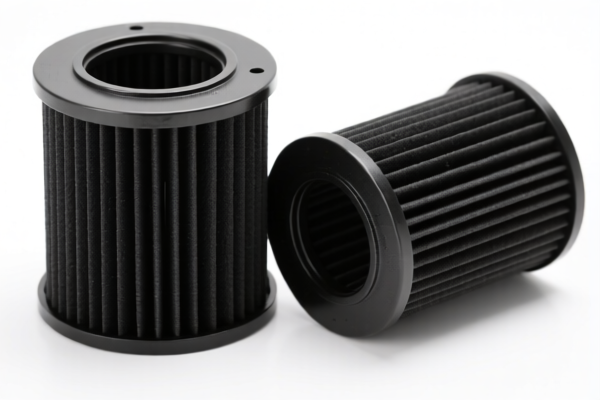
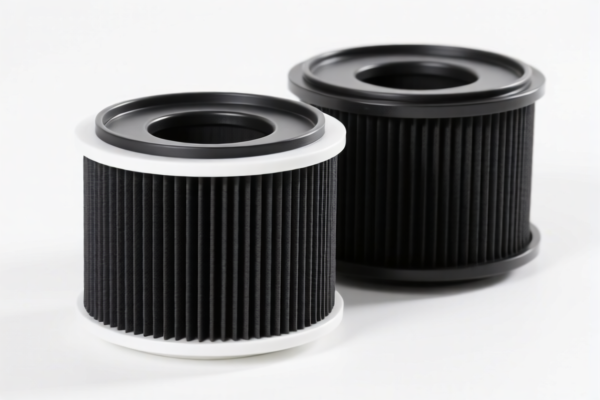
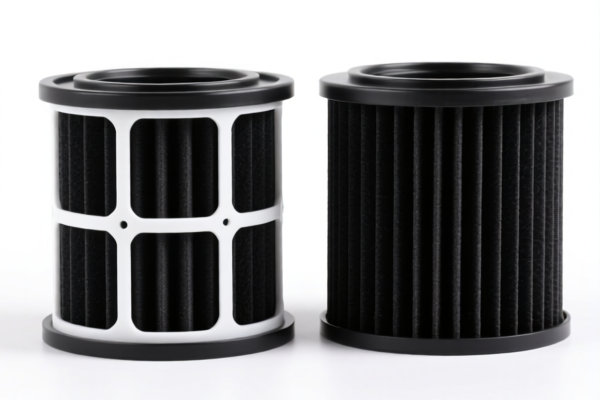

AI分析
🌿 Coal-Based Activated Carbon Filter (CBAC)
🌐 HS Code Reference & Clearance Guide | 2026 Latest Tariff Analysis | Professional Clearance Strategy
📌 I. Product Definition and Classification: Do You Really Understand "Coal-Based Activated Carbon"?
Coal-based activated carbon is a high-performance adsorption material derived from anthracite or bituminous coal. In international trade, its classification depends heavily on the degree of processing and the final form (e.g., powder vs. granular, raw vs. treated). It is not simply a "chemical product" or a "fuel," but a specialized industrial adsorbent.
Key Distinction: - Raw Coal Products (Chapter 27): If the product is primarily classified under coal derivatives without specific chemical activation treatment detailed in Chapter 38, it may fall under coal headings (2701). - Activated Carbon (Chapter 38): If the product has undergone specific chemical or physical activation processes to create microporous structures for adsorption, it typically falls under Heading 3802 (Activated carbon).
⚠️ Critical Classification Point:
- If declared as a raw coal derivative with minimal processing claims → 2701 series
- If declared as activated carbon with confirmed adsorption properties and specific manufacturing processes → 3802.10.00.10
📦 II. HS Code Classification Details (2026 Latest Tariff Authority Comparison)
| HS Code | Product Description | Application Scenario | Basis for Classification |
|---|---|---|---|
2701.11.00.00 |
Coal-based Activated Carbon, Material: Coal Products | Deep-processed derivative of anthracite | Treated as a coal product derivative under Chapter 27 |
3802.10.00.10 |
Coal-based Activated Carbon, Material: Coal Origin | Explicitly matches activated carbon classification criteria | Treated as a chemical/industrial activated carbon product under Chapter 38 |
2701.12.00.10 |
Coal-based Activated Carbon, Source: Coal | Reasonable extension of coal products | Treated as a coal product derivative under Chapter 27 |
🔍 Key Reminder:
- 3802.10.00.10 is the most precise classification for activated carbon specifically intended for adsorption, filtration, or purification. - 2701.11.00.00 and 2701.12.00.10 may apply if the product is classified as a coal derivative rather than a distinct chemical adsorbent. This often applies to less processed forms or specific national customs interpretations.
💰 III. 2026 Latest Tariff Rate Details (Including Surcharges, Policy Add-ons)
✅ Applicable Country: United States (US)
✅ Origin: China (CN)
✅ Effective Date: From November 10, 2025 (including subsequent imports)
🎯 1. 2701.11.00.00 —— Coal-Based Activated Carbon (Coal Product Derivative)
| Item | Content |
|---|---|
| Base Tariff | 0% (ad valorem) |
| USITC Surcharge (Section 301) | +25% |
| IEEPA Surcharge (Section 122/Other) | +10% |
| Total Tariff Rate | 35.0% |
| Tax Calculation | CIF Value × 35% |
| De Minimis Exemption | ❌ Not Eligible |
| Legal Basis Path | USITC:2701.11.00.00 → FOOTNOTE:301 → IEEPA:9903.01.24 |
📌 Explanation:
- Base Tariff 0%: Coal products typically have low base tariffs. - 25% Surcharge: Under USITC Footnote 9903.88.01 (Section 301 tariffs). - 10% IEEPA Surcharge: Additional levy on Chinese-origin goods under International Emergency Economic Powers Act. - Total 35%: High cost for importers, requiring careful margin calculation.
🎯 2. 3802.10.00.10 —— Coal-Based Activated Carbon (Explicitly Classified)
| Item | Content |
|---|---|
| Base Tariff | 4.8% |
| USITC Surcharge (Section 301) | +25% |
| IEEPA Surcharge (Section 122/Other) | +10% |
| Total Tariff Rate | 39.8% |
| Tax Calculation | CIF Value × 39.8% |
| De Minimis Exemption | ❌ Not Eligible |
| Legal Basis Path | USITC:3802.10.00.10 → FOOTNOTE:301 → IEEPA:9903.01.24 |
📌 Note:
- This is the most accurate HS code for activated carbon products. - The 4.8% base tariff is higher than coal derivatives, leading to a higher total tax burden. - Importers must ensure product documentation clearly states "Activated Carbon" with adsorption properties to justify this classification and avoid penalties for misclassification.
🎯 3. 2701.12.00.10 —— Coal-Based Activated Carbon (Reasonable Extension)
| Item | Content |
|---|---|
| Base Tariff | 0% |
| USITC Surcharge (Section 301) | +25% |
| IEEPA Surcharge (Section 122/Other) | +10% |
| Total Tariff Rate | 35.0% |
| Tax Calculation | CIF Value × 35.0% |
| De Minimis Exemption | ❌ Not Eligible |
| Legal Basis Path | USITC:2701.12.00.10 → FOOTNOTE:301 → IEEPA:9903.01.24 |
📌 Note:
- Similar to2701.11.00.00, this falls under coal derivatives. - Total rate is 35%, slightly lower than3802.10.00.10(39.8%). - Classification as a "coal product" rather than a "chemical adsorbent" allows for lower base tariffs.
🛠️ IV. Clearance Practical Suggestions (Battle-Tested Pitfall Avoidance Guide)
✅ 1. Required Document Checklist (None Can Be Omitted)
| Document | Required | Explanation |
|---|---|---|
| ✅ Product Specification Sheet | ✔️ | Must include particle size, iodine number, moisture content, ash content. |
| ✅ Certificate of Analysis (COA) | ✔️ | Proves adsorption capacity and activation level. |
| ✅ Product Photos (With Label) | ✔️ | Clear view of packaging, batch number, and net weight. |
| ✅ Commercial Invoice | ✔️ | Must state "Coal-Based Activated Carbon" and HS Code. |
| ✅ Packing List | ✔️ | Detail gross/net weight, dimensions, and container type. |
| ✅ Origin Certificate (CO) | ✔️ | Essential for proving Chinese origin and applying surcharges correctly. |
✅ 2. Declaration Techniques (Key Mantra)
🔥 "Accurate Description, Proper HS, Avoid Misclassification Penalties!"
| Scenario | Correct Declaration | Incorrect Practice |
|---|---|---|
| High-Grade Activated Carbon | 3802.10.00.10 (39.8%) |
Misdeclare as "Coal Powder" → Risk of penalty |
| Raw/Minimally Processed Carbon | 2701.11.00.00 or 2701.12.00.10 (35%) |
Misdeclare as "Chemical Product" → Unjustified high base tariff |
| Mixed Shipment (Filter + Carbon) | Declare separately | Combine → Risk of incorrect classification for both |
✅ 3. Special Case Handling
| Situation | Handling Advice |
|---|---|
| OEM Customized Carbon | Provide customer orders + technical specs to justify specific HS code. |
| Carbon in Filter Housing | Declare filter housing and carbon separately if possible. If pre-assembled, declare as "Filter Unit" (may have different HS). |
| Small Sample Shipments | Still subject to tariffs; de minimis does not apply to Section 301 goods. |
| Pre-Avance Ruling | Highly recommended for large shipments to confirm HS code and avoid delays. |
🌍 V. Global Market Clearance Comparison (2026 Latest)
| Country/Region | Recommended HS Code | Tariff | Certification Requirements | Notes |
|---|---|---|---|---|
| 🇺🇸 United States | 3802.10.00.10 |
39.8% | None specific, but CO required | High tariff due to surcharges |
| 🇨🇳 China | 3802.10.00.10 |
5.0% | None | Low domestic tariff |
| 🇪🇺 European Union | 3802.10.00.00 |
4.0% | REACH Registration | No US-style surcharges |
| 🇬🇧 United Kingdom | 3802.10.00.00 |
4.0% | UK REACH | Post-Brexit alignment |
| 🇦🇺 Australia | 3802.10.00.00 |
5.0% | None | Free Trade Agreement considerations |
📌 Conclusion:
- The US market imposes the highest total tariffs (35-39.8%) due to Section 301 and IEEPA surcharges. - EU and UK offer more favorable rates (4%) but require strict chemical compliance (REACH). - Cost Optimization: Consider routing through countries with FTAs or alternative origins if possible, though "Coal-Based" products are often tied to specific mining regions.
📌 VI. Common Errors & Pitfall Avoidance (Lessons Learned from Blood and Tears)
❌ Error 1: Declaring Activated Carbon as "Coal Dust"
👉 Consequence: Customs may reclassify, leading to back taxes and fines. The processing level determines the HS code, not just the raw material.
❌ Error 2: Omitting "Activated" in the Description
👉 Consequence: If the product is truly activated carbon, misclassification as a coal derivative (2701) when it should be 3802 can lead to audits. Conversely, declaring 3802 when it's raw coal might result in overpayment of base tariffs.
❌ Error 3: Not Providing Iodine Number or Adsorption Capacity
👉 Consequence: Customs cannot verify if it meets the definition of "Activated Carbon." Request for further inspection or delay in release.
❌ Error 4: Ignoring Section 301 and IEEPA Surcharges
👉 Consequence: Budget miscalculation. A 35-39.8% total tariff can erode all profit margins.
✅ Correct Practice:
"Coal-Based Activated Carbon, Granular, Iodine Number > 900, Ash Content < 10%, Used for Water Filtration, Model XYZ, Origin: China"
🎯 VII. Conclusion: Professional Declaration, Save Time and Money!
🎯 Remember the Mantra:
🔹 "Activated Carbon ≠ Coal Dust. HS Code Defines Tax. 3802 is Precise, 2701 is Alternative. Surcharges Add 35%+!"
🔹 "Pre-Arrangement Saves Days. Accurate Docs Avoid Fines."
📌 Tips:
- For large volume imports, apply for a Pre-Ruling (Advance Ruling) from US Customs and Border Protection (CBP) to confirm the HS code and tariff liability.
- Ensure all technical data sheets explicitly mention "Activated" and adsorption properties.
- If possible, consider supply chain diversification to mitigate the impact of US-China tariffs.
📣 Immediate Action:
📞 Contact a licensed customs broker + Provide Technical Specs + Apply for HS Code Pre-Ruling
🚀 Ensure smooth clearance, maximize profit margins, and avoid compliance risks!
✨ Professional Clearance Starts with Accurate Classification!
💼 Every Percent of Tariff Matters!
用户评价
关于 HS 编码归类
协调制度(HS)是由世界海关组织(WCO)制定的国际贸易商品分类标准。全球 200 多个国家采用 HS 系统作为海关关税、贸易统计和进出口监管的基础。
每个 HS 编码遵循以下层级结构:
- 章(2 位)——商品大类(例如:第 84 章:机器和机械设备)
- 品目(4 位)——章内的更具体分类
- 子目(6 位)——国际通用细分,所有 WCO 成员国统一使用
- 本国细分(8-10 位)——各国自行扩展的细分编码,如美国 HTSUS 10 位编码
正确的 HS 编码归类对于顺利通关、准确缴纳关税和遵守贸易法规至关重要。错误归类可能导致海关延误、多缴关税或罚款。
从CN进口到US时,适用的关税税率可能包括:
- 最惠国(MFN)税率——适用于 WTO 成员国的标准关税税率
- 普通税率——适用于无贸易协定国家
- 贸易救济关税——附加关税,如 301 条款(反倾销)、232 条款(国家安全)或反补贴税
本页内容仅供参考。如需正式归类,请咨询当地海关或持牌报关代理。