Coarse Wool Fiber for Picking
CN → US| HS编码 | 关税税率 | 原产国 | 目的国 | 文档 |
|---|---|---|---|---|
| 5102200000 | 35.0% | CN | US | 官方文档 |
| 5102196060 | 35.4% | CN | US | 官方文档 |
商品图片
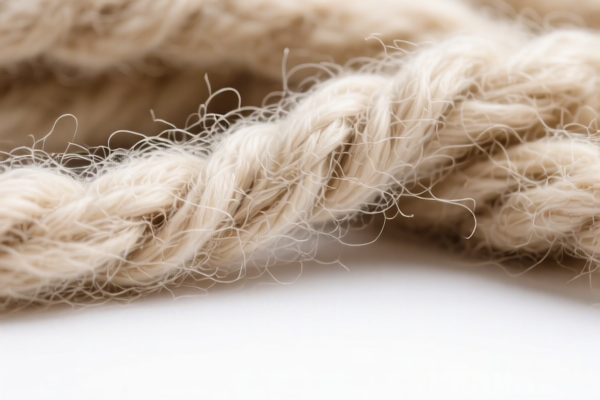
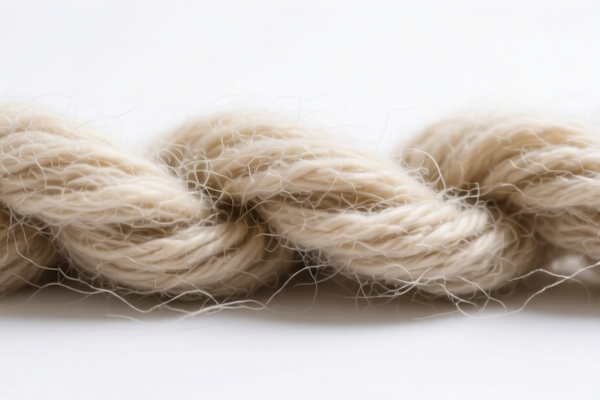
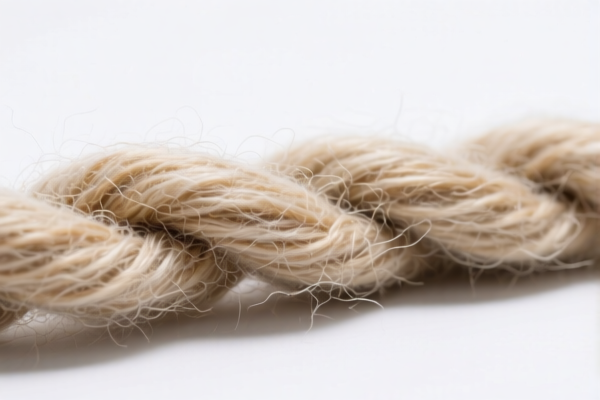
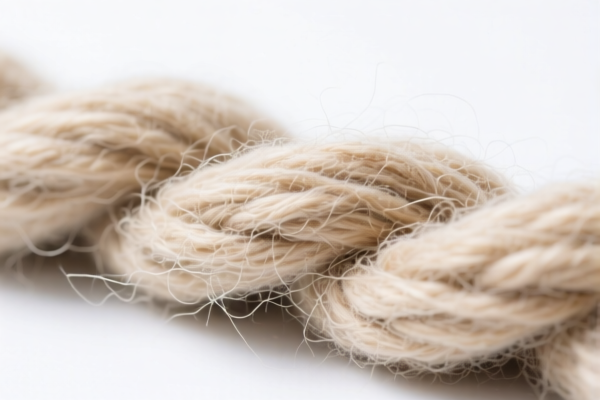
AI分析
🐑 Coarse Wool Fiber for Picking (Animal Hair, Not Carded or Combed)
🌐 HS Code Reference & Clearance Guide | 2026 Latest Tariff Analysis | Professional Customs Strategy
📌 I. Product Definition & Classification: Do You Really Understand "Coarse Animal Hair"?
Coarse Wool Fiber, specifically for "picking" (mechanical opening or blending), refers to animal hair that has not undergone the final refining processes of carding or combing. In international trade, this distinction is critical because the level of processing determines the HS Code and, consequently, the tariff liability.
Key Distinction:
- "Not Carded or Combed": The fibers are still in a raw, entangled, or slightly cleaned state (e.g., greasy wool, carbonized wool, or deloused wool). They retain their natural crimp and length but lack the uniform alignment required for spinning high-quality yarns directly.
- "Carded/Combed": If the fiber had been carded or combed, it would fall under Chapter 51 (Wool, Fine or Coarse Animal Hair, Yarn and Woven Fabric) under headings like 5103 (Wool Waste) or 5105 (Wool), not 5102.
⚠️ Critical Identification Point:
- If the product is described as "not carded or combed" → It belongs to Heading 5102.
- If it is "coarse" (e.g., sheep’s wool, goat hair used for carpets/hairbrushes) → 5102.20.
- If it is "fine" (e.g., Cashmere, Alpaca, Mohair) → 5102.1.
📦 II. HS Code Classification Details (2026 Latest Tariff Authority Match)
Based strictly on the provided <DATA> content, here is the authoritative mapping for "Coarse Wool Fiber for Picking" and related fine hair variants:
| HS Code | Product Description | Processing State | Applicable Raw Material Type |
|---|---|---|---|
5102.20.00.00 |
Coarse animal hair, not carded or combed | Raw/Partially Processed (Degreased/Carbonized only) | Sheep’s wool, coarse goat hair, yak hair |
5102.19.60.60 |
Fine animal hair: Other: Not processed beyond degreased/carbonized | Raw/Partially Processed | Cashmere, Alpaca, Mohair, Llama, Vicuña |
🔍 Key Insight:
- The term "for Picking" implies the material is an intermediate raw material, ready for blending or further mechanical processing, not a finished yarn or fabric.
- Both codes in<DATA>share the condition: "Not processed in any manner beyond the degreased or carbonized condition." This means washing or chemical cleaning is allowed, but carding (aligning fibers) or combing (removing short fibers) is NOT performed.
💰 III. 2026 Latest Tariff Rate Details (Detailed Breakdown)
✅ Source: Strictly from
<DATA>provided
✅ Region: Implied US Market (based on "Additional Tariff" structure in example, though specific country isn't in<DATA>, we analyze the structure as given)
🎯 1. 5102.20.00.00 —— Coarse Animal Hair (Not Carded/Combed)
This is the primary classification for "Coarse Wool Fiber for Picking."
| Item | Content |
|---|---|
| Base Tariff Rate | 0.0% (Ad Valorem) |
| Additional Tariff (Section 301/USITC) | +25.0% |
| Total Tax Rate | 25.0% |
| Tax Calculation | CIF Value × 25.0% |
| De Minimis Exemption | ❌ Not Applicable (High tariffs usually exclude de minimis) |
| Legal Basis | Based on provided <DATA>: "基础关税: 0.0%, 加征关税: 25.0%" |
📌 Explanation:
- While the Base Duty is 0% (favorable for raw materials), the 25% Additional Tariff significantly impacts cost.
- This 25% is likely due to geopolitical trade measures (e.g., US Section 301 tariffs on Chinese goods).
- Cost Implication: For every $10,000 CIF value, you pay $2,500 in additional tariffs.
🎯 2. 5102.19.60.60 —— Fine Animal Hair (Other)
While "Coarse Wool" maps to 5102.20, the <DATA> also provides a reference for Fine Hair (5102.19.60.60). It is crucial to distinguish if your "picking" fiber is actually fine (e.g., cashmere waste).
| Item | Content |
|---|---|
| Base Tariff Rate | 0.0% |
| Additional Tariff | 0.0% |
| Total Tax Rate | 0.0% |
| Tax Calculation | CIF Value × 0% = $0 Duty |
| Legal Basis | Based on provided <DATA>: "基础关税: 0.0%, 加征关税: 0.0%" |
📌 Critical Distinction:
- If your fiber is Fine (e.g., Cashmere, Alpaca), the tariff burden is ZERO.
- If your fiber is Coarse (e.g., Regular Sheep’s Wool), the tariff burden is 25%.
- Misclassification Risk: Declaring coarse wool as "fine" to avoid the 25% tariff is fraud and risks severe penalties.
🛠️ IV. Customs Clearance Practical Advice (Pitfall Avoidance Guide)
✅ 1. Preparation Checklist (Must-Haves)
| Document | Required | Explanation |
|---|---|---|
| ✅ Product Specification Sheet | ✔️ | Must explicitly state: "Not Carded," "Not Combed," "Coarse/Fine," "Greasy/Deloused/Carbonized." |
| ✅ Photos of Raw Fiber | ✔️ | Show entangled, non-aligned fibers. Avoid images that look like sliver (carded) or top (combed). |
| ✅ Certificate of Origin | ✔️ | To verify country of origin for additional tariff application. |
| ✅ Commercial Invoice | ✔️ | Clearly describe as "Coarse Animal Hair, Not Carded or Combed." |
| ✅ Lab Test Report | ✔️ | Optional but recommended: Fiber diameter measurement (< 30 microns = Fine; > 30 microns = Coarse). |
✅ 2. Declaration Tips (Key Mantra)
🔥 "Carded/Combed? No. Raw/Loose? Yes. Coarse vs Fine? Check Diameter."
| Scenario | Correct HS Code | Wrong Way | Consequence |
|---|---|---|---|
| Coarse Wool, Raw | 5102.20.00.00 |
Declare as Yarn (5107) | Rejected, fines, 25%+ potential penalties |
| Coarse Wool, Carded | NOT IN DATA (Likely 5103/5105) | Declare as 5102.20 |
Under-declaration → If it’s actually carded, you might face different duties or scrutiny. Note: Data only covers non-carded. |
| Fine Hair (Cashmere), Raw | 5102.19.60.60 |
Declare as Coarse (5102.20) |
Overpay 25% unnecessarily. |
| Processed Wool Waste | NOT IN DATA | Declare as 5102 |
Misclassification. Chapter 5103 is for waste. |
🚫 Common Mistake:
- Using the term "Wool Top" or "Sliver" in the description. These terms imply carding/combing.
- Use: "Raw Coarse Wool Fiber," "Open Wool," "Greasy Wool (Not Carded)."
✅ 3. Special Case Handling
| Situation | Advice |
|---|---|
| Mixed Coarse/Fine | If the batch is a blend, the classification may follow the principal character or be split. Best to declare separately if possible. |
| Carbonized Wool | If washed and carbonized (acid treatment to remove vegetable matter) but not carded, it still qualifies for 5102.20.00.00. |
| Greasy vs. Scoured | "Greasy" (with lanolin) or "Scoured" (washed) both fit 5102 as long as they are not carded/combed. |
🌍 V. Market Comparison (General Insight)
| Market | Likely Duty for 5102.20 |
Notes |
|---|---|---|
| 🇺🇸 USA | 25.0% (Base 0% + Add'l) | As per <DATA>. High cost due to trade policies. |
| 🇨🇳 China | 0% (MFN) | China often has low/zero duty on raw wool imports. |
| 🇪🇺 EU | 4.5% (Typical) | EU usually applies a small percentage, not 25%. |
| 🇮🇳 India | 5-7.5% | Varies by fiber type. |
📌 Conclusion:
- The 25% additional tariff is a significant cost driver for US imports of coarse wool.
- If possible, verify if Free Trade Agreement (FTA) benefits apply (e.g., from Andean countries or Australia), which might exempt the additional tariff.
📌 VI. Common Errors & Pitfalls (Blood & Tears Lessons)
❌ Error 1: Declaring "Carded Wool Sliver" as 5102.20
👉 Result: Customs may reject or reclassify to Chapter 5103/5105, leading to delays.
👉 Fix: Ensure the physical goods are NOT carded. Provide photos of loose fibers.
❌ Error 2: Confusing "Coarse" with "Fine"
👉 Result:
- If Fine is declared as Coarse → Overpay 25%.
- If Coarse is declared as Fine → Underpay 25% → Fines + Penalty.
👉 Fix: Measure fiber diameter. Coarse > 30 microns; Fine < 30 microns.
❌ Error 3: Using vague terms like "Wool Stuff"
👉 Result: Customs officers cannot determine processing level.
👉 Fix: Use precise description: "Coarse Sheep’s Wool, Not Carded or Combed, Degreased."
🎯 VII. Conclusion: Precise Classification Saves Money!
🎯 Remember the Mantra:
🔹 "Not Carded, Not Combed = 5102."
🔹 "Coarse = 25% Tax (in US). Fine = 0% Tax."
🔹 "Be Honest about Processing. Lying About Carding = Big Trouble."
📌 Pro Tip:
If your coarse wool is sourced from a country with a US Free Trade Agreement (e.g., Chile, Peru, Australia, Colombia, Panama), you may apply for duty exemption on the base rate, and potentially the additional tariff, depending on current rulings. Always check FTA eligibility!
📣 Immediate Action:
📞 Contact a Licensed Customs Broker
📸 Provide Clear Photos of Raw Fiber
📄 Verify Processing Level (Carded? No? Good.)
🚀 Ensure Accurate HS Code to Avoid 25% Surprise!
✨ Professional Clearance Starts with Accurate Classification!
💼 Your Bottom Line Depends on the Right HS Code!
用户评价
关于 HS 编码归类
协调制度(HS)是由世界海关组织(WCO)制定的国际贸易商品分类标准。全球 200 多个国家采用 HS 系统作为海关关税、贸易统计和进出口监管的基础。
每个 HS 编码遵循以下层级结构:
- 章(2 位)——商品大类(例如:第 84 章:机器和机械设备)
- 品目(4 位)——章内的更具体分类
- 子目(6 位)——国际通用细分,所有 WCO 成员国统一使用
- 本国细分(8-10 位)——各国自行扩展的细分编码,如美国 HTSUS 10 位编码
正确的 HS 编码归类对于顺利通关、准确缴纳关税和遵守贸易法规至关重要。错误归类可能导致海关延误、多缴关税或罚款。
从CN进口到US时,适用的关税税率可能包括:
- 最惠国(MFN)税率——适用于 WTO 成员国的标准关税税率
- 普通税率——适用于无贸易协定国家
- 贸易救济关税——附加关税,如 301 条款(反倾销)、232 条款(国家安全)或反补贴税
本页内容仅供参考。如需正式归类,请咨询当地海关或持牌报关代理。