Coated Kraft Paper
CN → US| HS编码 | 关税税率 | 原产国 | 目的国 | 文档 |
|---|---|---|---|---|
| 4811594020 | 35.0% | CN | US | 官方文档 |
| 4811594040 | 35.0% | CN | US | 官方文档 |
| 4810391200 | 35.0% | CN | US | 官方文档 |
| 4810311080 | 35.0% | CN | US | 官方文档 |
| 4811596000 | 35.0% | CN | US | 官方文档 |
商品图片
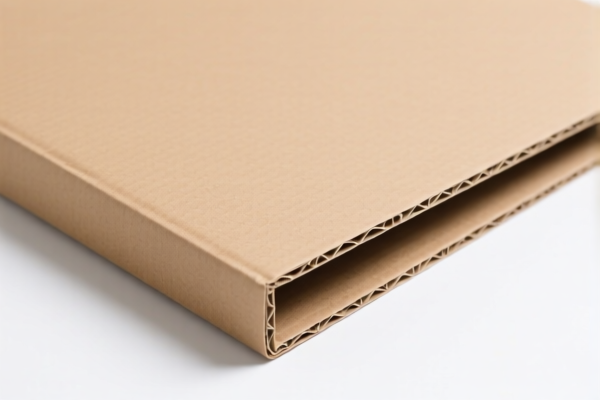
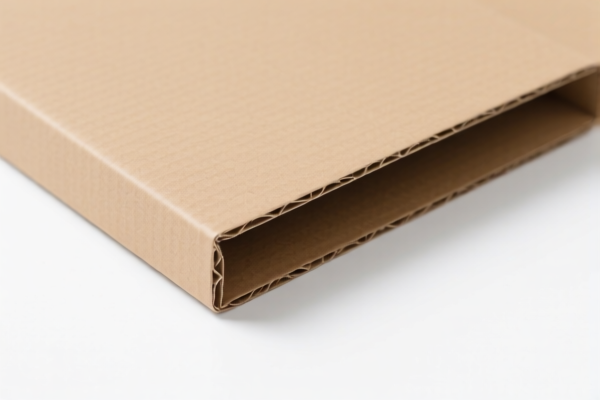
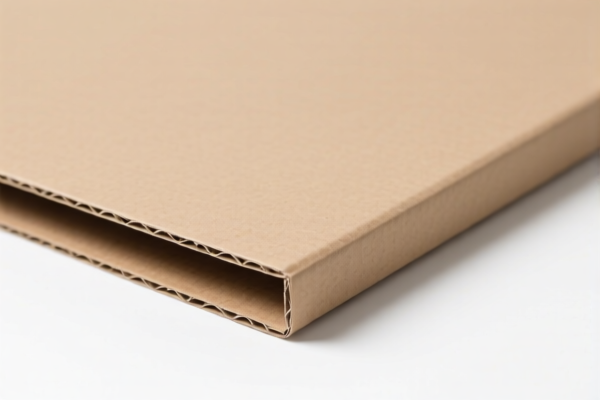
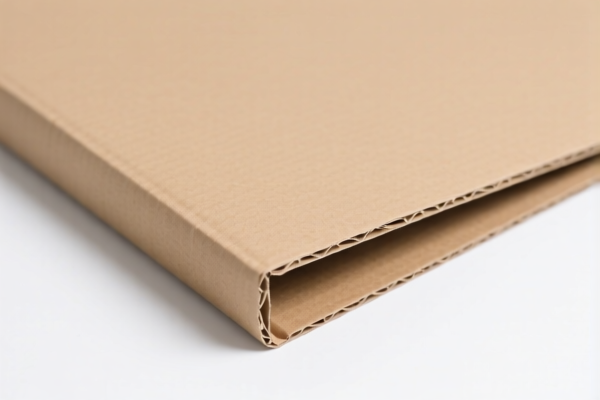
AI分析
📄 Coated Kraft Paper (Rolls)
🌐 HS Code Reference & Customs Clearance Guide | 2026 Latest Tariff Analysis | Professional Level Customs Strategy
📌 I. Product Definition and Classification: What Exactly is "Coated Kraft Paper"?
Coated Kraft Paper refers to paper made from wood pulp (typically chemical kraft pulp), characterized by high tensile strength and durability. In international trade, the specific classification depends heavily on whether the paper is merely coated (e.g., with clay, polymer, or plastic) versus printed or treated for specific industrial uses.
The input data indicates that all relevant HS Codes provided fall under Chapter 48 (Paper and Paperboard), specifically subheadings 4810 (Kraft Paper/Board, uncoated/coated) and 4811 (Paper, treated, coated, etc.).
⚠️ Key Distinction Points: - State: The data specifies "Rolls" (卷状/卷), implying it is not cut into sheets. - Material: All entries are "Kraft Paper" (牛皮纸) or "Coated Paper" (涂布纸). - Usage: The summaries suggest a "catch-all" or general coating application, not specific high-value end-uses like cigarette paper or specific medical uses. - Tariff Burden: All listed codes attract a high combined tax rate of 35% due to additional duties.
📦 II. HS Code Classification Details (2026 Latest Tariff Authority Cross-Reference)
Based on the provided <DATA>, here are the specific HS Codes and their corresponding summaries:
| HS Code | Summary / Product Description | Key Characteristics | Tax Category |
|---|---|---|---|
4811.59.40.20 |
Coated Kraft Paper Roll Material: Coated Paper. Form: Roll. Feature: Fits other "catch-all" categories. |
General coated paper rolls, not specifically categorized under other 4811 subheadings. | 35.0% |
4811.59.40.40 |
Kraft Paper Coated Roll Material: Kraft Paper. Form: Roll. Feature: Classified as Coated Paper or Paperboard. |
Emphasizes the "Kraft" origin but treated under general coated paper rules. | 35.0% |
4810.39.12.00 |
Kraft Paper Coated Roll Material: Kraft Paper. Form: Roll. Feature: Fits "Coated Paperboard" attributes. |
Falls under 4810 (Kraft Paper) but treated as coated. Likely thinner than typical paperboard. | 35.0% |
4810.31.10.80 |
Kraft Paper Coated Roll Material: Kraft Paper. Form: Roll. Feature: Fits "Non-specific Use" Coated Paper characteristics. |
General purpose coated kraft paper, no specific industrial end-use defined. | 35.0% |
4811.59.60.00 |
Kraft Paper Coated Roll Material: Kraft Paper. Form: Roll. Feature: Coated/Plastic-coated paper product. |
Specifically mentions "Plastic Coating/Lamination" characteristics. | 35.0% |
🔍 Important Note: - All five HS codes share the same total tax rate of 35.0%. - The difference lies in the legal classification nuance: -
4810codes generally refer to Kraft Paper/Board that is coated. -4811codes generally refer to Paper/Paperboard that has been treated, coated, impregnated, or covered with plastic. - Customs officers may scrutinize whether the coating thickness or type pushes the product from 4810 to 4811, or which specific 8-digit subheading best fits the technical specs.
💰 III. 2026 Latest Tariff Rate Breakdown (Including Additional Duties & Policy Surcharge)
✅ Applicable Country: USA (US)
✅ Origin: China (CN)
✅ Effective Time: Ongoing (Post-2018 Trade War measures)
For ALL the HS Codes listed above (4811.59.40.20, 4811.59.40.40, 4810.39.12.00, 4810.31.10.80, 4811.59.60.00), the tax structure is identical:
🎯 Combined Tariff Structure for All Listed Codes
| Item | Content |
|---|---|
| Base Tariff (Most Favored Nation) | 0.0% (Generally, coated kraft paper may have low base MFN rates, but see below) |
| Section 301 Additional Duty | +25.0% (List 3/4 items subject to 301 tariffs) |
| Section 122 / IEEPA Surcharge | +10.0% (Specific surcharge cited in data, likely referring to recent executive actions or specific trade remedy measures labeled as "122 clauses" in your source) |
| Total Effective Tax Rate | 35.0% |
| Tax Calculation Basis | CIF Value (Cost, Insurance, Freight) × 35% |
| De Minimis Exemption | ❌ Not Applicable (Goods subject to Section 301 and similar surcharges are excluded from de minimis treatment) |
| Legal Basis Path | HTSUS:4810/4811 → Section 301 (19 USC 2411) → IEEPA/Trade Policy Measures |
📌 Explanation: - Base Tariff (0.0%): This suggests the underlying MFN rate for this specific sub-category might be zero or negligible, but this is entirely wiped out by additional duties. - Section 301 (25%): This is the standard punitive tariff on Chinese imports for many paper and packaging products. - "122 Clause" (10%): This refers to specific U.S. Trade Representative (USTR) or Customs and Border Protection (CBP) enforcement actions often tied to broader trade policy (e.g., Uyghur Forced Labor Prevention Act (UFLPA) related scrutiny or specific Section 232/301 expansions). Note: In some contexts, "122" may refer to a specific CBP ruling or an internal classification code for surcharges, but financially it adds 10%. - Total 35%: This is a significant cost factor. Profit margins in the packaging industry are often thin; this tariff must be fully accounted for in pricing.
🛠️ IV. Customs Clearance Practical Advice (Real-World Pitfall Avoidance)
✅ 1. Required Documentation Checklist
| Document | Mandatory? | Description |
|---|---|---|
| ✅ Commercial Invoice | ✔️ | Must clearly state "Coated Kraft Paper Rolls", origin (China), and HS Code. |
| ✅ Packing List | ✔️ | Detail weight, dimensions, and number of rolls. Ensure consistency with invoice. |
| ✅ Bill of Lading (B/L) | ✔️ | Confirm consignee and notify party details. |
| ✅ Product Specification Sheet | ✔️ | Crucial: Specify coating type (e.g., PE, Clay, PVDC), GSM (grams per square meter), basis weight, and liner type (Kraft liner). |
| ✅ Certificate of Origin (CO) | ✔️ | To prove Chinese origin (triggering the 35% tax). If shipped via a third country, rules of origin must be strictly documented to avoid misclassification. |
| ✅ UFLPA Compliance Documentation | ✔️ | High Priority: Prove the cotton/wood pulp origin is not from the Xinjiang region. Provide chain-of-custody documents. |
✅ 2. Declaration Strategy (Key Mantras)
🔥 "Be Precise, Don't Guess, Specify the Coating!"
| Scenario | Correct Declaration Approach | Incorrect Approach |
|---|---|---|
| General Coated Kraft | Use 4811.59.40.20 or 4810.31.10.80 if no specific plastic lamination. |
Vague description like "Paper" → Risk of reclassification & penalties. |
| Plastic-Laminated Kraft | Use 4811.59.60.00 if the plastic coating is the primary feature. |
Calling it just "Kraft Paper" → Customs may apply higher duty or reject. |
| Mixed Shipments | Declare separately. Do not bundle coated and uncoated paper in one line item if HS codes differ significantly. | Bundling → Risk of audit on entire shipment. |
| Origin | Clearly state "Made in China". | Hiding origin → Severe penalties, seizure, and UFLPA blocks. |
✅ 3. Special Considerations
| Issue | Advice |
|---|---|
| UFLPA (Uyghur Forced Labor Prevention Act) | CBP is strict on paper products. Ensure your supplier provides verifiable proof of wood pulp sourcing. Without this, the shipment will be detained at the border. |
| Section 301 Exclusions | Check if your specific HS code currently has an exclusion (most paper products do not have exclusions in 2026). Assume 35% applies. |
| Coating Material | If the coating is >50% by weight or value, customs might argue it's a "Plastic Product" (Chapter 39). However, for paper-based packaging, Chapter 48 is usually retained. Provide chemical composition data. |
| Pre-Ruling | Consider applying for a Binding Tariff Information (BTI) or Pre-Ruling from CBP if the shipment value is high. This locks in the HS code and duty rate before arrival. |
🌍 V. Global Market Comparison (2026)
| Country/Region | Recommended HS Code | Tariff Rate (China Origin) | Key Certification/Notes |
|---|---|---|---|
| 🇺🇸 USA | 4810.31.10.80 / 4811.59.40.20 etc. |
35% (0% Base + 25% Sec 301 + 10% Surcharge) | UFLPA Compliance Critical. High duty burden. |
| 🇨🇳 China (Exporting) | N/A (Export Duties) | 0% (Most paper products have 0% export duty) | No restrictions on export of kraft paper. |
| 🇪🇺 EU | 4810.13.00 / 4811.59.90 |
0% - 6.5% | No Section 301 equivalent. Lower taxes. |
| 🇬🇧 UK | 4810.13.00 |
0% - 6.5% | Post-Brexit tariff schedule similar to EU. |
| 🇨🇦 Canada | 4810.13.00 |
0% (if under CUSMA/USMCA origin rules apply to transshipment, but direct China shipment = MFN rate) | Check MFN rates (~0-5%). No US-style punitive tariffs. |
📌 Conclusion: - USA is the highest-cost market due to the 35% aggregate tax. - EU/UK/Canada are significantly more favorable for duty purposes. - Supply Chain Strategy: If targeting the US, consider if the cost can be absorbed or passed to customers. If targeting EU, focus on quality and compliance.
📌 VI. Common Mistakes & Pitfalls (Lessons Learned)
❌ Mistake 1: Classifying Coated Kraft Paper as "Cardboard" (4805 or 4802) incorrectly.
👉 Consequence: Wrong HS code leads to manual inspection, delays, and potential back-tariff.
Fix: Ensure classification matches the specific coating and paper type (4810/4811).
❌ Mistake 2: Underestimating UFLPA Risk.
👉 Consequence: Shipment held at US port for 3-6 months while CBP investigates wood pulp origin.
Fix: Require full supply chain transparency from factory to port.
❌ Mistake 3: Ignoring the "122 Clause" Surcharge.
👉 Consequence: Budgeting only for 25% duty results in 10% unexpected cost, wiping out profit.
Fix: Budget for the full 35% rate.
❌ Mistake 4: Vague Product Description.
👉 Consequence: CBP issues a "Request for Information" (RFI), causing 1-2 week delays.
Fix: Use detailed descriptions: "Coated Kraft Paper Rolls, PE Coated, 150 GSM, Brown, for Packaging".
✅ Correct Approach:
"Coated Kraft Paper Rolls, Plastic-Coated, 150 GSM, Brown, Origin: China, Compliant with UFLPA."
🎯 VII. Conclusion: Professional Declaration, Cost Control, Efficiency!
🎯 Remember the Mantra:
🔹 "35% is the reality for US imports; don't forget the 10% surcharge."
🔹 "UFLPA is the gatekeeper; proof of origin is your ticket."
🔹 "Coating type determines the HS code; be precise."
📌 Pro Tip: If you are importing into the US, calculate the landed cost including: 1. Duty (35% of CIF) 2. Merchandise Processing Fee (MPF) (~0.3464% of CIF for formal entry) 3. Harbor Maintenance Fee (HMF) (0.125% of CIF, for vessel-transited goods) 4. UFLPA Compliance Costs (Audits, documentation).
📞 Immediate Action:
- Contact your customs broker before shipment departure.
- Provide Coating Technical Data Sheets.
- Verify UFLPA Documentation.
- 🚀 Ensure smooth clearance, avoid detention, and protect your margins!
✨ Professional Customs Clearance Starts with Accurate Classification!
💼 Every percentage point of tax is a point of profit lost if not managed correctly!
用户评价
关于 HS 编码归类
协调制度(HS)是由世界海关组织(WCO)制定的国际贸易商品分类标准。全球 200 多个国家采用 HS 系统作为海关关税、贸易统计和进出口监管的基础。
每个 HS 编码遵循以下层级结构:
- 章(2 位)——商品大类(例如:第 84 章:机器和机械设备)
- 品目(4 位)——章内的更具体分类
- 子目(6 位)——国际通用细分,所有 WCO 成员国统一使用
- 本国细分(8-10 位)——各国自行扩展的细分编码,如美国 HTSUS 10 位编码
正确的 HS 编码归类对于顺利通关、准确缴纳关税和遵守贸易法规至关重要。错误归类可能导致海关延误、多缴关税或罚款。
从CN进口到US时,适用的关税税率可能包括:
- 最惠国(MFN)税率——适用于 WTO 成员国的标准关税税率
- 普通税率——适用于无贸易协定国家
- 贸易救济关税——附加关税,如 301 条款(反倾销)、232 条款(国家安全)或反补贴税
本页内容仅供参考。如需正式归类,请咨询当地海关或持牌报关代理。