Cocoa Skins
CN → US| HS编码 | 关税税率 | 原产国 | 目的国 | 文档 |
|---|---|---|---|---|
| 1801000000 | 0.0% | CN | US | 官方文档 |
| 2101100000 | 0.0% | CN | US | 官方文档 |
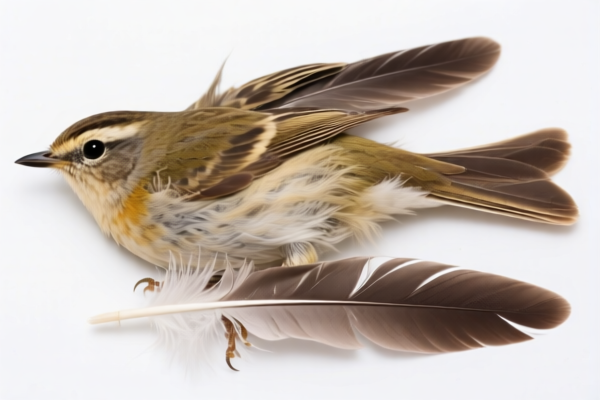
商品图片


AI分析
🍫 Cocoa Skins (Cocoa Hulls)
🌐 HS Code Reference & Customs Clearance Guide | 2026 Latest Tariff Analysis | Professional Clearance Strategy
📌 I. Product Definition & Classification: What Exactly Are "Cocoa Skins"?
Cocoa Skins, also known as Cocoa Hulls or Cocoa Chaff, are the outer shells removed from cocoa beans during the processing (winnowing) stage. They are a by-product of chocolate and cocoa powder manufacturing.
In international trade, they are strictly distinguished from the valuable cocoa beans themselves. Misclassification can lead to severe customs penalties, delays, or incorrect duty applications.
⚠️ Critical Distinction:
- Cocoa Beans (Raw/Roasted): The edible seed inside the shell. Classified under Chapter 18.
- Cocoa Skins/Hulls: The outer fibrous shell. Classified under Chapter 21 (Miscellaneous Edible Preparations) as a preparation not elsewhere specified.
📦 II. HS Code Classification Details (2026 Latest Tariff Authority Comparison)
Based on the provided <DATA>, the classification is strictly limited to two specific entries. Note that "Cocoa Skins" are not classified under Chapter 18 (Beans) but under Chapter 21 (Preparations).
| HS Code | Product Description | Application Scenario | Reason for Classification |
|---|---|---|---|
1801.00.00.00 |
Cocoa beans, whole or broken, raw or roasted | ❌ NOT APPLICABLE for Cocoa Skins. (Included in <DATA> for contrast) |
This code is for the inner bean only. If you ship actual beans, use this. If you ship skins/hulls, this is incorrect. |
2101.10.00.00 |
Cocoa preparations, not elsewhere specified or included | ✅ CORRECT for Cocoa Skins/Hulls. | Cocoa skins are processed by-products (often roasted, ground, or used for tea/extracts). They fall under "Preparations" in Chapter 21. |
🔍 Key Reminder:
- Do NOT misdeclare Cocoa Skins as1801.00.00.00. This is a common error. Customs may reject it because skins are not "beans."
- Use2101.10.00.00for bulk cocoa skins, cocoa hull tea, or cocoa shell flour.
- Tax Information: As per<DATA>, tax details for these codes are currently unavailable ("Failed to retrieve tax information"). This requires manual verification with local customs or a licensed broker.
💰 III. 2026 Latest Tariff Rate Details (Including Surcharges & Policy Add-ons)
✅ Important Note on Tax Data:
The<DATA>input explicitly states:
"tax_detail": "Failed to retrieve tax information"
"total_tax": "Error"Therefore, specific tariff rates, USITC surcharges, IEEPA surcharges, or base tax rates CANNOT be provided from the given data.
However, general industry knowledge (for context only, not from
<DATA>):
- Cocoa skins (2101.10.00.00) often have low or zero base MFN tariffs in many countries (e.g., 0% in the US, EU, China) because they are low-value by-products.
- BUT, if subject to Section 301 tariffs (US-China trade war), they might be included depending on the specific exclusion list.
- Always verify with a customs broker since the system returned "Error."📌 Interpretation:
- The system cannot determine the exact tax.
- Risk: Assuming a rate without verification could lead to underpayment or overpayment.
- Action: Request a Tariff Classification Ruling or consult a professional.
🛠️ IV. Customs Clearance Practical Advice (Battle-Proven Pitfall Guide)
✅ 1. Documentation Checklist (Essential)
| Document | Required | Explanation |
|---|---|---|
| ✅ Commercial Invoice | ✔️ | Clearly state "Cocoa Skins (Hulls)" – NOT "Cocoa Beans." Include HS Code 2101.10.00.00. |
| ✅ Packing List | ✔️ | Weight and volume. Specify "By-product of Cocoa Processing." |
| ✅ Certificate of Analysis (COA) | ✔️ | Proves composition (e.g., moisture content, fiber content). Shows it’s not bean dust mixed with skins. |
| ✅ Phytosanitary Certificate | ✔️ | CRITICAL for agricultural by-products. Proves freedom from pests/diseases. |
| ✅ Bill of Lading/Air Waybill | ✔️ | Ensure description matches invoice exactly. |
| ✅ Customs Declaration Form | ✔️ | Use HS Code 2101.10.00.00. |
✅ 2. Declaration Tips (Key Mantras)
🔥 "Hulls are NOT Beans! Use Chapter 21, Not 18!"
| Scenario | Correct Declaration | Wrong Practice |
|---|---|---|
| Bulk Cocoa Skins for Tea/Extract | 2101.10.00.00 |
Declaring as 1801.00.00.00 → Rejection/Penalty |
| Roasted Cocoa Hulls | 2101.10.00.00 |
Declaring as raw material 1801.00.00.00 → Mismatch |
| Mixed with Cocoa Powder | 2101.10.00.00 (if dominant) |
Mixed declaration → Customs Audit |
📌 Note: If the skins are unprocessed (just dried shells), some countries may still classify them under
2101.10.00.00as "preparations," but always check local regulations. The<DATA>suggests2101.10.00.00is the correct path for "preparations not elsewhere specified."
✅ 3. Special Cases Handling
| Situation | Handling Advice |
|---|---|
| OEM Custom Packaging | Ensure labels say "Cocoa Hulls/Skins" to avoid confusion with beans. |
| Organic Certification | Provide organic certificates if claiming premium value. |
| Pest Inspection | Be prepared for physical inspection. Phytosanitary cert is mandatory. |
| Tax Error in System | If the automated system returns "Error," submit a Manual Tariff Inquiry with broker. |
🌍 V. Global Market Customs Comparison (2026 Latest)
| Country/Region | Recommended HS Code | Estimated Base Duty* | Certification Requirement | Notes |
|---|---|---|---|---|
| 🇺🇸 USA | 2101.10.00.00 |
Likely 0-2%* | Phytosanitary | Check Section 301 exclusions. |
| 🇨🇳 China | 2101.10.00.00 |
~2-3%* | CIQ Phytosanitary | Common import for tea/coffee alternatives. |
| 🇪🇺 EU | 2101.10.00.00 |
0-5%* | Phytosanitary | Strict on agricultural by-products. |
| 🇬🇧 UK | 2101.10.00.00 |
0-3%* | Phytosanitary | Post-Brexit rules apply. |
📌 Conclusion:
- Accurate Description is Key: Never call them "Cocoa Beans."
- Tax Uncertainty: Since<DATA>shows "Error," do not assume 0%. Verify manually.
- Phytosanitary: This is the biggest hurdle for agricultural by-products. Ensure your supplier provides a valid certificate.
📌 VI. Common Mistakes & Pitfalls (Lessons Learned)
❌ Mistake 1: Declaring Cocoa Skins as 1801.00.00.00 (Cocoa Beans)
👉 Consequence: Customs detects mismatch in physical vs. declared description. Penalty + Delay.
❌ Mistake 2: Ignoring Phytosanitary Certificate
👉 Consequence: Seizure or Return Shipment due to pest risk.
❌ Mistake 3: Assuming Tax is "Error = Free"
👉 Consequence: You may owe back taxes + interest. "Error" means "Verify Manually."
❌ Mistake 4: Using vague descriptions like "Chocolate Waste"
👉 Consequence: Customs may classify under a higher-duty residual code. Use specific HS Code.
✅ Correct Practice:
“Cocoa Skins (Hulls), Roasted, for Tea Extraction, HS Code 2101.10.00.00, Phytosanitary Cert Attached”
🎯 VII. Conclusion: Accurate Classification Saves Time and Money
🎯 Remember the Mantra:
🔹 "Skins are Hulls, Not Beans! Use 2101, Not 1801!"
🔹 "Tax Error? Verify Manually! Don’t Guess!"
🔹 "Phytosanitary Cert is Non-Negotiable!"
📌 Pro Tip:
If your shipment is destined for the USA, check if Cocoa Skins are excluded from Section 301 tariffs. Some by-products may be exempt.
If the tax system shows "Error," submit a formal tariff inquiry to CBP or your local customs authority before shipping.
📣 Immediate Action:
📞 Contact your customs broker.
📄 Provide Product Spec Sheet + Phytosanitary Cert.
🚀 Ensure Correct HS Code (2101.10.00.00) is used.
✨ Professional Clearance Starts with Precise Classification!
💼 Every Shipment Deserves Accuracy!
用户评价
关于 HS 编码归类
协调制度(HS)是由世界海关组织(WCO)制定的国际贸易商品分类标准。全球 200 多个国家采用 HS 系统作为海关关税、贸易统计和进出口监管的基础。
每个 HS 编码遵循以下层级结构:
- 章(2 位)——商品大类(例如:第 84 章:机器和机械设备)
- 品目(4 位)——章内的更具体分类
- 子目(6 位)——国际通用细分,所有 WCO 成员国统一使用
- 本国细分(8-10 位)——各国自行扩展的细分编码,如美国 HTSUS 10 位编码
正确的 HS 编码归类对于顺利通关、准确缴纳关税和遵守贸易法规至关重要。错误归类可能导致海关延误、多缴关税或罚款。
从CN进口到US时,适用的关税税率可能包括:
- 最惠国(MFN)税率——适用于 WTO 成员国的标准关税税率
- 普通税率——适用于无贸易协定国家
- 贸易救济关税——附加关税,如 301 条款(反倾销)、232 条款(国家安全)或反补贴税
本页内容仅供参考。如需正式归类,请咨询当地海关或持牌报关代理。