Coffee Shell Powder
CN → US| HS编码 | 关税税率 | 原产国 | 目的国 | 文档 |
|---|---|---|---|---|
| 1211908980 | 35.0% | CN | US | 官方文档 |
| 2101300000 | 0.0% | CN | US | 官方文档 |
| 2101129000 | 26.0% | CN | US | 官方文档 |
| 2106909998 | 16.4% | CN | US | 官方文档 |
| 2106909987 | 16.4% | CN | US | 官方文档 |
商品图片
AI分析
☕ Coffee Shell Powder (Husks & Winnowing)
🌐 HS Code Reference & Customs Clearance Guide | 2026 Latest Tariff Analysis | Professional Strategy for US Import
📌 I. Product Definition & Classification: What Exactly is "Coffee Shell Powder"?
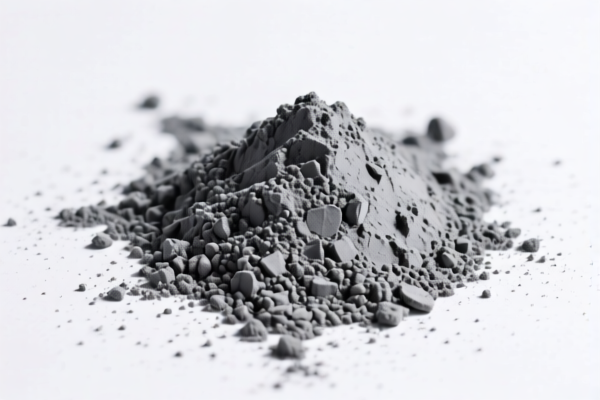
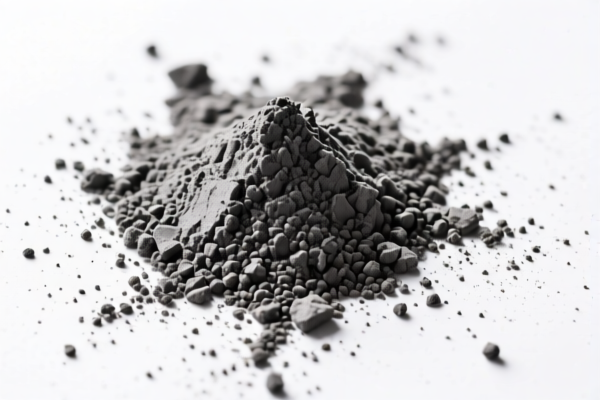
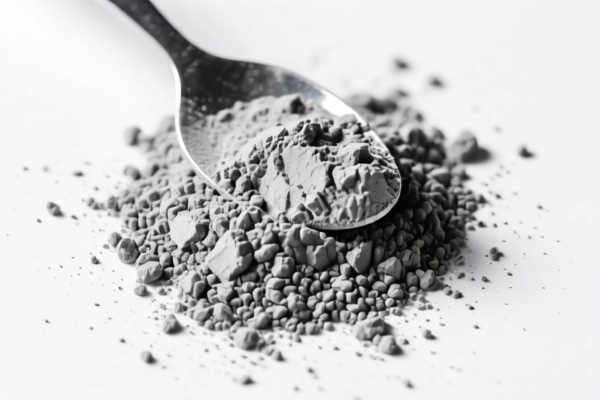
Coffee shell powder (often referred to as Coffee Husk, Chaff, or Silverskin) is a by-product of the coffee processing industry. It consists of the dried, ground outer skin and parchment of coffee beans. In international trade, its classification depends heavily on its state (raw vs. processed) and intended use.
Key Distinctions: * Raw Agricultural By-product: If it is simply dried, cleaned, and crushed plant matter without significant chemical modification or specific food formulation, it may fall under Chapter 12 (Oil seeds, fruit seeds, other seeds). * Processed Food Ingredient: If it is roasted, extracted, or mixed to create a beverage substitute or food additive, it falls under Chapter 21 (Miscellaneous edible preparations).
⚠️ Critical Classification Point:
- If it is plain dried/crushed plant matter → Likely 1211.90.89.xx
- If it is a beverage alternative or extract → Likely 2101.30.00.00 or 2101.12.90.00
- If it is a general food mixture/preparation → Likely 2106.90.99.98
📦 II. HS Code Classification Details (2026 Latest Tariff Alignment)
Based on the provided data, here is the breakdown of the 5 potential HS Codes for Coffee Shell Powder:
| HS Code | Product Description (Summary) | Category | Key Characteristics |
|---|---|---|---|
1211.90.89.90 |
Coffee shell powder, plant-based raw material, powdery, classified as "other parts of plants" | Agricultural/Plant Parts | Raw, unprocessed plant matter; not specifically for food use. |
1211.90.89.80 |
Coffee shell powder, plant part, dried/crushed form, under "other plant/plant parts" | Agricultural/Plant Parts | Dried/crushed state; generic plant category. |
2101.30.00.00 |
Coffee shell powder, coffee-related, powdery, qualifies as "preparations based on coffee substitutes" | Beverage/Substitute | Roasted or processed as a coffee alternative; specific beverage use. |
2101.12.90.00 |
Coffee shell powder, coffee material, powdery, qualifies as "extracts, essences, and concentrates" | Extracts/Concentrates | Focused on extraction properties; high concentration form. |
2106.90.99.98 |
Coffee shell powder, processed from beans into powdery food preparation, "other food preparations" | General Food Prep | Mixed or processed food item not elsewhere specified. |
🔍 Strategic Note:
- Chapter 12 codes (1211...) generally apply to raw agricultural by-products.
- Chapter 21 codes (2101...,2106...) apply to processed food ingredients.
- The choice determines the base tariff rate (0% vs. 6.4%-8.5%) and the total liability.
💰 III. 2026 Latest Tariff Rate Breakdown (US Imports from China)
✅ Applicable Country: United States (US)
✅ Origin: China (CN)
✅ Effective Time: 2025/2026 (Current Policy Framework)
🎯 1. 1211.90.89.90 & 1211.90.89.80 —— Raw Coffee Shell Powder (Plant Parts)
| Item | Details |
|---|---|
| Base Tariff | 0.0% |
| Section 301 Surcharge | +25.0% |
| IEEPA Clause 122 Surcharge | +10.0% |
| Total Effective Rate | 35.0% |
| Calculation Basis | CIF Value × 35% |
| De Minimis Eligibility | ❌ No (Section 321 relief does not apply to these HS codes in this context) |
| Legal Reference | Section 301:1211.90 → IEEPA:9903.01.24 |
📌 Analysis:
- Although the base tariff is 0%, the 35% total burden is significant.
- These codes are used when the product is considered a raw agricultural commodity.
- Risk: High scrutiny on "origin" and "processing level" to ensure it’s not misclassified as a lower-tariff food ingredient.
🎯 2. 2101.30.00.00 —— Coffee Substitute Preparation (Beverage Use)
| Item | Details |
|---|---|
| Base Tariff | 2.1¢/kg (Specific Duty) OR Ad Valorem depending on interpretation |
| Section 301 Surcharge | +7.5% |
| IEEPA Clause 122 Surcharge | +10.0% |
| Total Effective Rate | 2.1¢/kg + 17.5% (Ad Valorem portion) |
| Calculation Basis | Specific Duty + (CIF Value × 17.5%) |
| De Minimis Eligibility | ❌ No |
| Legal Reference | Section 301:2101.30 → IEEPA:9903.01.24 |
📌 Analysis:
- This is a hybrid tariff (Specific + Ad Valorem).
- The ad valorem portion is 17.5%, which is lower than the 35% for raw shells.
- Advantage: If your product is marketed as a "roasted coffee alternative," this classification may offer a lower overall tax burden compared to raw agricultural classification.
🎯 3. 2101.12.90.00 —— Coffee Extracts & Concentrates
| Item | Details |
|---|---|
| Base Tariff | 8.5% |
| Section 301 Surcharge | +7.5% |
| IEEPA Clause 122 Surcharge | +10.0% |
| Total Effective Rate | 26.0% |
| Calculation Basis | CIF Value × 26% |
| De Minimis Eligibility | ❌ No |
| Legal Reference | Section 301:2101.12 → IEEPA:9903.01.24 |
📌 Analysis:
- Higher base tariff (8.5%) but lower surcharge (7.5%) compared to raw shells.
- Total rate 26% is better than 35% but worse than the 17.5% ad valorem component of2101.30.
- Best for products clearly defined as "extracts" or "concentrates."
🎯 4. 2106.90.99.98 —— Other Food Preparations
| Item | Details |
|---|---|
| Base Tariff | 6.4% |
| Section 301 Surcharge | 0.0% |
| IEEPA Clause 122 Surcharge | +10.0% |
| Total Effective Rate | 16.4% |
| Calculation Basis | CIF Value × 16.4% |
| De Minimis Eligibility | ❌ No |
| Legal Reference | Section 301:2106.90 → IEEPA:9903.01.24 |
📌 Analysis:
- Lowest Total Rate among all options: 16.4%.
- Key Condition: The product must be classified as a "food preparation" (mixed/processed food item) and not a specific extract or substitute.
- Strategy: If the coffee shell powder is blended or processed in a way that fits "other food preparations," this code offers the maximum tax savings.
- Risk: High risk of reclassification by CBP if the product is deemed too simple (raw) or too specific (extract). Requires strong documentation proving it is a general food prep.
🛠️ IV. Customs Clearance Practical Advice (Pitfall Avoidance)
✅ 1. Documentation Checklist (Non-Negotiable)
| Document | Required? | Purpose |
|---|---|---|
| ✅ Product Specification Sheet | ✔️ | Define physical state (powder, dried), moisture content, and processing method. |
| ✅ Process Flowchart | ✔️ | Prove if it’s raw (1211) or processed (2101/2106). |
| ✅ Ingredients List | ✔️ | Crucial for 2106.90.99.98. If pure, 2106 is risky. |
| ✅ Commercial Invoice | ✔️ | Must match HS Code description precisely (e.g., "Roasted Coffee Husk Powder for Beverage" vs. "Raw Coffee Shells"). |
| ✅ Labeling Samples | ✔️ | Ensure intended use is clear (Food, Supplement, Agricultural). |
✅ 2. Declaration Strategy (Key Mantra)
🔥 "Raw is High Tax, Processed is Lower Tax, But Prove It!"
| Scenario | Recommended HS Code | Why? |
|---|---|---|
| Raw, dried, crushed shells | 1211.90.89.90 / .80 |
Accurate but 35% tax. |
| Roasted, used as coffee substitute | 2101.30.00.00 |
17.5% + specific duty. Lower ad valorem. |
| Extracts/Concentrates | 2101.12.90.00 |
26% tax. Moderate cost. |
| Mixed food prep / Supplement blend | 2106.90.99.98 |
16.4% tax. Lowest rate, but requires proof of "preparation." |
✅ 3. Special Case Handling
| Situation | Advice |
|---|---|
| "Organic" Certification | Does not change HS Code, but may reduce inspection frequency. Provide certificate. |
| Export to US as "Animal Feed" | If used for feed, consider 2309.90.65.00 (Animal Feed) – Note: Not in provided data, but worth checking externally. |
| CBP Rejection | If CBP rejects 2106.90.99.98, they will likely revert to 1211.90.89.90 (35%). Have a backup argument ready. |
| De Minimis (Section 321) | Do not rely on it. Coffee shell powder is generally subject to tariffs and requires formal entry. |
🌍 V. Global Market Comparison (Quick Reference)
| Destination | Likely HS Code | Est. Total Tax (CN Origin) | Notes |
|---|---|---|---|
| 🇺🇸 USA | 2106.90.99.98 |
16.4% | Best rate if classified as food prep. |
| 🇺🇸 USA | 1211.90.89.90 |
35.0% | Default for raw agricultural by-products. |
| 🇪🇺 EU | 1211.90 |
Varies (0-10%) | No Section 301 tariffs, but check EU VAT/Duties. |
| 🇨🇳 China | 1211.90 |
0% (Import Duty) | China exports coffee shells; imports less relevant. |
📌 Conclusion:
For US imports,2106.90.99.98(16.4%) is the most cost-effective if the product qualifies as a general food preparation.
If it is raw,1211.90.89.90(35%) is unavoidable.
2101.30.00.00(17.5% + specific) is a strong middle ground for roasted beverage alternatives.
📌 VI. Common Errors & Pitfalls (Lessons Learned)
❌ Error 1: Declaring raw coffee shells as 2106.90.99.98 without proof of processing.
👉 Result: CBP reclassifies to 1211.90.89.90 → Backpay 18.6% difference + penalties.
❌ Error 2: Ignoring the 2.1¢/kg specific duty in 2101.30.00.00.
👉 Result: Underpayment on high-volume, low-value shipments.
❌ Error 3: Using "Coffee Husk" in commercial invoice but declaring 2101.12.90.00 (Extract).
👉 Result: Misdescription → Delayed clearance, requests for lab testing.
✅ Correct Practice:
"Roasted Coffee Husk Powder, Food Grade, Prepared for Beverage Substitution" → Supports
2101.30.00.00or2106.90.99.98.
🎯 VII. Conclusion: Professional Declaration, Cost Optimization!
🎯 Remember:
🔹 "Raw is 35%, Roasted is 17.5%+, Extract is 26%, Food Prep is 16.4%!"
🔹 "Prove your processing level, or pay the 35% penalty!"
📌 Pro Tip:
If your coffee shell powder is blended with other ingredients (e.g., chicory, grains), aggressively pursue 2106.90.99.98 for the 16.4% rate. Ensure your ingredient list and process description support this.
📣 Immediate Action:
📞 Contact your customs broker with product specs and processing details.
📄 Request an Advance Ruling if the classification is ambiguous.
🚀 Optimize your HS Code to save up to 18.6% in taxes!
✨ Professional Customs Clearance Starts with Precise Classification!
💼 Every cent saved is profit earned!
用户评价
关于 HS 编码归类
协调制度(HS)是由世界海关组织(WCO)制定的国际贸易商品分类标准。全球 200 多个国家采用 HS 系统作为海关关税、贸易统计和进出口监管的基础。
每个 HS 编码遵循以下层级结构:
- 章(2 位)——商品大类(例如:第 84 章:机器和机械设备)
- 品目(4 位)——章内的更具体分类
- 子目(6 位)——国际通用细分,所有 WCO 成员国统一使用
- 本国细分(8-10 位)——各国自行扩展的细分编码,如美国 HTSUS 10 位编码
正确的 HS 编码归类对于顺利通关、准确缴纳关税和遵守贸易法规至关重要。错误归类可能导致海关延误、多缴关税或罚款。
从CN进口到US时,适用的关税税率可能包括:
- 最惠国(MFN)税率——适用于 WTO 成员国的标准关税税率
- 普通税率——适用于无贸易协定国家
- 贸易救济关税——附加关税,如 301 条款(反倾销)、232 条款(国家安全)或反补贴税
本页内容仅供参考。如需正式归类,请咨询当地海关或持牌报关代理。