Coiled Plastic Hose
CN → US| HS编码 | 关税税率 | 原产国 | 目的国 | 文档 |
|---|---|---|---|---|
| 3917320020 | 38.1% | CN | US | 官方文档 |
| 3917320050 | 38.1% | CN | US | 官方文档 |
| 3917310000 | 38.1% | CN | US | 官方文档 |
| 3917320050 | 38.1% | CN | US | 官方文档 |
| 8547200000 | 35.0% | CN | US | 官方文档 |
| 8547900020 | 89.6% | CN | US | 官方文档 |
商品图片


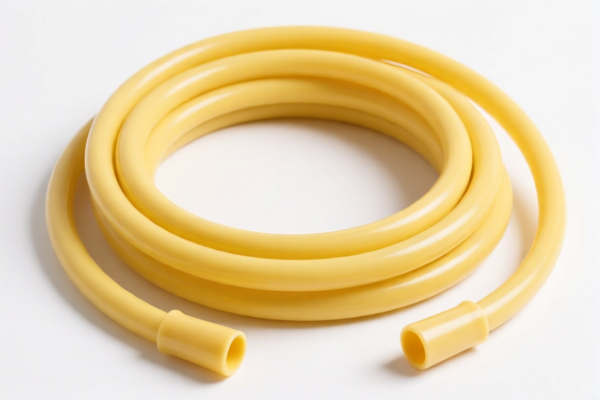
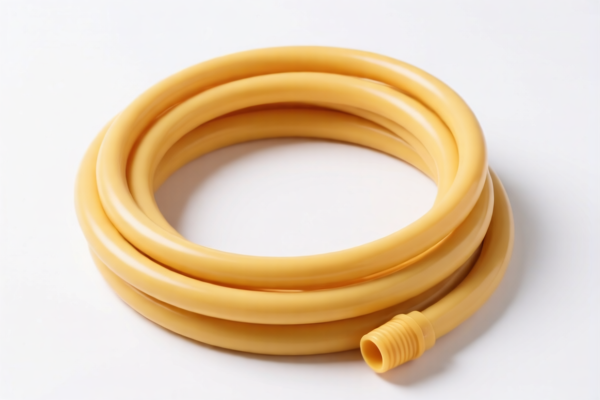
AI分析
🌀 Coiled Plastic Hose (Flexible Tubing)
🌐 HS Code Reference & Customs Clearance Guide | 2026 Latest Tariff Breakdown | Professional Transit Strategy
📌 I. Product Definition & Classification: Do You Truly Understand "Coiled Plastic Hose"?
Coiled plastic hoses are versatile flexible tubes used in pneumatic systems, fluid transfer, HVAC, and industrial automation. In international trade, their classification hinges on material type, mechanical strength (burst pressure), and structure (reinforced vs. non-reinforced).
1. High-Pressure Flexible Hoses (≥ 27.6 MPa):
High-strength, often reinforced hoses used in demanding industrial environments. These enjoy zero additional tariffs under current frameworks.
2. Standard Polyethylene (PE) Tubes:
Commonly used for water, air, or low-pressure fluid transfer. Often non-reinforced. Subject to standard base tariffs + significant additional duties.
3. Other Plastic Tubes (PVC, PU, Nylon, etc.):
General-purpose tubing not made of polyethylene. Also subject to base tariffs + additional duties.
⚠️ Key Distinction Point:
- If the hose is flexible and has a minimum burst pressure of ≥ 27.6 MPa → It falls under a preferential category with 0% total tax.
- If it is non-reinforced and made of Polyethylene (PE) → It falls under standard plastic tubing with 28.1% total tax.
- If it is non-reinforced and made of other plastics (e.g., PVC) → It also falls under 28.1% total tax.
📦 II. HS Code Classification Details (2026 Latest Tariff Authority Comparison)
| HS Code | Product Description | Application Scenario | Reinforcement | Total Tax Rate |
|---|---|---|---|---|
3917.31.00.00 |
Flexible tubes, pipes, hoses with min. burst pressure ≥ 27.6 MPa | High-pressure pneumatic lines, hydraulic systems, industrial vacuum | ✅ Yes (implied by pressure rating) | 0.0% |
3917.32.00.20 |
Other non-reinforced tubes, of Polyethylene (PE) | Water supply, low-pressure air lines, irrigation, consumer goods | ❌ No | 28.1% |
3917.32.00.50 |
Other non-reinforced tubes, Other Plastics (PVC, PU, etc.) | General fluid transfer, HVAC, packaging machinery | ❌ No | 28.1% |
🔍 Important Reminder:
- High-pressure hoses (≥ 27.6 MPa) are exempt from additional tariffs. Ensure test reports confirm this pressure rating.
- PE vs. Other Plastics: If unsure, provide material composition certificates. Misclassification between PE (3917.32.00.20) and Other (3917.32.00.50) does not change the tax rate here but affects compliance accuracy.
- Insulating Fittings: If the product includes electrical conduit tubing (base metal lined with insulation), see HS8547below.
💰 III. 2026 Latest Tariff Rate Breakdown (Including Additional Duties & Policy Surcharges)
✅ Applicable Country: United States (US)
✅ Country of Origin: China (CN)
✅ Effective Date: From November 10, 2025 (including subsequent imports)
🎯 1. 3917.31.00.00 —— High-Pressure Flexible Hoses (Min. Burst Pressure ≥ 27.6 MPa)
| Item | Content |
|---|---|
| Base Tariff | 0.0% (ad valorem) |
| USITC Additional Tariff | 0.0% (Exempt from Section 301 surcharges due to specific pressure criteria) |
| IEEPA Additional Tariff | 0.0% |
| Total Tax Rate | 0.0% |
| Tax Calculation | CIF Value × 0% = $0 |
| De Minimis Eligibility | ✅ Yes (Low duty value) |
| Legal Basis Path | USITC:3917.31.00.00 → No Footnotes applying surcharges |
📌 Explanation:
- This HS code is highly favorable. The high burst pressure requirement ensures it is classified as a specialized industrial component rather than general-purpose tubing.
- Zero Tax makes this the most cost-effective option for high-performance coiled hoses.
- Crucial: You must provide a Test Report from a recognized laboratory confirming the minimum burst pressure is ≥ 27.6 MPa. Without this, customs may reclassify it to the 28.1% categories.
🎯 2. 3917.32.00.20 & 3917.32.00.50 —— Standard Non-Reinforced Plastic Tubes (PE or Other)
| Item | Content |
|---|---|
| Base Tariff | 3.1% (ad valorem) |
| USITC Additional Tariff | +25.0% (Section 301) |
| IEEPA Additional Tariff | 0.0% (Note: IEEPA 10% does not apply to these specific plastic tubing codes in the provided data) |
| Total Tax Rate | 28.1% |
| Tax Calculation | CIF Value × 28.1% |
| De Minimis Eligibility | ❌ No (Deny de_minimis due to combined rate) |
| Legal Basis Path | USITC:3917.32.00.20/50 → FOOTNOTE:301 |
📌 Explanation:
- Base Rate (3.1%): Standard MFN rate for plastic tubes.
- Additional Duty (25%): Applies under US Trade Law Section 301 for Chinese-origin goods.
- Total (28.1%): A significant cost increase. Must be factored into pricing models.
- Material Specifics:
-3917.32.00.20: For Polyethylene (PE) hoses.
-3917.32.00.50: For Other Plastics (e.g., PVC, PU, Nylon).
- Both incur the same total tax rate, but material declaration must be accurate to avoid customs delays.
🎯 3. Special Case: Insulating Fittings & Conduit Tubing (Electrical)
If the "coiled hose" is actually electrical conduit tubing (base metal lined with insulation) or plastic insulating fittings:
| HS Code | Description | Total Tax Rate |
|---|---|---|
8547.20.00.00 |
Insulating fittings of plastics (wholly of insulating material) | 25.0% |
8547.90.00.20 |
Electrical conduit tubing, of base metal lined with insulating material (Steel/Aluminum/Copper) | 79.6% (Base 4.6% + 25% + 50% metal surcharge) |
📌 Warning:
- If the product is metal-lined (e.g., steel conduit with plastic inner lining), the tax skyrockets to 79.6%.
- If it is purely plastic electrical fittings, the rate is 25.0%.
- Do not confuse standard hydraulic/pneumatic hoses with electrical conduit tubing. Misclassification leads to severe penalties.
🛠️ IV. Customs Clearance Practical Advice (Real-World Pitfall Avoidance)
✅ 1. Required Documentation Checklist (Non-Negotiable)
| Document | Mandatory? | Description |
|---|---|---|
| ✅ Test Report (Burst Pressure) | ✔️ Critical | Must explicitly state ≥ 27.6 MPa to qualify for 3917.31.00.00 (0% tax). Without it, expect 28.1%. |
| ✅ Material Composition Certificate | ✔️ | Specifies if the tube is Polyethylene (PE) or Other Plastic. Required for 3917.32.00.20 vs. 3917.32.00.50. |
| ✅ Product Photographs | ✔️ | Show cross-section, labeling, and fittings. Helps customs distinguish between "hose" and "conduit". |
| ✅ Commercial Invoice | ✔️ | Clearly describe as "Flexible Plastic Hose" or "Coiled Tubing". Avoid vague terms like "Plastic Part". |
| ✅ Packing List | ✔️ | List weight, dimensions, and quantity. |
✅ 2. Declaration Strategy (Key Mantras)
🔥 "High Pressure = Zero Tax, PE/Other = 28%, Metal Lined = 79.6%!"
| Scenario | Correct HS Code | Consequence of Error |
|---|---|---|
| Industrial High-Pressure Hose (≥ 27.6 MPa) | 3917.31.00.00 |
0% Tax |
| Standard PE Hose (No pressure rating) | 3917.32.00.20 |
28.1% Tax |
| Standard PVC Hose | 3917.32.00.50 |
28.1% Tax |
| Electrical Conduit (Metal-lined) | 8547.90.00.20 |
79.6% Tax |
| Plastic Electrical Fittings | 8547.20.00.00 |
25.0% Tax |
✅ 3. Special Handling Notes
| Situation | Recommendation |
|---|---|
| OEM Custom Hoses | Provide design specs and material data sheets. Prove pressure ratings. |
| Hybrid Products (Hose + Metal Fittings) | If metal fittings are minor (for assembly only) and hose is plastic, it may still qualify as plastic hose. If metal is structural/insulating lining, re-evaluate as 8547. |
| Electrical vs. Mechanical | Clearly state use case: "Pneumatic/Air" vs. "Electrical Conduit". This is the #1 reason for misclassification. |
| Origin Marking | Ensure "Made in China" is visible on product/packaging to apply correct USITC surcharges. |
🌍 V. Global Market Comparison (2026 Latest)
| Country/Region | Recommended HS Code | Tariff (China Origin) | Certification | Notes |
|---|---|---|---|---|
| 🇺🇸 United States | 3917.31.00.00 |
0.0% | None | High-pressure exemption is key. |
| 🇺🇸 United States | 3917.32.00.20/50 |
28.1% | None | Standard rate for non-reinforced tubes. |
| 🇪🇺 EU | 3917.21/22/23 |
~2.5 - 4.5% | REACH, RoHS | No Section 301 equivalent. |
| 🇨🇳 China | 3917.21/22/23 |
~2.5 - 6.5% | CCC (if electrical) | Import duty varies by subheading. |
| 🇯🇵 Japan | 3917.21/22/23 |
~1.5 - 3.5% | PSE (if electrical) | Low tariffs, strict safety standards. |
📌 Conclusion:
- USA is the most critical market for tariff optimization. The 0% rate for high-pressure hoses is a major competitive advantage.
- Do not ignore the pressure rating. If you can certify ≥ 27.6 MPa, you save 28.1% in duties.
- Avoid electrical conduit confusion. If the hose is for wiring, do not use3917codes.
📌 VI. Common Mistakes & Pitfalls (Blood Lessons)
❌ Mistake 1: Declaring a standard hose as "High Pressure" without test reports.
👉 Consequence: Customs rejects the 0% claim, reclassifies to 28.1%, and may impose penalties for misdeclaration.
❌ Mistake 2: Confusing "Plastic Hose" with "Electrical Conduit".
👉 Consequence: If the product is metal-lined conduit, using 3917 leads to a 79.6% tax bill instead of 0-28%, plus fraud allegations.
❌ Mistake 3: Ignoring the "Base Metal Lining" aspect.
👉 Consequence: Even a thin metal layer inside a plastic tube can trigger the 8547.90.00.20 classification (79.6% tax).
❌ Mistake 4: Using generic descriptions like "Plastic Tube".
👉 Consequence: Customs officers will default to the highest applicable duty or request expensive classification services.
✅ Correct Approach:
"Coiled Polyethylene Hose, Non-Reinforced, 10mm ID, for Air Transfer, Model ABC, No Electrical Use"
OR
"High-Pressure Pneumatic Hose, Burst Pressure 30 MPa, PU Material, Certified by Lab XYZ"
🎯 VII. Conclusion: Professional Declaration, Cost Savings, Efficiency!
🎯 Remember the Mantras:
🔹 "High Pressure (≥27.6 MPa) = 0% Tax!"
🔹 "Standard PE/Other Plastic = 28.1% Tax!"
🔹 "Metal-Lined Conduit = 79.6% Tax (Avoid if possible)!"
🔹 "Test Reports are Your Best Friend for 0% Rate!"
📌 Pro Tip:
If your hoses originate from Vietnam, Mexico, Thailand, or Malaysia, you may qualify for preferential tariffs under FTAs (USMCA, ASEAN-Australia, etc.), potentially reducing the 28.1% rate significantly.
Recommendation: Apply for an Advance Ruling with US Customs if your product falls into a gray area (e.g., borderline pressure ratings or mixed materials).
📣 Take Action Now:
📞 Contact your freight forwarder + Provide Burst Pressure Test Report + Apply for HS Code Pre-Ruling
🚀 Let your hoses, Clear Customs Smoothly, Save Costs, Maximize Profits!
✨ Professional Clearance Starts with Accurate Classification!
💼 Every Cent of Tax Saved is Pure Profit!
用户评价
关于 HS 编码归类
协调制度(HS)是由世界海关组织(WCO)制定的国际贸易商品分类标准。全球 200 多个国家采用 HS 系统作为海关关税、贸易统计和进出口监管的基础。
每个 HS 编码遵循以下层级结构:
- 章(2 位)——商品大类(例如:第 84 章:机器和机械设备)
- 品目(4 位)——章内的更具体分类
- 子目(6 位)——国际通用细分,所有 WCO 成员国统一使用
- 本国细分(8-10 位)——各国自行扩展的细分编码,如美国 HTSUS 10 位编码
正确的 HS 编码归类对于顺利通关、准确缴纳关税和遵守贸易法规至关重要。错误归类可能导致海关延误、多缴关税或罚款。
从CN进口到US时,适用的关税税率可能包括:
- 最惠国(MFN)税率——适用于 WTO 成员国的标准关税税率
- 普通税率——适用于无贸易协定国家
- 贸易救济关税——附加关税,如 301 条款(反倾销)、232 条款(国家安全)或反补贴税
本页内容仅供参考。如需正式归类,请咨询当地海关或持牌报关代理。