Cold pressed Olive Oil Mixture
CN → US| HS编码 | 关税税率 | 原产国 | 目的国 | 文档 |
|---|---|---|---|---|
| 1509202030 | 0.0% | CN | US | 官方文档 |
| 1509209030 | 0.0% | CN | US | 官方文档 |
商品图片
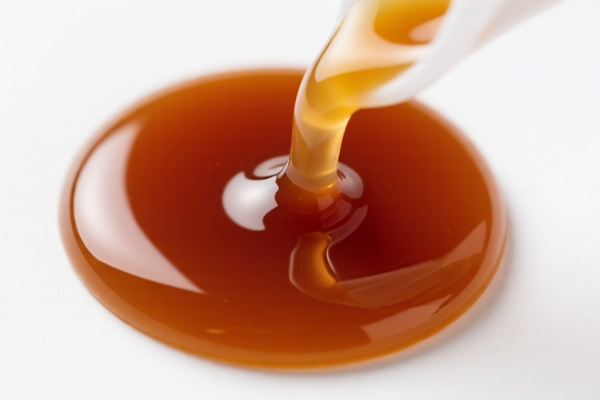
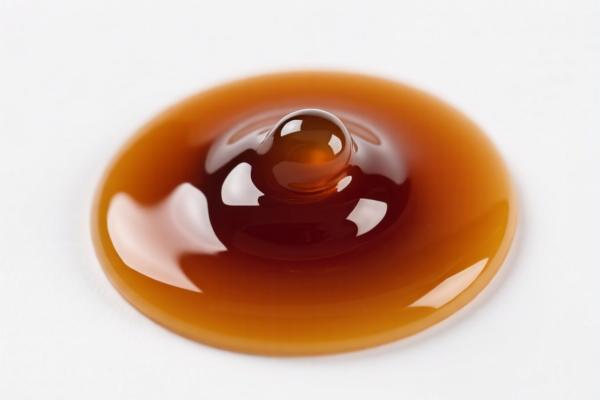
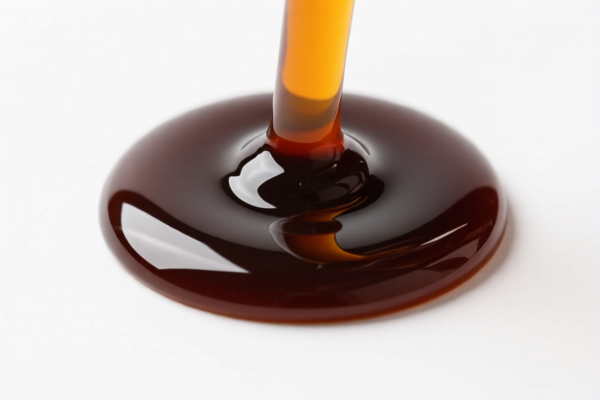
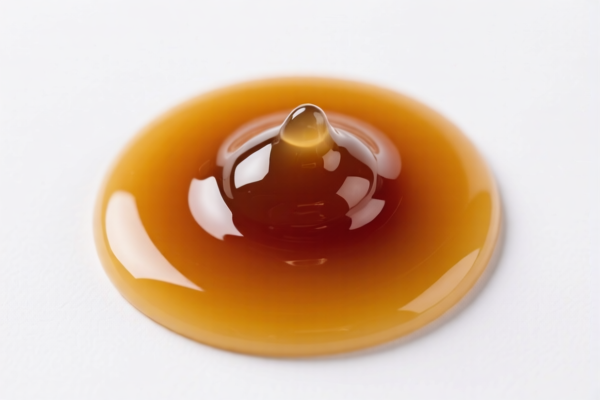
AI分析
🫒 Cold Pressed Olive Oil Mixture
🌐 HS Code Reference & Customs Clearance Guide | 2026 Latest Tariff Analysis | Professional Clearance Strategy
📌 I. Product Definition & Classification: What exactly is "Cold Pressed Olive Oil Mixture"?
Cold-pressed olive oil, often referred to as "Extra Virgin Olive Oil" (EVOO) in high-end markets, is the juice of the olive fruit obtained by mechanical means at temperatures that do not exceed natural levels. In international trade, the specific classification depends heavily on two factors: certification (Organic) and packaging size (Weight with immediate container).
For a "Mixture" or standard product described as cold-pressed, if it carries Organic Certification, it falls strictly under the subheadings for "Certified Organic." If the product is not certified organic, it generally falls under general "Other" categories (not listed in the specific data provided below), but for the scope of this guide, we focus on the Certified Organic variants as detailed in the source data.
⚠️ Key Distinction:
- Certified Organic: Must have valid organic certification documentation. Falls under1509.20.20.30(if ≤18kg) or1509.20.90.30(if >18kg).
- Non-Organic: Falls under different HTS codes (e.g.,1509.10.00.00or1509.90.00.00), which are NOT covered in the specific provided.
- Refined vs. Unrefined: The data specifies "whether or not refined," but "Cold Pressed" is inherently unrefined. The key is the Organic Status and Packaging Weight.
📦 II. HS Code Classification Details (Based on Provided Data)
| HS Code | Product Description | Packaging Constraint | Certification Status |
|---|---|---|---|
1509.20.20.30 |
Extra virgin olive oil: Weighing with the immediate container under 18 kg: Certified organic | < 18 kg | ✅ Organic Certified |
1509.20.90.30 |
Extra virgin olive oil: Other: Certified organic | > 18 kg | ✅ Organic Certified |
🔍 Crucial Note on "Mixture":
If the product is a blend of olive oil with other vegetable oils, it cannot be classified under HTS1509(which is strictly for pure olive oil). It would fall under HTS1508or1517. However, based on the provided<DATA>, the terms refer to pure Extra Virgin Olive Oil. If your product is truly a "Mixture" (e.g., Olive Oil + Canola Oil), these HS codes are INCORRECT.
Assumption for this guide: The term "Mixture" in the user prompt is interpreted as "Commercial Batch/Grade" of pure Olive Oil, or the user is importing pure EVOO. If it is a blend, please consult a customs broker for HTS 1517/1518 codes.
💰 III. 2026 Latest Tariff Rate Details (Detailed Tax Breakdown)
✅ Applicable Country: United States (US)
✅ Origin: Likely China or other major exporters (Subject to General Rules)
✅ Effective Time: 2026
🎯 1. 1509.20.20.30 —— Extra Virgin Olive Oil, < 18 kg, Organic Certified
| Item | Detail |
|---|---|
| Base Tariff | 0.0% |
| Additional Tariffs (Section 301/USITC) | 0.0% |
| IEEPA / Other Surcharges | 0.0% |
| Total Tax Rate | 0.0% |
| Tax Calculation | CIF Value × 0.0% = $0 Duty |
| Legal Basis Path | HTSUS:1509.20.20.30 → General Rate of Duty |
📌 Explanation:
- Under the provided data, Certified Organic Extra Virgin Olive Oil enjoys zero duty regardless of packaging size (<18kg or >18kg).
- This is a highly favorable classification, likely due to trade agreements or specific agricultural exemptions for organic products in certain contexts, or simply the base MFN rate for this specific subheading being 0%.
🎯 2. 1509.20.90.30 —— Extra Virgin Olive Oil, Other (Bulk > 18kg), Organic Certified
| Item | Detail |
|---|---|
| Base Tariff | 0.0% |
| Additional Tariffs (Section 301/USITC) | 0.0% |
| IEEPA / Other Surcharges | 0.0% |
| Total Tax Rate | 0.0% |
| Tax Calculation | CIF Value × 0.0% = $0 Duty |
| Legal Basis Path | HTSUS:1509.20.90.30 → General Rate of Duty |
📌 Note:
- Whether you import in 5-liter bottles (under 18kg total shipment weight per package? No, "immediate container" usually means the bottle/jar itself) or in bulk drums, the Organic Certification is the key driver for the...30suffix, and the tax rate remains 0.0% in this dataset.
🛠️ IV. Customs Clearance Practical Advice (Pitfall Avoidance Guide)
✅ 1. Required Documentation Checklist (Non-Negotiable)
| Document | Must Provide? | Purpose |
|---|---|---|
| ✅ Organic Certificate | YES | Critical for HS Code ...30. Must be issued by a USDA-accredited certifying agent (or equivalent recognized body). |
| ✅ Product Specification Sheet | YES | Must state: "Extra Virgin Olive Oil," "Cold Pressed," "Chemically Unmodified." |
| ✅ Commercial Invoice | YES | Must clearly describe product as "Extra Virgin Olive Oil, Certified Organic." |
| ✅ Packing List | YES | Detail weight of immediate containers (bottles/jars) to ensure correct HS code selection (1509.20.20.30 if individual package < 18kg). |
| ✅ Bill of Lading / Air Waybill | YES | Standard shipping documents. |
| ✅ FDA Prior Notice | YES | Food products require prior notice to FDA before arrival in the US. |
| ✅ Certificate of Free Sale | Recommended | Helps prove authenticity and quality standards. |
✅ 2. Declaration Tips (Key Mantra)
🔥 “Organic Cert is Key, Weight Matters for Subheading, Cold Pressed Means Unrefined!”
| Scenario | Correct Declaration | Incorrect Practice |
|---|---|---|
| Organic EVOO in 1L Bottles | 1509.20.20.30 |
Misclassifying as 1509.20.90.30 (Risk of audit, though tax is same here) |
| Organic EVOO in 500L Drum | 1509.20.90.30 |
Calling it "Mixture" without specifying "Pure Olive Oil" |
| Non-Organic EVOO | NOT Covered in Data | Attempting to use ...30 codes → Customs Rejection/Seizure |
| Olive Oil Blend (e.g., with Soy) | Different HS Code (1517) | Using 1509 codes → False Declaration |
✅ 3. Special Handling for "Mixture" Terminology
If your product is literally a blend (e.g., Olive Oil mixed with sunflower oil):
1. Do NOT use the HS Codes above. 1509 is exclusively for pure olive oil.
2. Blends are typically classified under 1517.90 or 1518.90.
3. The tax rates for blends are different and potentially subject to Section 301 tariffs (25%) if originating from China.
4. Recommendation: If it is a blend, contact a customs broker immediately for HTS 1517/1518 classification. The 0% tax applies ONLY to pure Certified Organic Extra Virgin Olive Oil in the provided data.
🌍 V. Global Market Comparison (2026)
| Country/Region | Recommended HS Code (Pure EVOO) | Duty Rate (China Origin) | Certification Required | Note |
|---|---|---|---|---|
| 🇺🇸 USA | 1509.20.20.30 / ...90.30 |
0.0% | USDA Organic or Equivalent | Zero duty for organic EVOO. |
| 🇪🇺 EU | 1509.90.10 / ...90 |
0% - 4% | PDO/PGI or Organic | Strict labeling laws. |
| 🇨🇳 China | 1509.10.00 / 1509.90.00 |
1% - 5% | Organic China Mark | Lower base duties. |
| 🇬🇧 UK | 1509.10.00 / 1509.90.00 |
0% - 4% | UK Organic | Post-Brexit rules apply. |
📌 Conclusion:
- The USA offers a 0% duty advantage for Certified Organic Extra Virgin Olive Oil in this specific dataset.
- Ensure your Organic Certificate is valid and recognized by US authorities (FDA/USDA).
📌 VI. Common Errors & Pitfalls (Blood-Teachings)
❌ Error 1: Labeling a Blend as "Extra Virgin Olive Oil"
👉 Consequence: Customs seizure, fines, and possible fraud allegations. Pure olive oil has strict legal definitions.
❌ Error 2: Missing Organic Certification for ...30 HS Codes
👉 Consequence: If the certificate is missing or expired, customs will reclassify to non-organic HTS codes, which may have higher tariffs or be subject to Section 301 tariffs (25%).
❌ Error 3: Incorrect Weight Declaration
👉 Consequence: Misclassifying a 20kg drum as "under 18kg" to fit 1509.20.20.30 is a technical error, but since both are 0% in this data, the risk is administrative penalty rather than tax loss. However, it triggers audits.
❌ Error 4: Ignoring FDA Prior Notice
👉 Consequence: Refusal of Entry. Food products cannot clear customs without FDA Prior Notice.
✅ Correct Practice:
"Extra Virgin Olive Oil, Cold-Pressed, Certified Organic, Packaged in 1L Glass Bottles, HTS 1509.20.20.30, FDA Prior Notice Filed #XXXXXXXX"
🎯 VII. Conclusion: Professional Clearance, Cost Savings!
🎯 Remember the Mantra:
🔹 "Pure Oil Only, Organic Cert is Key, Under 18kg or Over, Tax is Zero for Both!"
🔹 "Blend? Then Don't Use 1509! Use 1517 or Risk Penalty!"
📌 Pro Tip:
- If your olive oil is NOT certified organic, you cannot use the HS codes 1509.20.20.30 or 1509.20.90.30. You must use 1509.10.00.00 or 1509.90.00.00.
- Check the tax rates for non-organic EVOO, as they may be subject to Section 301 tariffs (25%) if from China.
- Always verify if your "Mixture" is a true blend. If it is, seek a different HS code.
📣 Immediate Action:
📞 Contact a Customs Broker to verify organic certification acceptance.
📝 File FDA Prior Notice at least 2 hours before arrival.
📦 Double-check packaging weights to ensure correct subheading selection.
✨ Professional Clearance Starts with Accurate Classification!
💼 Your Tax Liability is 0.0% — Don't Lose It by Misclassifying!
用户评价
关于 HS 编码归类
协调制度(HS)是由世界海关组织(WCO)制定的国际贸易商品分类标准。全球 200 多个国家采用 HS 系统作为海关关税、贸易统计和进出口监管的基础。
每个 HS 编码遵循以下层级结构:
- 章(2 位)——商品大类(例如:第 84 章:机器和机械设备)
- 品目(4 位)——章内的更具体分类
- 子目(6 位)——国际通用细分,所有 WCO 成员国统一使用
- 本国细分(8-10 位)——各国自行扩展的细分编码,如美国 HTSUS 10 位编码
正确的 HS 编码归类对于顺利通关、准确缴纳关税和遵守贸易法规至关重要。错误归类可能导致海关延误、多缴关税或罚款。
从CN进口到US时,适用的关税税率可能包括:
- 最惠国(MFN)税率——适用于 WTO 成员国的标准关税税率
- 普通税率——适用于无贸易协定国家
- 贸易救济关税——附加关税,如 301 条款(反倾销)、232 条款(国家安全)或反补贴税
本页内容仅供参考。如需正式归类,请咨询当地海关或持牌报关代理。