Collector
CN → US| HS编码 | 关税税率 | 原产国 | 目的国 | 文档 |
|---|---|---|---|---|
| 9705100010 | 10.0% | CN | US | 官方文档 |
| 9705100020 | 10.0% | CN | US | 官方文档 |
商品图片
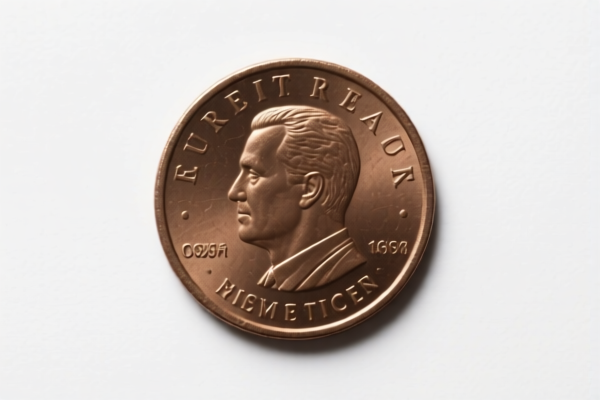
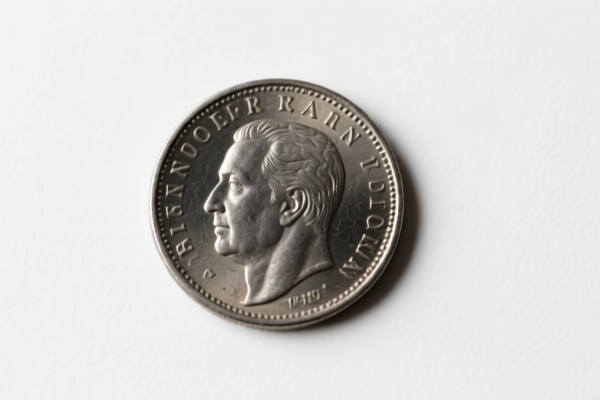
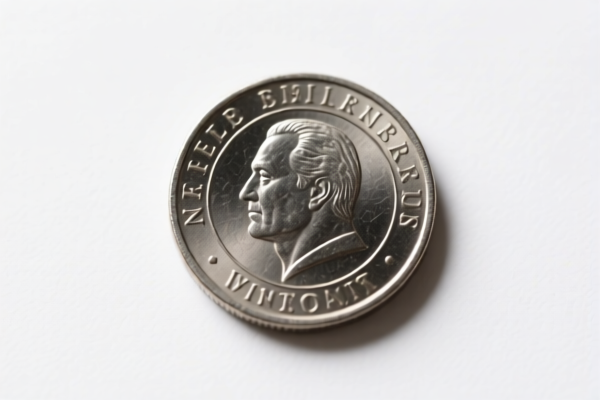
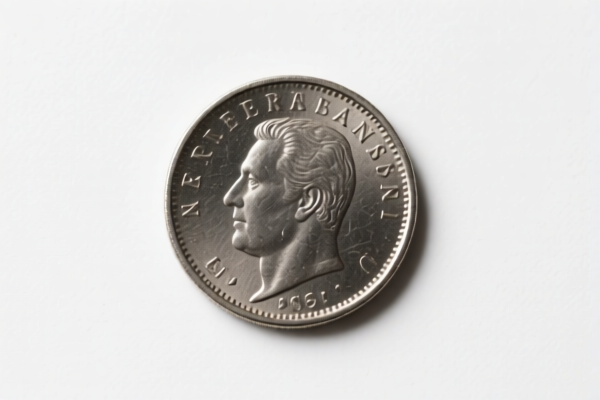
AI分析
🏛️ The "Collector" (Archaeological, Ethnographic, Historical & Numismatic Collections)
🌐 HS Code Reference & Customs Clearance Guide | 2026 Latest Tariff Analysis | Specialized Heritage Goods Strategy 📌 Part 1: Product Definition & Classification: What is a "Collector"?
In international trade, a "Collector" refers specifically to collections and collectors' pieces of significant interest in archaeology, ethnography, history, zoology, botany, mineralogy, anatomy, paleontology, or numismatics. These are not random antiques, but items of scientific, cultural, or educational value.
The Goods are broadly categorized into two main types based on their nature: 1. Archaeological Pieces: Artifacts from ancient human activity (tools, pottery, weapons). 2. Ethnographic/Historical Pieces: Items representing cultures, traditions, or historical events (clothing, ritual objects, documents).
⚠️ Key Distinction Point: * Archaeological Pieces: Must meet the definition in Statistical Note 1 to Chapter 97 (usually pre-19th century or significant historical value). * Ethnographic/Historical Pieces: Must represent specific cultural or historical significance. * Numismatic/Other Collections: Coins, stamps, fossils, etc., have separate HS codes (e.g., 9704, 9705.90) and are NOT included in the 9705.10.00.10/20 codes below.
📦 Part 2: HS Code Classification Details (2026 Latest Tariff Authority)
Based on the provided <DATA>, there are only two applicable HS codes for Archaeological and Ethnographic collectors’ pieces.
| HS Code | Product Description | Applicable Category | Key Constraint |
|---|---|---|---|
9705.10.00.10 |
Archaeological pieces of a kind described in statistical note 1 to this chapter. | Archaeological | Must be archaeological artifacts. |
9705.10.00.20 |
Ethnographic pieces of a kind described in statistical note 1 to this chapter. | Ethnographic/Historical | Must be ethnographic or historical items. |
🔍 Critical Reminder: * These codes ONLY apply to Archaeological and Ethnographic/Historical items. * Items of Zoological, Botanical, Mineralogical, Anatomical, Paleontological, or Numismatic interest fall under other subheadings of Chapter 97 (e.g., 9705.90, 9704, etc.) and are NOT covered by the specific codes
9705.10.00.10or9705.10.00.20. * Statistical Note 1 defines specific criteria for "collectors' pieces." Ensure your goods meet this legal definition.
💰 Part 3: 2026 Latest Tariff Rate Breakdown
✅ Applicable Country: United States (US) ✅ Origin: China (CN) (Assumed based on typical context, but rates are 0% regardless) ✅ Effective Date: 2026 Tariff Schedule
🎯 1. 9705.10.00.10 —— Archaeological Pieces
| Item | Content |
|---|---|
| Base Tariff Rate | 0.0% |
| Additional Tariff (Section 301/IEEPA) | 0.0% |
| Total Tax Rate | 0.0% |
| Tax Calculation | CIF Value × 0.0% = $0 |
| De Minimis Eligibility | ✅ Yes (Usually applies, but subject to other regulations) |
| Legal Basis | HTSUS Chapter 97 Specific Provisions |
📌 Explanation: * Archaeological and ethnographic collectors' pieces are considered cultural artifacts. * The US generally imposes 0% tariff on these items to encourage cultural exchange and academic study. * No Section 301 or IEEPA additional tariffs apply to this specific subheading.
🎯 2. 9705.10.00.20 —— Ethnographic Pieces
| Item | Content |
|---|---|
| Base Tariff Rate | 0.0% |
| Additional Tariff (Section 301/IEEPA) | 0.0% |
| Total Tax Rate | 0.0% |
| Tax Calculation | CIF Value × 0.0% = $0 |
| De Minimis Eligibility | ✅ Yes (Usually applies, but subject to other regulations) |
| Legal Basis | HTSUS Chapter 97 Specific Provisions |
📌 Explanation: * Same as archaeological pieces: 0% total tax. * This is a non-punitive tariff category, meaning it is not affected by trade war tariffs or emergency economic powers.
🛠️ Part 4: Customs Clearance Practical Advice
✅ 1. Documentation Checklist (Critical for Chapter 97)
| Document | Required | Explanation |
|---|---|---|
| ✅ Detailed Description | ✔️ | Must explicitly state: "Archaeological Piece" or "Ethnographic Piece." Include origin, age, and cultural significance. |
| ✅ Statistical Note 1 Compliance Proof | ✔️ | Evidence that the item fits the definition in Statistical Note 1 to Chapter 97 (e.g., expert appraisal, museum certificates). |
| ✅ Commercial Invoice | ✔️ | Value must be declared accurately. No under-invoicing. |
| ✅ Proof of Origin | ✔️ | To confirm eligibility for 0% rate (though it's 0% for all, origin matters for other regulations). |
| ✅ CITES Permit (If applicable) | ✔️ | CRITICAL: If the artifact contains endangered species materials (e.g., ivory, tortoiseshell, rare woods), CITES permits are required IN ADDITION to 0% tariff. |
| ✅ Import License (If applicable) | ✔️ | Some archaeological items may require special import permits from the Smithsonian Institution or State Department. |
✅ 2. Declaration Tips (Key Mantra)
🔥 "Cultural Artifacts, 0% Tax, But Check CITES!"
| Scenario | Correct Declaration | Wrong Practice |
|---|---|---|
| Ancient Pottery | 9705.10.00.10 - Archaeological Piece |
Declaring as "Ceramic Decor" → 5%+ |
| Traditional Tribal Clothing | 9705.10.00.20 - Ethnographic Piece |
Declaring as "Textile Apparel" → 10%+ |
| Coin Collection | NOT 9705.10.00.10 |
Using wrong code → Penalty |
| Fossil Collection | NOT 9705.10.00.10 |
Using wrong code → Penalty |
📌 Warning: * Do not use these codes for modern reproductions or fake antiques. Customs will inspect and reclassify, leading to penalties. * Do not assume Numismatic (coins) items are covered. Coins are under
9704.00.
✅ 3. Special Case Handling
| Scenario | Handling Advice |
|---|---|
| Items Containing Endangered Species | STOP: Check CITES. Even if tariff is 0%, illegal trade in ivory/rhino/horn/etc. will result in confiscation and criminal charges. |
| Cultural Property Import Restrictions | Some countries (e.g., Italy, Greece) have export bans. Ensure legal export from the country of origin. US CBP may detain if no legal export proof. |
| Museum vs. Private Collection | Both can use these codes if they meet Statistical Note 1 criteria. Private collectors must provide provenance. |
| Mixed Lots (Archaeological + Modern Souvenirs) | Split Declaration: Separate archaeological pieces (0%) from souvenirs (standard tariff). Do not mix. |
🌍 Part 5: Global Market Comparison (2026 Latest)
| Country/Region | Recommended HS Code | Tariff | Certification Requirements | Notes |
|---|---|---|---|---|
| 🇺🇸 USA | 9705.10.00.10 / 9705.10.00.20 |
0% | CITES (if applicable) | 0% tariff, but strict CITES/Cultural property rules. |
| 🇨🇳 China | Similar codes (e.g., 9705) | 0% ~ 5% | None usually | China often exempts cultural goods. |
| 🇪🇺 EU | 9705 category | 0% | CITES, Cultural Heritage Laws | EU has strict UNESCO convention compliance. |
| 🇬🇧 UK | 9705 category | 0% | CITES | Post-Brexit, same 0% rate for cultural goods. |
📌 Conclusion: * USA offers 0% tariff for legitimate archaeological and ethnographic collectors' pieces. * Main risk is not tariff, but regulation: CITES and Cultural Property laws.
📌 Part 6: Common Mistakes & Pitfalls (Lessons Learned)
❌ Mistake 1: Using 9705.10.00.10 for Numismatic items (coins).
👉 Consequence: Misclassification, penalties, delays. Coins are 9704.00.
❌ Mistake 2: Ignoring CITES for artifacts with ivory, coral, or exotic woods. 👉 Consequence: Confiscation, fines, and criminal investigation. Tariff is irrelevant if illegal.
❌ Mistake 3: Declaring Modern Reproductions as "Archaeological Pieces." 👉 Consequence: Fraud charges, seizure, and blacklisting.
❌ Mistake 4: Not providing Provenance/Provenance Documentation. 👉 Consequence: Customs may suspect illegal looting or trafficking. Delayed clearance.
✅ Correct Practice:
"Archaeological Ceramic Pottery, 3rd Century BC, No CITES Restrictions, Provenance Documentation Attached, HTSUS: 9705.10.00.10"
🎯 Part 7: Conclusion: Professional Clearance, Cost-Effective & Compliant
🎯 Remember the Mantra:
🔹 "Archaeological & Ethnographic: 0% Tax, But Check CITES!" 🔹 "Statistical Note 1 Defines the Category; Coins are Separate." 🔹 "Provenance is Key; Fraud is Fatal."
📌 Pro Tip:
If your collection includes items from conflict zones, consult legal counsel regarding UNESCO 1970 Convention compliance. For high-value items, consider Advance Rulings from CBP to confirm classification.
📣 Immediate Action:
📞 Consult a Customs Broker specializing in cultural goods. 📄 Prepare Expert Appraisals and CITES Permits if needed. 🚀 Ensure legal export from the country of origin to avoid seizure.
✨ Professional Clearance Starts with Precise Classification! 💼 Your Cultural Heritage, Cleared Safely and Efficiently!
用户评价
关于 HS 编码归类
协调制度(HS)是由世界海关组织(WCO)制定的国际贸易商品分类标准。全球 200 多个国家采用 HS 系统作为海关关税、贸易统计和进出口监管的基础。
每个 HS 编码遵循以下层级结构:
- 章(2 位)——商品大类(例如:第 84 章:机器和机械设备)
- 品目(4 位)——章内的更具体分类
- 子目(6 位)——国际通用细分,所有 WCO 成员国统一使用
- 本国细分(8-10 位)——各国自行扩展的细分编码,如美国 HTSUS 10 位编码
正确的 HS 编码归类对于顺利通关、准确缴纳关税和遵守贸易法规至关重要。错误归类可能导致海关延误、多缴关税或罚款。
从CN进口到US时,适用的关税税率可能包括:
- 最惠国(MFN)税率——适用于 WTO 成员国的标准关税税率
- 普通税率——适用于无贸易协定国家
- 贸易救济关税——附加关税,如 301 条款(反倾销)、232 条款(国家安全)或反补贴税
本页内容仅供参考。如需正式归类,请咨询当地海关或持牌报关代理。