Color Dye Sublimation Film (Negative)
CN → US| HS编码 | 关税税率 | 原产国 | 目的国 | 文档 |
|---|---|---|---|---|
| 3701910060 | 38.7% | CN | US | 官方文档 |
| 3701910030 | 38.7% | CN | US | 官方文档 |
| 3702310100 | 38.7% | CN | US | 官方文档 |
| 3702540060 | 38.7% | CN | US | 官方文档 |
| 3707100005 | 38.0% | CN | US | 官方文档 |
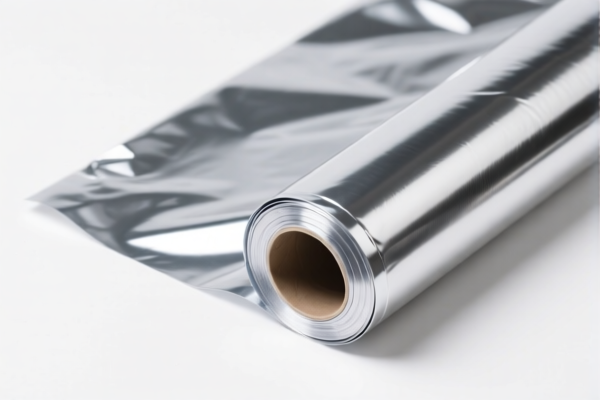
商品图片


AI分析
🎞️ Color Dye Sublimation Film (Negative / Negative Roll)
🌐 HS Code Reference & Customs Clearance Guide | 2026 Latest Tariff Analysis | Professional-Level Clearance Strategy
📌 I. Product Definition and Classification: What Exactly is "Color Dye Sublimation Film (Negative)"?
Color Dye Sublimation Film (often referred to as Negative Film or Color Negative Roll) is a photosensitive imaging medium used primarily in photographic and graphic arts industries. Unlike digital printing, this film undergoes a chemical development process to create a negative image, which is then used to produce prints or transfer images via sublimation.
In international trade, these products are strictly categorized under Chapter 37: Photographic or Cinematographic Goods. The classification hinges on two critical factors: 1. State of Exposure: Is it unexposed (raw) or exposed (developed)? 2. Form Factor: Is it in rolls, plates, or sheets? 3. Base Material: Is it on paper, textile, or other plastics?
⚠️ Key Distinction:
- If the film is unexposed (raw material for photography) → It falls under Heading 3701 or 3702.
- If the film is exposed but not developed (negative image visible but chemically fixed) → It falls under Heading 3702.
- If the product is a photographic paper with emulsion rather than film → It may fall under Heading 3707 (though less common for "film").
- Crucial Note: The term "Negative" in the user input often implies Color Negative Film (for still photography) or Exposed Negative Rolls (for printing plates). We must analyze the specific HS Codes provided to determine the exact state.
📦 II. HS Code Classification Details (2026 Latest Tariff Authority Match)
Based on the provided <DATA>, the following HS Codes are relevant for "Color Dye Sublimation Film (Negative)". Note that the descriptions in <DATA> are highly specific, suggesting a focus on photographic film materials rather than general thermal transfer ribbons.
| HS Code | Product Description | Application Scenario | State of Film | Base Material |
|---|---|---|---|---|
3701.91.00.60 |
Color Negative Film, for color photography, material non-paper/non-textile | Raw color negative film rolls | Unexposed | Plastic (Cellulose Acetate/Triacetate) |
3701.91.00.30 |
Unexposed Plate Film for Color Photography | Large format plates, graphic arts plates | Unexposed | Plastic |
3702.31.01.00 |
Exposed but Unfixed Color Negative Roll | Photo negatives ready for scanning/printing | Exposed | Plastic |
3702.54.00.60 |
Exposed Roll Film, non-paper base | Developed negative rolls for printing | Exposed | Plastic |
3707.10.00.05 |
Sensitized Emulsion for Color Negative Paper | Emulsion coatings for photographic paper | N/A (Liquid/Paste) | N/A |
🔍 Critical Analysis:
-3701.91.00.60&3701.91.00.30: These are unexposed films. If your "Dye Sublimation Film" is a raw material before printing, this is the correct category.
-3702.31.01.00&3702.54.00.60: These are exposed films. If the "Negative" refers to developed negative rolls (where the image is already captured), these codes apply.
-3707.10.00.05: This is for emulsion, not the film itself. Only use if importing raw chemical emulsions for coating.
- ⚠️ Warning: Standard Thermal Dye Sublimation Ribbons (thermal transfer films) typically fall under 3703 or 4911 depending on composition. However, the provided<DATA>strictly limits us to photographic film categories (3701/3702). This suggests the user is dealing with traditional photographic negatives or sensitized plates, not modern thermal ribbons.
💰 III. 2026 Latest Tariff Rate Details (Including Surcharges & Policy Add-ons)
✅ Applicable Country: United States (US)
✅ Origin: China (CN)
✅ Effective Time: From November 10, 2025 (for imports after this date)
🎯 1. 3701.91.00.60 & 3701.91.00.30 —— Unexposed Color Negative Film/Plates
| Item | Content |
|---|---|
| Base Tariff | 3.7% (Standard MFN Rate) |
| Section 301 Surcharge | +25.0% (USITC Footnote for China-origin goods) |
| IEEPA Surcharge | +10.0% (122 Clause, China-specific emergency power) |
| Total Tariff Rate | 38.7% |
| Tax Calculation | CIF Value × 38.7% |
| De Minimis Exemption | ❌ Not Available (deny_de_minimis) |
| Legal Basis Path | IEEPA:9903.01.25 → IEEPA:9903.01.24 → USITC:3701.91.00.60 → FOOTNOTE:3701.91.00.60 |
📌 Explanation:
- These products are considered high-tech imaging materials.
- The 25% is a standard Section 301 tariff.
- The 10% is an additional IEEPA surcharge.
- Total 38.7% is extremely high, significantly impacting cost competitiveness.
🎯 2. 3702.31.01.00 & 3702.54.00.60 —— Exposed Negative Rolls
| Item | Content |
|---|---|
| Base Tariff | 3.7% |
| Section 301 Surcharge | +25.0% |
| IEEPA Surcharge | +10.0% |
| Total Tariff Rate | 38.7% |
| Tax Calculation | CIF Value × 38.7% |
| De Minimis Exemption | ❌ Not Available |
| Legal Basis Path | IEEPA:9903.01.25 → IEEPA:9903.01.24 → USITC:3702.xxxx.xxxx → FOOTNOTE:3702.xxxx.xxxx |
📌 Note:
- Even though the film is exposed, it remains under the same high-tariff bracket.
- Do not confuse with "printed photographic paper" which might have different rates.
🎯 3. 3707.10.00.05 —— Sensitized Emulsion for Color Negative Paper
| Item | Content |
|---|---|
| Base Tariff | 3.0% |
| Section 301 Surcharge | +25.0% |
| IEEPA Surcharge | +10.0% |
| Total Tariff Rate | 38.0% |
| Tax Calculation | CIF Value × 38.0% |
| De Minimis Exemption | ❌ Not Available |
| Legal Basis Path | IEEPA:9903.01.25 → IEEPA:9903.01.24 → USITC:3707.10.00.05 |
📌 Note:
- Slightly lower total tariff (38.0%) compared to film (38.7%).
- Only applicable if importing raw emulsion coatings, not finished film.
🛠️ IV. Customs Clearance Practical Advice (Real-World Pitfall Guide)
✅ 1. Documentation Checklist (Mandatory)
| Document | Required | Description |
|---|---|---|
| ✅ Product Specification Sheet | ✔️ | Must clearly state: Unexposed vs. Exposed, Color Negative, Base Material (e.g., Polyester, Acetate). |
| ✅ Chemical Composition Statement | ✔️ | Detail the emulsion layers (e.g., Red, Green, Blue sensitive layers). |
| ✅ Photos/Labels | ✔️ | Show packaging, brand, model, and batch numbers. |
| ✅ Commercial Invoice | ✔️ | Must use precise HS Code descriptions. Avoid vague terms like "Film". Use "Color Negative Film, Unexposed". |
| ✅ Certificate of Origin (CO) | ✔️ | Essential for origin verification. If from Vietnam/Mexico, check for IEEPA exemptions. |
| ✅ Safety Data Sheet (SDS) | ✔️ | Required for chemical components in emulsion. |
✅ 2. Declaration Tips (Key Mantra)
🔥 "Unexposed vs. Exposed, State Defines Code! Don't Mix Paper and Film!"
| Scenario | Correct Declaration | Wrong Practice |
|---|---|---|
| Raw Color Negative Film Rolls | 3701.91.00.60 |
Misdeclaring as "Printing Ribbon" → Risk of misclassification + penalties |
| Exposed Negative Rolls | 3702.54.00.60 |
Misdeclaring as "Unexposed" → Could be seen as fraud if images are visible |
| Large Format Plates | 3701.91.00.30 |
Misdeclaring as "Roll Film" → Wrong rate application |
| Emulsion Liquid | 3707.10.00.05 |
Misdeclaring as "Finished Film" → Wrong HS Code |
✅ 3. Special Handling Cases
| Case | Handling Advice |
|---|---|
| OEM Custom Film | Provide customer order + design specs. Ensure "Unexposed" status is clear. |
| Hybrid Products (Film + Printer) | If sold as a bundle, film is usually the principal article. Declare separately if possible to avoid composite rate issues. |
| Transshipment via Third Countries | If shipped from Vietnam/Malaysia, ensure Certificate of Origin proves non-Chinese origin to avoid IEEPA 10% surcharge. |
| Samples for Testing | Still subject to 38.7% if over de minimis limit. Consider shipping via diplomatic or sample-specific channels if applicable. |
🌍 V. Global Market Clearance Comparison (2026 Latest)
| Country/Region | Recommended HS Code | Tariff Rate (China Origin) | Certification Requirements | Notes |
|---|---|---|---|---|
| 🇺🇸 USA | 3701.91.00.60 |
38.7% | No specific FCC/CE, but may require FDA for chemical safety | Highest cost due to 301+IEEPA |
| 🇨🇳 China | 3701.91.00.60 |
3.7% | No special certifications | Lowest cost |
| 🇪🇺 EU | 3701.91.00.60 |
0%~6% | REACH Compliance for chemicals | No Section 301 equivalent |
| 🇯🇵 Japan | 3701.91.00.60 |
0%~3% | PSE for electrical components (if any) | Low tariff |
| 🇬🇧 UK | 3701.91.00.60 |
0%~6% | UKCA for certain industrial uses | Post-Brexit rates apply |
📌 Conclusion:
- USA is the most expensive market due to combined 301 (25%) and IEEPA (10%) surcharges.
- EU and Japan offer significantly lower tariff barriers.
- Supply Chain Strategy: Consider sourcing from non-China origins (e.g., Japan, Korea, Vietnam) to mitigate US tariffs, if feasible.
📌 VI. Common Mistakes & Pitfall Guide (Lessons Learned)
❌ Mistake 1: Confusing Dye Sublimation Ribbons (thermal transfer) with Photographic Negative Film.
👉 Consequence: Misclassification under 4911 or 3703 → Wrong tariff + customs detention.
Solution: Confirm if it's photosensitive (requires darkroom/chemical development) or thermal (ink ribbon). The provided data is for photosensitive.
❌ Mistake 2: Declaring Exposed Film as Unexposed.
👉 Consequence:海关 (Customs) will detect image content → Penalty for fraud + Back Taxes.
Solution: Accurately declare Exposed status under 3702 codes if images are present.
❌ Mistake 3: Ignoring IEEPA 10% Surcharge.
👉 Consequence: Underestimating landed cost by 10% → Profit margin erosion.
Solution: Always factor in 38.7% for China-origin goods to the US.
❌ Mistake 4: Using vague terms like "Photographic Material".
👉 Consequence: Customs officer will pick the highest duty rate for ambiguity.
Solution: Be specific: "Color Negative Film, Unexposed, Polyester Base, 135 Roll".
✅ Correct Declaration Example:
"Color Negative Film, Unexposed, for Still Photography, Polyester Base, 35mm Roll, Model XYZ, Origin: China"
🎯 VII. Conclusion: Precision Classification Saves Money!
🎯 Remember the Mantra:
🔹 "Unexposed = 3701, Exposed = 3702, Don't Mix, Don't Guess!"
🔹 "US Tariff 38.7%, China Origin, Plan Ahead for Costs!"
📌 Pro Tip:
If your product is not photosensitive (e.g., standard thermal dye sublimation ribbon), it does not fit the provided <DATA> HS Codes (3701/3702). It may fall under 3703 or 4911. Please verify if your product requires chemical development. If it's a simple thermal transfer, re-evaluate HS Codes.
📣 Immediate Action:
📞 Contact a professional customs broker + Provide Product Specs + Apply for Advance Ruling for the US.
🚀 Ensure your Supply Chain accounts for the 38.7% total tariff impact.
✨ Professional Clearance Starts with Accurate Classification!
💼 Your Cost, Calculated Precisely!
用户评价
关于 HS 编码归类
协调制度(HS)是由世界海关组织(WCO)制定的国际贸易商品分类标准。全球 200 多个国家采用 HS 系统作为海关关税、贸易统计和进出口监管的基础。
每个 HS 编码遵循以下层级结构:
- 章(2 位)——商品大类(例如:第 84 章:机器和机械设备)
- 品目(4 位)——章内的更具体分类
- 子目(6 位)——国际通用细分,所有 WCO 成员国统一使用
- 本国细分(8-10 位)——各国自行扩展的细分编码,如美国 HTSUS 10 位编码
正确的 HS 编码归类对于顺利通关、准确缴纳关税和遵守贸易法规至关重要。错误归类可能导致海关延误、多缴关税或罚款。
从CN进口到US时,适用的关税税率可能包括:
- 最惠国(MFN)税率——适用于 WTO 成员国的标准关税税率
- 普通税率——适用于无贸易协定国家
- 贸易救济关税——附加关税,如 301 条款(反倾销)、232 条款(国家安全)或反补贴税
本页内容仅供参考。如需正式归类,请咨询当地海关或持牌报关代理。