Color Expired Film
CN → US| HS编码 | 关税税率 | 原产国 | 目的国 | 文档 |
|---|---|---|---|---|
| 3704000000 | 35.0% | CN | US | 官方文档 |
| 3702520130 | 38.7% | CN | US | 官方文档 |
| 3702310100 | 38.7% | CN | US | 官方文档 |
商品图片

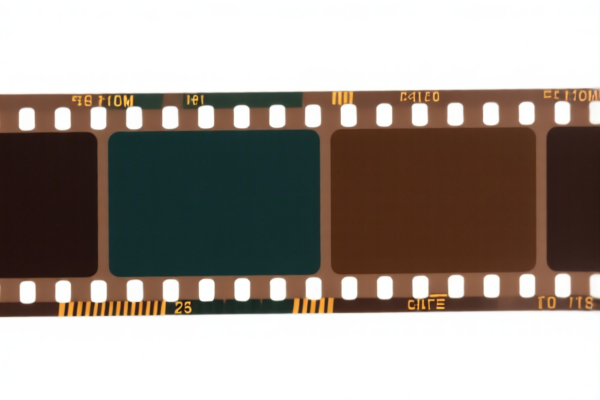
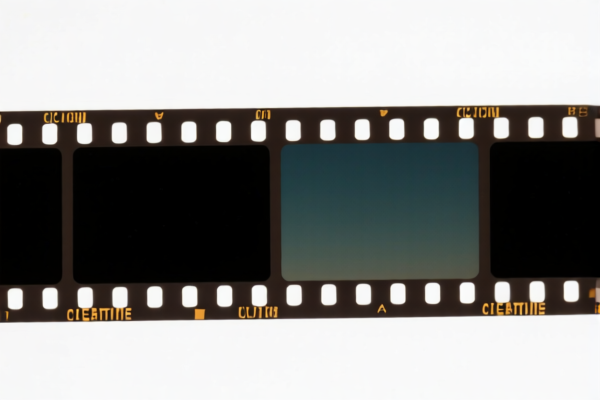

AI分析
🎞️ Color Expired Film (Photographic Film)
🌐 HS Code Reference & Clearance Guide | 2026 Latest Tariff Analysis | Professional Customs Strategy
📌 I. Product Definition & Classification: What is "Color Expired Film"?
Color Expired Film refers to photo-sensitive photographic film (positive or negative) that has passed its manufacturer’s expiration date. Despite being "expired," it remains a physical good consisting of a plastic base coated with light-sensitive emulsion. In international trade, it is classified based on its material composition (non-paper, non-textile photosensitive material) and format (roll film).
⚠️ Key Distinction:
- "Expired" is a quality status, not a material description. Customs classification relies on the physical nature of the item, not its usability.
- It is not considered "waste" or "scrap" unless declared as such, but it is still subject to standard HS classification for photographic materials.
- It falls under Chapter 37: Photographic or Cinematographic Goods.
📦 II. HS Code Classification Details (2026 Latest Tariff Authority Comparison)
Based on the provided data, Color Expired Film is classified into three primary HS Codes depending on the specific type (Color Negative, Color Reversal, or General Color Film) and whether it is treated as a general "Color Roll" or specific sub-types.
| HS Code | Product Description | Key Attributes & Logic |
|---|---|---|
3704.00.00.00 |
General Color Film / Color Rolls | Logic: "Color film belongs to film morphology, meeting the material and format requirements." This is the broad category for general color photographic film. |
3702.52.01.30 |
Color Negative & Reversal Film | Logic: "Color and color reversal film have consistent uses and belong to photosensitive film materials." Specifically targets standard consumer/professional negative and slide films. |
3702.31.01.00 |
Non-Paper/Non-Textile Photosensitive Material | Logic: "Contains elements of color and film, being a photosensitive material that is neither paper-based nor textile-based." A precise technical classification for film on plastic/acetate bases. |
🔍 Important Note:
- All three codes are under Chapter 37, confirming the product is photographic film.
- The "Expired" status does not change the HS Code. However, it may trigger additional inspection by customs for potential contamination or illegal importation of sensitive materials, though usually, it is treated as a standard chemical product.
- Ensure your invoice clearly states "Photographic Film" and NOT "Waste" or "Chemical Residue" to avoid misclassification as hazardous waste.
💰 III. 2026 Latest Tariff Rate Breakdown (Including Surcharges & Policy Add-ons)
✅ Applicable Country: United States (US)
✅ Origin: China (CN) (Assumed based on tariff structure in DATA)
✅ Effective Date: Post-2025 policies (Section 301 & IEEPA)
🎯 1. 3704.00.00.00 —— General Color Film
| Item | Detail |
|---|---|
| Base Tariff | 0.0% |
| Section 301 Surcharge | 25.0% |
| Section 122 Tariff | 10.0% |
| Total Tax Rate | 35.0% |
| Calculation Basis | CIF Value × 35% |
| Legal Authority | Standard Chapter 37 rate + USITC 301 + IEEPA 122 provisions |
📌 Explanation:
- Base 0%: Photographic film often has low base duties.
- 25% Surcharge: Applied under Section 301 (Trade Act of 1974, as amended) for Chinese-origin goods.
- 10% Surcharge: Referenced as "Section 122 Tariff" in the data, likely reflecting specific emergency powers or additional trade remedy measures.
- Total 35%: A significant cost factor. Ensure your profit margin accounts for this.
🎯 2. 3702.52.01.30 —— Color Negative/Reversal Film
| Item | Detail |
|---|---|
| Base Tariff | 3.7% |
| Section 301 Surcharge | 25.0% |
| Section 122 Tariff | 10.0% |
| Total Tax Rate | 38.7% |
| Calculation Basis | CIF Value × 38.7% |
| Legal Authority | Specific sub-heading for photosensitive materials + USITC 301 + IEEPA 122 |
📌 Explanation:
- Base 3.7%: Specific classification for certain photosensitive films attracts a small base duty.
- Surcharges: Same 25% + 10% structure applies.
- Total 38.7%: Slightly higher than the general category due to the base tariff.
🎯 3. 3702.31.01.00 —— Non-Paper/Non-Textile Photosensitive Material
| Item | Detail |
|---|---|
| Base Tariff | 3.7% |
| Section 301 Surcharge | 25.0% |
| Section 122 Tariff | 10.0% |
| Total Tax Rate | 38.7% |
| Calculation Basis | CIF Value × 38.7% |
| Legal Authority | Specific technical classification + USITC 301 + IEEPA 122 |
📌 Explanation:
- This code is functionally similar to3702.52.01.30in terms of taxation.
- Use this code if the film is explicitly described as "non-paper, non-textile" to emphasize its material nature, avoiding confusion with photographic paper (3703).
🛠️ IV. Clearance Practical Advice (Real-World Pitfall Guide)
✅ 1. Document Checklist (Non-Negotiable)
| Document | Required? | Explanation |
|---|---|---|
| Commercial Invoice | ✔️ | Must clearly state "Photographic Film, Color, Expired". Do not use vague terms like "Chemical Rolls." |
| Packing List | ✔️ | Detail the number of rolls, weight, and dimensions. |
| Certificate of Origin | ✔️ | Crucial for verifying Chinese origin and applying the correct tariff rates. |
| Material Safety Data Sheet (MSDS) | ✔️ | Highly Recommended. Film contains chemical emulsions. Customs may request MSDS to verify it is not hazardous waste or dangerous goods. |
| Expiration Date Label | ✔️ | Provide clear photos of the expiration date to prove it is "Expired" and not "Fresh" (which might affect insurance or value claims). |
| Non-Hazardous Declaration | ✔️ | Explicitly state the film is non-flammable, non-toxic, and suitable for postal/mail transport (if applicable). |
✅ 2. Declaration Tips (Key Mnemonics)
🔥 "Clear Description, Accurate HS, No Hazard Risk!"
| Scenario | Correct Declaration | Wrong Practice | Consequence |
|---|---|---|---|
| Expired Film | Declare as "Color Photographic Film" | Declare as "Used Chemicals" or "Waste" | Misclassification → High risk of detention/return |
| HS Code Selection | Use 3704.00.00.00 or 3702.52.01.30 |
Use 3703 (Photographic Paper) |
Paper has different tariffs and restrictions |
| Value Declaration | Declare actual transaction value | Under-declare to avoid tax | Customs audit → Penalties + Back Taxes |
| Origin Marking | Clearly mark "Made in China" | Omit origin | Cannot apply correct Section 301 rates → Audit |
✅ 3. Special Handling for "Expired" Status
| Situation | Handling Advice |
|---|---|
| Customs Inspection | Be prepared for physical inspection. The emulsion may smell; explain it is standard chemical odor. |
| Insurance | Standard cargo insurance may exclude "expired goods." Check if your policy covers "used" or "expired" items. |
| Re-import/Return | If you plan to re-export the film, ensure the HS Code matches the original export declaration to avoid double taxation. |
| Disposal | If not entering the market, declare as "for disposal only" to avoid import duties, but provide proper disposal certificates. |
🌍 V. Global Market Clearance Comparison (2026 Latest)
| Country/Region | Recommended HS Code | Tariff (China Origin) | Certification/Notes |
|---|---|---|---|
| 🇺🇸 USA | 3704.00.00.00 |
35% (Base 0% + 25% + 10%) | MSDS may be required. Strict on chemical imports. |
| 🇨🇳 China | 3704.00.00.00 |
~6% (VAT 13%) | No Section 301 tariffs. Standard import procedures. |
| 🇪🇺 EU | 3704.00.00 |
~6.5% | CE marking not required for film, but REACH compliance may apply for chemicals. |
| 🇬🇧 UK | 3704.00.00 |
~6.5% | Post-Brexit rules apply. Check UK Tariff for latest updates. |
| 🇯🇵 Japan | 3704.00.00 |
3.2% | No significant surcharges. Easy clearance. |
📌 Conclusion:
- USA is the most expensive market for Chinese-origin film due to Section 301 and Section 122 tariffs.
- Non-US markets generally have lower tariffs and fewer surcharges.
- If possible, consider sourcing film from non-Chinese origins (e.g., Japan, Germany) to avoid the 35%+ US tariffs.
📌 VI. Common Errors & Pitfalls (Blood Lessons)
❌ Error 1: Declaring "Expired Film" as "Chemical Waste"
👉 Consequence: Denied entry under hazardous waste laws → Returned at your cost!
❌ Error 2: Using "Photographic Paper" HS Code (3703) for Film
👉 Consequence: Misclassification → Penalties + Delay
❌ Error 3: Ignoring the "Expired" status on the Invoice
👉 Consequence: If customs suspects it is "Fresh" but labeled "Expired" for value reduction → Audit & Fine
❌ Error 4: Not Providing MSDS for Chemical Emulsions
👉 Consequence: Customs holds shipment for safety verification → Storage Fees + Delays
✅ Correct Practice:
"Color Negative Photographic Film, 35mm, Expired [Date], Made in China, Non-Hazardous, MSDS Attached"
🎯 VII. Conclusion: Professional Clearance, Save Costs, Avoid Risks!
🎯 Remember the Mantra:
🔹 "Film is Film, Paper is Paper, Expired Doesn't Mean Waste!"
🔹 "US Tariff 35%, Check Origin, MSDS Ready, Clearance Smooth!"
📌 Pro Tip:
If you are importing large quantities of expired film, consider applying for a Tariff Exclusion (if applicable under Section 301) or using a Free Trade Zone (FTZ) to defer duties. However, for small batches, the 35% total tariff is unavoidable for US-bound Chinese film.
📣 Immediate Action:
📞 Contact a licensed customs broker + Provide MSDS + Declare "Photographic Film" accurately
🚀 Ensure smooth clearance, avoid costly delays, and protect your profit margins!
✨ Professional Clearance Starts with Accurate Classification!
💼 Your every cent counts, and every detail matters!
用户评价
关于 HS 编码归类
协调制度(HS)是由世界海关组织(WCO)制定的国际贸易商品分类标准。全球 200 多个国家采用 HS 系统作为海关关税、贸易统计和进出口监管的基础。
每个 HS 编码遵循以下层级结构:
- 章(2 位)——商品大类(例如:第 84 章:机器和机械设备)
- 品目(4 位)——章内的更具体分类
- 子目(6 位)——国际通用细分,所有 WCO 成员国统一使用
- 本国细分(8-10 位)——各国自行扩展的细分编码,如美国 HTSUS 10 位编码
正确的 HS 编码归类对于顺利通关、准确缴纳关税和遵守贸易法规至关重要。错误归类可能导致海关延误、多缴关税或罚款。
从CN进口到US时,适用的关税税率可能包括:
- 最惠国(MFN)税率——适用于 WTO 成员国的标准关税税率
- 普通税率——适用于无贸易协定国家
- 贸易救济关税——附加关税,如 301 条款(反倾销)、232 条款(国家安全)或反补贴税
本页内容仅供参考。如需正式归类,请咨询当地海关或持牌报关代理。