Color Film (For Laboratory Use)
CN → US| HS编码 | 关税税率 | 原产国 | 目的国 | 文档 |
|---|---|---|---|---|
| 3701910060 | 38.7% | CN | US | 官方文档 |
| 3702310100 | 38.7% | CN | US | 官方文档 |
| 3702530060 | 38.7% | CN | US | 官方文档 |
| 9027508060 | 35.0% | CN | US | 官方文档 |
| 9027898060 | 35.0% | CN | US | 官方文档 |
商品图片
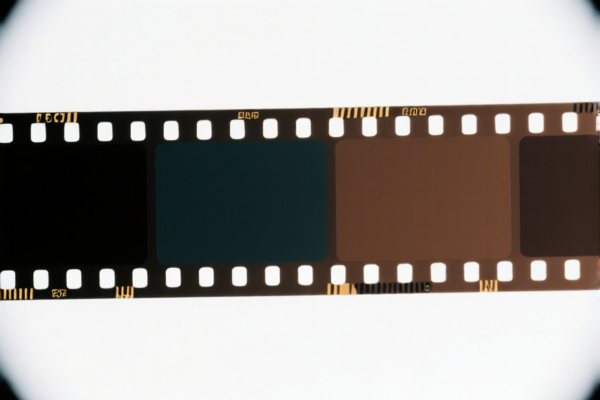
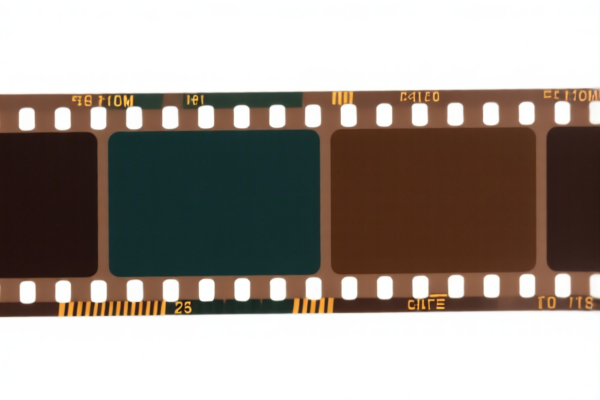
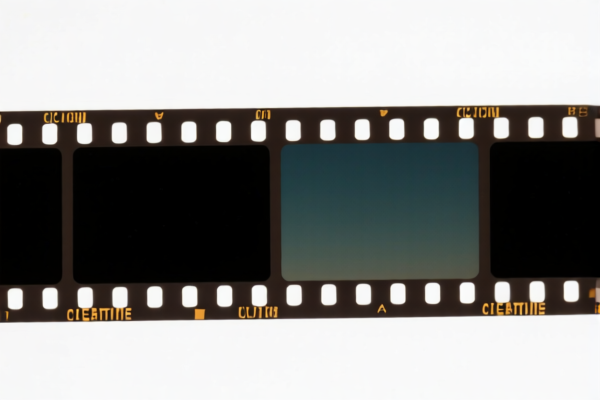

AI分析
🎞️ Color Film for Laboratory/Scientific Use
🌐 HS Code Reference & Customs Clearance Guide | 2024/2025 Latest Tariff Analysis | Professional Entry Strategy
📌 I. Product Definition & Classification: Understanding "Laboratory Color Film"
Color film designed for scientific or laboratory use is a specialized photographic material. Unlike standard consumer film, it is used for scientific testing, detection, analysis, or measurement (e.g., light radiation analysis, physical testing, or chemical detection).
In international trade, the classification depends heavily on the primary function and the device it serves:
1. Photographic Film (3701 / 3702): If the film is primarily a recording medium for images/photos, even if used in science.
2. Instrument Parts/Materials (9027): If the film is considered a consumable or part of a scientific/optical instrument (e.g., used inside a spectrometer or analyzer for detection).
⚠️ Key Distinction Point:
- If the film is sold as a standalone "photographic material" → Chapter 37 (3701/3702)
- If the film is strictly a consumable/component for a specific scientific instrument (e.g., gas analysis, radiation detection) → Chapter 90 (9027)
- Note: Customs authorities may scrutinize "scientific use" claims for Chapter 37 items. If it’s just photo film with a "science" label, it may still be classified under Ch 37.
📦 II. HS Code Classification Details (From Provided Data)
Based on the provided <DATA>, here are the exact HS Codes and their corresponding tax implications.
| HS Code | Product Description | Scientific/Usage Context |
|---|---|---|
| 3701.91.00.60 | Color photographic film | For Scientific Use: Film shape, classified under color photography categories. |
| 3702.31.01.00 | Color photographic roll film | Photo Material: Meets usage and material requirements for scientific/photo applications. |
| 3702.53.00.60 | Color photographic film | Specific Use: Rolled or light-sensitive film form, specific scientific application description. |
| 9027.50.80.60 | Film for scientific testing | Instrument Use: Used in optical radiation analysis instruments. Classified as part/consumable. |
| 9027.89.80.60 | Scientific film | Analysis Device: Meets category for physical analysis instruments and devices. |
🔍 Critical Observation:
- Items under 3701/3702 (Ch 37) have a higher base tariff (3.7%) compared to 9027 (Ch 90, 0.0% base).
- However, both groups are subject to the same additional tariffs (Section 301 + Section 122/IEEPA).
💰 III. Detailed Tariff Rate Breakdown (China to USA)
✅ Origin: China (CN)
✅ Destination: United States (US)
✅ Effective Time: Current regulations (Section 301 & Section 122/IEEPA)
🎯 1. Classification under Chapter 37 (Photographic Film)
Applicable HS Codes: 3701.91.00.60, 3702.31.01.00, 3702.53.00.60
| Item | Detail |
|---|---|
| Base Tariff | 3.7% |
| Section 301 Tariff | +25.0% (Additional duty on Chinese goods) |
| Section 122 / IEEPA Tariff | +10.0% (Additional duty under International Emergency Economic Powers Act) |
| Total Tax Rate | 38.7% |
| Calculation | CIF Value × 38.7% |
| De Minimis Exemption | ❌ Not Eligible (High rates exceed de minimis thresholds; also, many scientific films are not eligible for Section 321 exemption if properly valued/classified as subject items). |
📌 Explanation:
- The 3.7% is the standard Most Favored Nation (MFN) rate.
- The 25% is the retaliatory tariff under Section 301 of the Trade Act of 1974.
- The 10% is an additional layer (often referred to as "122 Section" or IEEPA) applied to specific Chinese imports.
- Total: 3.7 + 25 + 10 = 38.7%.
🎯 2. Classification under Chapter 90 (Scientific Instruments)
Applicable HS Codes: 9027.50.80.60, 9027.89.80.60
| Item | Detail |
|---|---|
| Base Tariff | 0.0% |
| Section 301 Tariff | +25.0% (Additional duty on Chinese goods) |
| Section 122 / IEEPA Tariff | +10.0% (Additional duty under International Emergency Economic Powers Act) |
| Total Tax Rate | 35.0% |
| Calculation | CIF Value × 35.0% |
| De Minimis Exemption | ❌ Not Eligible (Subject to Section 301/122 duties). |
📌 Explanation:
- The 0.0% base rate reflects the international preference for scientific/medical instruments.
- However, the 35% total rate (0 + 25 + 10) is still significant due to the additional duties.
- Savings: Compared to Ch 37, this classification saves 3.7% on the base tariff, but the additional duties remain identical.
🛠️ IV. Customs Clearance Practical Advice (Risk Mitigation)
✅ 1. Preparation of Documents (Must-Haves)
| Document | Required? | Purpose |
|---|---|---|
| Technical Specification Sheet | ✔️ Critical | Must clearly state scientific purpose (e.g., "used in spectrometer for X-ray detection") vs. "general photography." |
| Product Photos | ✔️ Critical | Show packaging, labels, and the film itself. Label must match the commercial invoice. |
| Commercial Invoice | ✔️ Critical | Description must be precise: "Color Photographic Film, Scientific Use, for [Specific Instrument] Analysis." Avoid vague terms like "Camera Film." |
| Certificate of Origin | ✔️ | Proves origin is China (triggers Section 301/122). |
| Bill of Lading / Air Waybill | ✔️ | Standard shipping docs. |
| Import License / Permit | ? | Check if specific scientific equipment/consumables require FDA or other agency permits. |
✅ 2. Classification Strategy & Declaration Tips
🔥 Key Mnemonic:
"Define the 'Why': Instrument Part vs. Standalone Film."
| Scenario | Recommended HS Code | Reasoning |
|---|---|---|
| Film is part of a kit for an instrument | 9027.xxxx | If the film cannot be used outside the instrument, it is an "instrument part/consumable." |
| Film is sold separately but labeled "scientific" | 3701/3702 | Most likely classified as photographic material. The "scientific" label alone may not move it to Ch 90 if it’s physically identical to standard film. |
| High-Value Analytical Film | 9027.xxxx | Higher chance of acceptance if supported by technical docs proving integration with scientific devices. |
⚠️ Warning:
- Misclassification Risk: If you declare9027but customs inspectors determine the film is general-purpose photographic film, they will reclassify to3702, potentially leading to duty discrepancies (though base rate is lower in 9027, the additional duties make the total only slightly lower).
- Valuation: Ensure the value declared includes the film and any necessary chemical processing kits if sold as a bundle.
✅ 3. Special Cases
| Case | Handling Advice |
|---|---|
| OEM / Private Label | Provide OEM agreement and technical drawings to prove specific scientific design. |
| Mixed Shipments | If shipping both 3702 and 9027 items, separate line items on the invoice. Do not bundle under one HS Code. |
| Samples | If value is very low, check if de minimis ($800) applies. However, Section 301 goods are generally excluded from de minimis exemption if they are subject to the additional duties. Check current CBP ruling. |
🌍 V. Global Market Comparison (2024/2025)
| Region | Recommended HS Code | Est. Total Duty (China Origin) | Notes |
|---|---|---|---|
| 🇺🇸 USA | 3701/3702 or 9027 |
38.7% (Ch 37) 35.0% (Ch 90) |
High additional tariffs (301+122). |
| 🇨🇳 China | 3701/3702 or 9027 |
0% - 5% | Import duty may be low; VAT applies (13%). |
| 🇪🇺 EU | 3701/3702 or 9027 |
4.5% - 6% | No Section 301 equivalent; standard EU tariffs apply. |
| 🇬🇧 UK | 3701/3702 or 9027 |
4.5% - 6% | Post-Brexit tariffs; no US-style additional duties. |
| 🇯🇵 Japan | 3701/3702 or 9027 |
0% - 3.5% | Often low or zero for scientific equipment. |
📌 Conclusion:
The USA is the most expensive market for these items due to the 35-38.7% effective tariff. Consider supply chain diversification if targeting the US market heavily.
📌 VI. Common Errors & Pitfalls (Lessons Learned)
❌ Error 1: Labeling general photographic film as "Scientific" to claim 9027 without technical proof.
👉 Consequence: Customs reclassifies to 3702, issues a duty deficiency notice, and may penalize for misdeclaration.
❌ Error 2: Ignoring the 10% Section 122/IEEPA tariff.
👉 Consequence: Underpayment of duties. The total is not just 301+Base. It is Base + 301 + 122.
❌ Error 3: Using vague descriptions like "Camera Film" on the invoice.
👉 Consequence: Customs may apply the highest possible duty rate or require extensive inquiry, causing delays.
✅ Correct Approach:
"Color Photographic Film for Scientific Spectroscopy Analysis, 35mm Roll, For Use in [Model] Analyzer, HS Code: 3702.53.00.60"
🎯 VII. Conclusion: Professional Declaration Saves Money
🎯 Key Takeaway:
🔹 "Scientific Use" is a dual-edged sword. It can lower the base tariff (from 3.7% to 0%) but does not eliminate the 35% additional tariffs.
🔹 Total Cost Difference: Only 3.7% savings if successfully classified under Ch 90.
🔹 Risk vs. Reward: The effort to prove Ch 90 classification may not be worth the small savings if customs rejects it. Ensure technical documentation is robust.
📌 Pro Tip:
If you are importing large volumes, consider Advance Rulings from CBP. Get a pre-determined HS Code for your specific film product to ensure predictability and avoid post-clearance audits.
📣 Immediate Action:
📞 Contact your customs broker with the technical data sheet.
📄 Prepare a "Scientific Use Statement" signed by the manufacturer or end-user.
🚀 Declare accurately to avoid seizures, delays, and penalties.
✨ Precision in Classification, Clarity in Declaration.
💼 Every percentage point counts in global trade.
用户评价
关于 HS 编码归类
协调制度(HS)是由世界海关组织(WCO)制定的国际贸易商品分类标准。全球 200 多个国家采用 HS 系统作为海关关税、贸易统计和进出口监管的基础。
每个 HS 编码遵循以下层级结构:
- 章(2 位)——商品大类(例如:第 84 章:机器和机械设备)
- 品目(4 位)——章内的更具体分类
- 子目(6 位)——国际通用细分,所有 WCO 成员国统一使用
- 本国细分(8-10 位)——各国自行扩展的细分编码,如美国 HTSUS 10 位编码
正确的 HS 编码归类对于顺利通关、准确缴纳关税和遵守贸易法规至关重要。错误归类可能导致海关延误、多缴关税或罚款。
从CN进口到US时,适用的关税税率可能包括:
- 最惠国(MFN)税率——适用于 WTO 成员国的标准关税税率
- 普通税率——适用于无贸易协定国家
- 贸易救济关税——附加关税,如 301 条款(反倾销)、232 条款(国家安全)或反补贴税
本页内容仅供参考。如需正式归类,请咨询当地海关或持牌报关代理。