Color Film Roll Low Grain
CN → US| HS编码 | 关税税率 | 原产国 | 目的国 | 文档 |
|---|---|---|---|---|
| 3701996060 | 35.0% | CN | US | 官方文档 |
| 3702310100 | 38.7% | CN | US | 官方文档 |
| 3701910060 | 38.7% | CN | US | 官方文档 |
| 3702520160 | 38.7% | CN | US | 官方文档 |
| 3703203030 | 38.7% | CN | US | 官方文档 |
商品图片
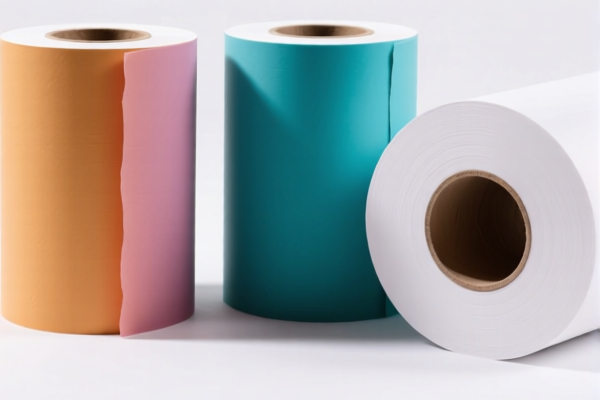
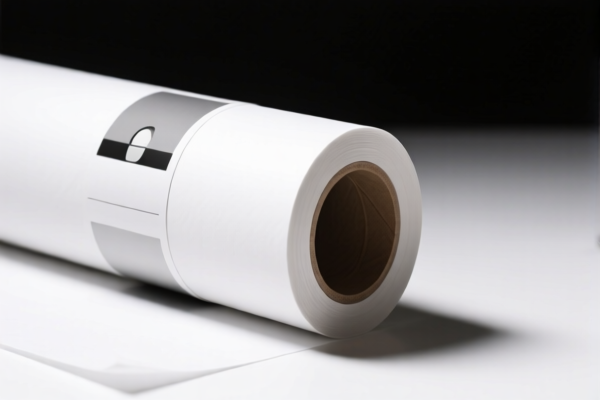
AI分析
🎞️ Color Film Roll (Low Grain/Low Contrast)
🌐 HS Code Reference & Customs Clearance Guide | 2026 Latest Tariff Analysis | Professional Clearance Strategy
📌 I. Product Definition & Classification: Do You Really Understand "Low Grain Color Film"?
"Low Grain Color Film" (often referred to as fine-grain or high-resolution film) is a critical photographic material used in professional cinematography, commercial photography, and high-end artistic expression. In international trade, it is not treated as a single commodity but is classified based on its state (sensitized vs. unsensitized) and substrate material (paper-based vs. plastic/non-paper).
Key Classification Logic: 1. Unsensitized Film (Unexposed/Ready to Use): Usually falls under Heading 3701 or 3703. If it is specifically "low contrast" or "fine grain" for still photography, it often goes to 3701.99 or 3703.20. 2. Sensitized Film (Already Exposed): Falls under Heading 3702. The specific subheading depends on the color type and intended use (e.g., still photography vs. motion picture). 3. Substrate Matters: Is the base Paper/Cardboard or Plastic/Non-woven/Textile? This is the primary differentiator for many HS codes.
⚠️ Key Distinction Point:
- If the film is unsensitized and not on paper, it generally falls under 3701.99 or 3701.91.
- If the film is sensitized (already developed/exposed for commercial distribution) or specifically categorized under still photography negatives/sheets, it falls under 3702.
- "Low Grain" (Low Contrast) is a physical characteristic that often maps to specific subheadings describing fine-grain emulsions or non-standard photographic materials.
📦 II. HS Code Classification Details (2026 Latest Tariff Authority Cross-Reference)
| HS Code | Product Description | Application Scenario | Sensitized? | Substrate |
|---|---|---|---|---|
3701.99.60.60 |
Color sensitized film in rolls, other, excluding paper/textile bases | Fine-grain/low-contrast unsensitized rolls, professional use | ❌ Unsensitized | Non-paper/Non-textile (Plastic base) |
3702.31.01.00 |
Color sensitized film for still photography, in rolls | Already sensitized/processed color film for stills | ✅ Sensitized | Plastic/Cellulose Acetate |
3701.91.00.60 |
Color sensitized film in strips, other, excluding paper/textile | Strip format, fine-grain, non-paper base | ❌ Unsensitized | Non-paper/Non-textile |
3702.52.01.60 |
Color sensitized film for other photographic uses, in rolls | Versatile color film, non-paper/cardboard/textile base | ✅ Sensitized | Non-paper/Non-cardboard/Non-textile |
3703.20.30.30 |
Color sensitized paper & paperboard for photographic use | Low-speed color paper/fast printing paper | ❌ N/A (Paper) | Paper/Cardboard |
🔍 Important Note:
- HS 3701 generally covers unsensitized photographic plates and films.
- HS 3702 covers sensitized photographic films (already prepared for exposure).
- HS 3703 covers sensitized photographic paper (not rolls).
- The provided data specifically links "Color Low Contrast Film Rolls" to 3701.99.60.60 (Unsensitized) and various 3702 codes (Sensitized). Ensure you know if your product is raw stock or consumer-ready/processed.
💰 III. 2026 Latest Tariff Rate Breakdown (Including Additional Taxes & Policy Surcharges)
✅ Applicable Country: United States (US)
✅ Origin: China (CN)
✅ Effective Date: Post-November 10, 2025 (Includes subsequent imports)
🎯 1. 3701.99.60.60 —— Color Sensitized Film Rolls (Other, Non-Paper/Textile)
| Item | Content |
|---|---|
| Base Tariff Rate | 0.0% (ad valorem) |
| Section 301 Additional Tariff | +25.0% |
| 122 Clause Tariff (IEEPA) | +10.0% |
| Total Tariff Rate | 35.0% |
| Tax Calculation | CIF Value × 35% |
| De Minimis Eligibility | ❌ Not Eligible (Denied for China-origin goods under these specific provisions) |
| Legal Basis Path | Section 301 → IEEPA (122 Clause) → USITC:3701.99.60.60 |
📌 Explanation:
- The 0% base rate reflects standard MFN treatment for certain photographic materials.
- The 25% is the standard Section 301 tariff on Chinese goods.
- The 10% is the additional "122 Clause" tariff (often associated with specific IEEPA orders targeting China).
- Total 35% is significant. Do not underestimate this even if the base is 0%.
🎯 2. 3702.31.01.00 —— Color Sensitized Film for Still Photography
| Item | Content |
|---|---|
| Base Tariff Rate | 3.7% (ad valorem) |
| Section 301 Additional Tariff | +25.0% |
| 122 Clause Tariff (IEEPA) | +10.0% |
| Total Tariff Rate | 38.7% |
| Tax Calculation | CIF Value × 38.7% |
| De Minimis Eligibility | ❌ Not Eligible |
| Legal Basis Path | Section 301 → IEEPA (122 Clause) → USITC:3702.31.01.00 |
📌 Note:
- Higher base rate (3.7%) compared to unsensitized film.
- Total burden is 38.7%, which is higher than the unsensitized roll category.
- Applies to film that is sensitized (ready for use/processing) for still photography.
🎯 3. 3701.91.00.60 —— Color Sensitized Film Strips (Other, Non-Paper/Textile)
| Item | Content |
|---|---|
| Base Tariff Rate | 3.7% |
| Section 301 Additional Tariff | +25.0% |
| 122 Clause Tariff (IEEPA) | +10.0% |
| Total Tariff Rate | 38.7% |
| Tax Calculation | CIF Value × 38.7% |
| De Minimis Eligibility | ❌ Not Eligible |
| Legal Basis Path | Section 301 → IEEPA → USITC:3701.91.00.60 |
📌 Note:
- Similar rate to3702.31.01.00.
- Applies to strips (not full rolls) or specific formats under 3701.91.
🎯 4. 3702.52.01.60 —— Color Sensitized Film (Other Uses, Non-Paper/Cardboard/Textile)
| Item | Content |
|---|---|
| Base Tariff Rate | 3.7% |
| Section 301 Additional Tariff | +25.0% |
| 122 Clause Tariff (IEEPA) | +10.0% |
| Total Tariff Rate | 38.7% |
| Tax Calculation | CIF Value × 38.7% |
| De Minimis Eligibility | ❌ Not Eligible |
| Legal Basis Path | Section 301 → IEEPA → USITC:3702.52.01.60 |
📌 Note:
- Broad category for "other" photographic uses.
- Excludes paper, cardboard, and textile bases.
- Consistent 38.7% total rate.
🎯 5. 3703.20.30.30 —— Color Sensitized Paper/Paperboard (Photographic)
| Item | Content |
|---|---|
| Base Tariff Rate | 3.7% |
| Section 301 Additional Tariff | +25.0% |
| 122 Clause Tariff (IEEPA) | +10.0% |
| Total Tariff Rate | 38.7% |
| Tax Calculation | CIF Value × 38.7% |
| De Minimis Eligibility | ❌ Not Eligible |
| Legal Basis Path | Section 301 → IEEPA → USITC:3703.20.30.30 |
📌 Note:
- This code is for paper-based film/paper (e.g., photographic paper rolls).
- If your product is truly "film roll" on a plastic base, do not use this code. Misclassification can lead to penalties.
- Also applies to "Low-speed color printing paper" as per the summary.
🛠️ IV. Customs Clearance Practical Advice (Battle-Tested Pitfall Guide)
✅ 1. Required Documentation Checklist (Non-negotiable)
| Document | Mandatory? | Description |
|---|---|---|
| ✅ Product Specification Sheet | ✔️ | Must detail: Emulsion type, grain size (fine/low), contrast index, base material (plastic/paper), length/width. |
| ✅ Photo/Video of Product | ✔️ | Show the roll, label, and any packaging. Must prove it's "Low Grain/Contrast" if claiming specific subheadings. |
| ✅ Commercial Invoice | ✔️ | Must clearly state: "Color Sensitized Film Roll, Low Grain, For Photographic Use." |
| ✅ Packing List | ✔️ | Itemize rolls by count and weight. |
| ✅ Certificate of Origin (CO) | ✔️ | Mandatory for Section 301 and IEEPA tariff determination. |
| ✅ HS Code Pre-ruling | ✔️ | Highly Recommended. Due to the complexity of "Sensitized vs. Unsensitized" and "Base Material," a pre-ruling reduces risk. |
✅ 2. Declaration Tips (Critical Mnemonics)
🔥 "Base Matters, Sensitized State, Low Grain Needs Proof!"
| Scenario | Correct Declaration | Wrong Approach |
|---|---|---|
| Unsensitized Plastic Roll | 3701.99.60.60 |
Declare as 3702 (Sensitized) → Risk of penalty + 38.7% tax if it should have been 35% (minor diff) but wrong legal basis. |
| Sensitized Still Photo Roll | 3702.31.01.00 |
Declare as 3701 (Unsensitized) → Customs will inspect and reclassify. |
| Paper-based Photographic Paper | 3703.20.30.30 |
Declare as 3702 (Film on plastic) → Major Misclassification. |
| "Low Grain" Claims | Provide Tech Specs | Vague description "Color Film" → Custom Officer decides, likely leading to higher scrutiny or incorrect duty. |
✅ 3. Special Cases Handling
| Situation | Handling Advice |
|---|---|
| OEM Custom Film | Provide contract with buyer. Ensure the "Low Grain" spec is documented in the design sheet. |
| Sample vs. Commercial | Samples are still subject to tariffs. Declare accurately. Do not undervalue as "Sample Only" to evade tax. |
| Mixed Shipments | If shipping both paper (3703) and plastic film (3701/3702), separate lines on the invoice. Do not lump them. |
| Origin Transshipment | If shipped via Vietnam/Malaysia but produced in China, declare China Origin. Transshipment does not erase Chinese origin for Section 301/IEEPA unless substantial transformation occurred (rare for simple repackaging). |
🌍 V. Global Market Customs Comparison (2026 Latest)
| Country/Region | Recommended HS Code | Tariff (China Origin) | Certification | Notes |
|---|---|---|---|---|
| 🇺🇸 USA | 3701.99.60.60 / 3702.31.01.00 |
35% - 38.7% | None (General) | High tariffs due to Section 301 + IEEPA. |
| 🇨🇳 China | 3701.99.60.60 / 3702.31.01.00 |
0% - 3.7% | None | Import duty varies, but no punitive additional taxes. |
| 🇪🇺 EU | 3701 / 3702 |
0% - 6.5% | REACH + CE (if applicable) | Generally lower tariffs, but strict chemical regulations (REACH) for photographic chemicals. |
| 🇬🇧 UK | 3701 / 3702 |
0% - 6.5% | UKCA | Post-Brexit rules apply. |
| 🇯🇵 Japan | 3701 / 3702 |
0% - 3.2% | PSE (if electrical components) | Low tariffs, high quality standards. |
📌 Conclusion:
- USA is the most expensive market for Chinese color film rolls due to the 35-38.7% combined tariff.
- EU and Japan are more tariff-friendly, but REACH (EU) compliance for silver halide and chemical emulsions is critical.
📌 VI. Common Errors & Pitfall Guide (Lessons Learned)
❌ Error 1: Declaring "Unsensitized" film as "Sensitized" (or vice versa)
👉 Consequence: Customs may reject the entry, demand re-classification, and impose fines. Wrong HS Code means wrong duty rate.
❌ Error 2: Ignoring the "Base Material"
👉 Consequence: If you ship plastic film but declare under a paper-based code (3703), customs will seize and reclassify, incurring storage fees and penalties.
❌ Error 3: Under-declaring Value
👉 Consequence: Tariffs are ad valorem (35-38.7%). Even a 10% undervaluation leads to massive duty evasion penalties and potential blacklisting.
❌ Error 4: Not disclosing "Chinese Origin"
👉 Consequence: If detected, penalties are severe. The 122 Clause and Section 301 tariffs are strictly enforced on CN origin.
✅ Correct Practice:
"Color Sensitized Film Roll, Low Grain, Plastic Base, For Still Photography, Made in China, Model XYZ, Batch No. 123"
🎯 VII. Conclusion: Professional Declaration, Save Time, Reduce Cost!
🎯 Remember the Mnemonic:
🔹 "Unsensitized = 3701, Sensitized = 3702. Paper = 3703. Base Material is King!"
🔹 "China Origin + Photo Film = 35% to 38.7% Tax. Budget accordingly!"
📌 Pro Tip:
If your film is shipped in small quantities (e.g., < $800), some carriers might attempt to use de minimis (Section 321). However, for China-origin goods, many of these HS codes are explicitly excluded from de minimis benefits under recent US trade policies. Do not rely on de minimis for high-value or large-volume film rolls.
Recommendation: Apply for a Binding Ruling from US Customs and Border Protection (CBP) if you are importing regularly. This provides legal certainty on the HS Code and tariff rate.
📣 Immediate Action:
📞 Contact a licensed customs broker + Provide Product Tech Specs + Apply for HS Code Pre-Ruling
🚀 Ensure your Color Film Rolls clear US customs smoothly, efficiently, and profitably!
✨ Professional Customs Clearance Starts with Accurate Classification!
💼 Every cent of duty cost deserves precise calculation!
用户评价
关于 HS 编码归类
协调制度(HS)是由世界海关组织(WCO)制定的国际贸易商品分类标准。全球 200 多个国家采用 HS 系统作为海关关税、贸易统计和进出口监管的基础。
每个 HS 编码遵循以下层级结构:
- 章(2 位)——商品大类(例如:第 84 章:机器和机械设备)
- 品目(4 位)——章内的更具体分类
- 子目(6 位)——国际通用细分,所有 WCO 成员国统一使用
- 本国细分(8-10 位)——各国自行扩展的细分编码,如美国 HTSUS 10 位编码
正确的 HS 编码归类对于顺利通关、准确缴纳关税和遵守贸易法规至关重要。错误归类可能导致海关延误、多缴关税或罚款。
从CN进口到US时,适用的关税税率可能包括:
- 最惠国(MFN)税率——适用于 WTO 成员国的标准关税税率
- 普通税率——适用于无贸易协定国家
- 贸易救济关税——附加关税,如 301 条款(反倾销)、232 条款(国家安全)或反补贴税
本页内容仅供参考。如需正式归类,请咨询当地海关或持牌报关代理。