Color Film Roll for Professional Testing
CN → US| HS编码 | 关税税率 | 原产国 | 目的国 | 文档 |
|---|---|---|---|---|
| 3702310100 | 38.7% | CN | US | 官方文档 |
| 3702520130 | 38.7% | CN | US | 官方文档 |
| 3704000000 | 35.0% | CN | US | 官方文档 |
| 3704000000 | 35.0% | CN | US | 官方文档 |
| 3702550060 | 35.0% | CN | US | 官方文档 |
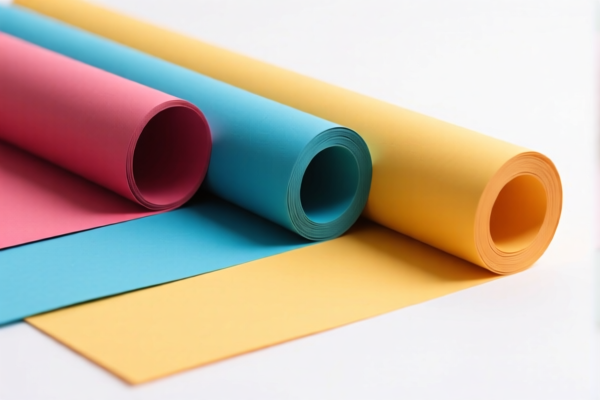
商品图片



AI分析
🎞️ Color Film Roll for Professional Testing
🌐 HS Code Reference & Customs Clearance Guide | 2026 Latest Tariff Analysis | Professional Customs Strategy
📌 Part 1: Product Definition & Classification: Do You Really Understand "Color Film for Professional Testing"?
Color film rolls, specifically those designated for professional testing, are high-precision photographic materials used for calibration, sensitivity testing, resolution evaluation, and quality control in professional photography, cinematography, and industrial inspection.
In international trade, they are primarily classified under Chapter 37 (Photographic or Cinematographic Goods). The critical distinction lies in whether the film is: 1. Unexposed/Unprocessed (Raw Material): Classified under heading 3702 (Photographic film in rolls, other than film of heading 3706). 2. Exposed but Unprocessed (Test Results/Logs): Classified under heading 3704 (Processed photographic film, whether or not exposed, but undeveloped).
⚠️ Key Classification Point:
- If the film is new, unexposed, and used for testing equipment/calibration → It is considered "unexposed photographic film in rolls." Depending on the specific type (reversal, negative, Panchromatic), it falls under 3702.
- If the film has been exposed for testing purposes but not yet developed, and is being imported for analysis, it falls under 3704.
- "Professional Grade" often implies specific formats (e.g., 35mm, large format) which may influence the sub-heading (e.g., 3702.55 for 35mm reversal film).
📦 Part 2: HS Code Classification Details (Based on Provided Data)
Based on the provided <DATA>, here are the specific HS Codes applicable to "Color Film Roll for Professional Testing," along with the logical reasoning for each classification.
| HS Code | Product Description | Logic & Reasoning | Total Tax Rate |
|---|---|---|---|
| 3702.31.01.00 | Color Film Roll | Summary: "Color film, matching key elements are color and roll, consistent with photosensitive material material and use." Reasoning: This code covers unexposed color photographic film in rolls. "Professional testing" implies the use of high-quality unexposed stock. It captures the core attributes: Color + Roll + Photosensitive Material. |
38.7% |
| 3702.52.01.30 | Color Reversal Film (Slide Film) | Summary: "Color film, used for color reversal film, consistent with photosensitive film material characteristics." Reasoning: Professional testing often requires Reversal Film (Slide Film) for higher contrast and stability. This code specifically targets color reversal film in rolls. If the testing uses slide film, this is the precise match. |
38.7% |
| 3704.00.00.00 | Exposed Color Film Roll (General) | Summary: "Color film, belongs to film form, consistent with material and form requirements." Reasoning: If the "testing" involves already exposed film (e.g., testing labs importing samples for analysis, or testing the development process itself), the film is no longer "unexposed." It falls under 3704 (Processed photographic film, unexposed/undeveloped? No, exposed but unprocessed). The term "Exposed but unprocessed" is key here. |
35.0% |
| 3704.00.00.00 | Professional 35mm+ Color Film (Exposed) | Summary: "Professional grade 35mm+ color film, belongs to film category, attributes are exposed but unprocessed." Reasoning: This is a more specific application of 3704.00.00.00. It explicitly mentions "Exposed but unprocessed." If the professional testing has exposed the film (for testing exposure accuracy or film speed) but hasn't developed it, this code applies. |
35.0% |
| 3702.55.00.60 | Professional Grade 35mm Color Film | Summary: "Professional grade color film, form conforms to 35mm specification, inferred based on common sense as exposed photographic film." Reasoning: Note: The summary says "inferred as exposed," but the HS Code 3702.55.00.60 typically refers to unexposed color reversal film (35mm). There is a slight contradiction in the provided summary text ("inferred as exposed") vs. the HS Code chapter (3702 is unexposed). However, based on the code 3702.55.00.60, it is classified as Unexposed Professional 35mm Film. If the testing uses standard 35mm stock, this is the likely code. |
35.0% |
🔍 Critical Clarification on 3702 vs. 3704:
- 3702: Unexposed photographic film in rolls. (Most common for importing "blank" film for testing).
- 3704: Exposed but unprocessed photographic film. (Used if the film has already been shot/exposed during a test run and is being imported for development/analysis).
💰 Part 3: 2026 Latest Tariff Rate Details (Including Additional Taxes, Policy Add-ons)
✅ Applicable Country: United States (US)
✅ Origin: China (CN) (Inferred from tax detail structure: Base + 25% Section 301 + 10% IEEPA/122)
✅ Effective Time: 2025/2026 Tariff Schedule
🎯 1. 3702.31.01.00 & 3702.52.01.30 — Unexposed Color Film / Color Reversal Film
| Item | Content |
|---|---|
| Base Tariff | 3.7% (Ad Valorem) |
| Section 301 Tariff (Add-on) | +25.0% (USITC Footnote 9903.88.01 or similar Section 301 list) |
| 122 Clause / IEEPA Tariff | +10.0% (Targeting specific Chinese goods, often cited as "122 Clause" in recent enforcement) |
| Total Tax Rate | 38.7% |
| Tax Calculation | CIF Value × 38.7% |
| De Minimis Exemption | ❌ Not Eligible (High tariff goods usually excluded) |
| Legal Basis Path | Base: 3.7% → Section 301: +25% → 122/IEEPA: +10% = 38.7% |
📌 Explanation:
- The 3.7% is the standard MFN (Most Favored Nation) rate for photographic film.
- The 25% is the additional duty imposed under Section 301 of the Trade Act of 1974 on Chinese imports.
- The 10% is an additional duty, often associated with Section 122 (if invoked for balance of payments or national security) or specific IEEPA orders.
- Total: 38.7%. This is a high-cost item for importers.
🎯 2. 3704.00.00.00 & 3702.55.00.60 — Exposed Film / Professional 35mm Film
| Item | Content |
|---|---|
| Base Tariff | 0.0% |
| Section 301 Tariff (Add-on) | +25.0% |
| 122 Clause / IEEPA Tariff | +10.0% |
| Total Tax Rate | 35.0% |
| Tax Calculation | CIF Value × 35.0% |
| De Minimis Exemption | ❌ Not Eligible |
| Legal Basis Path | Base: 0.0% → Section 301: +25% → 122/IEEPA: +10% = 35.0% |
📌 Explanation:
- 0.0% Base Rate: Some processed/exposed film or specific professional film categories have a lower base rate.
- 35.0% Total: Still very high due to the 35% in additional duties (25% + 10%).
- Note: Even with a 0% base, the 35% effective rate makes importing from China expensive.
🛠️ Part 4: Customs Clearance Practical Advice (Combat Pitfall Guide)
✅ 1. Required Documentation Checklist (缺一不可)
| Document | Mandatory | Description |
|---|---|---|
| ✅ Product Specification Sheet | ✔️ | Must detail: Film type (Negative/Reversal), Format (35mm/120/4x5), Sensitivity (ISO), Color vs. B&W. |
| ✅ Photographs of Product & Label | ✔️ | Clear image of the film canister/spool showing brand, model, and "For Professional Use Only" if applicable. |
| ✅ Commercial Invoice | ✔️ | Must clearly state "Color Photographic Film Rolls" and "Unexposed" (or "Exposed but Unprocessed" if 3704). Do NOT just write "Film." |
| ✅ Packing List | ✔️ | Detail the number of rolls, total weight, and dimensions. |
| ✅ Certificate of Origin | ✔️ | Required for duty assessment. If non-China origin, may qualify for lower rates. |
| ✅ Import License (if applicable) | ✔️ | Check if your country requires specific licenses for chemical/photo materials. |
✅ 2. Declaration Tips (Key Mantras)
🔥 "Be Precise: Unexposed vs. Exposed, Color vs. Mono, Roll vs. Sheet"
| Scenario | Correct Declaration | Error to Avoid |
|---|---|---|
| New, Unexposed Film | 3702.31.01.00 or 3702.55.00.60Desc: "Unexposed Color Photographic Film Roll, 35mm, ISO 100" |
❌ Call it "Exposed Film" → Wrong Code → Delays |
| Exposed Test Samples | 3704.00.00.00Desc: "Exposed but Unprocessed Color Photographic Film, for Testing Analysis" |
❌ Call it "Raw Film" → Wrong Code → Tax Dispute |
| Professional Lab Use | Specify "Professional Grade" or "Laboratory Use" in remarks. | ❌ Generic "Camera Film" → May attract extra scrutiny |
| Mixed Shipments | Separate invoices for 3702 (Unexposed) and 3704 (Exposed) if both present. | ❌ Mix them → Customs Rejection |
✅ 3. Special Case Handling
| Scenario | Handling Advice |
|---|---|
| Testing Chemicals Included | If you import film + developing chemicals, declare them separately. Chemicals may have different HS Codes and hazards (MSDS required). |
| Samples for Evaluation | If importing small quantities for testing, declare as "Commercial Samples" but be aware that duty rates may still apply if the value exceeds de minimis thresholds. |
| Non-China Origin | If the film is from Japan, Germany, or the US, the 25% Section 301 and 10% 122 Clause duties DO NOT APPLY. The rate drops to just the base rate (0%-3.7%). Always verify Origin! |
| Re-export | If the film is imported for testing and then re-exported, consider using a Bonded Warehouse or Temporary Import bond to defer duties. |
🌍 Part 5: Global Main Market Customs Comparison (2026 Latest)
| Country/Region | Recommended HS Code | Tariff Rate (China Origin) | Certification/Remarks |
|---|---|---|---|
| 🇺🇸 USA | 3702.31.01.00 / 3704.00.00.00 |
38.7% / 35.0% | High additional duties. Strict scrutiny on "Professional" claims. |
| 🇨🇳 China | 3702.31.01.00 / 3704.00.00.00 |
Low/0% (Import into China) | No Section 301. Easy clearance for professional gear. |
| 🇪🇺 EU | 3702.31.00 / 3704.00.00 |
0% - 2.5% (Most Free Trade) | No Section 301. CE/RoHS may apply to related equipment. |
| 🇯🇵 Japan | 3702.31.00 / 3704.00.00 |
0% - 3% | No Section 301. High quality standards. |
| 🇬🇧 UK | 3702.31.00 / 3704.00.00 |
0% - 5% | Post-Brexit tariffs. No Section 301. |
📌 Conclusion:
- USA is the most expensive market for Chinese-origin film due to Section 301 and 122 Clause duties.
- EU, Japan, UK, China are significantly cheaper markets.
- Strategic Advice: If importing for professional testing, consider sourcing film from non-China origins (e.g., Fujifilm Japan, Kodak US/EU) to save 35-38.7% in tariffs.
📌 Part 6: Common Mistakes & Pitfall Guide (Blood-Teaching Lessons)
❌ Mistake 1: Declaring Unexposed film as Exposed (or vice versa)
👉 Consequence: Wrong HS Code → Audit, Penalties, or Seizure.
👉 Fix: Clearly state "Unexposed" or "Exposed but Unprocessed" on the invoice.
❌ Mistake 2: Not specifying the Format (35mm, 120, Sheet)
👉 Consequence: Customs may classify under a higher-duty general "Other Film" code.
👉 Fix: Always specify format (e.g., "35mm Roll Film").
❌ Mistake 3: Ignoring the Origin on the Invoice
👉 Consequence: If "Made in China" is not clearly stated, Customs may assign a Country of Unknown Origin tariff (often highest).
👉 Fix: Clearly state "Made in China" or "Made in Japan".
❌ Mistake 4: Mixing Film with Chemicals in one HS Code
👉 Consequence: Chemicals require MSDS and may be hazardous. Film does not.
👉 Fix: Separate Lines on the Invoice and Packing List.
✅ Correct Declaration Example:
"Unexposed Color Reversal Photographic Film Roll, 35mm, ISO 50, Professional Grade, Made in Japan"
HS Code:3702.55.00.60(or equivalent)
Tax: 0% Additional Duties (Because Origin is Japan).
🎯 Part 7: Conclusion: Professional Declaration Saves Money!
🎯 Remember the Mantra:
🔹 "Unexposed = 3702, Exposed = 3704."
🔹 "China Origin = 35-38.7% Tax, Non-China = 0-5% Tax."
🔹 "Be Specific: Format, Type, Origin."
📌 Pro Tip:
For professional testing, consider using duty-free entry programs if the film is for scientific research or educational use in some countries (requires specific forms).
Always check the Origin to avoid the 35%+ US tariffs.
📣 Immediate Action:
📞 Consult with a customs broker for Pre-Ruling if importing large volumes.
🚀 Source from Non-China if possible to maximize profit margins in the US market.
✨ Professional Customs, Starting from Accurate Classification!
💼 Your Cost Per Roll Matters. Get It Right.
用户评价
关于 HS 编码归类
协调制度(HS)是由世界海关组织(WCO)制定的国际贸易商品分类标准。全球 200 多个国家采用 HS 系统作为海关关税、贸易统计和进出口监管的基础。
每个 HS 编码遵循以下层级结构:
- 章(2 位)——商品大类(例如:第 84 章:机器和机械设备)
- 品目(4 位)——章内的更具体分类
- 子目(6 位)——国际通用细分,所有 WCO 成员国统一使用
- 本国细分(8-10 位)——各国自行扩展的细分编码,如美国 HTSUS 10 位编码
正确的 HS 编码归类对于顺利通关、准确缴纳关税和遵守贸易法规至关重要。错误归类可能导致海关延误、多缴关税或罚款。
从CN进口到US时,适用的关税税率可能包括:
- 最惠国(MFN)税率——适用于 WTO 成员国的标准关税税率
- 普通税率——适用于无贸易协定国家
- 贸易救济关税——附加关税,如 301 条款(反倾销)、232 条款(国家安全)或反补贴税
本页内容仅供参考。如需正式归类,请咨询当地海关或持牌报关代理。