Color Film for Portrait Photography
CN → US| HS编码 | 关税税率 | 原产国 | 目的国 | 文档 |
|---|---|---|---|---|
| 3702310100 | 38.7% | CN | US | 官方文档 |
| 3702520130 | 38.7% | CN | US | 官方文档 |
| 3704000000 | 35.0% | CN | US | 官方文档 |
| 3701910030 | 38.7% | CN | US | 官方文档 |
| 3701910060 | 38.7% | CN | US | 官方文档 |
商品图片


AI分析
🎞️ Color Film for Portrait Photography: The Ultimate HS Code Guide & Customs Clearance Strategy
🌐 HS Code Reference & Customs Clearance Guide | 2026 Latest Tariff Analysis | Professional-Level Passing Strategy
📌 I. Product Definition & Classification: Do You Really Understand "Color Film"?
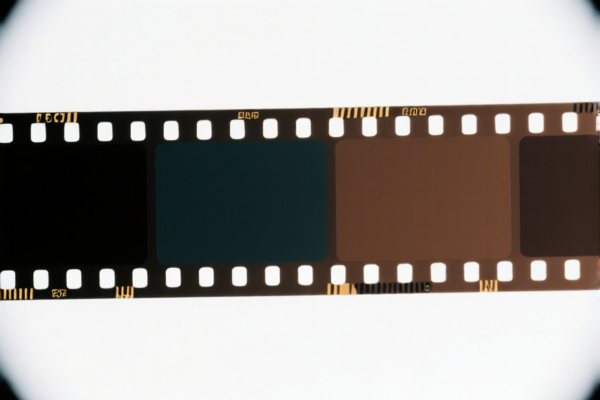
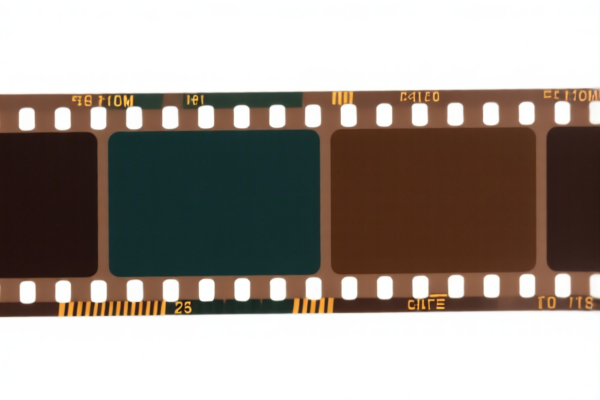
Color Film for Portrait Photography refers to light-sensitive photographic materials specifically designed to capture color images of human subjects. In international trade, this product falls under the broad category of "Light-Activated Plates and Films" (Chapter 37). However, precise classification depends heavily on the film's format (sheet vs. roll), chemical process (negative vs. reversal), and status (exposed vs. unexposed).
⚠️ Key Distinction Points:
- Unexposed Film: Must be classified by its specific format (roll, sheet) and type (color negative, color positive/reversal).
- Exposed Film: Classified differently based on whether it has been developed or not.
- Purpose: "Portrait photography" is a use case, not a technical specification. Customs classify based on physical form and chemical properties, not the subject matter.
📦 II. HS Code Classification Details (Based on Provided Data)
Below is the detailed breakdown of the potential HS Codes for "Color Film for Portrait Photography," derived from the provided dataset. Each code corresponds to a specific technical characteristic of the film.
1. 🎞️ 3702.31.01.00 – Color Roll Film (General Use)
- Summary: Matches color film usage characteristics; falls under the category of light-sensitive roll film.
- Applicability: Most common consumer color film (e.g., Kodak Portra 400, Fujifilm Superia) used in standard 35mm or medium format roll cameras.
- Tax Rate: 38.7%
- Base Tariff: 3.7%
- Section 301 Tariff: 25.0%
- Section 122 Tariff: 10%
2. 🔄 3702.52.01.30 – Color Reversal Film (Slide Film)
- Summary: Matches color and film morphology; inferred as Color Reversal Film (Positive/Slide).
- Applicability: Professional portrait photographers often use slide film (e.g., Ektachrome) for high-contrast, saturated results. This code specifically targets the "reversal" (positive) process.
- Tax Rate: 38.7%
- Base Tariff: 3.7%
- Section 301 Tariff: 25.0%
- Section 122 Tariff: 10%
3. 📸 3704.00.00.00 – Exposed Undeveloped Film
- Summary: Matches film material and morphology; fits the classification of exposed but undeveloped film.
- Applicability: If the portrait shoot is complete but the film has not yet been developed (processed), it falls under Chapter 3704. This is a critical distinction! Once developed, it may be classified differently (often as a photograph).
- Tax Rate: 35.0%
- Base Tariff: 0.0%
- Section 301 Tariff: 25.0%
- Section 122 Tariff: 10%
- Note: This is the only code in the dataset with a 0% base tariff.
4. 🖼️ 3701.91.00.30 – Color Photographic Plates/Film (Unexposed)
- Summary: Matches color photography attributes; classified as light-sensitive unexposed photographic film.
- Applicability: Often refers to sheet film (large format) or specific plate-like structures used in high-end portrait studios (e.g., 4x5 or 8x10 sheet film). Code
.30often implies a specific sub-category within "Other" color plates/films. - Tax Rate: 38.7%
- Base Tariff: 3.7%
- Section 301 Tariff: 25.0%
- Section 122 Tariff: 10%
5. 🎨 3701.91.00.60 – Color Photographic Plates/Film (General)
- Summary: Matches color photography purpose and film morphology; classified as light-sensitive material.
- Applicability: A broader category for color photographic plates/films not specified in other sub-headings. Could include various large-format or specialized portrait films.
- Tax Rate: 38.7%
- Base Tariff: 3.7%
- Section 301 Tariff: 25.0%
- Section 122 Tariff: 10%
💰 III. 2026 Latest Tariff Rate Breakdown (Including Surcharges)
✅ Applicable Country: United States (US)
✅ Origin: China (CN)
✅ Effective Date: From November 10, 2025 (including subsequent imports)
🎯 1. The "38.7% Club": 3702.31.01.00, 3702.52.01.30, 3701.91.00.30, 3701.91.00.60
| Item | Content |
|---|---|
| Base Tariff | 3.7% |
| USITC Surcharge (Section 301) | +25.0% |
| IEEPA Surcharge (Section 122) | +10.0% |
| Total Tax Rate | 38.7% |
| Tax Calculation | CIF Value × 38.7% |
| De Minimis Exemption | ❌ NOT Eligible |
| Legal Basis Path | IEEPA:9903.01.24 → USITC:3702.31.01.00 → FOOTNOTE:9903.88.01 |
📌 Explanation:
- These codes represent the majority of unexposed color films (rolls, sheets, slides).
- The 3.7% base is standard for Chapter 37 goods.
- The 25% + 10% surcharges significantly increase the landed cost.
- Critical: Do not confuse "Roll Film" (3702) with "Sheet Film/Plates" (3701). Both incur the same 38.7% rate in this dataset.
🎯 2. The "35.0% Case": 3704.00.00.00 – Exposed Undeveloped Film
| Item | Content |
|---|---|
| Base Tariff | 0.0% |
| USITC Surcharge (Section 301) | +25.0% |
| IEEPA Surcharge (Section 122) | +10.0% |
| Total Tax Rate | 35.0% |
| Tax Calculation | CIF Value × 35.0% |
| De Minimis Exemption | ❌ NOT Eligible |
| Legal Basis Path | IEEPA:9903.01.24 → USITC:3704.00.00.00 → FOOTNOTE:9903.88.01 |
📌 Key Difference:
- The base tariff drops to 0% for exposed but unprocessed film.
- However, it still incurs the 25% + 10% surcharges.
- Why it matters: If you are importing a batch of film that has already been shot but not developed (e.g., returning from a photoshoot), this code offers a 3.7% savings compared to unexposed film.
🛠️ IV. Customs Clearance Practical Advice (Battle-Tested Pitfall Avoidance)
✅ 1. Documentation Checklist (No Compromises)
| Document | Required | Explanation |
|---|---|---|
| ✅ Product Specification Sheet | ✔️ | Must detail: Type (Color Negative/Positive), Format (35mm/120/4x5), Speed (ISO), and Manufacturer. |
| ✅ Commercial Invoice | ✔️ | Clearly state: "Unexposed Color Photographic Film" or "Exposed Undeveloped Color Film". Avoid vague terms like "Art Supplies". |
| ✅ Packing List | ✔️ | Specify unit count (rolls/sheets) and gross weight. |
| ✅ Certificate of Origin | ✔️ | If not from China, may qualify for lower tariffs. For China-origin, confirms surcharge applicability. |
| ✅ Photo/Video Sample | ✔️ | Proof of product identity to prevent misclassification. |
✅ 2. Declaration Tips (Critical Keywords)
🔥 "Declare Precisely, Tax Saves Big!"
| Scenario | Correct Declaration | Incorrect Declaration | Risk |
|---|---|---|---|
| 35mm Color Roll | "Unexposed Color Negative Film, 35mm Format" | "Camera Film" | Misclassification → Penalty |
| Professional Slide Film | "Unexposed Color Reversal Film, 35mm" | "Photography Material" | Delayed Release |
| Used but Undeveloped Film | "Exposed Undeveloped Color Film" | "Photographic Print" | Wrong HS Code (Ch 49 vs Ch 37) |
| Large Format Sheet Film | "Unexposed Color Photographic Plate, 4x5" | "Film Roll" | Classification Error |
✅ 3. Special Cases & Handling
| Situation | Handling Advice |
|---|---|
| Mixed Shipments | If a shipment contains both unexposed and exposed film, declare separately. Do not mix 3702 and 3704 codes in one line item. |
| Film + Camera Kit | If film is shipped with a camera, declare them separately. The camera (e.g., 8525.80) has different tariffs. Mixing them may void exemptions for either. |
| Developed vs. Undeveloped | CRITICAL: Once film is developed, it becomes a photograph (often Chapter 49). Do not declare developed film as "unexposed film." |
| Digital Backups | If digital files are included on a USB drive, declare the film and the USB drive separately. |
🌍 V. Global Market Customs Comparison (2026 Latest)
| Country/Region | Recommended HS Code | Tariff (China Origin) | Certification Req. | Notes |
|---|---|---|---|---|
| 🇺🇸 USA | 3702.31.01.00 / 3704.00.00.00 |
35.0% – 38.7% | FDA (if applicable), No special pharma req. | High surcharges due to trade policies. |
| 🇨🇳 China | 3702.31 / 3704.00 |
Low (5-10%) | None | No additional surcharges. |
| 🇪🇺 EU | 3702.31 |
0% – 6% | CE (for camera gear, not film) | Film is generally duty-free or low duty. |
| 🇬🇧 UK | 3702.31 |
0% | None | Post-Brexit, many goods are 0%. |
| 🇯🇵 Japan | 3702.31 |
0% | None | Free Trade Agreement benefits may apply. |
📌 Conclusion:
- USA is the most expensive market due to the 25% + 10% surcharges.
- EU/UK/Japan are far more favorable for importing Chinese color film.
- Strategy: If targeting the US, ensure accurate classification to avoid additional penalties, but budget for the high tax burden. Consider third-country sourcing if margins are tight.
📌 VI. Common Mistakes & Pitfall Guide (Blood-Teaching Lessons)
❌ Mistake 1: Declaring "Exposed Undeveloped Film" as "Unexposed Film"
👉 Consequence: Wrong HS Code (3702 vs 3704). Risk of audit, back-tariffs, and fines.
👉 Fix: Clearly state "EXPOSED UNDEVELOPED" on the invoice.
❌ Mistake 2: Vague Description "Camera Accessories"
👉 Consequence: Customs may classify under a generic, higher-tariff category or detain for inspection.
👉 Fix: Use precise terms: "35mm Color Negative Film, Kodak Portra 400".
❌ Mistake 3: Ignoring the "Base Tariff" Difference
👉 Consequence: Missing the 0% base rate for 3704.00.00.00 (Exposed).
👉 Fix: If the film is already shot, use 3704 to save 3.7% on the CIF value.
❌ Mistake 4: Mixing Roll and Sheet Film in One Line
👉 Consequence: Customs may reject the declaration or apply the highest tariff to the whole batch.
👉 Fix: Create separate line items for 3702 (Rolls) and 3701 (Sheets).
✅ Correct Practice:
"Unexposed Color Photographic Film, 35mm, Negative Process, ISO 400, 36 Exposures, Made in Japan"
(Note: If from China, add "Country of Origin: China" to confirm surcharge applicability.)
🎯 VII. Conclusion: Precision Classification Saves Money!
🎯 Remember the Mantra:
🔹 "Unexposed = 38.7%, Exposed = 35.0%."
🔹 "Format Matters: Roll (3702) vs. Sheet (3701).
🔹 "Be Specific: 'Color Film' is not enough. Add 'Unexposed/Exposed' and 'Format'."
📌 Pro Tip:
If you are importing large volumes of film for a commercial photography studio, consider applying for an Advance Ruling (Pre-classification) from US Customs. This locks in the HS Code and prevents unexpected audits.
📣 Immediate Action:
📞 Contact your freight forwarder with the exact product specs (Format, Process, Exposure Status).
📝 Draft your invoice using the precise terminology provided above.
🚀 Ensure smooth customs clearance and protect your profit margins!
✨ Professional Customs Clearance Starts with Accurate Classification!
💼 Every percentage point saved is pure profit!
用户评价
关于 HS 编码归类
协调制度(HS)是由世界海关组织(WCO)制定的国际贸易商品分类标准。全球 200 多个国家采用 HS 系统作为海关关税、贸易统计和进出口监管的基础。
每个 HS 编码遵循以下层级结构:
- 章(2 位)——商品大类(例如:第 84 章:机器和机械设备)
- 品目(4 位)——章内的更具体分类
- 子目(6 位)——国际通用细分,所有 WCO 成员国统一使用
- 本国细分(8-10 位)——各国自行扩展的细分编码,如美国 HTSUS 10 位编码
正确的 HS 编码归类对于顺利通关、准确缴纳关税和遵守贸易法规至关重要。错误归类可能导致海关延误、多缴关税或罚款。
从CN进口到US时,适用的关税税率可能包括:
- 最惠国(MFN)税率——适用于 WTO 成员国的标准关税税率
- 普通税率——适用于无贸易协定国家
- 贸易救济关税——附加关税,如 301 条款(反倾销)、232 条款(国家安全)或反补贴税
本页内容仅供参考。如需正式归类,请咨询当地海关或持牌报关代理。