Color Instant Imaging Film
CN → US| HS编码 | 关税税率 | 原产国 | 目的国 | 文档 |
|---|---|---|---|---|
| 3701910030 | 38.7% | CN | US | 官方文档 |
| 3701910060 | 38.7% | CN | US | 官方文档 |
| 3705000000 | 35.0% | CN | US | 官方文档 |
| 3702530030 | 38.7% | CN | US | 官方文档 |
| 3702530060 | 38.7% | CN | US | 官方文档 |
商品图片


AI分析
🎞️ Color Instant Imaging Film (Photography)
🌐 HS Code Reference & Customs Clearance Guide | 2026 Latest Tariff Analysis | Professional Clearance Strategy
📌 1. Product Definition & Classification: Do You Really Understand "Instant Film"?
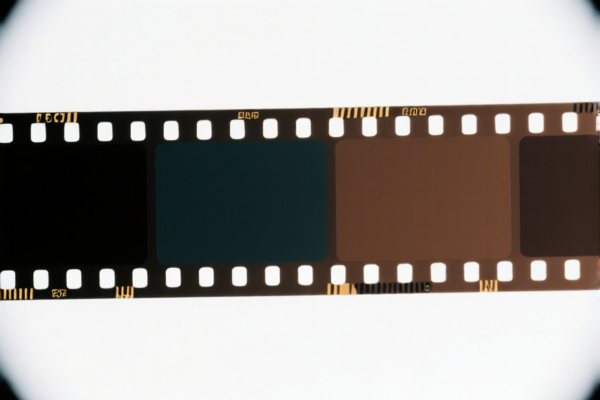
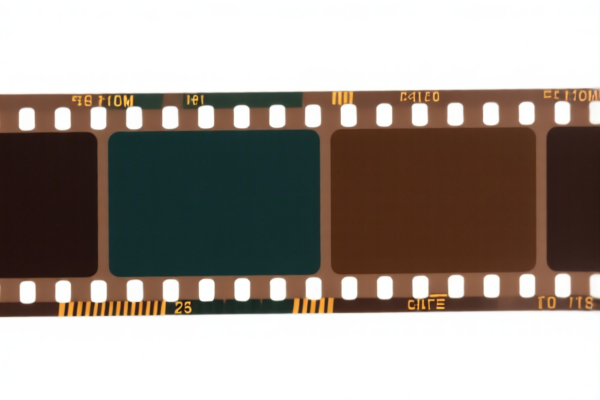
Color Instant Imaging Film is a unique self-developing photographic material. Unlike traditional roll film that requires separate chemical development, instant film contains reagent packets between the image-receiving layer and the image-forming layer. After exposure, the camera squeezes these reagents to spread them evenly, initiating the chemical reaction that produces the image.
In international trade, this product is strictly categorized based on its state (exposed/unexposed) and physical form (sheets vs. rolls).
⚠️ Key Distinction Points: - Unexposed vs. Exposed: Unexposed film falls under Chapter 37.01/37.02. Once developed (exposed and processed), it may shift classification or attract different duties. - Sheet vs. Roll: Instant film is typically sold in sheets. However, if it comes in a continuous roll format (rare for standard instant cameras but possible for specific uses), it might be classified under 3702. - Material Substrate: It is neither paper nor textile-based sensing material; it uses a plastic/polyester base.
📦 2. HS Code Classification Details (2026 Latest Tariff Authority对照)
| HS Code | Product Description | Application Scenario | Physical State |
|---|---|---|---|
3701.91.00.30 |
Color photographic film, sensitive, other than cinematographic film, in plates or in sheets | Standard instant film packs (Polaroid, Fujifilm Instax sheets), unexposed | ✅ Unexposed Sheets |
3701.91.00.60 |
Color photographic film, sensitive, other than cinematographic film, other than in plates or sheets | Non-standard formats, large format sheets not fitting "plate" definition | ✅ Unexposed Non-Roll |
3705.00.00.00 |
Exposed color photographic film, sensitized but not yet developed, other than cinematographic film | Rare for instant film: Usually instant film is developed in-camera. This code applies if film is exposed but sent to a lab unprocessed (uncommon for instant). | ⚠️ Exposed/Developed? |
3702.53.00.30 |
Color photographic film, sensitive, other than cinematographic film, in rolls | If instant film is manufactured in continuous roll form for specialized industrial or scanning purposes | ✅ Unexposed Rolls |
3702.53.00.60 |
Color photographic film, sensitive, other than cinematographic film, in rolls, other than paper or textile base | Industrial roll instant media, plastic-based | ✅ Unexposed Rolls |
🔍 Critical Reminder: - Most consumer Instant Film is supplied in sheet format and is unexposed until used in the camera. Therefore,
3701.91.00.30is the most common and accurate classification for standard packs. -3705.00.00.00is risky for instant film because instant images develop within the pack. If you declare it as "Exposed," customs may question why you are importing already-developed images, which is often treated as a finished good with different regulatory implications. - Ensure the description explicitly states "Unexposed" to avoid misclassification.
💰 3. 2026 Latest Tariff Rate Details (Including Surtaxes & Policy Additions)
✅ Applicable Country: United States (US)
✅ Origin: China (CN)
✅ Effective Date: Ongoing (Section 301 & IEEPA)
🎯 1. 3701.91.00.30 & 3701.91.00.60 — Color Photographic Film (Sheets/Plates, Unexposed)
| Item | Content |
|---|---|
| Base Tariff Rate | 3.7% (Ad Valorem) |
| Section 301 Surtax | +25.0% (From USITC Footnote 9903.88.01) |
| IEEPA Surtax (122 Clause) | +10.0% (Targeting China/HK products, effective from Nov 10, 2025) |
| Total Effective Rate | 38.7% |
| Tax Calculation | CIF Value × 38.7% |
| De Minimis Eligibility | ❌ NO (deny_de_minimis) |
| Legal Basis Path | IEEPA:9903.01.25 → IEEPA:9903.01.24 → USITC:3701.91.00.30 → FOOTNOTE:9903.88.01 |
📌 Explanation: - Base 3.7%: Standard Most Favored Nation (MFN) rate for photographic films. - 25% Section 301: Retaliatory tariff on Chinese goods under Trade Act of 1974 Section 301. - 10% IEEPA: Additional tariff under the International Emergency Economic Powers Act, targeting specific Chinese imports. - Total 38.7%: This is a high-cost import. Immediate duty payment is required upon entry.
🎯 2. 3702.53.00.30 & 3702.53.00.60 — Color Photographic Film (Rolls, Unexposed)
| Item | Content |
|---|---|
| Base Tariff Rate | 3.7% |
| Section 301 Surtax | +25.0% |
| IEEPA Surtax (122 Clause) | +10.0% |
| Total Effective Rate | 38.7% |
| Tax Calculation | CIF Value × 38.7% |
| De Minimis Eligibility | ❌ NO |
| Legal Basis Path | Same as above |
📌 Note: - Even if the film is in roll format, the surtaxes apply identically. - Ensure the description clearly distinguishes between "Sheets" (
3701) and "Rolls" (3702) to prevent customs delays. Misclassification leads to audits.
🎯 3. 3705.00.00.00 — Exposed Color Photographic Film (Non-Cinematographic)
| Item | Content |
|---|---|
| Base Tariff Rate | 0.0% |
| Section 301 Surtax | +25.0% |
| IEEPA Surtax (122 Clause) | +10.0% |
| Total Effective Rate | 35.0% |
| Tax Calculation | CIF Value × 35.0% |
| De Minimis Eligibility | ❌ NO |
| Legal Basis Path | IEEPA:9903.01.25 → IEEPA:9903.01.24 → USITC:3705.00.00.00 → FOOTNOTE:9903.88.01 |
📌 Warning: - While the base rate is 0%, the 35% total is still very high. - Risk: Customs may reject this classification for instant film because instant film is designed to develop in-camera. Importing "exposed" film suggests a different use case (e.g., sending raw exposed negatives to a lab). If the product is clearly instant film packs (unexposed), using this code is misdeclaration and can lead to fines.
🛠️ 4. Customs Clearance Practical Advice (Real-World Pitfall Guide)
✅ 1. Required Documentation Checklist (Non-negotiable)
| Document | Required? | Explanation |
|---|---|---|
| ✅ Product Specification Sheet | ✔️ | Must specify: "Color Instant Imaging Film," "Unexposed," "Sheet/ Roll Format," "Chemical Composition." |
| ✅ Declaration of Non-Textile/Paper Base | ✔️ | Explicitly state the base is Polyester/Plastic, not paper, to justify HS Code 3701 or 3702 over textile codes. |
| ✅ Commercial Invoice | ✔️ | Must clearly describe as "UNEXPOSED COLOR PHOTOGRAPHIC FILM". Do not just write "Film." |
| ✅ Packing List | ✔️ | Detail pack sizes (e.g., "10 sheets per pack, 5 packs per box"). |
| ✅ Certificate of Origin (CO) | ✔️ | Required to confirm Chinese origin for surtax assessment. |
| ✅ FCC/CE Certification | ❌ (Usually) | Not required for film itself, but required if packaging contains batteries/electronics. |
✅ 2. Declaration Tips (Key Mantras)
🔥 "Unexposed is Key, Sheets vs. Rolls Must Be Clear, Name Must Be Precise!"
| Scenario | Correct Declaration | Wrong Practice |
|---|---|---|
| Standard Instant Film Packs | 3701.91.00.30 | "Camera Accessories" → Risky, may be reclassified. |
| Roll-based Instant Media | 3702.53.00.30 | "Photo Paper" → Wrong category. |
| Already Developed Images | 3705.00.00.00 | Only if explicitly for lab processing; risky for instant film. |
| Instant Film with Batteries | 3701.91.00.30 + 8506.50 | Must declare separately if batteries are distinct. |
✅ 3. Special Case Handling
| Situation | Handling Advice |
|---|---|
| OEM Custom Instant Film | Provide design proofs and material specs. Ensure "Unexposed" status is certified. |
| Sample Imports | Still subject to 38.7% duty. No de minimis exemption. |
| Mixed Shipments (Film + Camera) | Declare separately. Film is 3701, Camera is 8525 or 8528. Do not bundle into one HS Code. |
| Chemical Hazard? | Instant film contains chemicals. Ensure SDS (Safety Data Sheet) is available if requested by customs or carrier for shipping safety. |
🌍 5. Global Market Clearance Comparison (2026 Latest)
| Country/Region | Recommended HS Code | Duty Rate | Certification Requirements | Remarks |
|---|---|---|---|---|
| 🇺🇸 USA | 3701.91.00.30 |
38.7% | None specific for film | High duty; strict origin verification. |
| 🇨🇳 China | 3701.91.00.30 |
~5-10% | None | No Section 301/IEEPA surtaxes. |
| 🇪🇺 EU | 3701.91.00 |
0-6% | REACH Compliance | Low duty, but strict chemical regulations. |
| 🇬🇧 UK | 3701.91.00 |
0-6% | UKCA (if applicable) | Post-Brexit rules vary. |
| 🇯🇵 Japan | 3701.91.00 |
0-8% | None | Generally low barriers. |
📌 Conclusion: - USA is the most expensive market due to 38.7% effective duty. - Europe and Asia offer significantly lower duty burdens. - If sourcing from China for the US market, consider cost-benefit analysis or explore FTZ (Foreign Trade Zone) storage to defer duties.
📌 6. Common Errors & Pitfall Guide (Lessons Learned)
❌ Error 1: Declaring as "Photo Paper" (4809 or 4816)
👉 Consequence: Customs reclassifies to 3701, assesses 38.7% duty + penalties.
Reason: Instant film is a sensitive photographic medium, not paper.
❌ Error 2: Failing to specify "Unexposed"
👉 Consequence: Customs may assume it's exposed film (3705) or reject the entry due to ambiguity.
Reason: HS codes for exposed vs. unexposed film differ.
❌ Error 3: Ignoring IEEPA 10% Surtax
👉 Consequence: Underpayment of duties, leading to audit and back-taxes.
Reason: 10% is additive to the 25% Section 301. Total is 38.7%, not 25%.
❌ Error 4: Bundling Film with Cameras in One Line Item
👉 Consequence: Customs may reject the entry or assess higher duties on the entire shipment if not properly split.
Reason: Different HS Codes require separate line items.
✅ Correct Practice:
"COLOR INSTANT IMAGING FILM, UNEXPOSED, SENSITIVE, IN SHEETS, POLYESTER BASE, MODEL XYZ, FOR PHOTOGRAPHIC USE ONLY"
🎯 7. Conclusion: Precise Classification Saves Money!
🎯 Remember the Mantra:
🔹 "Unexposed is Critical, Sheets vs. Rolls Define Code."
🔹 "USA Duty 38.7%, No De Minimis, Plan Ahead!"
🔹 "Chemicals Need SDS, Documentation Saves Days."
📌 Pro Tip:
If your instant film is manufactured in Vietnam, Malaysia, or Thailand, you may be eligible for 0% Section 301 and IEEPA surtaxes (subject to current trade agreements).
Action: Verify Country of Origin carefully. A small change in manufacturing location can save 35%+ in duties.
📣 Immediate Action:
📞 Consult with a licensed customs broker.
📄 Provide full product specs and material composition.
🚀 Get an Advance Ruling to lock in the HS Code and duty rate before shipping.
✨ Professional Clearance Starts with Accurate Classification!
💼 Every Percent of Duty Counts! Optimize Your Supply Chain!
用户评价
关于 HS 编码归类
协调制度(HS)是由世界海关组织(WCO)制定的国际贸易商品分类标准。全球 200 多个国家采用 HS 系统作为海关关税、贸易统计和进出口监管的基础。
每个 HS 编码遵循以下层级结构:
- 章(2 位)——商品大类(例如:第 84 章:机器和机械设备)
- 品目(4 位)——章内的更具体分类
- 子目(6 位)——国际通用细分,所有 WCO 成员国统一使用
- 本国细分(8-10 位)——各国自行扩展的细分编码,如美国 HTSUS 10 位编码
正确的 HS 编码归类对于顺利通关、准确缴纳关税和遵守贸易法规至关重要。错误归类可能导致海关延误、多缴关税或罚款。
从CN进口到US时,适用的关税税率可能包括:
- 最惠国(MFN)税率——适用于 WTO 成员国的标准关税税率
- 普通税率——适用于无贸易协定国家
- 贸易救济关税——附加关税,如 301 条款(反倾销)、232 条款(国家安全)或反补贴税
本页内容仅供参考。如需正式归类,请咨询当地海关或持牌报关代理。