Color Photo Paper (Professional Grade)
CN → US| HS编码 | 关税税率 | 原产国 | 目的国 | 文档 |
|---|---|---|---|---|
| 3707100005 | 38.0% | CN | US | 官方文档 |
| 3707100090 | 38.0% | CN | US | 官方文档 |
| 3701200030 | 38.7% | CN | US | 官方文档 |
| 3702310100 | 38.7% | CN | US | 官方文档 |
| 3702440160 | 38.7% | CN | US | 官方文档 |
商品图片
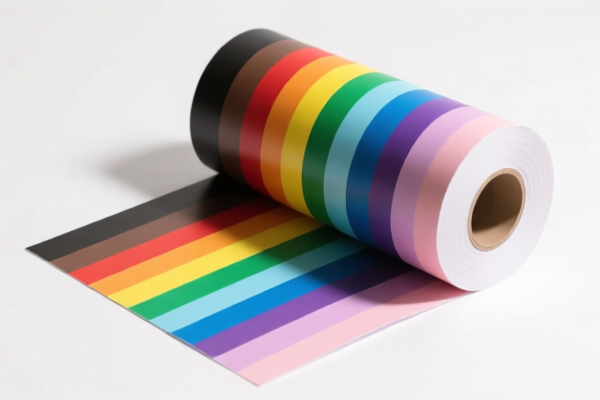
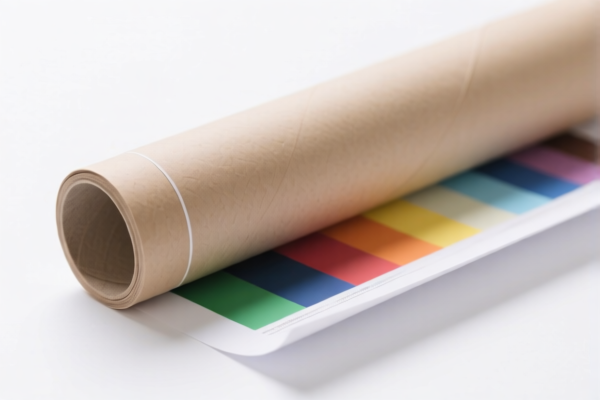


AI分析
📸 Color Photo Paper (Professional Grade)
🌐 HS Code Reference & Customs Clearance Guide | 2026 Latest Tariff Analysis | Professional-Level Strategy 📌 I. Product Definition & Classification: Do You Really Understand "Color Photo Paper"?
Color Photo Paper, especially in "Professional Grade," refers to high-sensitivity light-sensitive material coated on a paper base, primarily used for photographic printing. In international trade, it is strictly categorized under Chapter 37 (Photographic or Cinematographic Goods).
Key Distinction: * Photographic Paper (Based on Paper): Must be classified under heading 3701 or 3702 depending on whether it is "printed" or "unprocessed." * Photographic Film (Based on Plastic/Cellulose): If the base is not paper but film, it falls under different subheadings. * Emulsion Type: "Color Photo" implies color-sensitive emulsion, distinguishing it from black-and-white materials.
⚠️ Critical Classification Point:
- If the product is unprocessed (blank rolls/sheets) →归入 3707.10 (Emulsions on Supports) or 3701.20 (Instant Printing Film/Paper).
- If the product is processed (already exposed/imaged) →归入 3702 categories.
- Note: The provided data suggests ambiguity between "Paper" and "Film" due to the term "Photo" and "Rapid Printing," leading to multiple potential codes.
📦 II. HS Code Classification Details (Based on Provided Data)
Based on the input data, there are 5 potential HS Codes with slight variations in tax rates and specific descriptions. This highlights the complexity of classifying "Photo" materials that might be misidentified as either paper or film.
| HS Code | Product Description & Match Logic | Total Tax Rate | Tax Detail Breakdown |
|---|---|---|---|
| 3707.10.00.05 | Light-sensitive Emulsions on Supports. ✅ Match: 'Color Photo' matches color emulsion use; 'Film' mentioned in summary indicates film support. 💡 Logic: Classified as unexposed photographic material. |
38.0% | Base: 3.0% Addl: 25.0% 122-Clause: 10% |
| 3707.10.00.90 | Other Light-sensitive Emulsions. ✅ Match: Unmixed photographic emulsions; inferred film form. 💡 Logic: "Other" category for emulsions not specifically listed elsewhere. |
38.0% | Base: 3.0% Addl: 25.0% 122-Clause: 10% |
| 3701.20.00.30 | Instant Printing Film/Paper. ✅ Match: 'Color Photo' + 'Rapid Printing Film'. 💡 Logic: Matches "Instant Printing" technology (e.g., Polaroid-style or rapid print media). |
38.7% | Base: 3.7% Addl: 25.0% 122-Clause: 10% |
| 3702.31.01.00 | Other Negative Film for Color Photography. ✅ Match: 'Color Photo' + 'Film'. 💡 Logic: Inferred as non-paper/non-textile film, potentially processed or specific film type. |
38.7% | Base: 3.7% Addl: 25.0% 122-Clause: 10% |
| 3702.44.01.60 | Other Color Printing Film. ✅ Match: 'Photo Film' + 'Rapid Printing'. 💡 Logic: "Other" category for film-based rapid printing materials. |
38.7% | Base: 3.7% Addl: 25.0% 122-Clause: 10% |
🔍 Key Insight:
- Two Tax Brackets Exist:
- 38.0% for general emulsions on supports (3707).
- 38.7% for instant printing films/processed films (3701.20 & 3702 series).
- The 0.7% Difference comes from the Base Tariff (3.0% vs 3.7%).
- All are subject to 25% Section 301 Tariff and 10% Section 122 Tariff.
💰 III. 2026 Latest Tariff Rate Breakdown
✅ Applicable Country: United States (US)
✅ Origin: China (CN) (Implied by "122-Clause" and typical US-China trade context)
✅ Effective Date: Post-November 2025 policies apply.
🎯 1. Category A: General Emulsions on Supports (HS 3707.10.00.xx)
| Item | Content |
|---|---|
| Base Tariff | 3.0% (ad valorem) |
| Section 301 Tariff | +25% (USITC Footnote for Chapter 37 items from China) |
| Section 122 Tariff | +10% (Targeted tariffs on specific categories, likely under trade remedy provisions) |
| Total Effective Rate | 38.0% |
| Calculation Basis | CIF Value × 38.0% |
| De Minimis Exemption | ❌ Not Eligible (High-value industrial/consumer good) |
📌 Explanation:
- The 3.0% base is the MFN (Most Favored Nation) rate for photographic emulsions.
- The 25% + 10% = 35% in additional tariffs significantly increases the landed cost.
- Total: 38.0% is a substantial cost burden.
🎯 2. Category B: Instant Printing & Film (HS 3701.20 / 3702.xx)
| Item | Content |
|---|---|
| Base Tariff | 3.7% (ad valorem) |
| Section 301 Tariff | +25% |
| Section 122 Tariff | +10% |
| Total Effective Rate | 38.7% |
| Calculation Basis | CIF Value × 38.7% |
| De Minimis Exemption | ❌ Not Eligible |
📌 Explanation:
- Instant Printing and Processed Film often have slightly higher base rates due to technological specificity.
- Total: 38.7% is the highest risk tier in this dataset.
- Warning: Misclassifying "Paper" as "Film" or vice versa can trigger audits if physical evidence (paper base vs. plastic base) contradicts the HS code.
🛠️ IV. Customs Clearance Practical Advice (Pitfall Avoidance Guide)
✅ 1. Preparation Checklist (Non-Negotiable)
| Document | Required? | Explanation |
|---|---|---|
| ✅ Product Specification Sheet | ✔️ | Must specify: Base Material (Paper vs. Plastic), Sensitivity (Speed/ISO), Format (Roll/Sheet). |
| ✅ Material Composition | ✔️ | Crucial to prove if it's Paper-Based (Heading 3701/3702) or Film-Based (Heading 3707). |
| ✅ Product Photos | ✔️ | Show texture (matte/glossy paper) and cross-section if possible to prove base material. |
| ✅ Commercial Invoice | ✔️ | Clear description: "Color Photo Paper, Professional Grade, Paper-Based, Unexposed." |
| ✅ Bill of Lading | ✔️ | Ensure weight and volume match invoice. |
✅ 2. Classification Strategy (Key Mantra)
🔥 "Know Your Base: Paper vs. Film Determines the Code!"
| Scenario | Correct Classification | Risk if Wrong |
|---|---|---|
| Paper-Based, Unexposed | Likely 3707.10.00.05/90 or 3701.20.00.30 (if instant) | Misclassifying as 3702 (Film) may lead to discrepancy. |
| Plastic/Film-Based, Unexposed | 3707.10.00.05/90 | Must emphasize "Non-Paper Support." |
| Instant Print Media | 3701.20.00.30 | Highest base rate (3.7%), but often accurate for "Rapid" products. |
| Processed/Exposed Paper | 3702 Series (e.g., 3702.31, 3702.44) | Do not classify as unexposed if already printed. |
📌 Critical Warning:
- The input data contains "Color Photo Paper" but the HS Code summaries mention "Film".
- Action: You MUST verify if the product is actually Paper or Film.
- If it is Paper, codes like 3702.31.01.00 (Film) are incorrect. You should look for 3701 (Paper) codes.
- If the summary insists on "Film" despite the name "Paper", it may be a misclassification in the provided data. Always prioritize physical reality.
✅ 3. Special Considerations
| Situation | Handling Advice |
|---|---|
| "Professional Grade" | May imply higher sensitivity. Ensure MSDS is ready if chemicals are involved. |
| "Rapid Printing" | Strongly suggests Instant Film technology. Classify under 3701.20 if it's a self-developing system. |
| Origin Marking | Clearly mark "Made in China" to avoid additional penalties. |
| Section 122 Tariff | Confirm if your specific product line is listed in the 122-Clause exclusion list. If not, the 10% applies. |
🌍 V. Global Market Comparison (2026 Context)
| Market | Recommended HS Code | Base Tariff | Additional Tariffs (CN Origin) | Total Est. |
|---|---|---|---|---|
| 🇺🇸 USA | 3707.10 / 3701.20 | 3.0% - 3.7% | +25% (301) + 10% (122) | 38.0% - 38.7% |
| 🇨🇳 China | 3707 / 3701 | ~5-7% | None | ~5-7% |
| 🇪🇺 EU | 3707 / 3701 | ~5-6% | None (under current trade) | ~5-6% |
| 🇬🇧 UK | 3707 / 3701 | ~5-6% | None | ~5-6% |
📌 Conclusion:
- USA is the most expensive market due to combined 35% in additional tariffs.
- EU/UK/China are significantly cheaper.
- Strategy: If shipping to the US, consider transshipment (if legal) or value engineering to offset the 38%+ cost.
📌 VI. Common Mistakes & Pitfalls (Lessons Learned)
❌ Mistake 1: Assuming "Photo Paper" always means 3701.
👉 Reality: The provided data heavily leans towards 3707 (Emulsions) and 3702 (Film). If your product is truly paper, ensure the description explicitly states "Paper Support" to avoid being forced into Film codes.
❌ Mistake 2: Ignoring the 10% Section 122 Tariff.
👉 Reality: Many importers only calculate the 25% Section 301 tariff. The additional 10% can surprise you at clearance.
❌ Mistake 3: Confusing "Instant Film" with "Standard Photo Paper".
👉 Reality: 3701.20.00.30 is for Instant Printing Film. If you are selling standard glossy photo paper, this code is wrong and may lead to rejection.
✅ Correct Approach:
"Color Photo Paper, Paper-Based, Unexposed, Glossy, 100 sheets, Model XYZ, Origin China."
🎯 VII. Conclusion: Precise Classification Saves Money!
🎯 Remember the Mantra:
🔹 "Base Material First: Paper or Film?"
🔹 "Tax is High: 38% is the New Normal for US Imports."
🔹 "Check the 122-Clause: Don't Forget the Extra 10%."
📌 Pro Tip:
If your product is not classified under 3707.10 or 3701.20 in the US Harmonized Tariff Schedule (HTS), verify the latest USITC Lookup. The provided data shows a narrow range. For true paper, look for 3701.10 (Black and White) or 3701.20 (Color, if instant). If it's standard color paper, it might be 3701.20 or 3701.90 depending on specific national notes.
📣 Immediate Action:
📞 Confirm Base Material (Paper vs. Film).
📑 Apply for Pre-Ruling if the classification is ambiguous.
💰 Calculate Landed Cost with 38.0%-38.7% tariff.
🚀 Optimize Supply Chain to mitigate US trade risks.
✨ Professional Customs Clearance Starts with Accurate Classification!
💼 Every percent of tariff is your profit margin! Protect it!
用户评价
关于 HS 编码归类
协调制度(HS)是由世界海关组织(WCO)制定的国际贸易商品分类标准。全球 200 多个国家采用 HS 系统作为海关关税、贸易统计和进出口监管的基础。
每个 HS 编码遵循以下层级结构:
- 章(2 位)——商品大类(例如:第 84 章:机器和机械设备)
- 品目(4 位)——章内的更具体分类
- 子目(6 位)——国际通用细分,所有 WCO 成员国统一使用
- 本国细分(8-10 位)——各国自行扩展的细分编码,如美国 HTSUS 10 位编码
正确的 HS 编码归类对于顺利通关、准确缴纳关税和遵守贸易法规至关重要。错误归类可能导致海关延误、多缴关税或罚款。
从CN进口到US时,适用的关税税率可能包括:
- 最惠国(MFN)税率——适用于 WTO 成员国的标准关税税率
- 普通税率——适用于无贸易协定国家
- 贸易救济关税——附加关税,如 301 条款(反倾销)、232 条款(国家安全)或反补贴税
本页内容仅供参考。如需正式归类,请咨询当地海关或持牌报关代理。