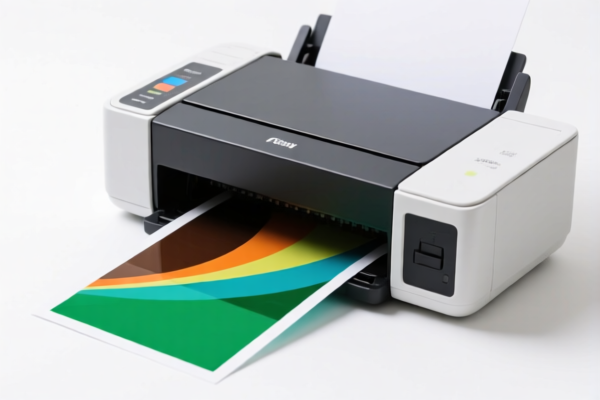
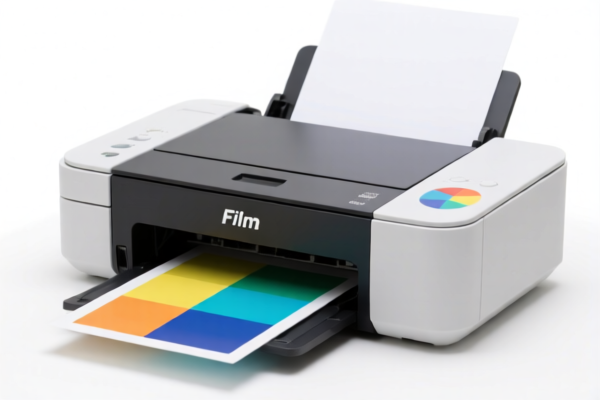
Color Photo Quick Print Film Narrow Width
CN → US| HS编码 | 关税税率 | 原产国 | 目的国 | 文档 |
|---|---|---|---|---|
| 3920991000 | 41.0% | CN | US | 官方文档 |
| 4811908030 | 35.0% | CN | US | 官方文档 |
| 4811594040 | 35.0% | CN | US | 官方文档 |
| 3701200030 | 38.7% | CN | US | 官方文档 |
商品图片


AI分析
🖨️ Color Photo Quick Print Film – Narrow Width
🌐 HS Code Reference & Customs Clearance Guide | 2026 Latest Tariff Analysis | Professional Clearance Strategy
📌 I. Product Definition & Classification: What Exactly is "Color Photo Quick Print Film"?
Color Photo Quick Print Film refers to specialized photographic media used in rapid photo printing processes (such as dye-sublimation or inkjet systems for immediate output). The key constraint here is "Narrow Width", which typically distinguishes these films from large-format architectural or industrial printing rolls, often used for passport photos, ID cards, loyalty cards, or small-batch commercial prints.
In international trade, this product is classified based on its base material and coating: * Plastic-Based Films: The most common type, featuring a PET or PC base with dye-receiving and protective layers. * Paper-Based Films: Paper substrates with specific coatings for quick-dye transfer. * Paper-Plastic Composite: A hybrid structure where paper is coated with plastic or vice-versa, designed for specific printer compatibility. * Photographic Film (Unexposed): If the film is strictly for analog or chemical color photography (not digital quick print), it falls under a different category. However, "Quick Print" usually implies digital/sublimation processes.
⚠️ Key Distinction Point:
- If the film is digital output media (ink/dye transfer) → It is generally treated as a printed/impregnated article or plastic/paper product (HS 3920 or 4811).
- If the film is light-sensitive emulsion for analog cameras (even if used in labs) → It falls under HS 3701.
- "Narrow Width" is a descriptive term for the product form but does not change the fundamental HS classification; it affects packing and duty calculations.
📦 II. HS Code Classification Details (2026 Latest Tariff Authority Mapping)
Based on the provided <DATA>, there are four possible HS Codes depending on the specific material composition. Below is the detailed breakdown.
| HS Code | Product Description | Base Material | Primary Use Case |
|---|---|---|---|
3920.99.10.00 |
Plastic Substrate Narrow-Width Color Photo Quick Print Film | Plastic (PET/PC) | Digital dye-sublimation, ID photos, plastic card printing |
4811.90.80.30 |
Paper Substrate Coated Color Quick Print Film | Paper | Direct thermal/sublimation on paper, loyalty cards, receipts |
4811.59.40.40 |
Narrow-Width Quick Print Film with Plastic-Coated Paper Base | Paper + Plastic | Hybrid applications, often for specific thermal printers |
3701.20.00.30 |
Light-Sensitive Film for Color Photography | Glass/Plastic Base | Analog color photography, lab processing (NOT digital quick print) |
🔍 Critical Note:
- The term "Quick Print" strongly suggests HS 3920 or HS 4811 categories.
- HS 3701 is for light-sensitive film (analog). If your product is digital ink/dye-transfer, do NOT use 3701. Misclassification can lead to severe penalties.
- The "Narrow Width" specification is a product attribute but does not alter the HS Code itself; it is described in the summary.
💰 III. 2026 Latest Tariff Rate Breakdown (Including Surcharges & Policy Add-ons)
✅ Applicable Country: United States (US)
✅ Origin: China (CN)
✅ Effective Date: 2025-11-10 onwards (including subsequent imports)
🎯 1. 3920.99.10.00 —— Plastic Substrate Film (Most Common for Digital Print)
| Item | Detail |
|---|---|
| Base Tariff | 6.0% (General Rate) |
| Section 301 Surcharge | +25.0% |
| Section 122 Surcharge | +10.0% |
| Total Tariff Rate | 41.0% |
| Tax Calculation | CIF Value × 41% |
| De Minimis Exemption | ❌ Not Applicable (High duty threshold) |
| Legal Basis | USITC:3920.99.10.00 → Section 301: 25% → Section 122: 10% |
📌 Explanation:
- This is the most likely classification for digital color photo films made of plastic (e.g., Kodak, Fujifilm thermal transfer films).
- The 41% rate is significant. It includes the base duty (6%) plus two separate surcharges.
- Section 301 is the standard trade war tariff on Chinese plastic products.
- Section 122 is an additional surcharge often applied to certain manufacturing inputs.
🎯 2. 4811.90.80.30 —— Paper Substrate Coated Film
| Item | Detail |
|---|---|
| Base Tariff | 0.0% |
| Section 301 Surcharge | +25.0% |
| Section 122 Surcharge | +10.0% |
| Total Tariff Rate | 35.0% |
| Tax Calculation | CIF Value × 35% |
| De Minimis Exemption | ❌ Not Applicable |
| Legal Basis | USITC:4811.90.80.30 → Section 301: 25% → Section 122: 10% |
📌 Explanation:
- Paper-based films benefit from a 0% base tariff, but the surcharges remain high.
- Total 35% is slightly lower than plastic-based (41%), making it marginally cheaper for imports.
- Ensure the product is indeed paper-based, not plastic-coated paper (see below).
🎯 3. 4811.59.40.40 —— Paper-Based Carrier with Plastic Coating
| Item | Detail |
|---|---|
| Base Tariff | 0.0% |
| Section 301 Surcharge | +25.0% |
| Section 122 Surcharge | +10.0% |
| Total Tariff Rate | 35.0% |
| Tax Calculation | CIF Value × 35% |
| De Minimis Exemption | ❌ Not Applicable |
| Legal Basis | USITC:4811.59.40.40 → Section 301: 25% → Section 122: 10% |
📌 Explanation:
- This code covers paper with plastic coating. It is often used for specific thermal paper rolls.
- Same 35% rate as pure paper films.
- Critical Check: If the backing is primarily plastic with a thin paper layer, it may be classified as 3920 (41%). Misclassification can lead to underpayment penalties.
🎯 4. 3701.20.00.30 —— Light-Sensitive Film for Color Photography
| Item | Detail |
|---|---|
| Base Tariff | 3.7% |
| Section 301 Surcharge | +25.0% |
| Section 122 Surcharge | +10.0% |
| Total Tariff Rate | 38.7% |
| Tax Calculation | CIF Value × 38.7% |
| De Minimis Exemption | ❌ Not Applicable |
| Legal Basis | USITC:3701.20.00.30 → Section 301: 25% → Section 122: 10% |
📌 Explanation:
- Only use this if the film is light-sensitive (analog photography).
- If you are importing digital quick print films, this code is incorrect and will likely be rejected by US Customs (CBP) because "Quick Print" implies non-light-sensitive, printed media.
- Rate is 38.7%, which is between the paper (35%) and plastic (41%) options.
🛠️ IV. Customs Clearance Practical Advice (Real-World Pitfall Guide)
✅ 1. Required Documentation Checklist (No Exceptions)
| Document | Mandatory? | Description |
|---|---|---|
| ✅ Product Specification Sheet | ✔️ | Must clearly state: Base material (Plastic/Paper), Width, Length, Use (Digital/Analog). |
| ✅ Product Photos | ✔️ | Show the roll, the core, and any packaging labels. |
| ✅ Commercial Invoice | ✔️ | Must explicitly describe the item: e.g., "Plastic Base Color Photo Quick Print Film, Narrow Width, Digital Use". |
| ✅ Packing List | ✔️ | Detail net/gross weight, number of rolls. |
| ✅ Origin Certificate | ✔️ | To prove Chinese origin (which triggers the 35-41% duties). |
| ✅ Material Composition Statement | ✔️ | Crucial: Declare whether it is 100% plastic, 100% paper, or composite. |
✅ 2. Classification Strategy (Key Mnemonic)
🔥 “Material Dictates Code, Use Dictates Rate!”
| Scenario | Correct HS Code | Total Duty | Why? |
|---|---|---|---|
| Digital Print, Plastic Base | 3920.99.10.00 |
41% | Plastic films are taxed higher (6% base). |
| Digital Print, Paper Base | 4811.90.80.30 |
35% | Paper has 0% base, so lower total. |
| Digital Print, Paper+Plastic | 4811.59.40.40 |
35% | Composite paper-based products benefit from 0% base. |
| Analog Color Photo Film | 3701.20.00.30 |
38.7% | Only for light-sensitive emulsion films. |
📌 Warning:
- Do NOT use3701for digital films. CBP will inspect and reclassify, leading to delays and penalties.
- Do NOT assume all "Photo Films" are the same. The base material is the primary classifier.
✅ 3. Special Handling Tips
| Situation | Recommendation |
|---|---|
| OEM Custom Widths | Declare exact width (e.g., 4 inches, 100mm). "Narrow" is not a technical term for CBP. |
| Mixed Shipments | If you have both plastic and paper films, declare separately. Do not combine into one line item. |
| Pre-Coated vs. Uncoated | If the film is uncoated blank media, it may still fall under 3920/4811. If it’s a finished print, it might be different. Ensure "Quick Print Film" means media, not printed photos. |
| Section 301 Exclusions | Check if your specific HS Code is on the exclusion list. Most photo films are not excluded. |
🌍 V. Global Market Comparison (2026)
| Country/Region | Recommended HS Code | Estimated Duty (China Origin) | Key Certification | Remarks |
|---|---|---|---|---|
| 🇺🇸 USA | 3920.99.10.00 (Plastic) |
41% | None specific | High duty due to 301 + 122. |
| 🇨🇳 China | 3920.99.10.00 |
5-10% | CCC (if applicable) | Lower import duty, no surcharges. |
| 🇪🇺 EU | 3920.99.10.00 |
6.5% | REACH, RoHS | No Section 301/122 equivalents. |
| 🇬🇧 UK | 3920.99.10.00 |
6.5% | UKCA, RoHS | Post-Brexit tariff remains moderate. |
| 🇯🇵 Japan | 3920.99.10.00 |
5-8% | PSE (if electrical) | Moderate duty, no surcharges. |
📌 Conclusion:
- USA is the most expensive market due to the 35-41% total duty.
- For US exports, cost calculation must include the full 35-41%.
- Consider tariff engineering: If possible, switch to paper-based substrates (4811) to save 6% (35% vs 41%).
📌 VI. Common Errors & Pitfall Guide (Lessons Learned)
❌ Error 1: Classifying digital film as 3701 (Analog)
👉 Consequence: CBP rejects the entry, delays shipment, and may assess penalties.
👉 Fix: Confirm if the film is light-sensitive. If not, use 3920/4811.
❌ Error 2: Ignoring "Section 122" Surcharge
👉 Consequence: Underpaying duty by 10%. CBP audits will recover the difference + interest.
👉 Fix: Always add 10% for Section 122 on covered Chinese goods.
❌ Error 3: Misidentifying "Narrow Width" as a classification factor
👉 Consequence: Wrong HS Code search.
👉 Fix: "Narrow Width" is a product dimension, not a HS classifier. Focus on material (Plastic/Paper).
❌ Error 4: Combining Plastic and Paper Films in One Line Item
👉 Consequence: Customs may apply the higher duty (41%) to the entire shipment.
👉 Fix: Separate line items for 3920 and 4811.
✅ Best Practice:
"Plastic Base Color Photo Quick Print Film, Narrow Width, for Digital Thermal Printers, Model XYZ"
🎯 VII. Conclusion: Professional Declaration, Cost Control, Efficiency!
🎯 Remember the Mnemonic:
🔹 "Plastic Base: 41% Duty; Paper Base: 35% Duty; Analog Film: 38.7% Duty."
🔹 "Digital Quick Print ≠ Analog Photo Film."
🔹 "Add 301 (25%) + 122 (10%) + Base to CIF for Total Duty."
📌 Pro Tip:
If your product is essential for healthcare or education, check for Exclusion Lists under Section 301. However, general photo films are rarely excluded.
Recommendation:
📞 Consult a licensed customs broker for Advance Ruling on the specific material composition.
🚀 Accurate classification saves 6-7% in duty. That’s real profit!
✨ Professional Customs Clearance Starts with Precise Classification!
💼 Every cent of your cost is worth calculating precisely!
用户评价
关于 HS 编码归类
协调制度(HS)是由世界海关组织(WCO)制定的国际贸易商品分类标准。全球 200 多个国家采用 HS 系统作为海关关税、贸易统计和进出口监管的基础。
每个 HS 编码遵循以下层级结构:
- 章(2 位)——商品大类(例如:第 84 章:机器和机械设备)
- 品目(4 位)——章内的更具体分类
- 子目(6 位)——国际通用细分,所有 WCO 成员国统一使用
- 本国细分(8-10 位)——各国自行扩展的细分编码,如美国 HTSUS 10 位编码
正确的 HS 编码归类对于顺利通关、准确缴纳关税和遵守贸易法规至关重要。错误归类可能导致海关延误、多缴关税或罚款。
从CN进口到US时,适用的关税税率可能包括:
- 最惠国(MFN)税率——适用于 WTO 成员国的标准关税税率
- 普通税率——适用于无贸易协定国家
- 贸易救济关税——附加关税,如 301 条款(反倾销)、232 条款(国家安全)或反补贴税
本页内容仅供参考。如需正式归类,请咨询当地海关或持牌报关代理。