Color Pressure Sensitive Carbonless Paper Multi Color
CN → US| HS编码 | 关税税率 | 原产国 | 目的国 | 文档 |
|---|---|---|---|---|
| 4911998000 | 17.5% | CN | US | 官方文档 |
| 4820400000 | 35.0% | CN | US | 官方文档 |
| 4820900000 | 35.0% | CN | US | 官方文档 |
| 4911914040 | 17.5% | CN | US | 官方文档 |
商品图片
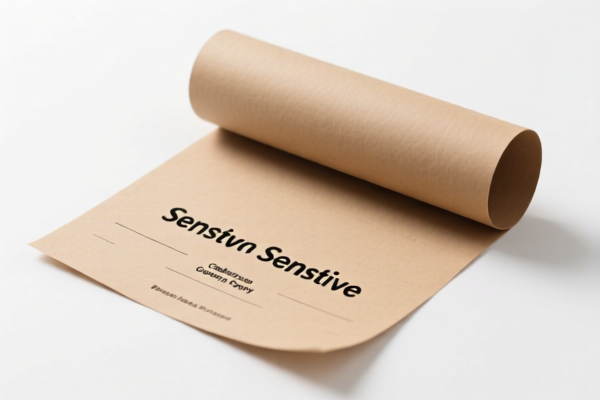
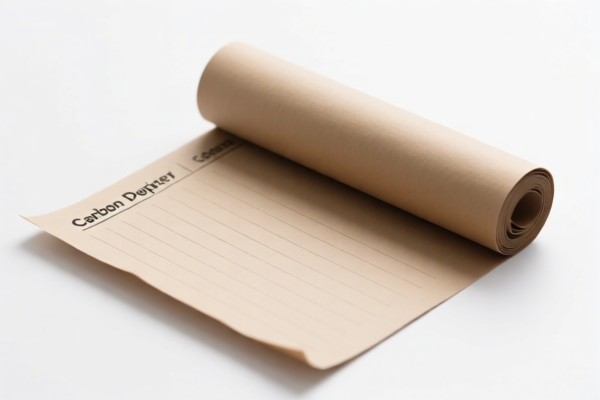


AI分析
📄 Multi-Color Pressure Sensitive Carbonless Paper (复写纸/多联单)
🌐 HS Code Classification & Customs Clearance Guide | 2026 Latest Tariff Analysis | Professional Strategy
📌 I. Product Definition: What Exactly Is "Carbonless Paper"?
"Multi-Color Pressure Sensitive Carbonless Paper" refers to specialized paper used for creating duplicate copies (typically 2–5 sets) without the need for traditional carbon paper. It relies on micro-encapsulated color-forming chemicals (leuco dyes) and clay-coated papers to react under pressure.
In international trade, it is primarily classified under Chapter 48 (Paper and Paperboard). The critical distinction lies in whether it is treated as a raw material/form (Form/Sheet) or a finished printed item (Printed Product).
⚠️ Key Classification Logic:
- If it is unprinted or merely coated for business forms → It falls under Heading 4820 (Notebooks, letterpaper, carbon copy sets, etc.).
- If it is fully printed with designs, images, or specific layout acting as a final printed product → It might be argued under Heading 4911 (Printed matter, other).
- Customs Reality: Most carbonless papers are classified as 4820 because their primary function is functional replication, not aesthetic display. However, if heavily printed with complex designs, some traders attempt 4911 to lower duties.
📦 II. HS Code Classification Details (2026 Official Tariff Reference)
Based on the provided data, here are the four potential HS Codes and their specific justifications:
| HS Code | Product Description | Summary/Justification from Data | Total Tax Rate |
|---|---|---|---|
| 4911.99.80.00 | Other Printed Matter | "Goods belong to the category of printed products, conforming to the material and use attributes of other printed products." | 17.5% |
| 4820.40.00.00 | Carbon Copy Sets (Multi-color) | "The multi-color attribute in the product name conforms to the single material nature of carbon sets and business use." | 35.0% |
| 4820.90.00.00 | Other Carbon Copy Sets / Forms | "Goods belong to multi-part commercial forms, categorized under sets with carbonless paper for replication." | 35.0% |
| 4911.91.40.40 | Other Printed Matter (Pictures/Designs) | "Goods belong to the printed matter category, conforming to the logic of picture/design printed materials within other printed matter." | 17.5% |
🔍 Critical Analysis of the Two Tax Brackets: - 17.5% Bracket (4911 Series): Applies if you can prove the item is primarily a printed design/picture rather than a functional form. This is a lower duty strategy but carries a higher risk of customs reclassification if the product is standard business forms. - 35.0% Bracket (4820 Series): The standard, safe classification for carbonless paper/forms. Customs views this as a functional paper good. The high tariff is due to Section 301 tariffs.
💰 III. 2026 Detailed Tariff Breakdown (Including Add-on Taxes)
✅ Applicable Country: United States (US)
✅ Origin: China (CN)
✅ Effective Date: Post-2025 Tariff Regime
🎯 1. Low Duty Strategy: HS Code 4911.99.80.00 / 4911.91.40.40
(Arguing as "Printed Matter" rather than "Paper Forms")
| Item | Content |
|---|---|
| Base Tariff | 0% (General Ad Valorem) |
| Section 301 Additional Tariff | +7.5% (Based on Data: "Section 301 Tariff 7.5%") |
| Section 122 Tariff | +10% (Based on Data: "122 Section Tariff 10%") |
| Total Effective Rate | 17.5% |
| De Minimis Exemption | ❌ NO (Deny De Minimis) |
| Legal Basis | USITC:4911.99.80.00 → Section 301: Footnote 3 → Section 122 |
📌 Explanation:
- Traders often try to classify printed forms under 4911 to benefit from the lower 7.5% Section 301 rate instead of 25%.
- Risk: Customs may reject this if the product is standard "carbonless paper" without significant artistic printing.
- Section 122 (232/122 or similar trade remedy): Adds 10% regardless of Section 301.
🎯 2. Standard Strategy: HS Code 4820.40.00.00 / 4820.90.00.00
(Standard Classification for Carbonless Paper/Forms)
| Item | Content |
|---|---|
| Base Tariff | 0% (General Ad Valorem) |
| Section 301 Additional Tariff | +25.0% (Standard for Paper Products) |
| Section 122 Tariff | +10% |
| Total Effective Rate | 35.0% |
| De Minimis Exemption | ❌ NO (Deny De Minimis) |
| Legal Basis | USITC:4820.40.00.00 → Section 301: Footnote 2 → Section 122 |
📌 Explanation:
- This is the most accurate classification for "Pressure Sensitive Carbonless Paper" as it is explicitly listed in Heading 4820.
- The 25% Section 301 tariff is significantly higher than the 7.5% in the 4911 category.
- However, it is safer and less likely to result in penalties or reclassification audits.
🛠️ IV. Customs Clearance Practical Advice (Avoid Pitfalls)
✅ 1. Documentation Checklist (Must-Haves)
| Document | Required? | Notes |
|---|---|---|
| ✅ Product Specification Sheet | ✔️ | Must detail: Number of copies (e.g., NCR 2-ply, 3-ply), coating type (CAB/MBT), dimensions. |
| ✅ Commercial Invoice | ✔️ | Clearly state: "Carbonless Paper, Multi-Color, Business Forms" or "Printed Multi-Part Forms". |
| ✅ Material Composition | ✔️ | Specify if it includes printed designs/logos. If printed, 4911 might be arguable. |
| ✅ Country of Origin Certificate | ✔️ | Essential for proving Chinese origin (triggers 301 tariffs). |
| ✅ Photos of Product | ✔️ | Show the sheets, the copies produced, and any printing. |
✅ 2. Classification Strategy: 4911 vs. 4820?
| Scenario | Recommended HS Code | Tax Rate | Risk Level |
|---|---|---|---|
| Standard White/Blue Forms (Unprinted or Basic Lines) | 4820.40.00.00 / 4820.90.00.00 |
35% | 🟢 Low (Correct) |
| Heavily Printed Forms (Logos, Complex Layouts) | 4911.99.80.00 |
17.5% | 🟡 Medium (Arguable) |
| Paper Rolls (Unprinted) | 4820.10.00.00 (Not in Data) |
Similar to 4820 | 🟢 Low |
| Pre-printed Invoices/Receipts | 4911.91.40.40 |
17.5% | 🟡 Medium |
🔥 Pro Tip:
- If you choose 4911, you MUST provide evidence that the printing is the primary value-add (e.g., marketing brochures, art prints, or highly complex pre-printed business documents).
- If you just ship "Carbonless Paper" with minimal printing, Customs will likely reclassify it to 4820, penalize you, and charge 35%.
- Safest Bet: Stick to 4820 if you are unsure. The extra 17.5% tax is predictable and avoids audits.
✅ 3. Special Customs Notes
- Section 122 Tariff (10%): This applies to both 17.5% and 35% rates. It is a separate levy on top of Section 301. Do not forget to account for it.
- No De Minimis Exemption: Carbonless paper from China is not eligible for the $800 de minimis exemption. All shipments, regardless of value, must go through formal entry with full duties paid.
- Valuation: Ensure the declared value includes the cost of the chemical coating and printing (if any). Under-declaration leads to seizures.
🌍 V. Global Market Comparison (2026)
| Country | Recommended HS Code | Base Tariff | Section 301/Extra | Total Tax | Notes |
|---|---|---|---|---|---|
| 🇺🇸 USA | 4820.40.00.00 |
0% | +25% (301) +10% (122) | 35% | Standard for carbonless paper |
| 🇺🇸 USA | 4911.99.80.00 |
0% | +7.5% (301) +10% (122) | 17.5% | Only if heavily printed as "printed matter" |
| 🇪🇺 EU | 4820.10.00 |
~5% | None | ~5% | Lower duty, no Section 301 |
| 🇨🇳 China | 4820.10.00 |
0-5% | None | ~0-5% | Import into China is cheap |
📌 Conclusion for US Importers:
- USA is the highest duty market.
- 35% is the default cost.
- 17.5% is a risky discount.
- Plan for 35% in your COGS (Cost of Goods Sold).
📌 VI. Common Mistakes & Pitfalls
❌ Mistake 1: Declaring as "Paper" without specifying "Carbonless"
👉 Consequence: Customs may classify under general paper (higher base duty) or reject the entry for lack of specificity.
❌ Mistake 2: Using HS Code 4820 for Heavily Printed forms to avoid 35%
👉 Consequence: If the printing is minor, Customs will assess 35% + Penalties + Re-classification Fees.
❌ Mistake 3: Ignoring Section 122 (10%)
👉 Consequence: Underpayment of duties. The 10% is in addition to the 7.5% or 25% Section 301. Total is 17.5% or 35%.
❌ Mistake 4: Assuming De Minimis applies
👉 Consequence: Package held at border, entry required, back taxes + storage fees.
🎯 VII. Final Recommendation
🏆 Best Practice:
- If your product is standard carbonless paper/forms:
- Use
4820.40.00.00or4820.90.00.00. - Budget for 35% Total Tax.
-
Why? Compliance is more important than saving 17.5% on a high-volume, low-margin product.
-
If your product is "Pre-printed Business Documents" with high-value graphics:
- Use
4911.99.80.00. - Budget for 17.5% Total Tax.
- Why? You have a defensible argument that it is "Printed Matter" (4911) rather than "Paper" (4820).
- Action: Provide samples to your broker for Pre-Ruling before shipping.
🔑 Key Takeaway:
"Carbonless Paper = 4820 = 35% Tax (Safe)"
"Printed Matter = 4911 = 17.5% Tax (Risky but Cheaper)"
📣 Immediate Action:
📞 Consult your Customs Broker: Provide a sample and ask: "Can this be classified as 4911.99.80.00 due to heavy printing, or must it be 4820?"
📦 Prepare for 35% Duty: Unless you have a strong case for 4911, plan your pricing assuming 35% landed cost impact from tariffs alone.
✨ Precise Classification, Predictable Costs.
💼 Don't let hidden tariffs erase your profit margin!
用户评价
关于 HS 编码归类
协调制度(HS)是由世界海关组织(WCO)制定的国际贸易商品分类标准。全球 200 多个国家采用 HS 系统作为海关关税、贸易统计和进出口监管的基础。
每个 HS 编码遵循以下层级结构:
- 章(2 位)——商品大类(例如:第 84 章:机器和机械设备)
- 品目(4 位)——章内的更具体分类
- 子目(6 位)——国际通用细分,所有 WCO 成员国统一使用
- 本国细分(8-10 位)——各国自行扩展的细分编码,如美国 HTSUS 10 位编码
正确的 HS 编码归类对于顺利通关、准确缴纳关税和遵守贸易法规至关重要。错误归类可能导致海关延误、多缴关税或罚款。
从CN进口到US时,适用的关税税率可能包括:
- 最惠国(MFN)税率——适用于 WTO 成员国的标准关税税率
- 普通税率——适用于无贸易协定国家
- 贸易救济关税——附加关税,如 301 条款(反倾销)、232 条款(国家安全)或反补贴税
本页内容仅供参考。如需正式归类,请咨询当地海关或持牌报关代理。