Color Slow Film
CN → US| HS编码 | 关税税率 | 原产国 | 目的国 | 文档 |
|---|---|---|---|---|
| 3702310100 | 38.7% | CN | US | 官方文档 |
| 3702520130 | 38.7% | CN | US | 官方文档 |
| 3704000000 | 35.0% | CN | US | 官方文档 |
| 3706106090 | 35.0% | CN | US | 官方文档 |
| 3706106060 | 35.0% | CN | US | 官方文档 |
商品图片
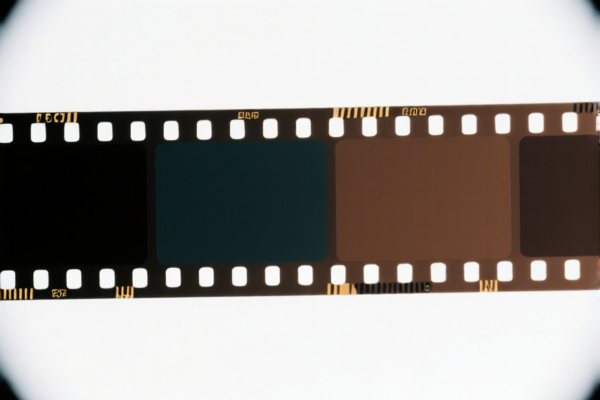
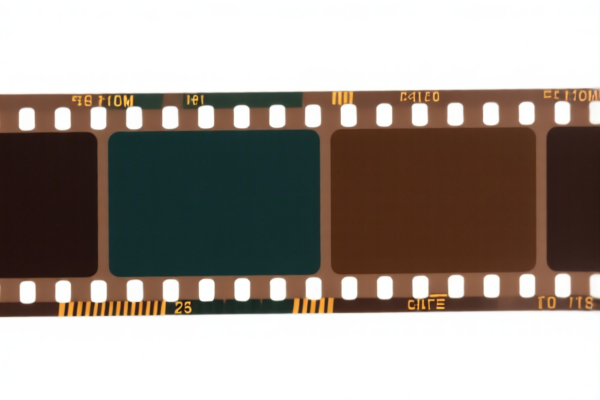
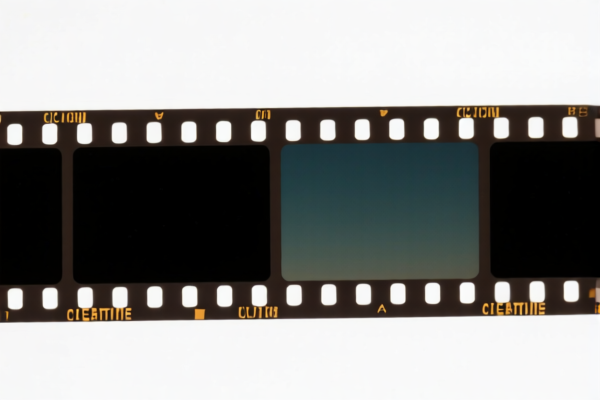

AI分析
🎞️ Color Slow Film (Color Negative/Reversal Film for General Photography & Cinematography)
🌐 HS Code Reference & Customs Clearance Guide | 2026 Latest Tariff Analysis | Professional Level Strategy
📌 I. Product Definition and Classification: What is "Color Slow Film"?
"Color Slow Film" refers to unexposed photographic film with a low Light Sensitivity (ISO rating, typically ISO 50, 100, or 200). In international trade, this term is a functional descriptor rather than a precise legal classification. It covers two main categories: 1. Still Photography Film: Rolls or sheets for cameras (negative or reversal/slide film). 2. Cinematography Film: Strips or rolls for movie cameras, specifically "slow" speed stock used for studio lighting or fine grain requirements.
⚠️ Critical Distinction for Customs:
- Format Matters: Is it for still cameras (HS 3702) or motion pictures (HS 3706)?
- State of Processing: Is it unexposed (new product) or exposed but undeveloped (HS 3704)?
- Material Base: Is it on cellulose acetate/plastic (standard) or paper? (Usually plastic).
📦 II. HS Code Classification Details (2026 Latest Tariff Authority Mapping)
Based on the provided data, the classification depends on whether the film is for still photography (rolls/sheets) or cinematography (movie reels), and whether it is standard or specialized.
| HS Code | Product Description | Application Scenario | Key Characteristics |
|---|---|---|---|
3702.31.01.00 |
Color Sensitised Plates & Film (Other) | Still Photography | Matches color film usage; non-paper light-sensitive medium. Typical for standard color negative film rolls. |
3702.52.01.30 |
Color Sensitised Plates & Film (Other) | Still Photography | Matches color material & film form; inferred as Color Reversal Film (Slide Film). High precision for E-6 processing. |
3704.00.00.00 |
Photographic Plates, Film, Paper... (Unexposed/Exposed but Unprocessed) | Exposed/Undeveloped | Matches film material & photographic carrier form. Applies if the film is exposed but not yet developed. |
3706.10.60.90 |
Cinematographic Film, Unexposed | Motion Pictures | Matches cinematographic film material form. Color & high-speed photography fall under "Other" categories (Note: "Slow" film often competes here if not standard speed). |
3706.10.60.60 |
Cinematographic Film, Unexposed | Motion Pictures | Matches cinematographic film material form. Color & high-speed photography fit the specialty cinematographic film catch-all category. |
🔍 Key Insight:
- If the product is clearly labeled as "Cinematographic Film", use HS 3706.
- If it is "Photographic Film" (for still cameras), use HS 3702.
- If the film is already exposed but not developed, it falls under HS 3704, which has a different tax structure.
💰 III. 2026 Latest Tariff Rate Details (Including Surcharges & Policy Add-ons)
✅ Applicable Country: United States (US)
✅ Origin: China (CN)
✅ Effective Date: From November 10, 2025 (including subsequent imports)
🎯 1. 3702.31.01.00 & 3702.52.01.30 —— Color Photographic Film (Still Photography)
These codes represent standard color films for still photography.
| Item | Content |
|---|---|
| Basic Tariff Rate | 3.7% (ad valorem) |
| USITC Surcharge (Section 301) | +25.0% |
| IEEPA Surcharge (Section 122/CN) | +10.0% |
| Total Effective Rate | 38.7% |
| Tax Calculation | CIF Value × 38.7% |
| De Minimis Exemption Eligible? | ❌ No (deny_de_minimis) |
| Legal Basis Path | IEEPA:9903.01.25 → USITC:3702.31.01.00 / 3702.52.01.30 → FOOTNOTE:9903.88.01 |
📌 Explanation:
- The 3.7% is the standard Most Favored Nation (MFN) rate for photographic film.
- The 25% is the standard Section 301 tariff on Chinese goods.
- The 10% is the additional IEEPA tariff specifically targeting Chinese optical/photo products.
- Total 38.7% is significant. For a $1,000 shipment, tax is $387.
🎯 2. 3704.00.00.00 —— Exposed but Unprocessed Photographic Film
| Item | Content |
|---|---|
| Basic Tariff Rate | 0.0% (ad valorem) |
| USITC Surcharge (Section 301) | +25.0% |
| IEEPA Surcharge (Section 122/CN) | +10.0% |
| Total Effective Rate | 35.0% |
| Tax Calculation | CIF Value × 35.0% |
| De Minimis Exemption Eligible? | ❌ No |
| Legal Basis Path | IEEPA:9903.01.25 → USITC:3704.00.00.00 → FOOTNOTE:9903.88.01 |
📌 Note:
- The basic rate is lower (0%) compared to new film (3.7%), but the surcharges remain the same.
- Crucial: This code is ONLY for film that has been exposed by the user and is being imported for development or return. Do not use this for new, unused film.
🎯 3. 3706.10.60.90 & 3706.10.60.60 —— Cinematographic Film (Movie Film)
| Item | Content |
|---|---|
| Basic Tariff Rate | 0.0% (ad valorem) |
| USITC Surcharge (Section 301) | +25.0% |
| IEEPA Surcharge (Section 122/CN) | +10.0% |
| Total Effective Rate | 35.0% |
| Tax Calculation | CIF Value × 35.0% |
| De Minimis Exemption Eligible? | ❌ No |
| Legal Basis Path | IEEPA:9903.01.25 → USITC:3706.10.60.90/60 → FOOTNOTE:9903.88.01 |
📌 Note:
- Cinematographic film benefits from a 0% basic rate.
- However, the 25% + 10% surcharges still apply, bringing the total to 35.0%.
- This is 3.7% cheaper than still photography film (3702series) due to the lower base rate.
🛠️ IV. Customs Clearance Practical Advice (Pitfall Avoidance Guide)
✅ 1. Document Checklist (Mandatory)
| Document | Required | Description |
|---|---|---|
| ✅ Product Specification Sheet | ✔️ | Must specify: ISO Speed (e.g., ISO 100), Format (35mm/120/Reel), Color/Negative/Reversal, Width. |
| ✅ Technical Data Sheet | ✔️ | Chemical composition (if requested), Emulsion type. |
| ✅ Product Photos | ✔️ | Clear images of packaging, label (showing ISO/Format), and the film canister/strip. |
| ✅ Commercial Invoice | ✔️ | Must describe item as "Unexposed Color Photographic Film" or "Unexposed Cinematographic Film". Do not just write "Film". |
| ✅ Packing List | ✔️ | Detail units, gross weight, net weight. |
| ✅ Origin Certificate | ✔️ | Proof of Chinese origin. |
✅ 2. Declaration Tips (Key Mantras)
🔥 "Format Determines Code, Exposure Determines Category, Name Must Be Precise!"
| Scenario | Correct Declaration | Common Error |
|---|---|---|
| New 35mm Color Negative Roll | HS 3702.31.01.00 |
Misdeclare as 3706 (Movie Film) → Risk of misclassification penalty. |
| New 120 Slide Film (Reversal) | HS 3702.52.01.30 |
Generic "Color Film" → May trigger manual review. |
| Used Film (Exposed, Undeveloped) | HS 3704.00.00.00 |
Declare as "New Film" → Fraud/Smuggling risk! |
| 35mm Movie Reel (Color, Slow Speed) | HS 3706.10.60.90 |
Declare as "Photographic Film" → Wrong chapter. |
| 16mm Movie Reel | HS 3706.10.60.90 |
Same as above. |
✅ 3. Special Circumstances Handling
| Scenario | Handling Advice |
|---|---|
| Mixed Shipments (Still + Movie Film) | Do not mix HS codes in one line item. Declare separately. Mixed declarations can lead to detention. |
| Film for Medical/Scientific Use | If used for non-photographic imaging (e.g., X-ray film), it may fall under Chapter 90. Ensure the invoice specifies "Not for Photographic Artistic Use". |
| Samples for Evaluation | Even samples are subject to 38.7% or 35.0% tax. No duty-free entry for commercial samples from China under current rules. |
| Packaging with Cameras | If film is packed inside a camera, declare as "Film for Cameras" under HS 3702 if separable, or as "Camera Accessory" if inseparable (but risk of reclassification). Best to declare separately. |
🌍 V. Global Market Customs Comparison (2026 Latest)
| Country/Region | Recommended HS Code | Tariff Rate (China Origin) | Certification/Notes |
|---|---|---|---|
| 🇺🇸 USA | 3702.31.01.00 / 3706.10.60.90 |
38.7% (Still) / 35.0% (Movie) | High tariffs. IEEPA & 301 apply. |
| 🇨🇳 China | 3702.31.01.00 |
~3-7% | Import duties vary. No 301/IEEPA. |
| 🇪🇺 EU | 3702.31.00 / 3706.10.00 |
0% - 4.5% | No additional surcharges. CE not typically required for film. |
| 🇯🇵 Japan | 3702.31.00 / 3706.10.00 |
0% - 3.2% | No additional surcharges. |
| 🇬🇧 UK | 3702.31.00 / 3706.10.00 |
0% - 4.5% | Post-Brexit rules. No US-style surcharges. |
📌 Conclusion:
- The USA is the most expensive market for importing Chinese photographic film due to 38.7% total tax.
- EU, Japan, and UK are much more favorable with 0-4.5% rates.
- Strategy: Consider routing through a non-Chinese country (e.g., Vietnam, Thailand) for final assembly/packaging to avoid "China Origin" labeling, if supply chain allows.
📌 VI. Common Errors & Pitfall Guide (Lessons Learned)
❌ Error 1: Declaring "Cinematographic Film" as "Photographic Film" (or vice versa).
👉 Consequence: While both are in Chapter 37, the HS codes differ. Misdeclaration can lead to customs audits, delays, or penalties.
❌ Error 2: Using HS 3704 (Exposed Film) for New Film.
👉 Consequence: Severe penalty. 3704 is for processed/unprocessed used goods. New film must be 3702 or 3706. This is a compliance risk.
❌ Error 3: Ignoring the IEEPA 10% Surcharge.
👉 Consequence: Underpayment of duties. The 10% is mandatory for Chinese optical products. Customs will audit and recover with interest.
❌ Error 4: Vague Description "Color Film".
👉 Consequence: Customs officer has discretion to choose the code. They may choose the one with higher scrutiny or higher duty. Always specify ISO, Format, and Type (Neg/Rev/Cine).
✅ Correct Declaration Example:
"Unexposed Color Negative Photographic Film, 35mm, ISO 100, Cellulose Acetate Base, for Still Photography, Model XYZ, Origin: China"
(HS: 3702.31.01.00 | Tax: 38.7%)
🎯 VII. Conclusion: Professional Declaration, Cost Optimization!
🎯 Remember the Mantra:
🔹 "Still Film is 38.7%, Movie Film is 35.0%, Exposed is 35.0%. Don't mix formats!"
🔹 "IEEPA 10% is Non-Negotiable for China Origin. Plan Your Logistics!"
📌 Pro Tip:
If you are a high-volume importer, consider applying for a Tariff Engineering strategy.
- Can the product be classified as a "Part of a Camera" (sometimes lower duty)?
- Is there a non-Chinese origin component that qualifies for a different origin rule?
- Pre-emption: Apply for an Advance Ruling from US Customs (CBP) to lock in the HS code before shipment.
📣 Immediate Action:
📞 Consult with a Licensed Customs Broker + Provide Technical Data Sheet + Apply for Advance Ruling
🚀 Ensure Smooth Clearance, Avoid Delays, and Manage Cost Predictability!
✨ Professional Customs Clearance Starts with Accurate Classification!
💼 Every Percentage Point of Tariff is a Margin Hit – Optimize It!
用户评价
关于 HS 编码归类
协调制度(HS)是由世界海关组织(WCO)制定的国际贸易商品分类标准。全球 200 多个国家采用 HS 系统作为海关关税、贸易统计和进出口监管的基础。
每个 HS 编码遵循以下层级结构:
- 章(2 位)——商品大类(例如:第 84 章:机器和机械设备)
- 品目(4 位)——章内的更具体分类
- 子目(6 位)——国际通用细分,所有 WCO 成员国统一使用
- 本国细分(8-10 位)——各国自行扩展的细分编码,如美国 HTSUS 10 位编码
正确的 HS 编码归类对于顺利通关、准确缴纳关税和遵守贸易法规至关重要。错误归类可能导致海关延误、多缴关税或罚款。
从CN进口到US时,适用的关税税率可能包括:
- 最惠国(MFN)税率——适用于 WTO 成员国的标准关税税率
- 普通税率——适用于无贸易协定国家
- 贸易救济关税——附加关税,如 301 条款(反倾销)、232 条款(国家安全)或反补贴税
本页内容仅供参考。如需正式归类,请咨询当地海关或持牌报关代理。