Color changing film
CN → US| HS编码 | 关税税率 | 原产国 | 目的国 | 文档 |
|---|---|---|---|---|
| 3920992000 | 39.2% | CN | US | 官方文档 |
| 3920515090 | 41.5% | CN | US | 官方文档 |
商品图片
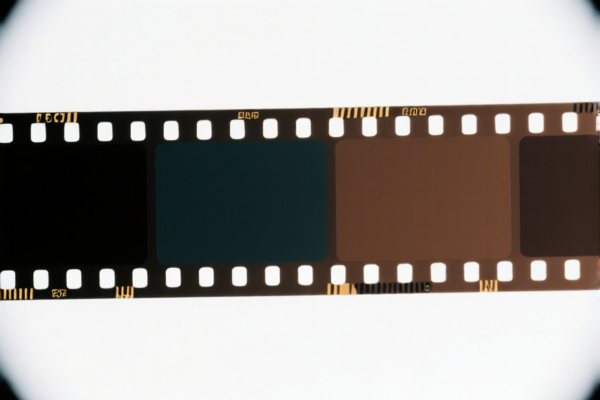
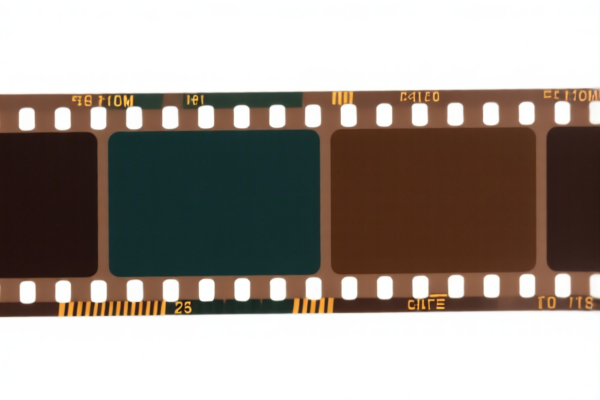
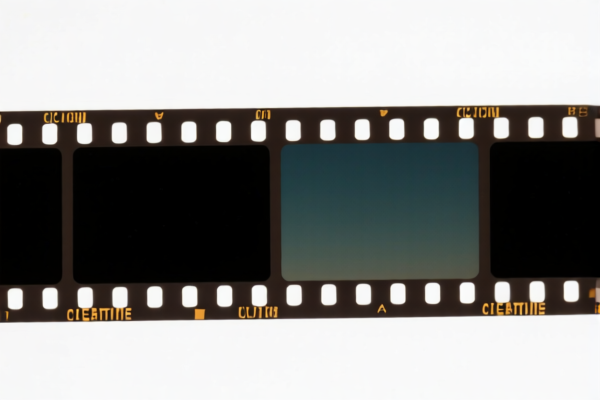

AI分析
🌈 Color Changing Film (Chromogenic / Thermochromic / Photochromic Films)
🌐 HS Code Reference & Customs Clearance Guide | 2026 Latest Tariff Analysis | Professional Entry Strategy
📌 I. Product Definition & Classification: Do You Really Understand "Color Changing Film"?
"Color changing film" is a broad commercial term that does not exist as a single entity in the Harmonized System (HS). In international trade, its classification depends strictly on material composition, structure, and function. It generally falls under Chapter 39 (Plastics).
The two most common interpretations for "Color Changing Film" are: 1. Flexible PVC/PE/PET Films: Thin plastic sheets that may be coated or treated to change color (e.g., via temperature or light). These are classified as flexible plastic films. 2. Acrylic (PMMA) Sheets: Solid, non-cellular plates or sheets made of polymers like Poly(methyl methacrylate) that may contain dyes or coatings. These are classified as non-cellular plastic plates/sheets.
⚠️ Key Distinction Point:
- If the product is a thin, flexible strip/film (easily bent, rolled, not rigid) made of general plastics (PVC, PE, PP, etc.) → It falls under Flexible Film categories (e.g.,3920.99.20.00).
- If the product is a rigid or semi-rigid plate/sheet made of Acrylic (PMMA) → It falls under Acrylic Polymers categories (e.g.,3920.51.50.90).
📦 II. HS Code Classification Details (Based on Provided Data)
Based on the provided <DATA>, only two specific HS codes are relevant. Below is the detailed breakdown for "Color Changing Film" depending on its physical form and material.
| HS Code | Product Description | Applicable Scenario | Key Characteristics |
|---|---|---|---|
3920.99.20.00 |
Other plates, sheets, film, foil and strip, of plastics, noncellular and not reinforced...: Film, strip and sheets... flexible | Flexible films made of non-acrylic plastics (e.g., PVC, PET, PE, PP). Often used for window tinting, decorative wraps, or thermochromic films that are supplied in rolls. | ✅ Flexible ❌ Not Acrylic ❌ Non-cellular, non-reinforced |
3920.51.50.90 |
Other plates, sheets, film, foil and strip, of plastics...: Of acrylic polymers | Rigid or semi-rigid Acrylic (PMMA) sheets/films. If the "color changing" effect is achieved through acrylic material properties or coatings on an acrylic substrate, this code applies. | ✅ Acrylic (PMMA) ✅ Non-cellular ✅ Non-reinforced |
🔍 Critical Clarification:
- "Color Changing" is NOT a classifier: The HS system does not have a code specifically for "smart materials" or "chromogenic films." You must classify based on the base plastic material.
- Is it Acrylic? If yes → Use3920.51.50.90. If no (e.g., PVC vinyl wrap) → Use3920.99.20.00.
- Is it Flexible? The data specifies3920.99.20.00is for "Film, strip and sheets... flexible." If the acrylic product is very thin and flexible, it might still fall under acrylic categories, but the provided data links3920.51.50.90to "Other Other" under acrylics, implying broader acrylic sheet classification.
💰 III. 2026 Latest Tariff Rate Details (Detailed Tax Breakdown)
✅ Note: The provided data indicates high additional tariffs (likely US Section 301 tariffs on Chinese goods).
✅ Origin Assumption: China (CN)
✅ Destination: United States (US)
🎯 1. 3920.99.20.00 — Flexible Plastic Films (Non-Acrylic)
| Item | Content |
|---|---|
| Base Tariff | 4.2% |
| Additional Tariff | +25.0% (Section 301 / USITC) |
| Total Tax Rate | 29.2% |
| Tax Calculation | CIF Value × 29.2% |
| De Minimis Exemption | ❌ Not Eligible (Section 301 goods are generally excluded from de minimis) |
| Legal Basis | 3920.99.20.00 + Section 301 Footnote |
📌 Explanation:
- This code applies to flexible plastic films (like PVC wraps or PET films) that are not made of acrylic.
- The 29.2% total rate is extremely high due to the 25% punitive tariff on top of the 4.2% base duty.
- Cost Impact: For every $10,000 of goods, you pay $2,920 in duties alone.
🎯 2. 3920.51.50.90 — Acrylic Polymers (PMMA) Sheets/Films
| Item | Content |
|---|---|
| Base Tariff | 0.0% |
| Additional Tariff | 0.0% |
| Total Tax Rate | 0.0% |
| Tax Calculation | CIF Value × 0% = $0 |
| De Minimis Exemption | ✅ Eligible (Likely, as no additional tariffs apply) |
| Legal Basis | 3920.51.50.90 |
📌 Explanation:
- This code applies to Acrylic (PMMA) products.
- Zero Duty is a massive advantage. If your "color changing film" can be justified as an acrylic polymer product (even if thin), you save 29.2% in tariffs.
- Strategy: If the product is a thin acrylic sheet, ensure it is correctly described as "Acrylic" rather than generic "plastic film" to leverage this 0% rate.
🛠️ IV. Customs Clearance Practical Advice (Avoid Pitfalls)
✅ 1. Documentation Checklist (Non-negotiable)
| Document | Required? | Description |
|---|---|---|
| ✅ Product Spec Sheet | ✔️ | Must explicitly state: Material Composition (e.g., "100% Polyethylene Terephthalate (PET)" or "Polymethyl Methacrylate (PMMA)"). ⚠️ Do NOT just write "Color Changing Film." |
| ✅ Material Safety Data Sheet (MSDS) | ✔️ | Shows chemical composition, helping customs verify the plastic type. |
| ✅ Product Photos | ✔️ | Clear images showing flexibility, thickness, and any coatings. |
| ✅ Commercial Invoice | ✔️ | Must match the HS Code description exactly. |
| ✅ Proof of Origin (CO) | ✔️ | If claiming non-Chinese origin to avoid Section 301 tariffs. |
| ✅ Declaration of Non-Reinforcement | ✔️ | Explicitly state: "Not reinforced, not laminated with other materials" (as per HS 3920 description). |
✅ 2. Declaration Strategy (Crucial for Cost Saving)
🔥 "Material Determines Duty: Acrylic is Free, PVC is 29.2%!"
| Scenario | Correct HS Code | Tax Rate | Risk of Misclassification |
|---|---|---|---|
| PVC Vinyl Wrap (Flexible, rolls) | 3920.99.20.00 |
29.2% | Low risk if material is PVC. |
| PET Window Film (Flexible, rolls) | 3920.99.20.00 |
29.2% | Low risk if material is PET. |
| Acrylic Sheet (Rigid/Semi-rigid, PMMA) | 3920.51.50.90 |
0.0% | High savings if correctly identified as Acrylic. |
| "Color Changing" Sticker | Avoid HS 3920? | Varies | If it’s an adhesive sticker, it may belong to HS 3919 (Self-adhesive plates), which has different rates. Check if adhesive is included! |
📌 Critical Warning:
- If your product is a self-adhesive film (has glue on one side), it likely belongs to HS 3919 (Self-adhesive plates, sheets, film...), NOT HS 3920.
- HS 3920 is for non-self-adhesive films/sheets.
- Action: Check if your "color changing film" has adhesive. If YES, you must find the correct HS 3919 code (not provided in data, but critical for accuracy). If NO adhesive, use the codes above.
✅ 3. Special Case Handling
| Case | Handling Advice |
|---|---|
| Multi-layer Film (e.g., Acrylic + Adhesive) | If it has adhesive, it’s HS 3919. If it’s just laminated acrylic, it’s still HS 3920.51.50.90. |
| "Chromogenic" (Light-sensitive) | The chemical reaction doesn’t change the HS code. Classify by base material (PVC → 3920.99.20.00; Acrylic → 3920.51.50.90). |
| Small Samples (< $800) | If entering via De Minimis (Section 321), 3920.99.20.00 may still incur tariffs if Section 301 applies. Verify current De Minimis exemptions for Section 301 goods. |
🌍 V. Global Market Comparison (General Insight)
| Market | Recommended HS Code (Flexible) | Estimated Duty (CN Origin) | Note |
|---|---|---|---|
| 🇺🇸 USA | 3920.99.20.00 |
29.2% | High punitive tariffs. |
| 🇺🇸 USA (Acrylic) | 3920.51.50.90 |
0.0% | Best option if product is PMMA. |
| 🇨🇳 China | 3920.99.20.00 |
~10-15% | Standard MFN rate. |
| 🇪🇺 EU | 3920.99.90 |
~6-8% | No Section 301 equivalent. |
| 🇬🇧 UK | 3920.99.90 |
~6-8% | Post-Brexit tariffs. |
📌 Conclusion:
- The US market is the most challenging due to the 25% additional tariff on non-acrylic plastic films.
- Cost Optimization Strategy: If possible, reformulate or source Acrylic (PMMA) based products to enjoy 0% duty.
- Adhesive Check: Always verify if the product is self-adhesive. If yes, HS 3919 applies, and you need a separate tariff analysis.
📌 VI. Common Mistakes & Pitfalls (Learn from Others)
❌ Mistake 1: Writing "Color Changing Film" as the description.
👉 Result: Customs may detain goods for unclear description.
✅ Fix: Use "Non-cellular Plastic Film, Flexible, Material: PVC/PET/Acrylic" + Function "Thermochromic/Photochromic."
❌ Mistake 2: Misclassifying Acrylic as "Other Plastic" (3920.99).
👉 Result: Paying 29.2% instead of 0.0%. A $100k shipment loses $29,200 unnecessarily.
✅ Fix: Confirm material is PMMA (Acrylic) and use 3920.51.50.90.
❌ Mistake 3: Ignoring Adhesive.
👉 Result: If the film has glue, it’s HS 3919, not 3920. Misclassification leads to penalties.
✅ Fix: Check for adhesive layer. If present, do not use HS 3920.
🎯 VII. Conclusion: Professional Classification Saves Money
🎯 Key Takeaway:
🔹 "Is it Acrylic? Yes → 0% Duty. No → 29.2% Duty."
🔹 "Is it Self-Adhesive? Yes → Not HS 3920. Use HS 3919."
🔹 "Don't Guess Material. Specify PVC, PET, or PMMA."
📌 Pro Tip:
For US imports, request a Binding Ruling (PBO) from CBP if the material composition is complex. It provides legal certainty and prevents post-clearance audits.
📣 Immediate Action:
📞 Contact Your Supplier: Ask for the exact Material Safety Data Sheet (MSDS) and Composition Percentage.
📝 Update Invoice Description: From "Color Changing Film" to "Flexible Non-Cellular PVC Film, Thermochromic" OR "Acrylic Polymer Sheet, PMMA."
🚀 Calculate Landed Cost: Factor in 29.2% or 0% duty to decide if the product is profitable for the US market.
✨ Accurate Classification Starts with Material Knowledge!
💼 Save 29.2% by Choosing (or Specifying) Acrylic!
用户评价
关于 HS 编码归类
协调制度(HS)是由世界海关组织(WCO)制定的国际贸易商品分类标准。全球 200 多个国家采用 HS 系统作为海关关税、贸易统计和进出口监管的基础。
每个 HS 编码遵循以下层级结构:
- 章(2 位)——商品大类(例如:第 84 章:机器和机械设备)
- 品目(4 位)——章内的更具体分类
- 子目(6 位)——国际通用细分,所有 WCO 成员国统一使用
- 本国细分(8-10 位)——各国自行扩展的细分编码,如美国 HTSUS 10 位编码
正确的 HS 编码归类对于顺利通关、准确缴纳关税和遵守贸易法规至关重要。错误归类可能导致海关延误、多缴关税或罚款。
从CN进口到US时,适用的关税税率可能包括:
- 最惠国(MFN)税率——适用于 WTO 成员国的标准关税税率
- 普通税率——适用于无贸易协定国家
- 贸易救济关税——附加关税,如 301 条款(反倾销)、232 条款(国家安全)或反补贴税
本页内容仅供参考。如需正式归类,请咨询当地海关或持牌报关代理。