Colored Polyester Board
CN → US| HS编码 | 关税税率 | 原产国 | 目的国 | 文档 |
|---|---|---|---|---|
| 3920620090 | 39.2% | CN | US | 官方文档 |
| 3926909400 | 35.0% | CN | US | 官方文档 |
| 3921190090 | 41.5% | CN | US | 官方文档 |
| 3926909989 | 22.8% | CN | US | 官方文档 |
| 3920690000 | 39.2% | CN | US | 官方文档 |
商品图片
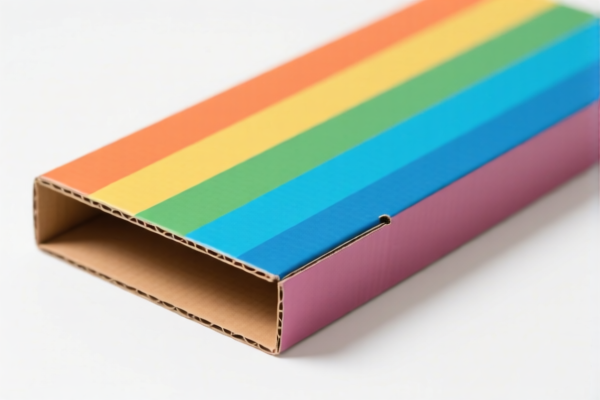
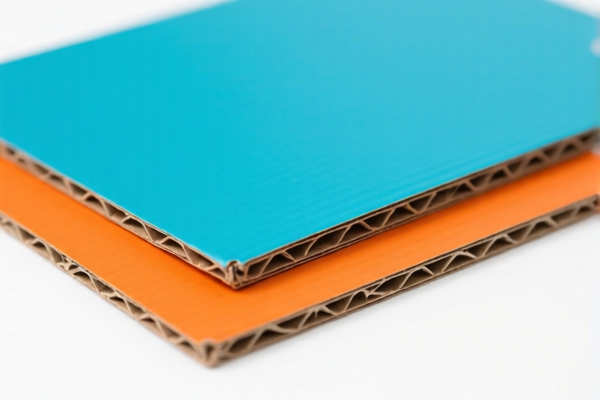
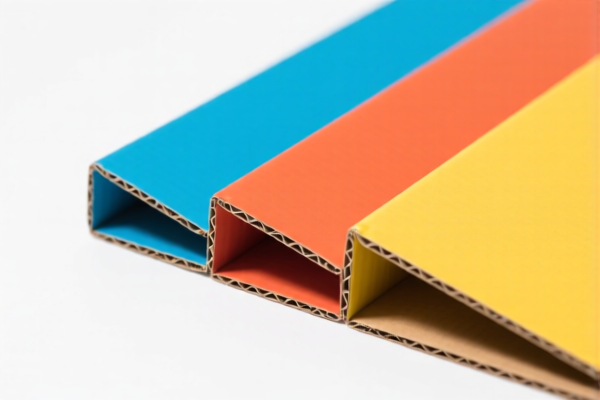
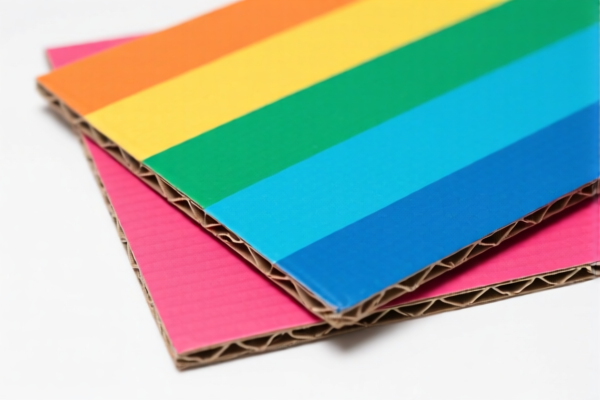
AI分析
🌈 Colored Polyester Board (PET Sheets/Plates)
🌐 HS Code Reference & Customs Clearance Guide | 2026 Latest Tariff Analysis | Professional Clearance Strategy
📌 I. Product Definition & Classification: What Exactly is "Colored Polyester Board"?
Colored Polyester Board generally refers to rigid, flat products made from Polyethylene Terephthalate (PET). In international trade, the classification depends heavily on physical form (plate/sheet vs. other articles) and material composition. Since "Polyester" usually maps to "Polyester" (PET) in Chapter 39, but generic descriptions might trigger "Other Plastics," the HS Code choice is critical for cost control.
⚠️ Key Distinction Point:
- If it is a flat plate/sheet specifically made of Polyester (PET) → It falls under 3920 (Other plates, sheets, film, foil, and strip, of plastics). - If it is a finished article (e.g., cut to specific shapes, not just raw sheets) or if the material is ambiguous → It may fall under 3926 (Other articles of plastics). - Crucial Note: "Colored" does not change the HS code, but "Polyester" is a specific polymer. Misclassifying it as "Other Plastics" (3921) or "Other Articles" (3926) can lead to either overpaying or underpaying duties, attracting海关 inspection.
📦 II. HS Code Classification Matrix (2026 Latest Tariff Authority Match)
Based on the provided data, here are the 5 valid HS Codes for Colored Polyester Board, ranked by potential tax efficiency and applicability.
| HS Code | Product Description | Key Attributes | Total Tax Rate |
|---|---|---|---|
3926.90.99.89 |
Best Value Option: Polyester plastic board, classified under 3901-3914 plastics, no material conflict. | General "Other" plastic articles; often used for generic polyester plates if specific polyester subheading doesn't fit perfectly. | 22.8% ⭐ |
3926.90.94.00 |
Generic Plate: Polyester plastic products, shape is plate, belongs to "Other plastic articles" catch-all, no material conflict. | Catch-all for plates not specified elsewhere; base duty 0%. | 35.0% |
3920.62.00.90 |
Specific PET: Polyester plastic board, shape is plate, material is Polyethylene Terephthalate (PET), no metallized or laminated reinforcement. | Exact match for pure PET sheets/plates. | 39.2% |
3920.69.00.00 |
Specific Polyester: Polyester plastic board, shape is plate, material is Polyester, meets polyester material category. | Similar to 3920.62 but broader "Polyester" definition. | 39.2% |
3921.19.00.90 |
Other Plastic: Polyester plastic board, shape is plate, material is Other Plastics, no material conflict. | Used if the "Polyester" claim is disputed or if it's a composite "Other Plastic." | 41.5% |
🔍 Analysis:
-3926.90.99.89offers the lowest tax burden (22.8%). However, it is a "catch-all" code. Customs may challenge this if the product is clearly a standard PET sheet, which belongs in 3920.
-3920.62.00.90and3920.69.00.00are the most technically accurate for PET sheets, but carry a higher tax rate (39.2%).
-3921.19.00.90is the least desirable due to the highest base duty (6.5%) and total tax (41.5%).
💰 III. 2026 Latest Tariff Rate Details (Including Surcharges & Policy Add-ons)
✅ Applicable Country: USA (US)
✅ Origin: China (CN)
✅ Effective Date: From November 10, 2025 (including subsequent imports)
🎯 1. 3926.90.99.89 —— Lowest Risk/Cost Option
(Description: Polyester plastic board, belonging to plastics under items 3901-3914, no material conflict.)
| Item | Details |
|---|---|
| Base Tariff | 5.3% (ad valorem) |
| Section 301 Surcharge | +7.5% |
| 122 Clause Tariff | +10% |
| Total Tax Rate | 22.8% |
| Tax Calculation | CIF Value × 22.8% |
| De Minimis Exemption | ❌ Not Eligible (Deny De Minimis) |
| Legal Basis Path | USITC:3926.90.99.89 → Section 301: Footnote 7.5% → 122 Clause: 10% |
📌 Explanation:
- This code benefits from the lowest Section 301 surcharge (7.5%) among the options.
- The base duty is moderate (5.3%).
- Strategy: Use this only if you can justify it as a "general plastic article" or if the product structure is complex enough to not fit neatly into 3920.
🎯 2. 3926.90.94.00 —— The "0% Base" Trap
(Description: Polyester plastic products, shape is plate, belongs to other plastic articles catch-all, no material conflict.)
| Item | Details |
|---|---|
| Base Tariff | 0.0% |
| Section 301 Surcharge | +25.0% |
| 122 Clause Tariff | +10% |
| Total Tax Rate | 35.0% |
| Tax Calculation | CIF Value × 35.0% |
| De Minimis Exemption | ❌ Not Eligible |
| Legal Basis Path | USITC:3926.90.94.00 → Section 301: Footnote 25% → 122 Clause: 10% |
📌 Explanation:
- Although the base duty is 0%, the Section 301 surcharge is 25%.
- This makes it cheaper than 3920 (39.2%) but more expensive than 3926.99.89 (22.8%).
- Warning: Customs may reclassify this as 3920 if it is clearly a plain PET sheet, leading to back taxes.
🎯 3. 3920.62.00.90 & 3920.69.00.00 —— Accurate but Expensive
(Description: Polyester plastic board, shape is plate, material is Polyester/PET, no metallized/laminated layers.)
| Item | Details |
|---|---|
| Base Tariff | 4.2% |
| Section 301 Surcharge | +25.0% |
| 122 Clause Tariff | +10% |
| Total Tax Rate | 39.2% |
| Tax Calculation | CIF Value × 39.2% |
| De Minimis Exemption | ❌ Not Eligible |
| Legal Basis Path | USITC:3920.62.00.90 → Section 301: Footnote 25% → 122 Clause: 10% |
📌 Explanation:
- These are the most technically correct codes for PET sheets.
- The 25% Section 301 surcharge significantly increases costs.
- Strategy: Only use these if your product is strictly a flat PET sheet/plate and you want to ensure 100% compliance to avoid penalties for misclassification.
🎯 4. 3921.19.00.90 —— Highest Cost
(Description: Polyester plastic board, shape is plate, material is Other Plastics, no material conflict.)
| Item | Details |
|---|---|
| Base Tariff | 6.5% |
| Section 301 Surcharge | +25.0% |
| 122 Clause Tariff | +10% |
| Total Tax Rate | 41.5% |
| Tax Calculation | CIF Value × 41.5% |
| De Minimis Exemption | ❌ Not Eligible |
| Legal Basis Path | USITC:3921.19.00.90 → Section 301: Footnote 25% → 122 Clause: 10% |
📌 Explanation:
- Avoid this code unless absolutely necessary.
- It has the highest base duty (6.5%) and the maximum 25% surcharge.
- "Other Plastics" is a weak classification for "Polyester."
🛠️ IV. Customs Clearance Practical Advice (Pitfall Avoidance Guide)
✅ 1. Required Documentation Checklist (None Can Be Omitted)
| Document | Mandatory? | Description |
|---|---|---|
| ✅ Product Specification Sheet | ✔️ | Must detail: Material (100% PET or blend), Form (Sheet/Plate), Thickness, Color, Dimensions. |
| ✅ Photos | ✔️ | Clear images of the board, showing flatness, edges, and lack of metalization/lamination (critical for 3920). |
| ✅ Commercial Invoice | ✔️ | Must state: "Colored Polyester Board (PET)" and correct HS Code. |
| ✅ Packing List | ✔️ | Weight and dimensions. |
| ✅ Certificate of Origin | ✔️ | If not CN origin, may reduce rates. For CN, it’s standard. |
| ✅ Third-Party Test Report | ✔️ | Plastic Identification Report to prove it is Polyester (PET) and not "Other Plastic." |
✅ 2. Declaration Strategy (Key Mantras)
🔥 "Form Defines Code, Material Defines Rate!"
| Situation | Correct Declaration | Incorrect Action |
|---|---|---|
| Plain PET Sheet/Plate | 3920.62.00.90 or 3920.69.00.00 |
Misdeclare as 3926 to save tax → High Audit Risk |
| Complex Shape/Cut Part | 3926.90.99.89 |
Declare as Sheet → Misclassification |
| Laminated/Metalized Board | Different Code (Not in list) | Declare as Plain Board → Penalty |
| "Polyester" vs. "PET" | Use "Polyethylene Terephthalate (PET)" | Use vague "Polyester" → Ambiguity |
📌 Note on 3926.90.99.89:
If you choose this code for its lower tax rate (22.8%), ensure the product is not a simple, unprocessed PET sheet. If it is, Customs may reject it and apply3920rates (39.2%) plus penalties. The risk-reward ratio must be calculated.
✅ 3. Special Scenarios
| Scenario | Handling Advice |
|---|---|
| Colored Board | "Colored" is irrelevant to HS Code. Focus on Material (PET) and Form (Plate). |
| Metallized/Laminated | If the board has a metal layer or is laminated, it does not fit 3920.62/69. It may fall under 3921 or other codes. Check carefully! |
| Reinforced with Glass/Carbon | Not a "plain" plastic board. Will be classified under 3921.19 or higher. |
| Samples | Even for samples, if over $800 (de minimis limit), De Minimis is denied for Section 301 goods. Must file formally. |
🌍 V. Global Market Comparison (2026 Latest)
| Country/Region | Recommended HS Code | Tariff (China Origin) | Certification | Notes |
|---|---|---|---|---|
| 🇺🇸 USA | 3920.62.00.90 (Accurate) or 3926.90.99.89 (Strategic) |
39.2% (Accurate) / 22.8% (Strategic) | None | High surcharge (25% or 7.5%). No de minimis. |
| 🇨🇳 China | 3920.62.00.90 |
~6.5% - 13% (Varies) | CCC (if applicable) | Lower base duties. No Section 301. |
| 🇪🇺 EU | 3920.62.00.90 |
6.5% | REACH, RoHS | No 301 surcharges. Standard WTO rates. |
| 🇬🇧 UK | 3920.62.00.90 |
6.5% | UKCA | Post-Brexit rules apply. |
| 🇦🇺 Australia | 3920.62.00.90 |
5% - 10% | None | Generally low tariffs. |
📌 Conclusion:
- USA is the most expensive market due to Section 301 and 122 Clause tariffs.
- Choosing the right HS Code in the US is critical:3926.90.99.89saves 16.4% in total tax compared to3920.62.00.90, but requires careful justification.
📌 VI. Common Mistakes & Pitfalls (Blood & Tears Lessons)
❌ Mistake 1: Declaring PET Sheet as 3926.90.99.89 just to save 16.4% tax.
👉 Consequence: Customs may request a plastic identification test. If proven to be a standard PET sheet, they will reclassify to 3920, charge the difference, and impose penalties.
✅ Solution: Only use 3926 if the product is a complex article, not a simple sheet.
❌ Mistake 2: Ignoring "Metallized" or "Laminated" status.
👉 Consequence: If the board has a metal layer, it is not a plain plastic plate. Misclassification leads to 100% penalty.
✅ Solution: Inspect the product. If it has a metallic coating, it does not fit the provided 3920 codes (which specify "no metallized layers").
❌ Mistake 3: Vague Description: "Plastic Board."
👉 Consequence: Customs will classify based on the worst-case scenario or demand re-inspection, causing delays.
✅ Solution: Use "Colored Polyester (PET) Board, Flat, Unlaminated, [Thickness]mm".
🎯 VII. Conclusion: Precise Classification Saves Thousands!
🎯 Remember the Mantra:
🔹 "PET Sheet? 3920 (39.2%). Complex Article? 3926.99.89 (22.8%). Check for Metal! Check for Lamination!"
🔹 "In the US, 16% difference is huge. Compliance is key, but strategic classification is profit!"
📌 Pro Tip:
If your Polyester Board is shipped from Vietnam, Mexico, or Thailand, you may be eligible for Section 301 Exclusions or lower MFN rates.
- Recommendation: Apply for Pre-Ruling (Advance Ruling) from CBP before shipment if the value is high.
- Documentation: Always include a Plastic Polymer Identification Report from a third-party lab (e.g., SGS, Bureau Veritas) to prove it is Polyester (PET) and not "Other Plastic."
📣 Take Action Now:
📞 Consult a Customs Broker + Provide Product Photos + Verify Material Composition
🚀 Clear customs smoothly, avoid penalties, and maximize profit margins!
✨ Professional Clearance Starts with Accurate Classification!
💼 Every dollar of duty is calculated precisely!
用户评价
关于 HS 编码归类
协调制度(HS)是由世界海关组织(WCO)制定的国际贸易商品分类标准。全球 200 多个国家采用 HS 系统作为海关关税、贸易统计和进出口监管的基础。
每个 HS 编码遵循以下层级结构:
- 章(2 位)——商品大类(例如:第 84 章:机器和机械设备)
- 品目(4 位)——章内的更具体分类
- 子目(6 位)——国际通用细分,所有 WCO 成员国统一使用
- 本国细分(8-10 位)——各国自行扩展的细分编码,如美国 HTSUS 10 位编码
正确的 HS 编码归类对于顺利通关、准确缴纳关税和遵守贸易法规至关重要。错误归类可能导致海关延误、多缴关税或罚款。
从CN进口到US时,适用的关税税率可能包括:
- 最惠国(MFN)税率——适用于 WTO 成员国的标准关税税率
- 普通税率——适用于无贸易协定国家
- 贸易救济关税——附加关税,如 301 条款(反倾销)、232 条款(国家安全)或反补贴税
本页内容仅供参考。如需正式归类,请咨询当地海关或持牌报关代理。