Colored Sun Film
CN → US| HS编码 | 关税税率 | 原产国 | 目的国 | 文档 |
|---|---|---|---|---|
| 3921121950 | 40.3% | CN | US | 官方文档 |
| 3921901950 | 40.3% | CN | US | 官方文档 |
| 3921904090 | 39.2% | CN | US | 官方文档 |
| 3921905050 | 39.8% | CN | US | 官方文档 |
| 3920591000 | 41.0% | CN | US | 官方文档 |
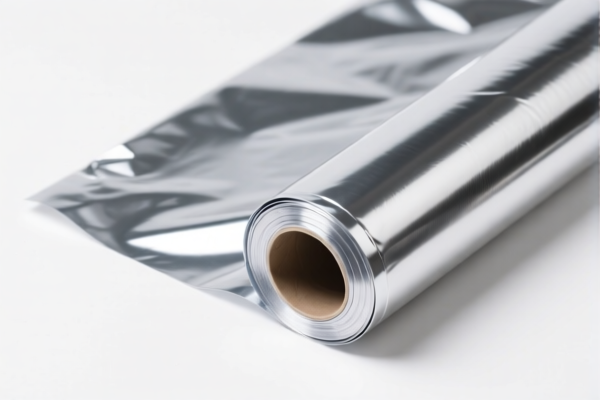
商品图片


AI分析
🌞 Colored Sun Film (Window Tint / Architectural Film)
🌐 HS Code Reference & Clearance Guide | 2026 Latest Tariff Analysis | Strategic Clearance Strategy for US Imports
📌 I. Product Definition & Classification: What is "Colored Sun Film"?
Colored Sun Film refers to thin, flexible sheets made from polymers (such as PVC, PET, or acrylic) designed to be applied to glass surfaces. In international trade, these products are primarily classified under Chapter 39 (Plastics and Articles Thereof), specifically within Heading 3920 (Plates, sheets, film, foil, and strip, of plastics) or 3921 (Other plates, sheets, film, and strip of plastics).
The classification depends heavily on the material composition and manufacturing process:
* Polymer Films (PET/PVC): Often classified under 3920.59 or 3921.12.
* Printed/Decorative Films: If the coloring is achieved through printing or specific lamination for decorative purposes, it may fall under 3921.90 or 3921.50.
* Key Distinction: Unlike optical lenses (Chapter 90), sun films are considered plastic articles unless they contain specific optical correction layers that define them as optical elements (rare for standard architectural films).
⚠️ Critical Classification Point:
- If the film is primarily colored polymer without complex printing processes → Likely 3921.12 or 3920.59.
- If the film is printed or has a specific laminate structure for aesthetic use → Likely 3921.90.
- Misclassification Risk: Declaring as "Glass Accessories" (Chapter 70) is incorrect; it is a Plastic Product.
📦 II. HS Code Classification Details (2026 Tariff Authority Cross-Reference)
Based on the provided data, here are the five most relevant HS Codes for Colored Sun Film imported into the US from China, along with their tax implications.
| HS Code | Product Description | Key Attributes | Total Tax Rate (China Origin) |
|---|---|---|---|
3921.12.19.50 |
Colored Sun Film, Material: Polymer (e.g., PVC/PET), Form: Film | Generic polymer film, categorized under "Other". | 40.3% |
3921.90.19.50 |
Colored Sun Film, Material: Plastic, Form: Film/Sheet/Foil | General plastic film/sheet for other uses. | 40.3% |
3921.90.40.90 |
Color-Printed Film, Material: Plastic, Form: Film | Matches attributes film and plastics; implies printing/lamination. |
39.2% |
3921.90.50.50 |
Color-Printed Film, Material: Plastic, Form: Film | Specific match for printed plastic films. | 39.8% |
3920.59.10.00 |
Color-Printed Film, Material: Acrylic or Related Polymers | Acrylic-based films; no conflict with standard film classifications. | 41.0% |
🔍 Key Insight:
- Acrylic films (3920.59.10.00) carry the highest base tax rate (6.0%), leading to a total of 41.0%.
- Printed/Laminated Films (3921.90.40.90) offer the lowest total rate (39.2%) due to a lower base duty (4.2%).
- Generic Polymer Films (3921.12.19.50/3921.90.19.50) sit in the middle at 40.3%.
💰 III. 2026 Tariff Rate Breakdown (Including Additional Duties & Policy Surcharges)
✅ Applicable Country: United States (US)
✅ Country of Origin: China (CN)
✅ Effective Date: 2025 onwards (Current Trade Environment)
🎯 1. 3921.12.19.50 & 3921.90.19.50 —— Generic Colored Polymer/Plastic Films
| Item | Details |
|---|---|
| Base Duty Rate | 5.3% (Ad Valorem) |
| Section 301 Additional Duty | +25.0% |
| Section 122 Duty (IEEPA) | +10.0% |
| Total Effective Tax Rate | 40.3% |
| Calculation Basis | CIF Value × 40.3% |
| De Minimis Exemption? | ❌ NO (deny_de_minimis). High risk of seizure if undervalued. |
| Legal Reference | Section 301: 19 CFR 1220 → IEEPA: 122 → HTSUS: 3921.12/90 |
📌 Explanation:
- The 25% is the standard Section 301 tariff for most Chinese plastics.
- The 10% is the additional tariff under Section 122 of the Trade Act of 1974 (or related IEEPA authorities depending on the specific enforcement period).
- Base 5.3% is the standard MFN rate for other plastic films.
🎯 2. 3921.90.40.90 & 3921.90.50.50 —— Color-Printed/Laminated Films
| Item | Details |
|---|---|
| Base Duty Rate | 4.2% (for .40.90) / 4.8% (for .50.50) |
| Section 301 Additional Duty | +25.0% |
| Section 122 Duty (IEEPA) | +10.0% |
| Total Effective Tax Rate | 39.2% (.40.90) / 39.8% (.50.50) |
| Calculation Basis | CIF Value × Rate |
| De Minimis Exemption? | ❌ NO |
| Legal Reference | Section 301: 19 CFR 1220 → IEEPA: 122 → HTSUS: 3921.90 |
📌 Explanation:
- These codes benefit from a slightly lower base duty (4.2%-4.8%) compared to generic films (5.3%).
- They are often used for decorative window films where printing or complex lamination is the primary value-add.
- Savings: Choosing3921.90.40.90can save 1.1% compared to3921.12.19.50.
🎯 3. 3920.59.10.00 —— Acrylic-Based Films
| Item | Details |
|---|---|
| Base Duty Rate | 6.0% |
| Section 301 Additional Duty | +25.0% |
| Section 122 Duty (IEEPA) | +10.0% |
| Total Effective Tax Rate | 41.0% |
| Calculation Basis | CIF Value × 41.0% |
| De Minimis Exemption? | ❌ NO |
| Legal Reference | Section 301: 19 CFR 1220 → IEEPA: 122 → HTSUS: 3920.59 |
📌 Explanation:
- Highest Total Tax Rate (41.0%).
- Use this code only if the product is explicitly made of Acrylic or related polymers. Using this for PVC/PET films may lead to customs disputes and audits.
🛠️ IV. Clearance Practical Advice (Real-World Pitfall Avoidance)
✅ 1. Required Documentation Checklist
| Document | Required? | Purpose |
|---|---|---|
| Product Specification Sheet | ✅ Yes | Must specify Material (PVC, PET, Acrylic), Thickness (mil/mm), and Light Transmission %. |
| Commercial Invoice | ✅ Yes | Must explicitly state "Colored Plastic Film, HTS 3921.xx" and "Made in China". |
| Packing List | ✅ Yes | Detail roll dimensions, weight, and number of rolls. |
| Bill of Lading/Air Waybill | ✅ Yes | Standard shipping document. |
| Proof of Origin | ✅ Yes | Certificate of Origin (CO) may be required for Section 301 exclusion applications (if applicable). |
| Section 301 Exclusion Letter | ⚠️ Conditional | If your specific HTS code had an active exclusion in 2025, provide the exclusion ID. (Most common sun films are NOT excluded). |
✅ 2. Declaration Best Practices
🔥 Golden Rule: "Material First, Use Second, Print Third!"
| Scenario | Correct Declaration | Risk if Incorrect |
|---|---|---|
| Standard PVC/PET Tint | 3921.12.19.50 or 3921.90.19.50 |
Misclassifying as acrylic (3920.59) leads to 41.0% tax (overpayment) or if misclassified as non-plastic, leads to penalties. |
| Decorative Printed Film | 3921.90.40.90 |
Declaring as generic film (3921.12) may trigger an audit for under-declaring complexity. However, 3921.90.40.90 is safer if printing is involved. |
| Acrylic Window Film | 3920.59.10.00 |
Declaring as PVC/PET is fine for tax, but material mismatch can cause FDA or chemical safety questions. |
✅ 3. Special Handling Tips
| Situation | Recommendation |
|---|---|
| Roll Goods vs. Cut Sheets | Declare as Film/Rolls. Do not declare as "Window Parts" unless cut to size for a specific vehicle/building, which might shift classification. |
| Adhesive Backing | Films with adhesive are still generally classified under 3920/3921. Do not try to classify under adhesive tapes (Chapter 35 or 3919) unless primarily a tape product. |
| Low-Value Shipments | ❌ Do NOT use Section 321 (De Minimis) for Chinese Origins. Section 301 and 122 duties apply. Valuation below $800 will likely be seized or delayed. |
🌍 V. Global Market Comparison (2026)
| Market | Recommended HS Code | Base Duty | Additional Duties | Total Est. Tax | Notes |
|---|---|---|---|---|---|
| 🇺🇸 USA | 3921.12.19.50 |
5.3% | 25% (301) + 10% (122) | 40.3% | High barriers. Accurate material declaration is critical. |
| 🇨🇳 China | 3921.12.19.50 |
5.3% | None | 5.3% | Low tax. Export-friendly. |
| 🇪🇺 EU | 3920.59.00 / 3921.10 |
~3-6% | No 301/122 equivalents | ~3-6% | No major anti-dumping on window films generally. |
| 🇬🇧 UK | 3921.12 |
~3-5% | No 301/122 | ~3-5% | Post-Brexit rules apply, but generally lower than US. |
| 🇨🇦 Canada | 3921.12 |
~0-5% | No 301/122 | ~0-5% | USMCA may allow duty-free if originating in US/Mexico. |
📌 Conclusion:
- The US market is the most expensive due to the 35%+ cumulative tariff burden.
- Supply Chain Strategy: Consider sourcing from Vietnam, Thailand, or Mexico to avoid Section 301/122 tariffs (ensure substantial transformation).
📌 VI. Common Mistakes & Pitfalls (Blood & Tears Lessons)
❌ Mistake 1: Declaring as "Window Tint" without specifying Material.
👉 Consequence: Customs may classify it as the highest possible duty rate or ask for extensive product samples, causing delays.
❌ Mistake 2: Using Section 321 (De Minimis) for China-origin films.
👉 Consequence: Seizure. The US CBP has strict enforcement against "de minimis" abuse for Chinese plastics.
❌ Mistake 3: Confusing Acrylic with PET/PVC.
👉 Consequence: If you declare 3920.59 (Acrylic) but the product is PET, you may be assessed penalties for misdeclaration, even if the tax rate is similar.
❌ Mistake 4: Ignoring Section 122.
👉 Consequence: Many importers only account for the 25% Section 301 duty. Forgetting the 10% Section 122 leads to underpayment and subsequent audits/fines.
✅ Correct Practice:
"Architectural Window Film, PET Material, Colored, Roll, HTS 3921.90.40.90, Made in China, 35% Total Duty Applicable"
🎯 VII. Conclusion: Professional Clearance, Cost Optimization
🎯 Remember the Formula:
🔹 Total Tax = Base Duty (4.2-6.0%) + Sec 301 (25%) + Sec 122 (10%)
🔹 Lowest Rate:3921.90.40.90(39.2%)
🔹 Highest Rate:3920.59.10.00(41.0%)
📌 Strategic Recommendation:
1. Verify Material: Ensure your supplier provides a Material Safety Data Sheet (MSDS) confirming if the film is PVC, PET, or Acrylic.
2. Choose the Right Code: If the film is printed, use 3921.90.40.90 for the lowest tax (39.2%). If it is solid color, use 3921.12.19.50 (40.3%) or 3921.90.19.50 (40.3%).
3. Avoid De Minimis: Never ship Chinese sun films via de minimis channels. Use formal entry with correct HS codes.
4. Consider Alternatives: If volume is high, explore sourcing from ASEAN countries to bypass the 35%+ US tariffs.
✨ Professional clearance starts with accurate classification!
💼 Every 1% difference in HS Code can save thousands of dollars!
📞 Contact a licensed customs broker to file a Pre-Ruling if your product mix is complex.
用户评价
关于 HS 编码归类
协调制度(HS)是由世界海关组织(WCO)制定的国际贸易商品分类标准。全球 200 多个国家采用 HS 系统作为海关关税、贸易统计和进出口监管的基础。
每个 HS 编码遵循以下层级结构:
- 章(2 位)——商品大类(例如:第 84 章:机器和机械设备)
- 品目(4 位)——章内的更具体分类
- 子目(6 位)——国际通用细分,所有 WCO 成员国统一使用
- 本国细分(8-10 位)——各国自行扩展的细分编码,如美国 HTSUS 10 位编码
正确的 HS 编码归类对于顺利通关、准确缴纳关税和遵守贸易法规至关重要。错误归类可能导致海关延误、多缴关税或罚款。
从CN进口到US时,适用的关税税率可能包括:
- 最惠国(MFN)税率——适用于 WTO 成员国的标准关税税率
- 普通税率——适用于无贸易协定国家
- 贸易救济关税——附加关税,如 301 条款(反倾销)、232 条款(国家安全)或反补贴税
本页内容仅供参考。如需正式归类,请咨询当地海关或持牌报关代理。