Commercial Grade Thermal Paper Base
CN → US| HS编码 | 关税税率 | 原产国 | 目的国 | 文档 |
|---|---|---|---|---|
| 4802202000 | 35.0% | CN | US | 官方文档 |
| 4802201000 | 35.0% | CN | US | 官方文档 |
| 4811908030 | 35.0% | CN | US | 官方文档 |
| 4811909030 | 35.0% | CN | US | 官方文档 |
| 4911998000 | 17.5% | CN | US | 官方文档 |
商品图片

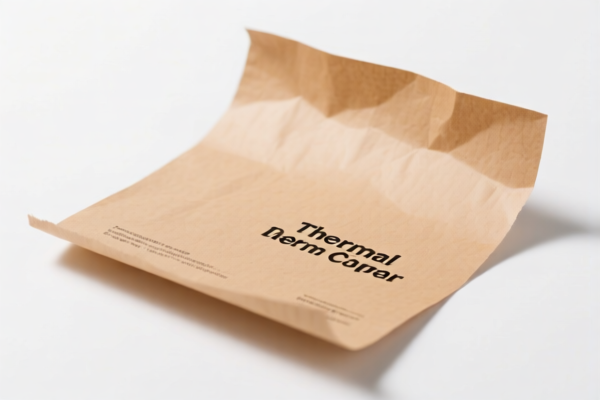
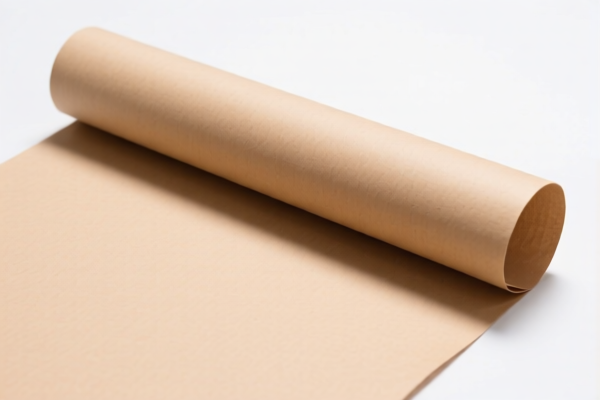
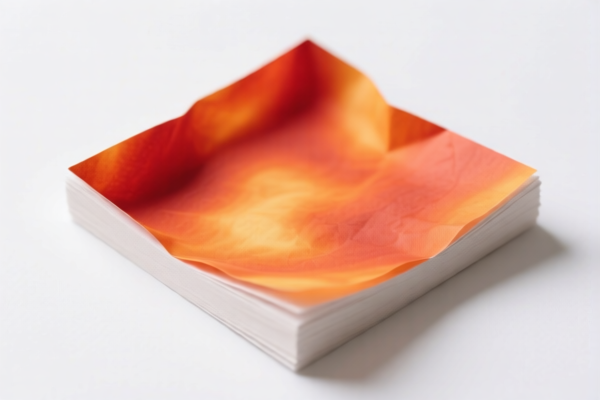
AI分析
🧻 Commercial Grade Thermal Paper Base
🌐 HS Code Reference & Customs Clearance Guide | 2026 Latest Tariff Analysis | Professional Strategy
📌 I. Product Definition & Classification: What Exactly is "Commercial Grade Thermal Paper Base"?
Thermal paper base (often referred to as "Thermal Paper Base Paper" or "Reagent Paper Base") is the foundational substrate used in the manufacturing of thermal receipt paper, fax paper, and POS terminal papers. It is typically chemically treated or coated with heat-sensitive dyes to produce images upon exposure to heat.
In international trade, it is crucial to distinguish between the uncoated/base paper and the finished coated thermal paper. However, for "Commercial Grade Thermal Paper Base," the key attributes are: 1. Material: Paper/Paperboard. 2. Function: Designed for use as a base for photosensitive, thermosensitive, or electrosensitive paper. 3. Grade: Commercial (implying standard quality for POS/receipts).
⚠️ Key Distinction:
- If the paper is merely uncoated base stock intended for further coating → It may fall under 4802.
- If the paper is already coated with thermal sensitizers (ready for use) → It may fall under 4811 or 4802.20 depending on specific coating definitions and national interpretations.
- Critical Note: The provided data suggests a strong alignment with 4802.20 (Base paper for photosensitive/thermosensitive use) and 4811 (Coated paper).
📦 II. HS Code Classification Details (2026 Latest Tariff Authority Cross-Reference)
Based on the provided <DATA>, here are the potential HS Codes and their rationales:
| HS Code | Product Description | Rationale for Classification | Total Tax Rate |
|---|---|---|---|
4802.20.20.00 |
Base paper for photosensitive, thermosensitive, or electrosensitive paper. | Best Fit for "Base Paper": Directly matches the definition of "paper/board capable of being used as photosensitive, thermosensitive, or electrosensitive paper." The material and usage attributes are fully consistent. | 35.0% |
4802.20.10.00 |
Other paper/board for photosensitive/thermosensitive use. | Material Match: Matches the material (thermal) and usage. Based on consistency of material and name, it is preliminarily determined to be compliant. | 35.0% |
4811.90.80.30 |
Other coated paper/board, other. | Core Attribute Match: The product name directly corresponds to the core attribute "thermal." Common sense infers the material is paper, fitting the definition of thermal-coated paper. | 35.0% |
4811.90.90.30 |
Other coated paper/board, not elsewhere specified. | Direct Correspondence: The name "Thermal Paper" is fully consistent with the material (paper) and core usage (direct thermal coating). | 35.0% |
4911.99.80.00 |
Other printed matter (miscellaneous). | Secondary Possibility: Thermal paper is considered a printed matter category. Based on common sense, the material is paper. It fits the material attribute of "other printed matter" with no conflict in form or usage. | 17.5% |
🔍 Focus Alert:
- Primary Classification: Most customs authorities will classify uncoated or pre-treated base paper for thermal applications under 4802.20.
- Alternative Classification: If the paper is fully coated and finished for immediate use, 4811.90 is often used.
- Lowest Rate Option: 4911.99.80.00 offers a significantly lower total tax (17.5%), but classification must strictly support it being considered "printed matter" rather than "paper base." This is riskier and requires strong justification.
💰 III. 2026 Latest Tariff Rate Breakdown (Including Surtaxes & Policy Surcharges)
✅ Applicable Country: United States (US)
✅ Country of Origin: China (CN)
✅ Effective Date: November 10, 2025 (and subsequent imports)
🎯 1. 4802.20.20.00 & 4802.20.10.00 —— Base Paper for Thermosensitive Use
| Item | Detail |
|---|---|
| Base Tariff | 0.0% (Ad valorem) |
| Section 301 Surtax | +25.0% (From USITC Footnote for Chinese imports) |
| IEEPA Surtax | +10.0% (Targeting Chinese/HK products, effective from Nov 10, 2025) |
| Total Tax Rate | 35.0% |
| Tax Calculation | CIF Value × 35% |
| De Minimis Exemption | ❌ Not Applicable (High probability of being denied de minimis due to surtaxes) |
| Legal Authority Path | USITC:4802.20.20.00 → Section 301: 25% → IEEPA: 10% |
📌 Explanation:
- The 25% Section 301 surtax is applied to all Chinese-origin thermal paper bases.
- The 10% IEEPA surtax is an additional layer for Chinese imports.
- Total 35% is a high effective rate. Importers must budget for this significantly increased cost.
🎯 2. 4811.90.80.30 & 4811.90.90.30 —— Coated Thermal Paper
| Item | Detail |
|---|---|
| Base Tariff | 0.0% |
| Section 301 Surtax | +25.0% |
| IEEPA Surtax | +10.0% |
| Total Tax Rate | 35.0% |
| Tax Calculation | CIF Value × 35% |
| De Minimis Exemption | ❌ Not Applicable |
| Legal Authority Path | USITC:4811.90.90.30 → Section 301: 25% → IEEPA: 10% |
📌 Note:
- Even if classified as coated paper (4811), the surtaxes remain the same.
- There is no tariff advantage in choosing 4811 over 4802.20 for Chinese origin.
🎯 3. 4911.99.80.00 —— Other Printed Matter (Lowest Rate Scenario)
| Item | Detail |
|---|---|
| Base Tariff | 0.0% |
| Section 301 Surtax | +7.5% |
| IEEPA Surtax | +10.0% |
| Total Tax Rate | 17.5% |
| Tax Calculation | CIF Value × 17.5% |
| De Minimis Exemption | ❌ Not Applicable |
| Legal Authority Path | USITC:4911.99.80.00 → Section 301: 7.5% → IEEPA: 10% |
📌 Caution:
- This rate is half of the primary classification.
- Risk: Customs may reject this classification if the product is clearly "paper base" and not "printed matter." Misclassification can lead to penalties, back taxes, and delays.
- Justification Needed: You must prove the product is a "printed item" in its final form, not a raw material for further processing.
🛠️ IV. Customs Clearance Practical Advice (Avoid Pitfalls)
✅ 1. Documentation Checklist (Essential)
| Document | Required | Description |
|---|---|---|
| ✅ Product Specification Sheet | ✔️ | Must detail: Basis weight, coating type (if any), thermal sensitivity level, width/roll size. |
| ✅ Technical Data Sheet | ✔️ | Differentiates between "Base Paper" (4802) and "Coated Thermal Paper" (4811). |
| ✅ Commercial Invoice | ✔️ | Clearly state: "Thermal Paper Base" or "Thermal Receipt Paper." Avoid vague terms like "Paper Roll." |
| ✅ Packing List | ✔️ | Specify net/gross weight, number of rolls, dimensions. |
| ✅ Certificate of Origin | ✔️ | Proof of Chinese origin triggers surtaxes. |
| ✅ Customs Bond | ✔️ | Required for formal entry (value > $2,500). |
| ✅ Letter of Explanation | ✔️ | If using 4911.99.80.00, provide a detailed argument why it is "printed matter." |
✅ 2. Declaration Strategy (Key Tips)
🔥 "Be Precise, Be Consistent, Avoid Ambiguity!"
| Scenario | Correct Declaration | Wrong Declaration |
|---|---|---|
| Uncoated Base Paper | "Paper Base for Thermal Receipts, Uncoated" → 4802.20.20.00 |
"Thermal Paper" (Vague) → Risk of misclassification |
| Pre-Coated Thermal Paper | "Thermal Coated Paper for POS Systems" → 4811.90.90.30 |
"Paper Base" (If coated) → Classification error |
| Finished Receipt Rolls | "Thermal Receipt Paper, Pre-printed/Blank" → 4911.99.80.00 (If justified) |
"Paper Rolls" → May be flagged |
| OEM Custom Order | Provide End-Use Statement + Design Specs | Only "Thermal Paper" |
✅ 3. Special Considerations
| Situation | Handling Advice |
|---|---|
| Low-Value Shipments (<$800) | Still subject to de minimis review. Given the high surtaxes, even small shipments may attract scrutiny. Ensure accurate HTSUS. |
| Mixed Containers | If thermal paper is mixed with other HS codes, each must be declared separately. Do not lump under one code to save costs. |
| Chinese Origin | Expect higher scrutiny. Keep all supply chain documents (invoices from mill, etc.) ready for audit. |
| Section 301 Exclusions | Check if any specific thermal paper codes were excluded in previous years. Note: Most thermal paper categories were not excluded in the latest rounds. |
🌍 V. Global Market Comparison (2026 Update)
| Country/Region | Recommended HS Code | Tax Rate (China Origin) | Key Requirements | Remarks |
|---|---|---|---|---|
| 🇺🇸 USA | 4802.20.20.00 |
35% | CBP Ruling, Detailed Specs | High surtaxes. Consider Vietnam/Malaysia origin for lower rates. |
| 🇨🇳 China | 4802.20.20.00 |
~0-5% (Export) | VAT Rebate Docs | Export-friendly. |
| 🇪🇺 EU | 4802.20.20 |
~6.5% | CE/RoHS (if chemical safety) | No Section 301 equivalent. |
| 🇬🇧 UK | 4802.20.20 |
~6.5% | Post-Brexit Rules | Similar to EU. |
| 🇯🇵 Japan | 4802.20.20 |
~5-8% | PSE (if electrical components involved) | Lower overall tax burden. |
📌 Conclusion:
- USA is the most expensive market for Chinese thermal paper due to 35% total duties.
- Alternative Sourcing: Consider sourcing thermal paper base from Vietnam, Thailand, or Malaysia to avoid Section 301 and IEEPA surtaxes, potentially reducing taxes to 0-7%.
📌 VI. Common Mistakes & Pitfalls (Lessons Learned)
❌ Mistake 1: Declaring "Thermal Paper" as 4802.20 when it is already coated.
👉 Consequence: Customs may reclassify to 4811 with no benefit, but delays and penalties apply.
👉 Solution: Clearly state "Coated" or "Uncoated" in the description.
❌ Mistake 2: Using 4911.99.80.00 for uncoated base paper.
👉 Consequence: High risk of audit and back taxes. 4911 is for printed matter, not raw paper base.
👉 Solution: Use 4802.20 for base paper. Only use 4911 if it is finished, printed, or ready-to-use retail packs with strong justification.
❌ Mistake 3: Ignoring Section 301 & IEEPA.
👉 Consequence: Unexpected 35% charge at border.
👉 Solution: Budget for 35% tax if shipping from China.
✅ Correct Practice:
"Thermal Paper Base, Uncoated, 44gsm, 100mm Width, for POS Receipt Printing, HS 4802.20.20.00, Origin: China"
🎯 VII. Conclusion: Smart Classification Saves Money!
🎯 Remember:
🔹 "Base vs. Coated" defines the HS Code.
🔹 "Chinese Origin" defines the Surtax (35%).
🔹 "4911" is risky but cheaper (17.5%) – only use if justified.
📌 Pro Tip:
If you are importing large volumes, apply for an Advance Ruling from CBP. This provides legal certainty on the HS Code and tax rate, avoiding surprises at customs.
📣 Immediate Action:
📞 Consult a licensed customs broker.
📄 Prepare full technical specs.
🚀 Consider third-country sourcing (e.g., Vietnam) if 35% US duty impacts your margin.
✨ Professional Customs Clearance Starts with Accurate Classification!
💼 Every percentage point saved is profit gained!
用户评价
关于 HS 编码归类
协调制度(HS)是由世界海关组织(WCO)制定的国际贸易商品分类标准。全球 200 多个国家采用 HS 系统作为海关关税、贸易统计和进出口监管的基础。
每个 HS 编码遵循以下层级结构:
- 章(2 位)——商品大类(例如:第 84 章:机器和机械设备)
- 品目(4 位)——章内的更具体分类
- 子目(6 位)——国际通用细分,所有 WCO 成员国统一使用
- 本国细分(8-10 位)——各国自行扩展的细分编码,如美国 HTSUS 10 位编码
正确的 HS 编码归类对于顺利通关、准确缴纳关税和遵守贸易法规至关重要。错误归类可能导致海关延误、多缴关税或罚款。
从CN进口到US时,适用的关税税率可能包括:
- 最惠国(MFN)税率——适用于 WTO 成员国的标准关税税率
- 普通税率——适用于无贸易协定国家
- 贸易救济关税——附加关税,如 301 条款(反倾销)、232 条款(国家安全)或反补贴税
本页内容仅供参考。如需正式归类,请咨询当地海关或持牌报关代理。