Coniferous Roughly Trimmed Wooden Sticks
CN → US| HS编码 | 关税税率 | 原产国 | 目的国 | 文档 |
|---|---|---|---|---|
| 4403220165 | 35.0% | CN | US | 官方文档 |
| 4404100090 | 35.0% | CN | US | 官方文档 |
| 4421991000 | 35.0% | CN | US | 官方文档 |
| 4404100080 | 35.0% | CN | US | 官方文档 |
| 4421991500 | 35.0% | CN | US | 官方文档 |
商品图片
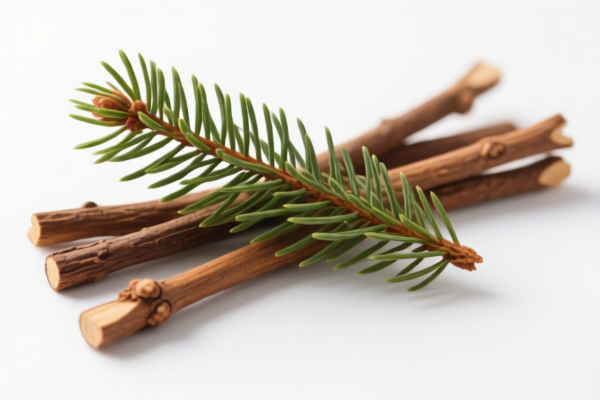

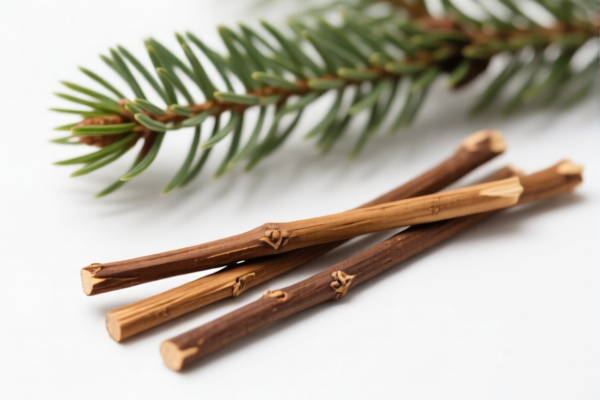

AI分析
🌲 Coniferous Roughly Trimmed Wooden Sticks (Pinus Species)
🌐 HS Code Reference & Customs Clearance Guide | 2026 Latest Tariff Analysis | Professional Compliance Strategy
📌 I. Product Definition & Classification: Decoding "Roughly Trimmed Wooden Sticks"
"Coniferous Roughly Trimmed Wooden Sticks" (often derived from Pine/Songmu in export contexts) refer to timber products that have undergone basic shaping but lack the precision of sawn timber or finished goods. In international trade, the classification hinges on whether the item is considered "Wood in the Rough" (Chapter 4403/4404) or a "Wooden Article" (Chapter 4421).
⚠️ Critical Distinction:
- If the wood retains its natural bark or is simply debarked and trimmed to a stick shape for raw use (e.g., support poles, raw material) → Raw Timber Category (4403/4404).
- If the sticks are processed into specific functional items (e.g., pegs, dowels, decorative sticks) regardless of material → Wooden Article Category (4421).
📦 II. HS Code Classification Details (2026 Latest Tariff Authority Match)
Based on the provided data for Pine (松木) products, here are the precise HS codes and their logical justifications:
| HS Code | Product Description | Justification for Classification | Tax Rate (Total) |
|---|---|---|---|
4403.22.01.65 |
Coniferous Wood, Roughly Trimmed (Log Form) | Pine is a conifer. "Roughly trimmed" and "stick-like" morphology fits the definition of wood in the rough (logs/sleepers). This is the most direct classification for unprocessed raw timber sticks. | 35.0% |
4404.10.00.90 |
Coniferous Wood, Not Sawed Lengthwise (Other) | Pine is coniferous. If the sticks are shaped (e.g., rounded or squared) but not sawn into planks/sheets, they fall under wooden blocks/poles. This is a common classification for "sticks" that have been shaped but not milled. | 35.0% |
4421.99.10.00 |
Made of Wood: Wooden Pegs/Nails | If the sticks are cut to specific lengths and used as dowels, pegs, or fasteners, they are classified as wooden articles rather than raw timber. The shape implies a specific utility beyond just "wood." | 35.0% |
4404.10.00.80 |
Coniferous Wood, Pole/Post Form | Specifically for sticks that serve as poles, stakes, or posts. The summary explicitly mentions "pole/post form" (杆桩柱形态), distinguishing them from generic "other" sticks. | 35.0% |
4421.99.15.00 |
Other Made of Wood Articles | A catch-all for wooden products that don't fit other specific article codes. If the sticks are decorative, craft-related, or non-functional "stick" items, this generic wooden article code applies. | 35.0% |
🔍 Key Insight:
- All 5 codes share the same total tax rate (35%), but the legal basis differs.
- Misclassification can lead to customs delays or seizures due to incorrect product description, even if the tax amount is the same.
- 4403/4404 are for raw/material classification.
- 4421 is for finished/semi-finished article classification.
💰 III. 2026 Latest Tariff Rate Breakdown (Including Surcharges)
✅ Applicable Country: United States (US)
✅ Origin: China (CN) (Implied by the 35% total rate structure)
✅ Effective Date: Current regulations (Section 301 & IEEPA)
🎯 1. General Tariff Structure for All 5 HS Codes
| Component | Rate | Legal Basis | Explanation |
|---|---|---|---|
| Base Duty (MFN) | 0.0% | HTSUS Base Rate | Most coniferous wood products have low base tariffs. |
| Section 301 Duty | +25.0% | USITC Footnote 9903.88.01 | Additional tariff on Chinese-origin goods under Trade Act Section 301. |
| IEEPA Duty | +10.0% | IEEPA Section 9903.01.25 | Additional tariff on specific Chinese products under International Emergency Economic Powers Act. |
| TOTAL EFFECTIVE RATE | 35.0% | Sum of Above | 0% + 25% + 10% = 35% |
📌 Important Note:
- No De Minimis Exemption: These codes are NOT eligible for the $800 de minimis exemption for informal entries.
- Full Formal Entry Required: All shipments must undergo formal customs clearance with full documentation.
- Tax Calculation:Duty = CIF Value × 35%
🛠️ IV. Customs Clearance Practical Advice (Risk Mitigation Strategy)
✅ 1. Documentation Checklist (Mandatory)
| Document | Requirement | Purpose |
|---|---|---|
| Commercial Invoice | Must clearly state: "Coniferous Roughly Trimmed Wooden Sticks, Pine Species" | Prevents ambiguity in product description. |
| Packing List | Detailed count, weight, and dimensions per carton. | Verifies quantity and prevents over/under-declaration. |
| Phytosanitary Certificate | MANDATORY for all wood products. | Proves the wood is free from pests/diseases (ISPM 15 compliant). |
| Heat Treatment Certificate | If wood is not heat-treated, it may be rejected. | Ensures compliance with import phytosanitary standards. |
| Product Photos | Show cross-section, bark status, and trim quality. | Helps customs officer verify "roughly trimmed" vs. "sawn." |
| Origin Declaration | Certify Country of Origin as China. | Triggers correct tariff application (35%). |
✅ 2. Classification Strategy (Which HS Code to Choose?)
| Scenario | Recommended HS Code | Why? |
|---|---|---|
| Raw Sticks for Construction (e.g., scaffolding props) | 4404.10.00.80 |
Clearly defined as "poles/posts." Easiest to justify. |
| Raw Sticks for Raw Material Processing | 4403.22.01.65 |
Best for "logs/rough wood" classification. |
| Sticks for Furniture/Assembly (e.g., dowels) | 4421.99.10.00 |
Classified as "peg/dowel" article. |
| Generic/Craft Sticks (unclear use) | 4421.99.15.00 |
Safe fallback for "other wooden articles." |
| Shaped but Not Sawn (rounded sticks) | 4404.10.00.90 |
Best for "other coniferous wood not sawed." |
🔥 Pro Tip:
- If the sticks are uniformly cylindrical and used for fastening, use4421.99.10.00.
- If the sticks are irregular and used for support or raw material, use4404.10.00.80or4403.22.01.65.
- Avoid using generic terms like "wooden sticks" in declarations. Use specific morphological terms.
✅ 3. Special Considerations
| Issue | Solution |
|---|---|
| Phytosanitary Rejection | Ensure wood is ISPM 15 certified (heat-treated or fumigated). Without this, shipment will be held/destroyed. |
| Misclassification Risk | If you declare 4421 but customs sees raw logs, they may reclassify to 4403/4404 (same tax, but different inspection rules). |
| Value Declaration | Ensure CIF value includes freight and insurance. Under-declaration leads to penalties. |
| Pre-arrival Notification | Submit ACE/ABI entry data 72 hours before arrival to avoid demurrage. |
🌍 V. Global Market Comparison (2026)
| Market | HS Code Alignment | Tariff Rate (China Origin) | Key Requirement |
|---|---|---|---|
| 🇺🇸 USA | 4403.22.01.65 / 4404.10.00.90 / 4421.99.10.00 |
35% (25% Sec 301 + 10% IEEPA) | Phytosanitary Cert + ISPM 15 Mark |
| 🇨🇳 China (Export) | Same | 0% (Export Duty) | Standard Export Declaration |
| 🇪🇺 EU | 4403/4404/4421 |
0% (Most Favored Nation) | EUTR (EU Timber Regulation) Compliance |
| 🇬🇧 UK | 4403/4404/4421 |
0% (Post-Brexit MFN) | UK Timber Regulation Compliance |
| 🇨🇦 Canada | 4403/4404/4421 |
0% (CUSMA if Origin CA) | CFIA Permit for Wood |
📌 Conclusion:
- USA is the most challenging market due to the 35% combined tariff and strict phytosanitary rules.
- EU/UK/Canada have 0% base tariffs but require timber legality verification (EUTR/UKTR).
- Cost Advantage: If possible, consider sourcing from non-China origins (e.g., Vietnam, Thailand) to avoid Section 301/IEEPA tariffs.
📌 VI. Common Errors & Pitfalls (Lessons Learned)
❌ Error 1: Declaring as "Wooden Toys" or "Furniture Parts" when they are raw sticks.
👉 Consequence: Customs may reclassify, leading to delay + penalties.
❌ Error 2: No Phytosanitary Certificate.
👉 Consequence: Shipment held at port, potential destruction or re-export.
❌ Error 3: Ignoring the "Roughly Trimmed" aspect.
👉 Consequence: If too smooth, it may be classified as sawn timber (4407), which has different inspection protocols.
❌ Error 4: Under-declaring Value.
👉 Consequence: Fraud investigation + fines (100% of duty evaded).
✅ Best Practice:
"Precise Description + ISPM 15 Mark + Accurate Value = Smooth Clearance."
🎯 VII. Final Recommendations
🎯 Action Plan:
1. Verify Morphology: Are your sticks "raw logs" (4403), "shaped poles" (4404), or "finished articles" (4421)?
2. Secure Phytosanitary Cert: Ensure wood is heat-treated and marked per ISPM 15.
3. Use Specific Terms: Replace "sticks" with "Pine Wood Poles," "Wooden Dowels," or "Rough Sawn Timber."
4. Pre-Arrival Filing: Submit ACE entry 72 hours before vessel arrival.
5. Consult a Broker: For large shipments, hire a licensed customs broker to handle Section 301/IEEPA compliance.
📣 Final Note:
🚀 Customs compliance is not optional.
📉 Tariffs are non-negotiable.
📦 Documentation is your shield.
✨ Precision in Classification, Success in Clearance!
💼 Your Supply Chain, Optimized for 2026!
用户评价
关于 HS 编码归类
协调制度(HS)是由世界海关组织(WCO)制定的国际贸易商品分类标准。全球 200 多个国家采用 HS 系统作为海关关税、贸易统计和进出口监管的基础。
每个 HS 编码遵循以下层级结构:
- 章(2 位)——商品大类(例如:第 84 章:机器和机械设备)
- 品目(4 位)——章内的更具体分类
- 子目(6 位)——国际通用细分,所有 WCO 成员国统一使用
- 本国细分(8-10 位)——各国自行扩展的细分编码,如美国 HTSUS 10 位编码
正确的 HS 编码归类对于顺利通关、准确缴纳关税和遵守贸易法规至关重要。错误归类可能导致海关延误、多缴关税或罚款。
从CN进口到US时,适用的关税税率可能包括:
- 最惠国(MFN)税率——适用于 WTO 成员国的标准关税税率
- 普通税率——适用于无贸易协定国家
- 贸易救济关税——附加关税,如 301 条款(反倾销)、232 条款(国家安全)或反补贴税
本页内容仅供参考。如需正式归类,请咨询当地海关或持牌报关代理。